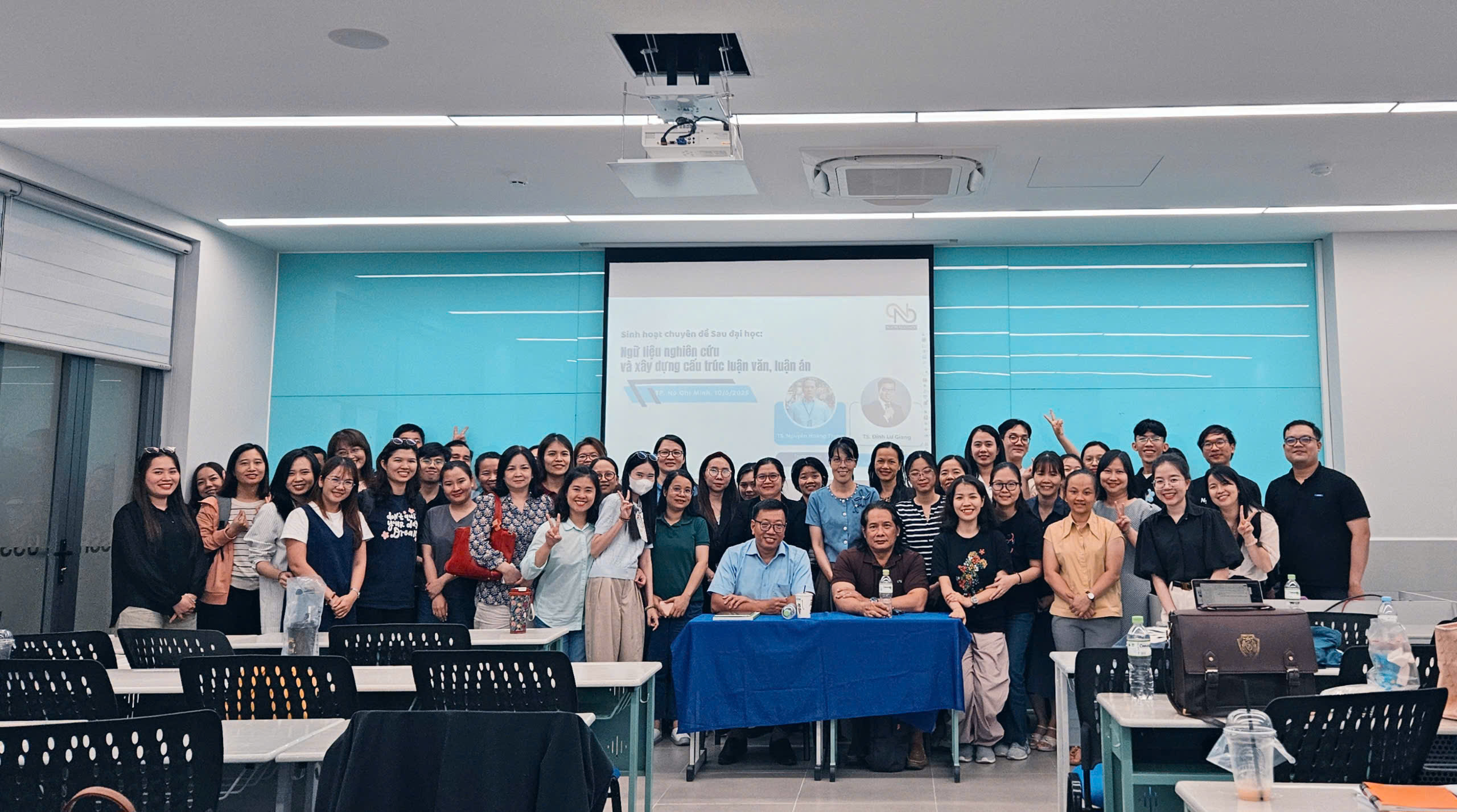
On May 10, 2025, the Faculty of Linguistics organized the second thematic activity in the series of thematic activities for graduate students, pre-doctoral students, and doctoral students of the Faculty with the content "Research materials and construction of thesis and dissertation structures". The activity took place at 1:30 p.m. in room D.605, Campus 1, University of Social Sciences and Humanities, VNU-HCM, chaired by Dr. Nguyen Hoang Trung - Head of the Faculty of Linguistics and Dr. Dinh Lu Giang - Head of the Department of Vietnamese Linguistics.
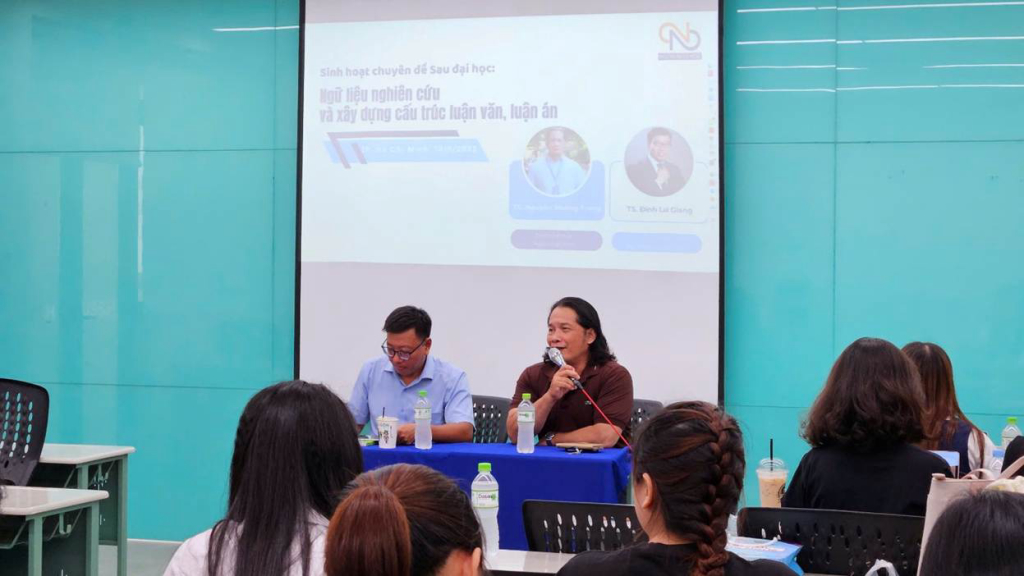
Chairs: Dr. Nguyen Hoang Trung and Dr. Dinh Lu Giang
Before the event, the Organizing Committee sent the registration form to the students and collected questions and concerns from the students so that they could discuss and answer them fully and accurately.
At the beginning of the event, Dr. Nguyen Hoang Trung shared his excitement at the presence of a large number of students. He emphasized a number of extremely important steps in the process of writing a thesis or dissertation, but not all students fully and correctly grasp them, which are the collection, processing of research materials and building the structure for a linguistic thesis or dissertation.
Regarding research materials, materials or corpus are indispensable elements in linguistic research. A diverse corpus with clear sources is considered reliable material. Only with new materials can there be a clear research direction. Dr. Nguyen Hoang Trung noted the difference between monolingual and bilingual materials. Monolingual is less complicated, the richness of the source is the key point; Bilingualism is more complex, it is necessary to pay attention to the translation ability of the corpus (translation corpus), and for untranslatable corpus, it is necessary to find common points such as the same topic, same time, same genre, same school, same mood, etc. From here, the person doing the comparison can establish universal similarities and differences due to culture, society, etc. in each language.
Dr. Dinh Lu Giang gave some conclusions about corpus work: it must be done early (implemented as soon as the subject and scope of the topic are initially determined); it must be done sufficiently (quantity, rich sources); it must be done correctly (real corpus: read real corpus, record real corpus).
Regarding the structure of the thesis, the learner needs to closely follow the regulations of the training institution on the requirements for the structure of a thesis, the dissertation. Mr. Hoang Trung emphasized the presentation of the Research Methodology section - an important subsection in the Introduction section of the topic. For the NNH industry, the descriptive method is the key method and needs to be presented thoroughly: what to describe, how, for what purpose. Mr. Lu Giang assessed the importance of presenting the History of Research on the issue. Accordingly, learners need to answer the question "in the picture of the research situation related to the topic, is there any space for the learner's thesis or dissertation" (which is the basis for contributing to the novelty).
Particularly for PhD students, in the first two years of the training process, learners will carry out 4 topics; the topics are not chapters but the main content of the thesis (each topic is about 25-30 pages long).
In addition, the Organizing Committee also discussed more about reading documents. Advice for those doing theses and dissertations is to read related (prioritize documents related to the topic); read new (the level of update of documents); read original (increase reading of original documents, especially documents in English). Learners also need to write responsibly (ensure academic integrity, write with basis); write in a critical spirit. Some points to avoid include avoiding choosing topics that follow "trends", topics that are not close to the major. In contact with scientific instructors, with postgraduate teaching staff, learners need to be proactive and have appropriate behaviors.
The last part of the program is a question and answer section. Some issues raised by learners are quantitative analysis in linguistics, how to build a questionnaire with information value, how to recognize corpus saturation, the spectrum of variables/variables in research, etc. Dr. Dinh Lu Giang provided some basic information: for "quantitative analysis": it is necessary to clearly identify the survey population, choose appropriate analysis tools, etc.; with “how to build a questionnaire with information value”: it is necessary to learn how to build a questionnaire in general, then apply it to the specific object of the topic, it is possible to ask for advice from experts so that the questionnaire is scientific, achieving high information value when included in the survey; with “how to recognize the saturation of the text”: it is very difficult to recognize the saturation of the text, so learners need to pay attention to the diversity of sources, the richness of creators; with “the spectrum of variables/variables in research”: depending on the research object of the topic, for example, the variable about gender is mainly male - female, the variable about evaluation opinions will be more complicated.
The second meeting took place enthusiastically and openly: many professional exchanges from the Chair and learners; many thoughts and wishes were sent by learners. These contribute to timely support for learners during their studies at the Faculty, and at the same time contribute to further improving the quality of postgraduate training of the Faculty of Linguistics in particular and of the School in general.
Some other pictures in the program:
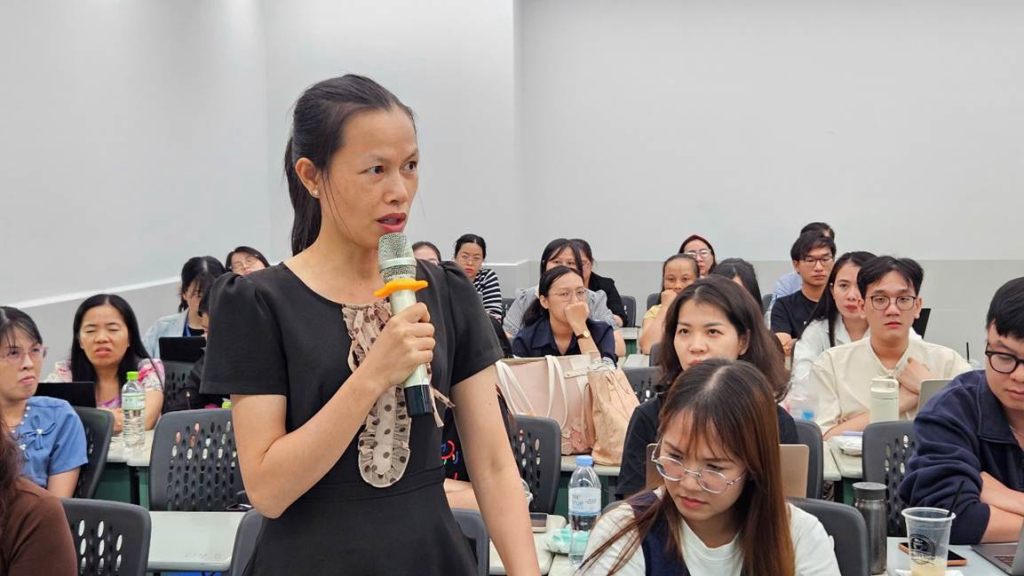
Figure 2: Learners ask questions.
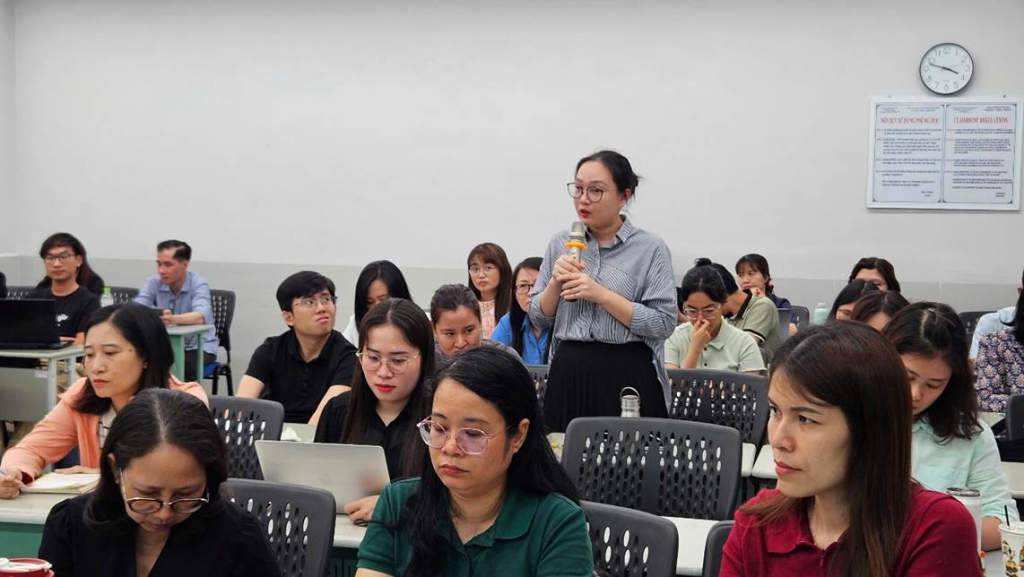
Figure 3: Learners ask questions.
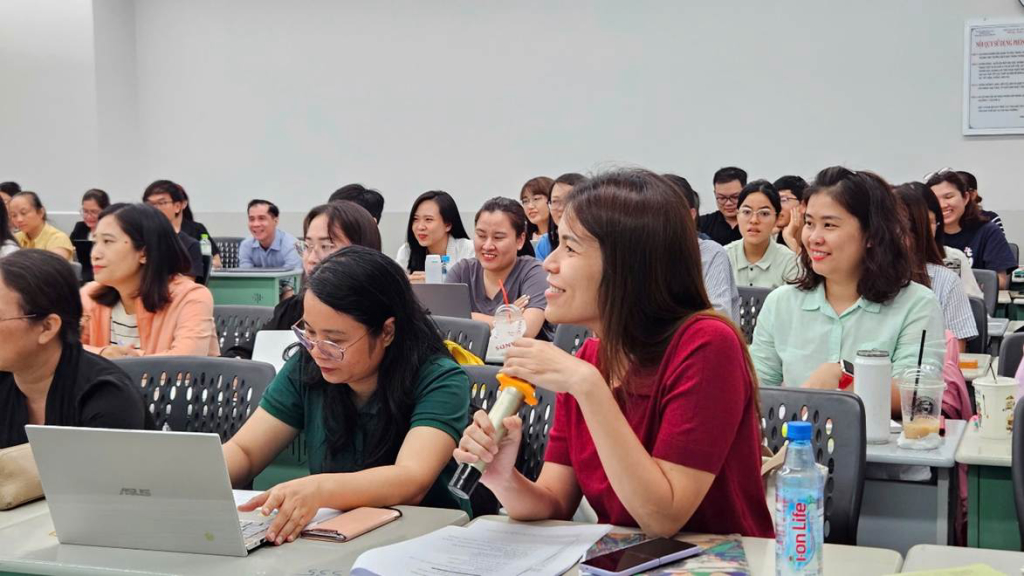
Figure 4: Learners ask questions.
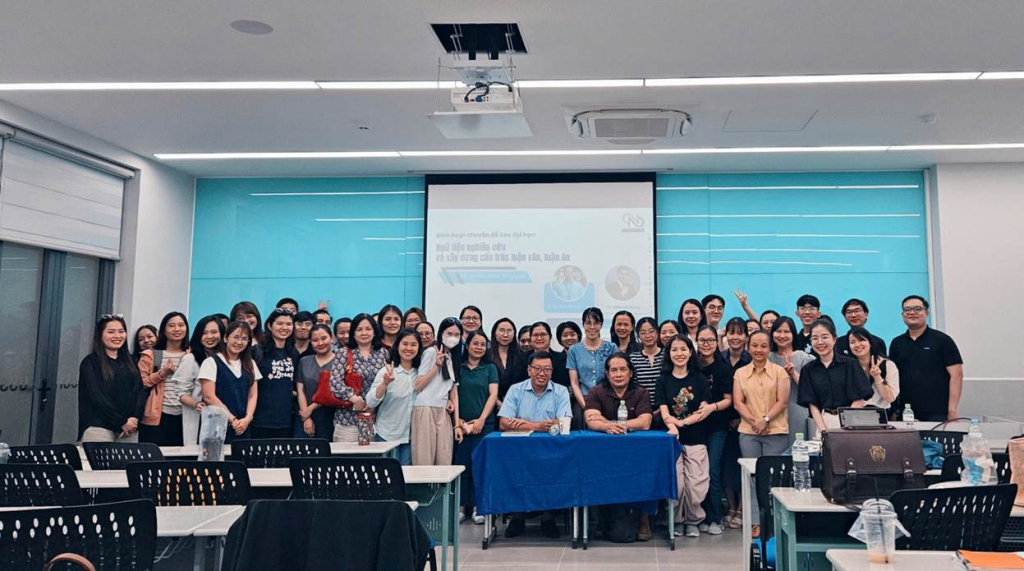
Figure 5: The entire audience took a souvenir photo.