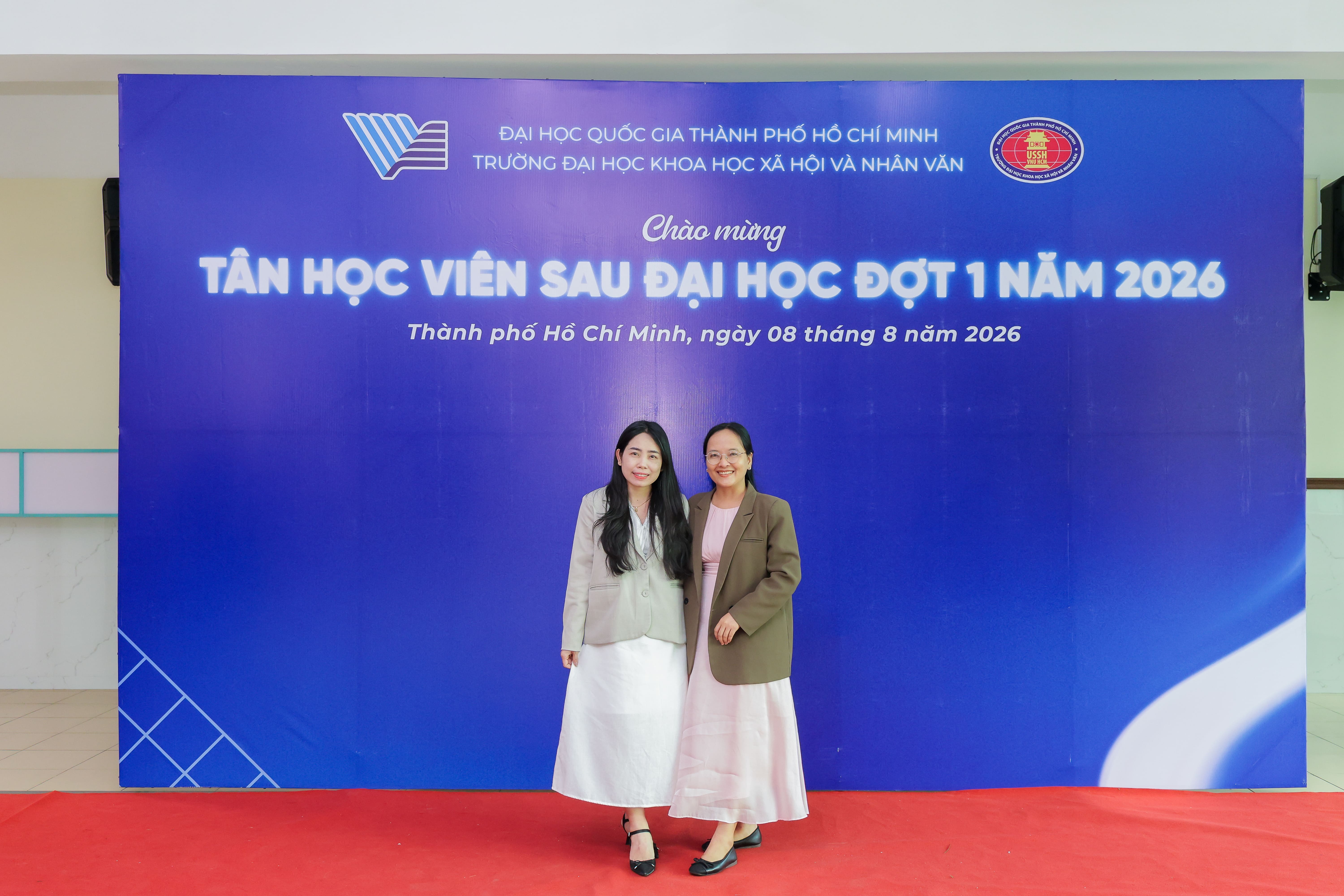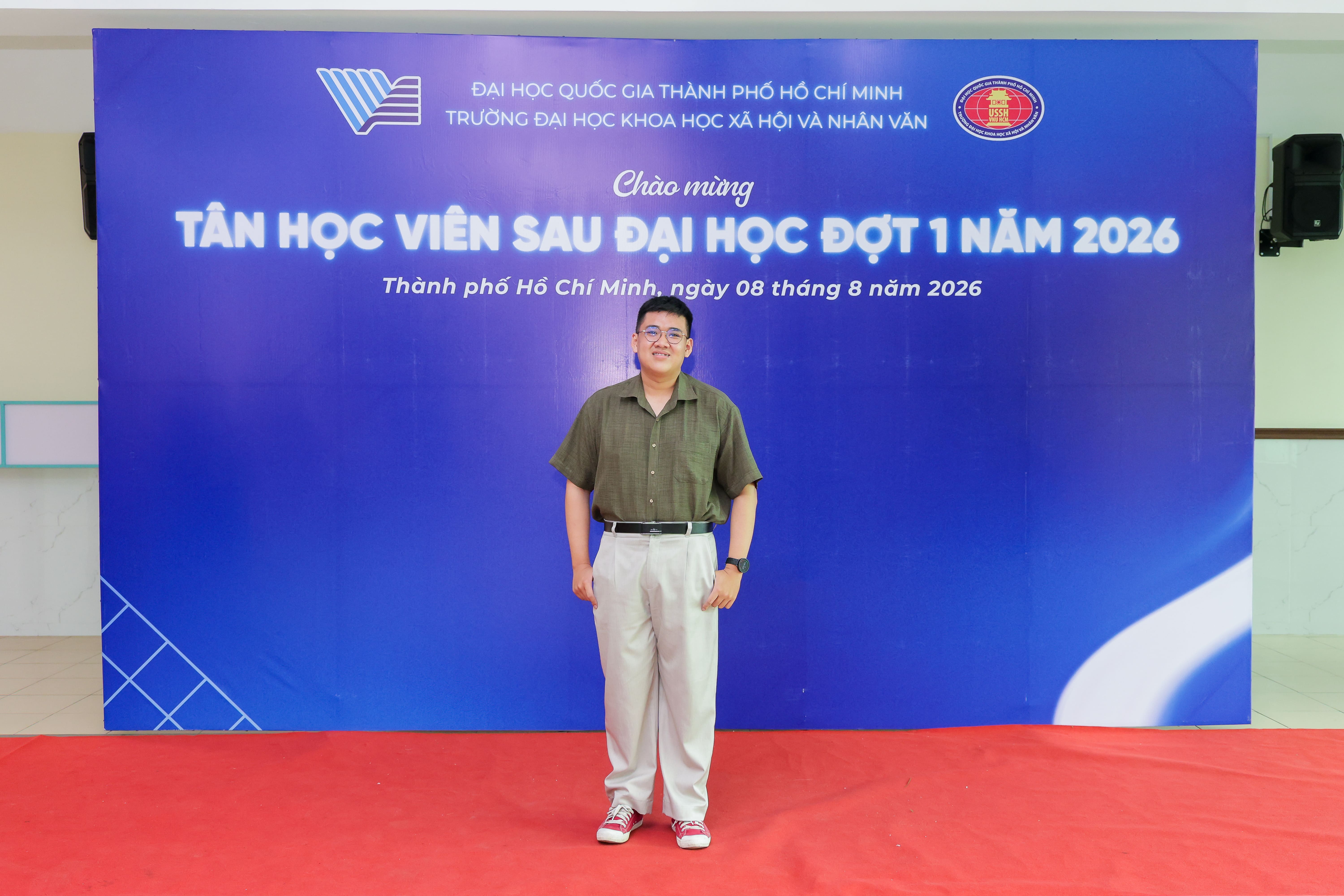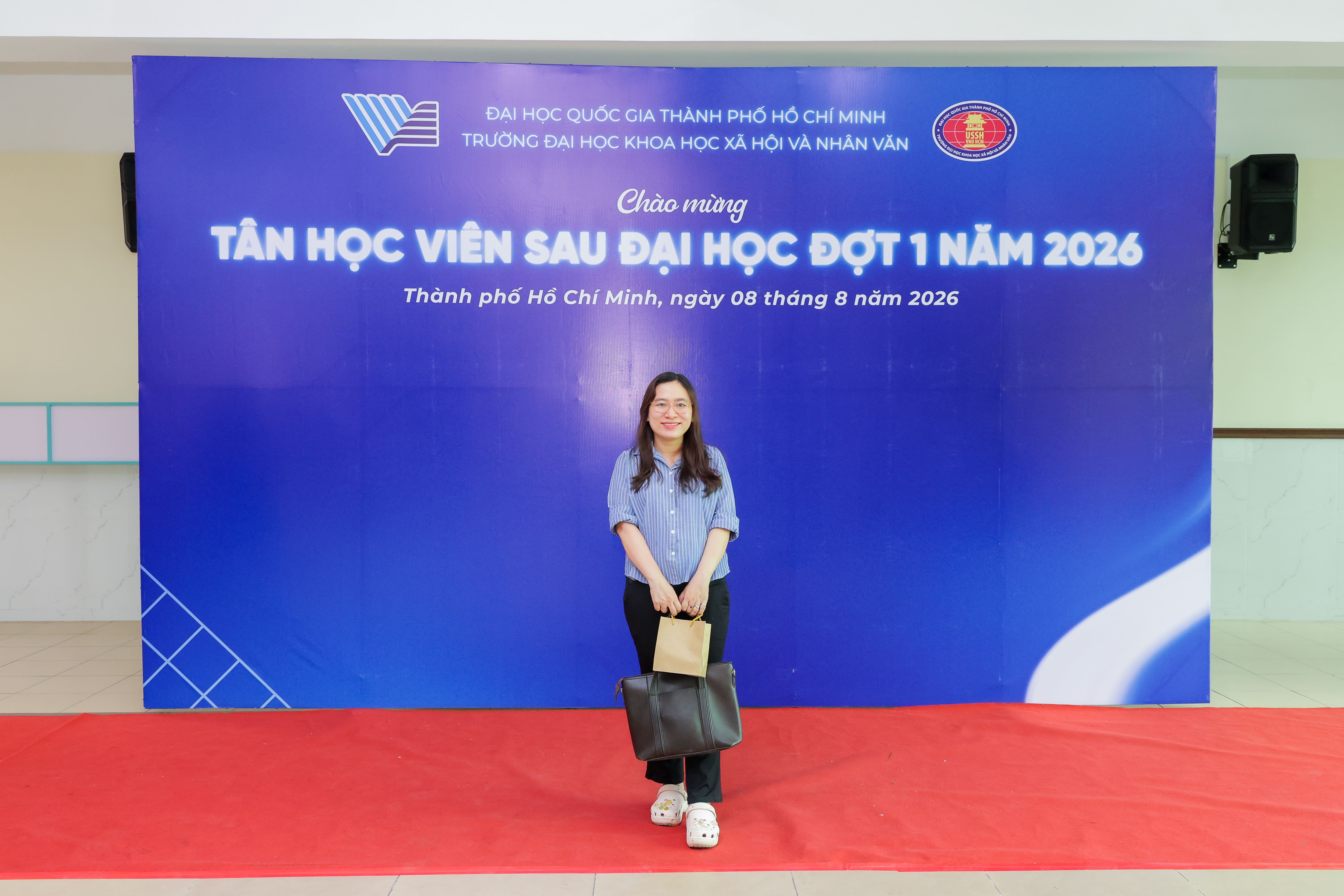
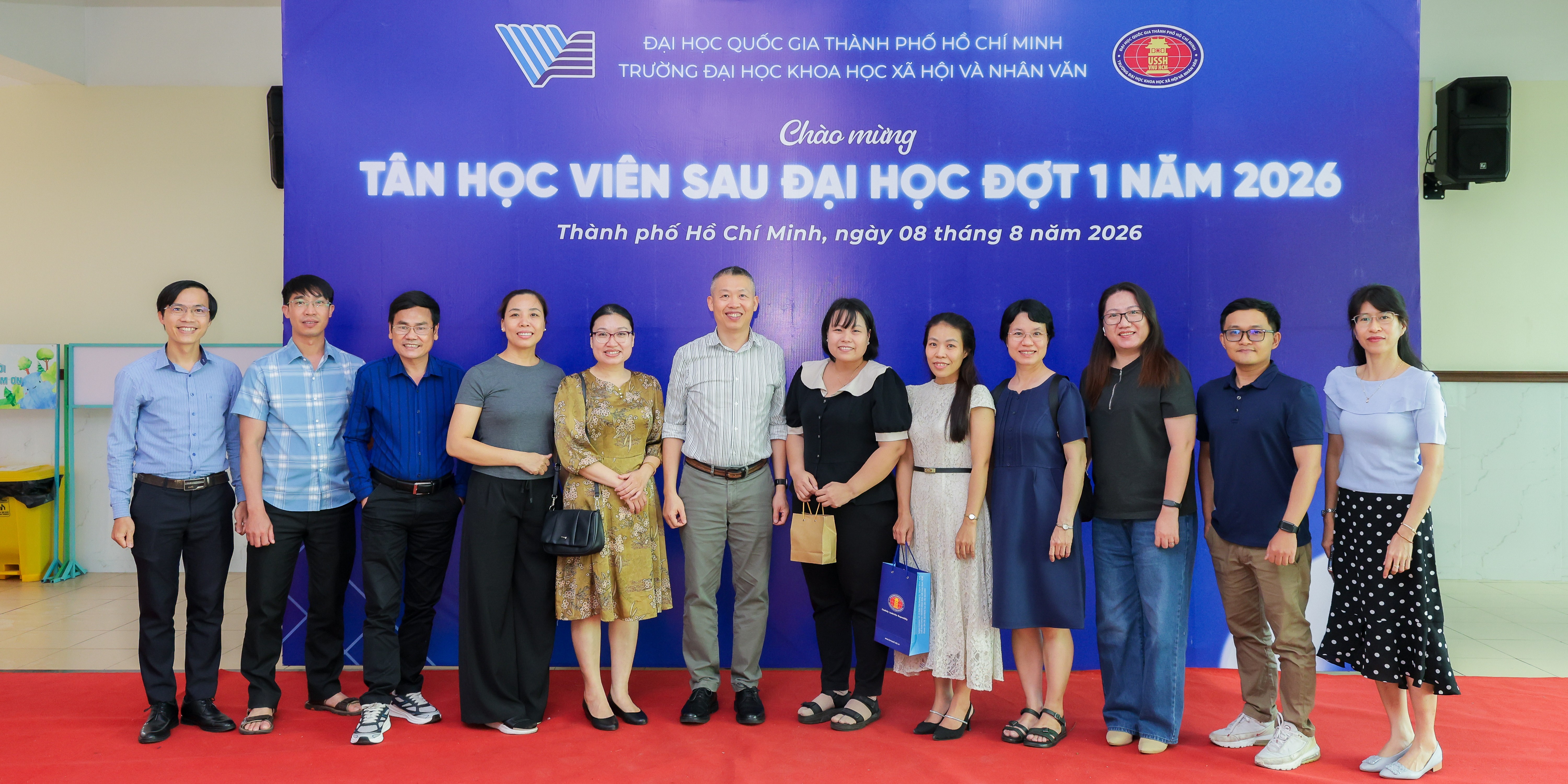
On August 8, the University of Social Sciences and Humanities, Viet Nam National University Ho Chi Minh City (USSH-VNUHCM) held the first 2026 Postgraduate Orientation Session for doctoral students. The program focused on training regulations, research requirements, scientific publication, funding support policies, student affairs, and support channels at the University.
Attending the event were Dr. Le Hoang Dung, Vice President of USSH-VNUHCM; representatives of the leadership of the University's divisions, faculties, and affiliated units; and the new doctoral students of the first intake of 2026.
In his opening remarks, Dr. Le Hoang Dung congratulated more than 100 new doctoral students who were embarking on their learning journey at the University. He hoped they would continue to build on their professional strengths while expanding connections with global academic communities.
He also emphasized the role of doctoral students in bringing Vietnamese knowledge to the global academic community. As a result, they need to proactively develop their research and foreign language capacity to increase the reach of their scientific work. “Besides studying and researching, we should also introduce Vietnam and our strengths and expertise to the world,” he said.
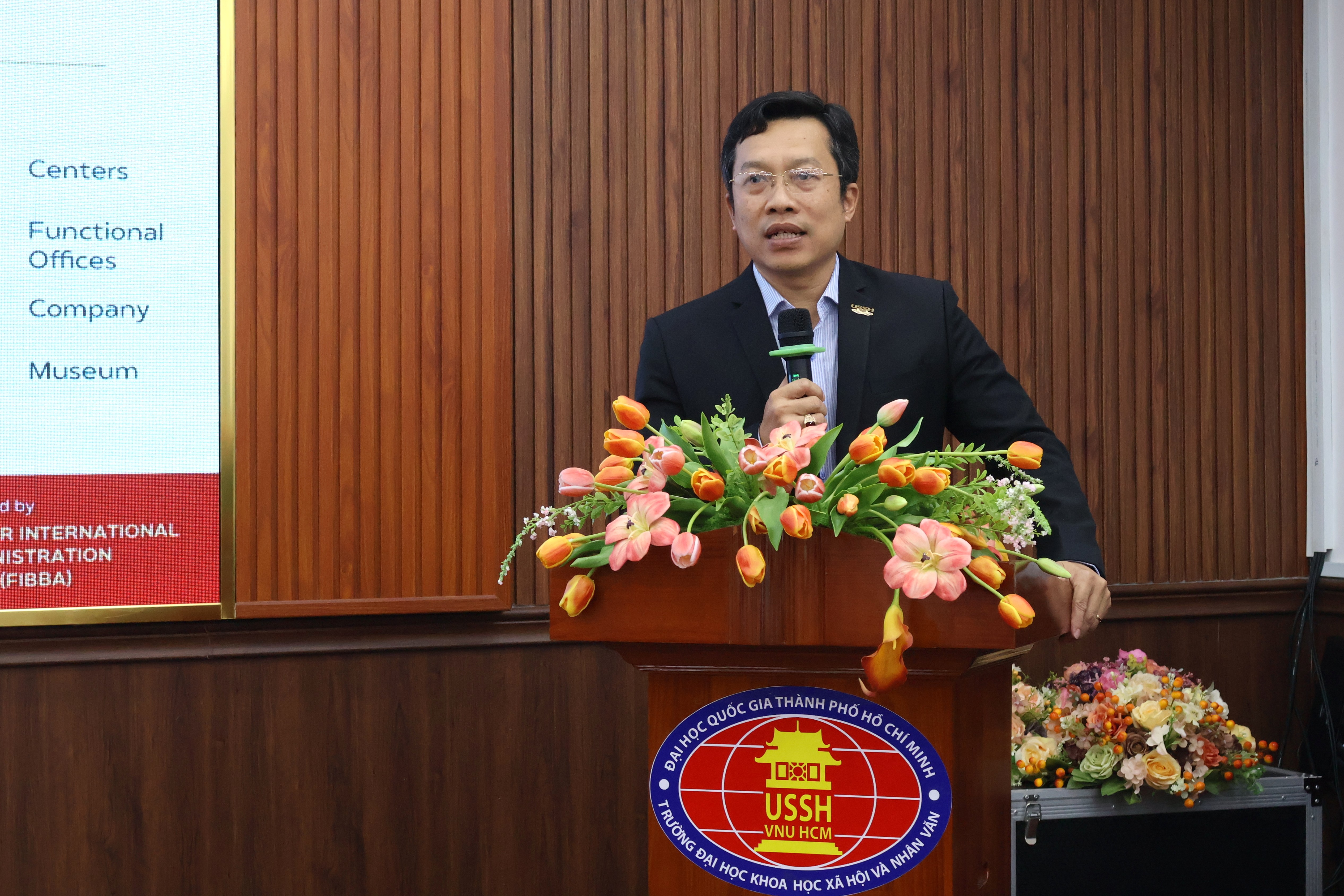
Next, M.A. Pham Truong Tho introduced the key requirements of doctoral training, from course registration and completing special topics to preparing and defending the dissertation. Accordingly, doctoral students must complete at least 90 credits and meet research and publication requirements before they can be eligible for a dissertation defense. On scientific publication, a student’s total publication points must reach at least 2, and the works must meet the regulations on authorship role and affiliation information.
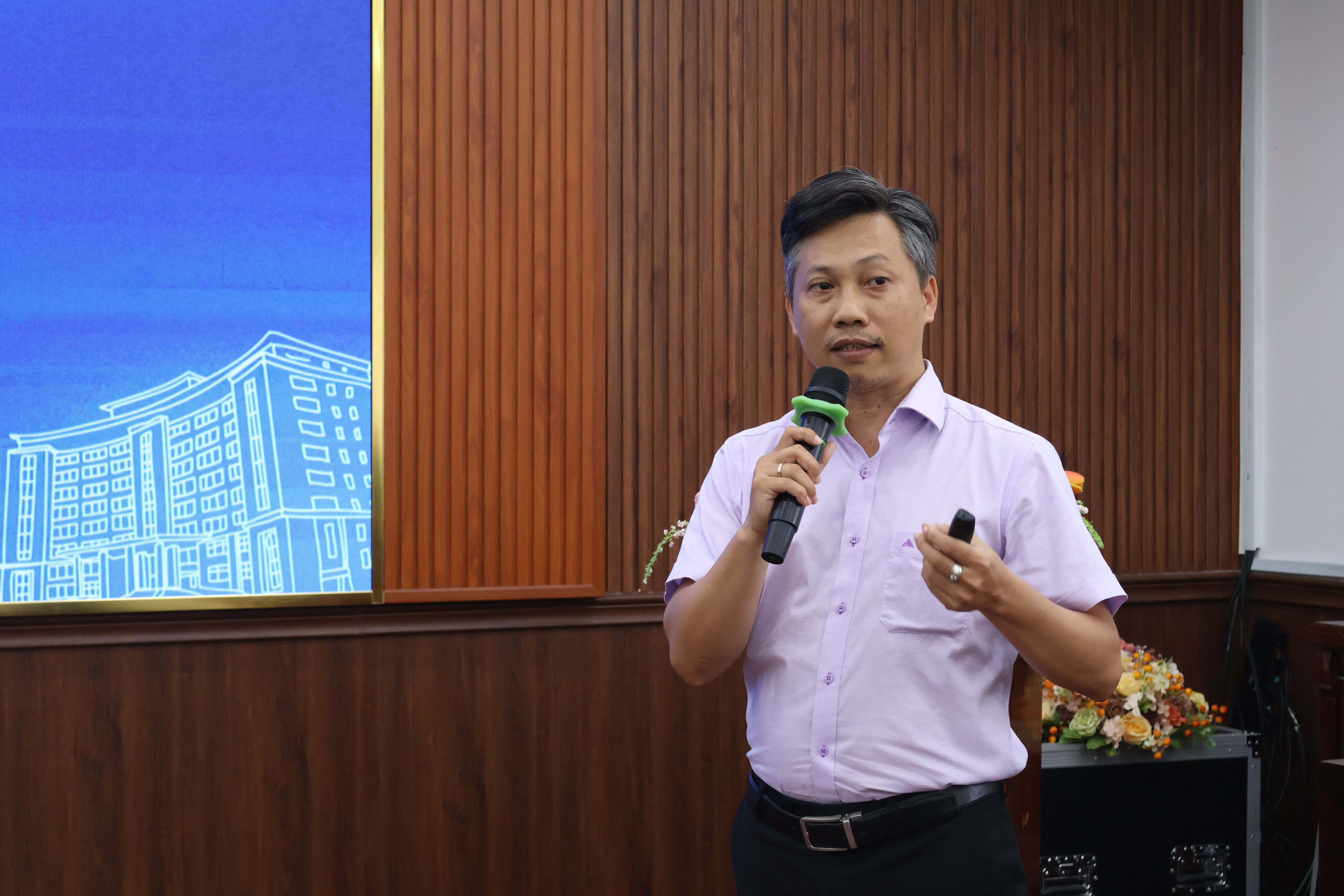
The program also introduced funding support policies for doctoral students. The University has a mechanism to support 50% to 100% of tuition fees, with five slots available in this round. Students can also take part in teaching assistant and research assistant roles or in science and technology tasks suited to their expertise.
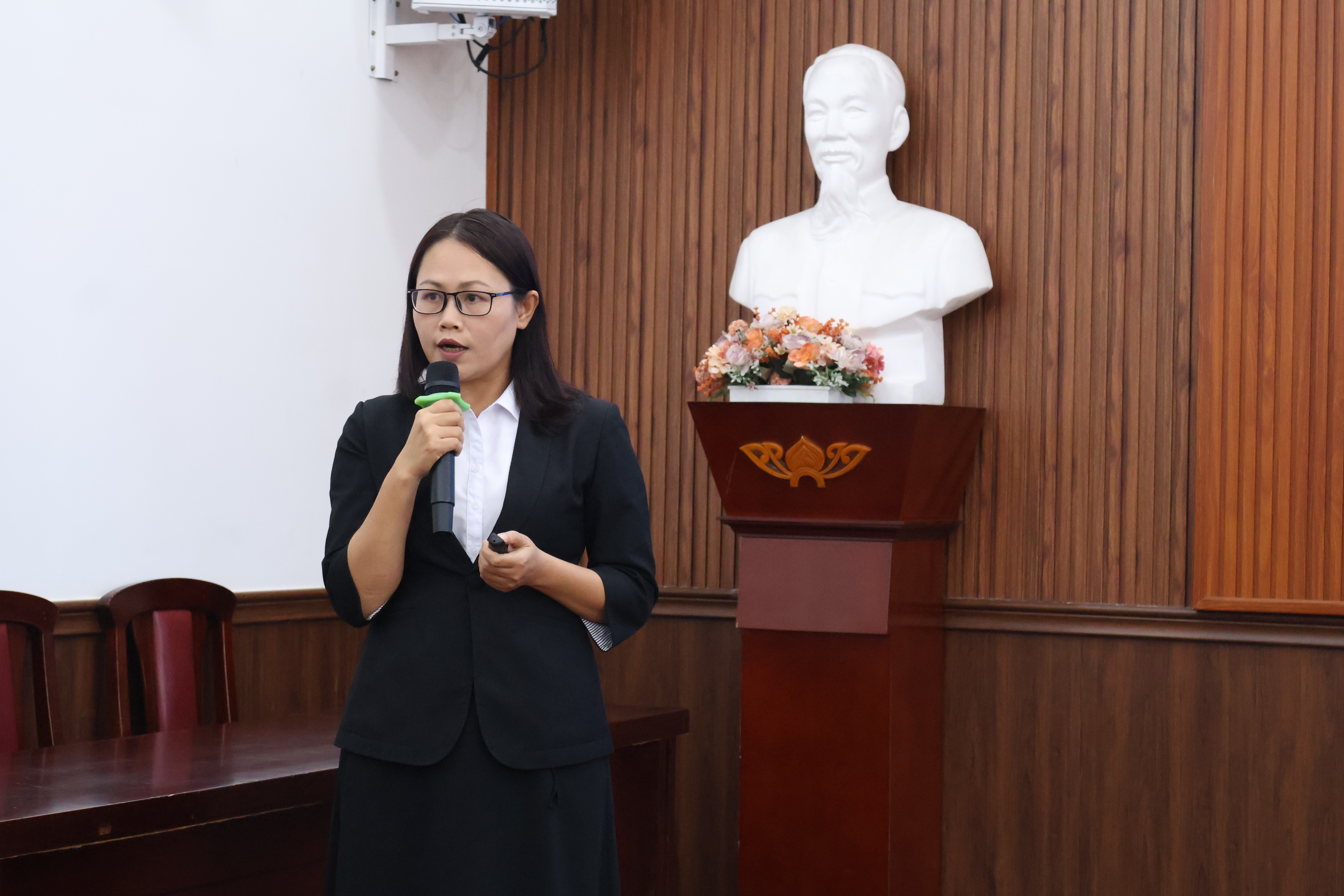
On research and publication, Dr. Hoang Ngoc Minh Chau, Deputy Director of the Division of External Relations and Research Management, introduced the role of the Research Ethics Council in ensuring quality and scientific integrity. “The Research Ethics Council plays a very important role in improving the quality of scientific research at the University,” she emphasized. Doctoral students must complete the Council’s confirmation procedures for works that require it before publication.
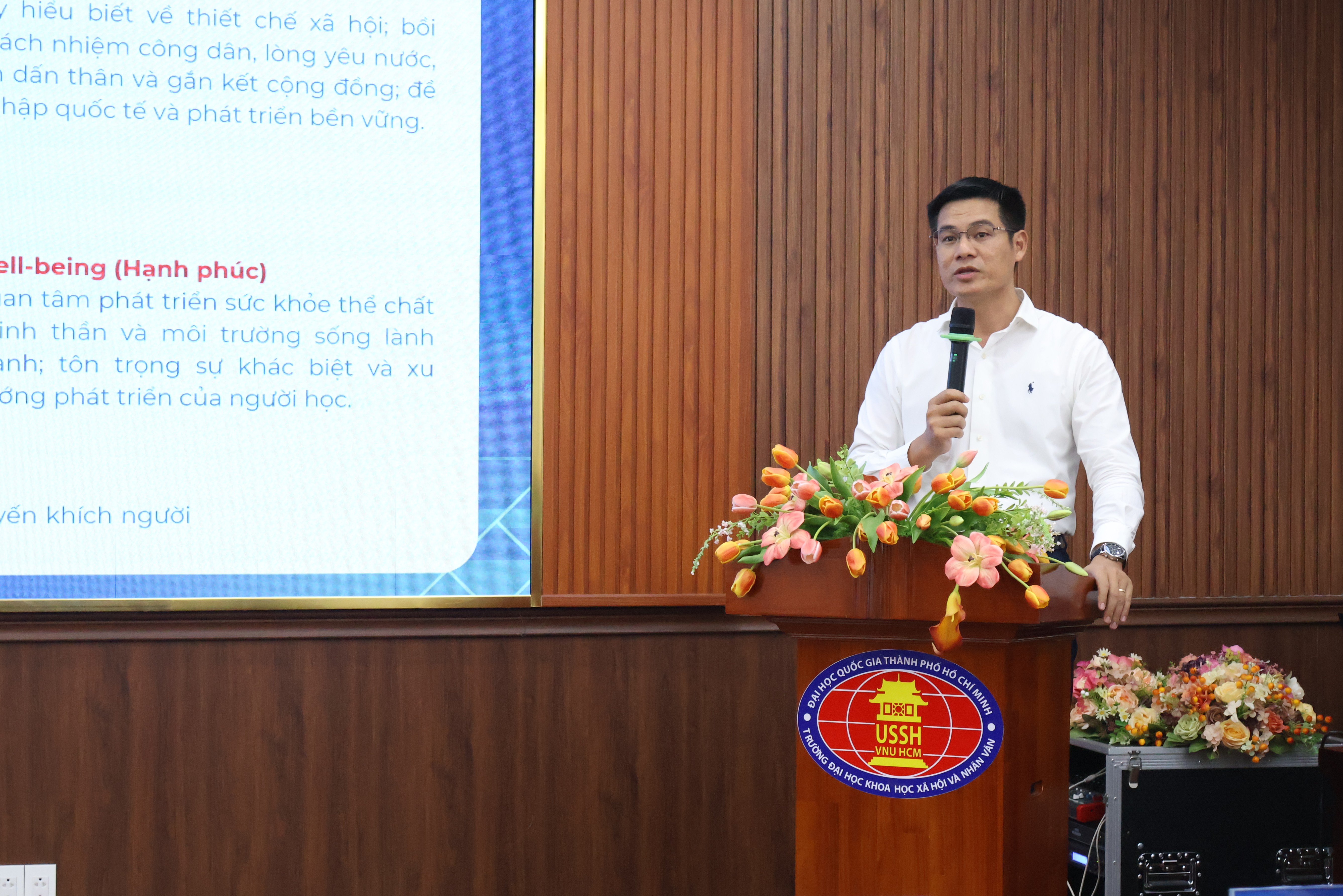
Then, M.A. Tran Nam, Director of the Division of Student Affairs, shared information on student affairs. He advised doctoral students to proactively consult postgraduate academic affairs staff, lecturers, and functional divisions whenever problems arise during their studies. “Doctoral students should regularly consult and give feedback to lecturers, postgraduate academic affairs staff, and divisions to get timely support,” he emphasized.
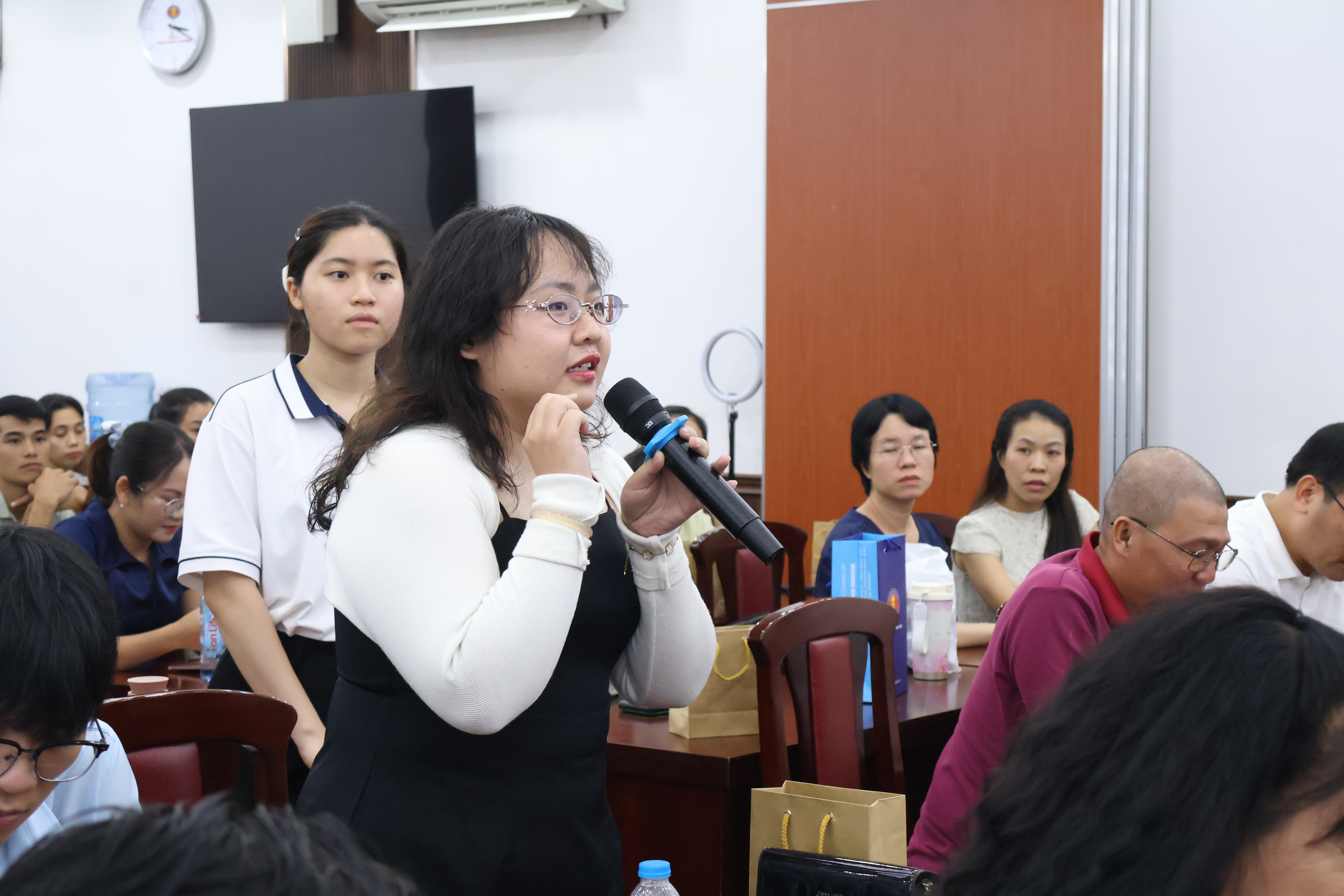
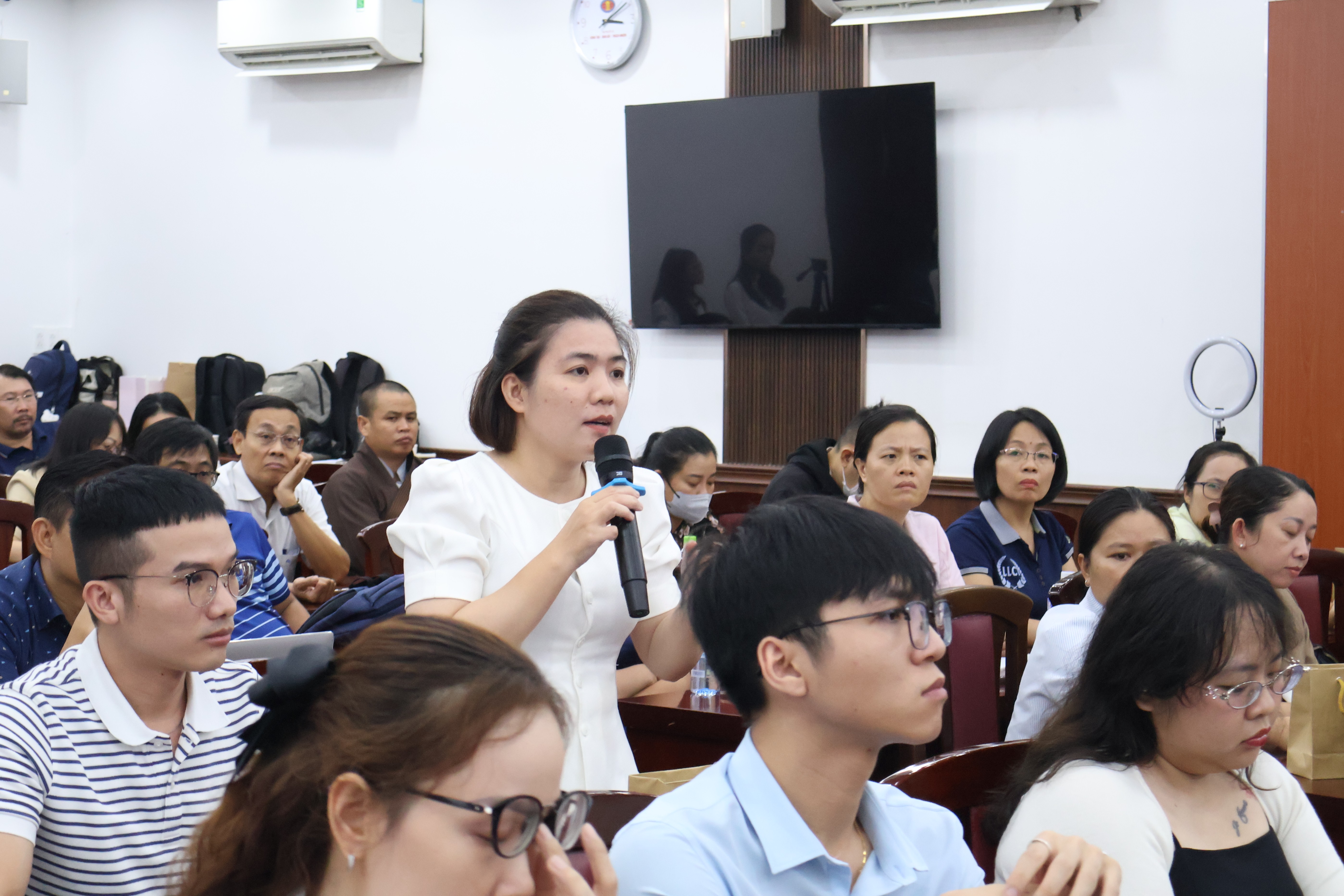
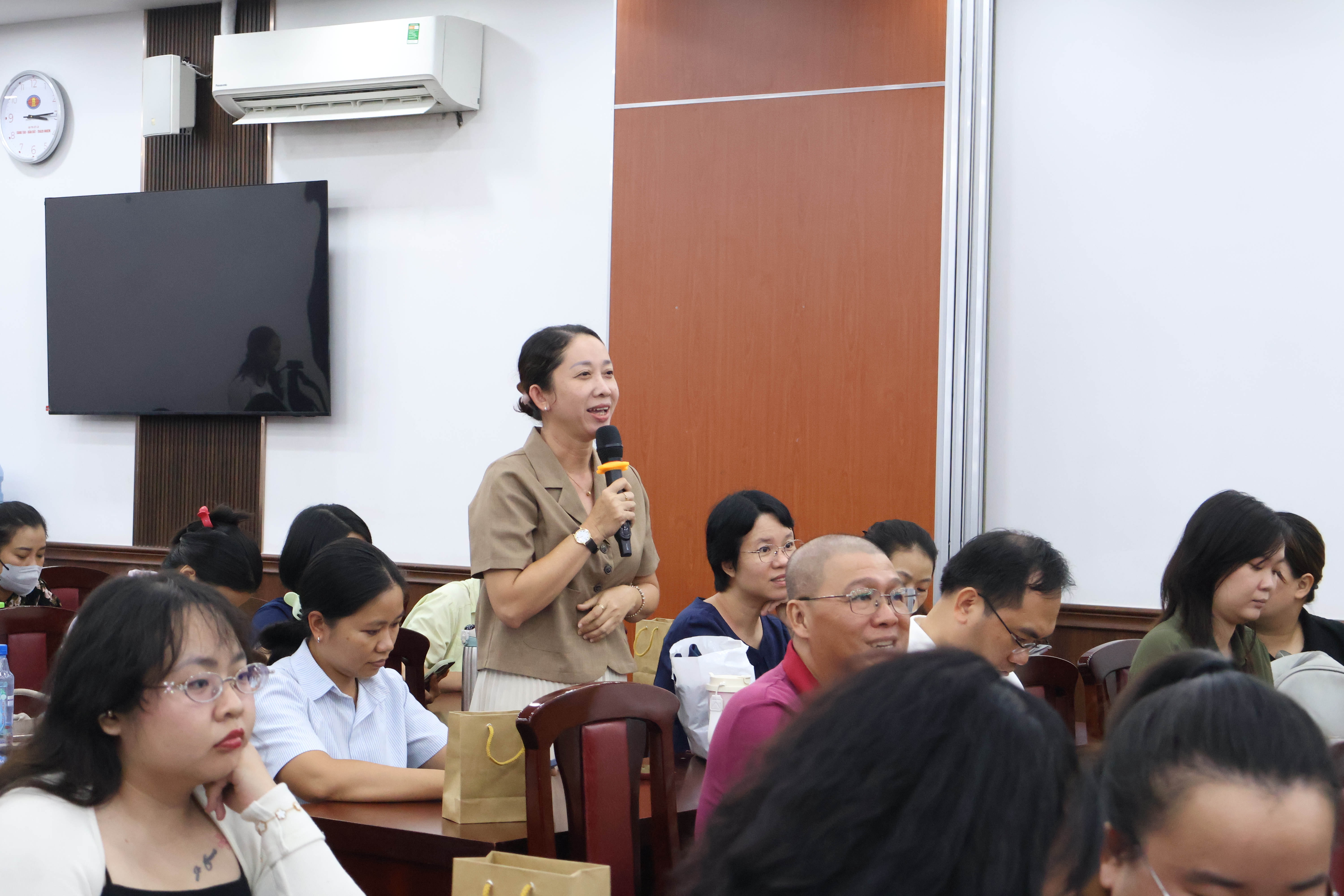
To close the program, doctoral students talked directly with representatives of the units about training regulations, research, scientific publication, and support policies. Questions on training progress, dissertation defense requirements, and study procedures were answered, giving students more information to build their research plans proactively.
Through the session, doctoral students gained a clearer understanding of the training roadmap and the requirements for research and publication, and learned about the resources available to support their study and research at the University. This lays the groundwork for the new doctoral students to prepare for their academic journey ahead.