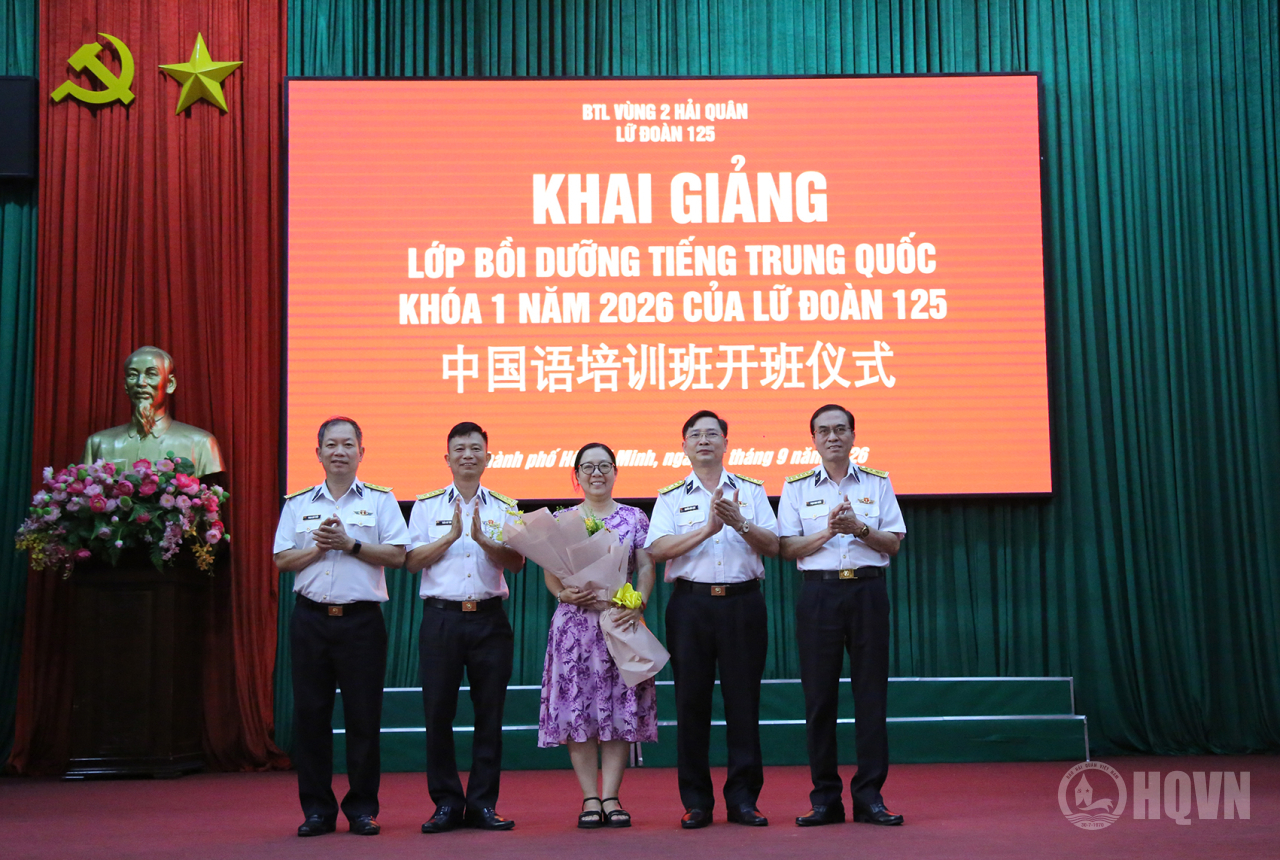
To strengthen personnel's capacity to perform professional duties and support defense diplomacy, Naval Brigade 125 under Naval Region 2, in cooperation with the USSH-VNUHCM, officially opened its first Chinese language training course on September 11 in Ho Chi Minh City.
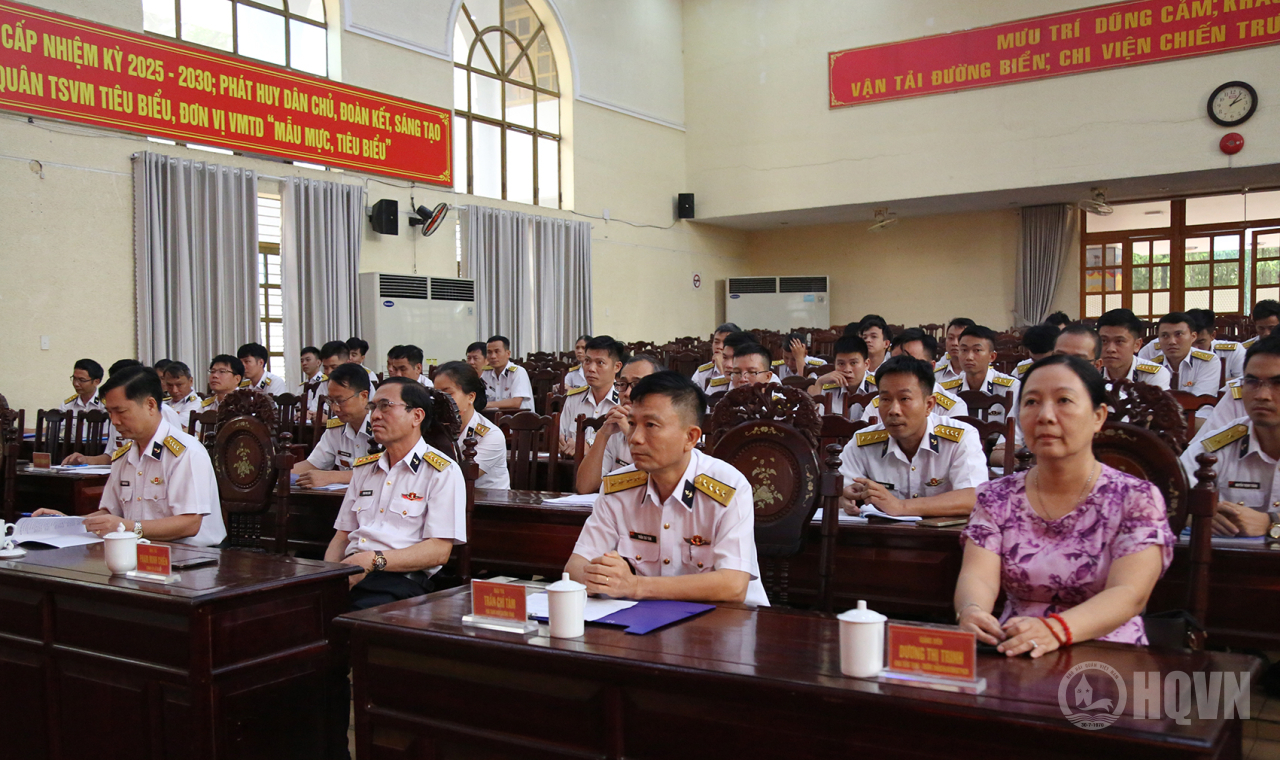
The opening ceremony was attended by Senior Colonel Tran Chi Tam, Deputy Chief of Staff of Naval Region 2; Senior Colonel Nguyen Dinh Lich, Commander of Naval Brigade 125; Senior Colonel Pham Minh Chien, Political Commissar of the Brigade; Dr. Duong Thi Trinh, lecturer at the Faculty of Chinese Linguistics and Literature, USSH-VNUHCM; and 60 trainees.
The course is one of the activities under the cooperation program between Naval Brigade 125 and USSH-VNUHCM established earlier this year.
The six-month course is taught directly by lecturers from the Faculty of Chinese Linguistics and Literature. The curriculum covers basic vocabulary and communication skills, as well as specialized Chinese language for military affairs, naval operations, maritime affairs and defense diplomacy. Particular emphasis is placed on listening and speaking skills for military activities both on land and at sea.
The course is designed to equip military personnel with language skills for researching documents, communicating and exchanging professional knowledge with partners, thereby supporting their professional duties and defense diplomacy in the new context.
The participating officers and personnel expressed their enthusiasm and determination to develop their Chinese language skills, with the aim of applying their knowledge to professional duties and defense diplomacy activities.
Speaking at the ceremony, Senior Colonel Nguyen Dinh Lich noted that the course was established in response to practical requirements arising from the Brigade's operations. Participation is both an honor and a responsibility for the officers and personnel enrolled in the course.
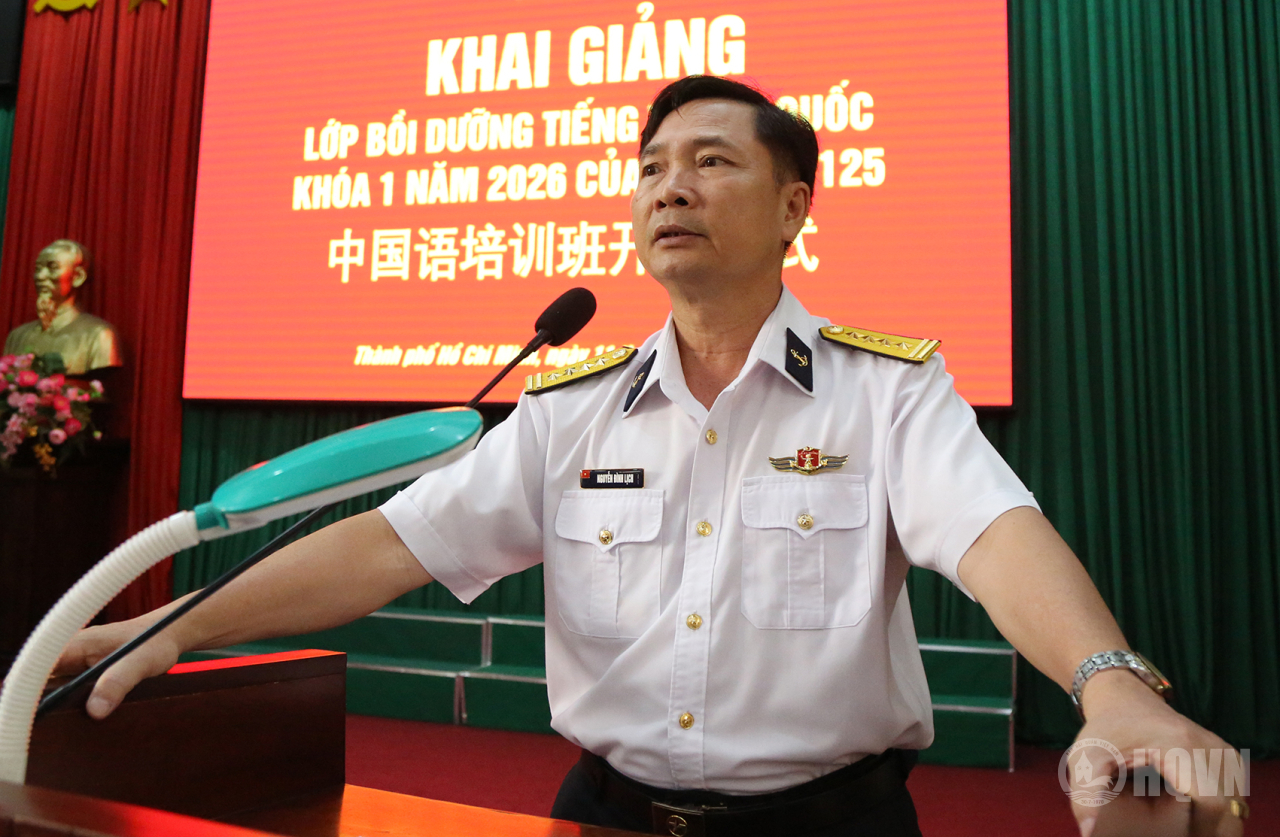
The Brigade Commander called on trainees to maintain a strong sense of responsibility and a positive attitude toward learning, comply with course regulations, and actively engage in self-study and practice. He also emphasized connecting Chinese language learning with practical duties, particularly communication, research, professional exchanges and assigned tasks.