National scientific conference "US force aggregation in the 2017-2024 period and its impacts on the world"
On June 12, 2026, the Institute for European and American Studies in collaboration with the Faculty of History and International Relations, University of Social Sciences and Humanities, Viet Nam National University Ho Chi Minh City successfully organized a national scientific conference themed: “US force aggregation in the 2017-2024 period and its impacts on the world”. The conference was attended by representatives of the University of Social Sciences and Humanities, Viet Nam National University Ho Chi Minh City, Assoc. Prof. Dr. Luu Van Quyet - Vice President, University of Social Sciences and Humanities, Viet Nam National University Ho Chi Minh City, Assoc. Prof. Dr. Nguyen Chien Thang, Director of the Institute for European and American Studies - co-chair of the conference, Assoc. Prof. Dr. Nguyen Xuan Trung - Institute for South Asian, West Asian and African Studies - Head of the project KX.06.07/21-30.
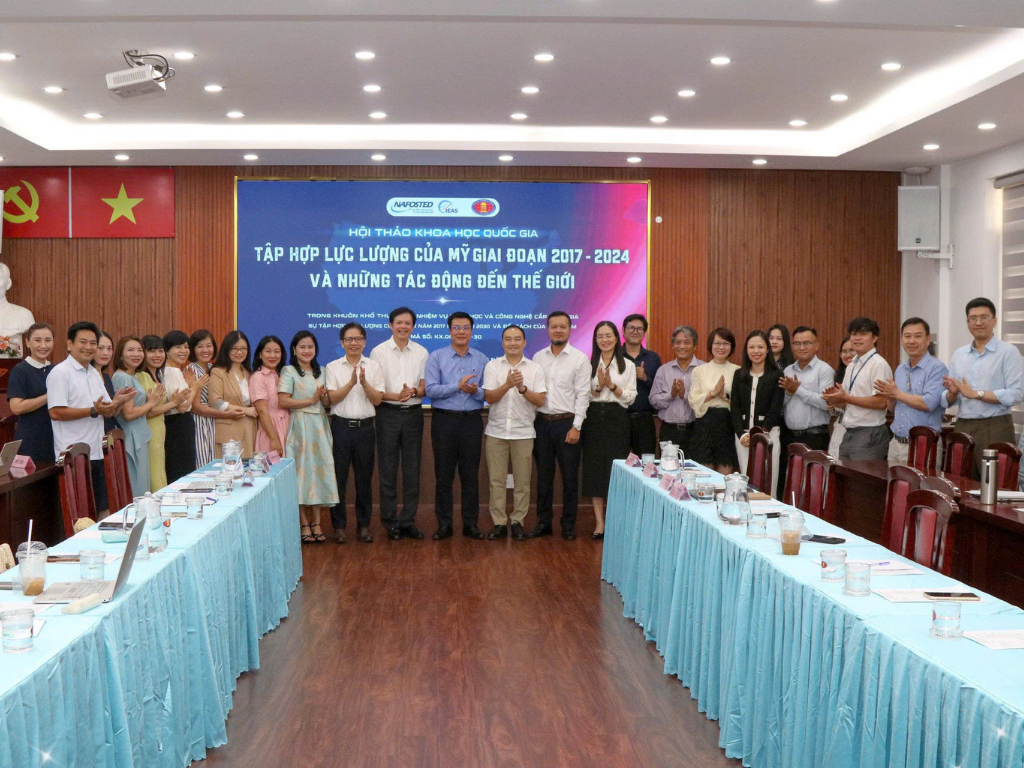
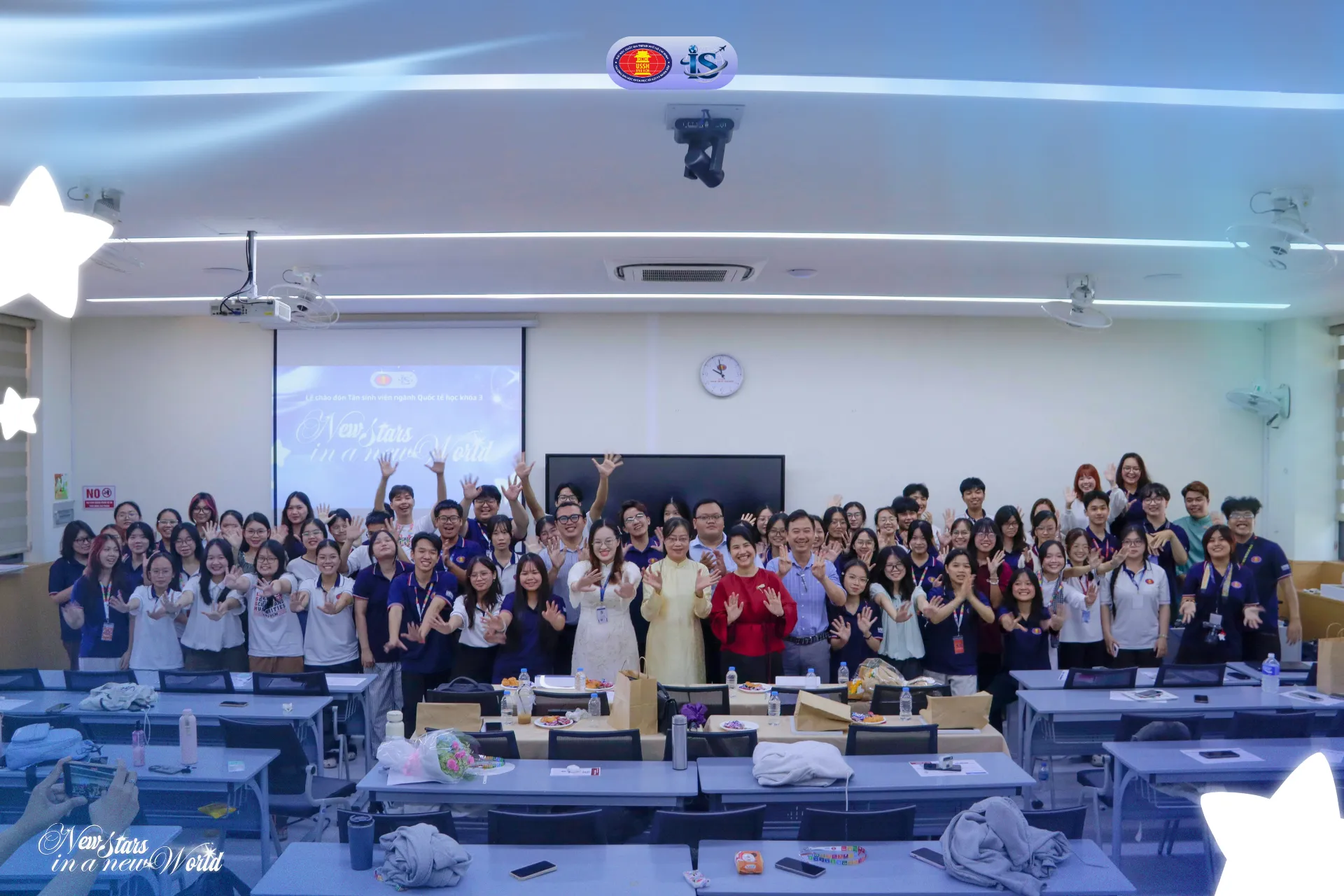
Photo: Lecturers of the Faculty of History and International Relations taking a souvenir photo with the presenters.
In his welcoming speech, Assoc. Prof. Dr. Luu Van Quyet affirmed: “Researching this topic not only helps us better understand current developments but also contributes to identifying trends that are shaping the regional and international environment in the coming years”. Assoc. Prof. Dr. Luu Van Quyet also emphasized that as a leading training and research institution in the field of social sciences and humanities, the University of Social Sciences and Humanities, Viet Nam National University Ho Chi Minh City always attaches importance to building open, serious, and dialogical academic spaces: “We especially appreciate the coordination between the Faculty of History and International Relations and the Institute for European and American Studies, as well as the participation of scientists, experts, and lecturers in today's conference”.
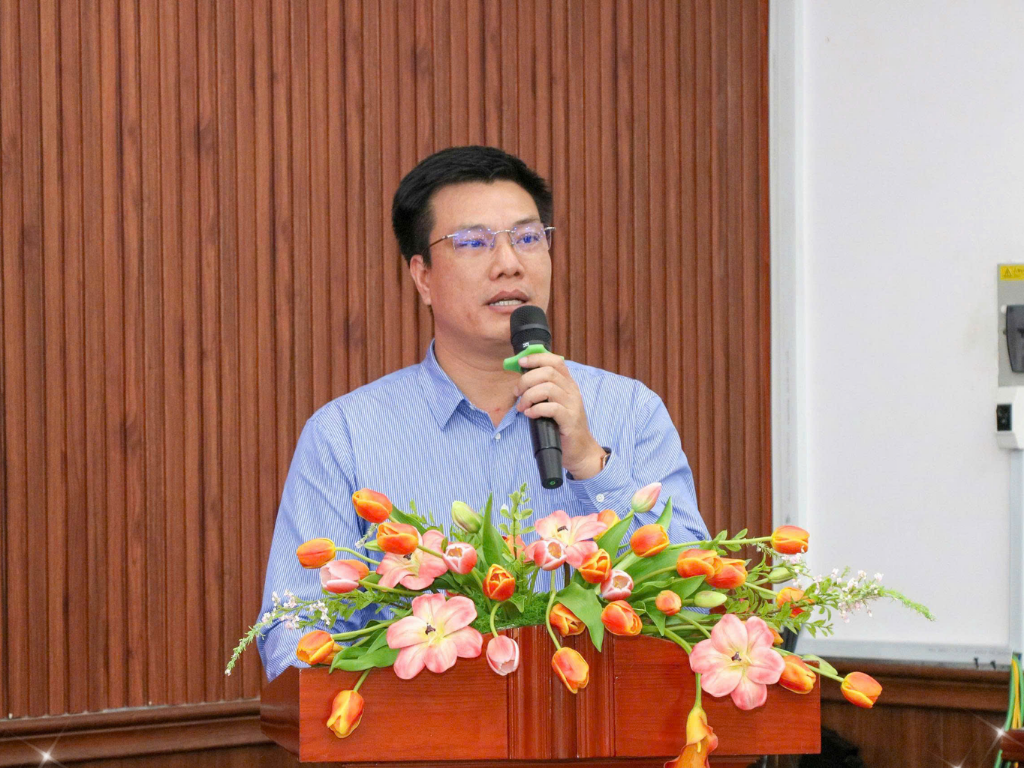
Photo: Assoc. Prof. Dr. Luu Van Quyet - Vice President of the University of Social Sciences and Humanities, Viet Nam National University Ho Chi Minh City.
The conference was organized into two sessions with six papers presented by speakers. The first session focused on analyzing the basis and practice of US force aggregation in the 2017-2024 period in the Indo-Pacific region. The second session delved into clarifying the content of US force aggregation across different sectors and partners during the 2017-2024 period.
Opening the first session, Dr. Nguyen Tang Nghi presented his research titled “Great power competition and alliance restructuring: A realist perspective on the US Indo-Pacific Strategy (2017-2021)”. Accordingly, from John Mearsheimer's realist approach combined with Stephen Walt's balance of power theory, Dr. Nguyen Tang Nghi argued that the Indo-Pacific region is a critical area for the US to strengthen its presence and affirm its role. Besides, strategic competition between the US and China is a significant driving force for the US to increase its presence and restructure its network of allies in the Indo-Pacific region. Whether under the administration of Joe Biden, Barack Obama, or Donald Trump, the US has always viewed China as “a fierce and serious competitor” and a top “strategic competitor”. Based on that assessment, the US is gradually expanding forms of force aggregation not only in the security sector but also on economic, trade, and technological fronts. Emphasizing this trend, Dr. Nguyen Tang Nghi affirmed: “Not only regarding economic or security issues, but the US has attempted to aggregate a force in the trade war, the semiconductor war” against China. According to Dr. Nguyen Tang Nghi, this shows that US-China competition today has moved beyond the traditional geopolitical scope to spill over into high-tech sectors and strategic supply chains, thereby becoming one of the important factors shaping the Indo-Pacific landscape in recent years.
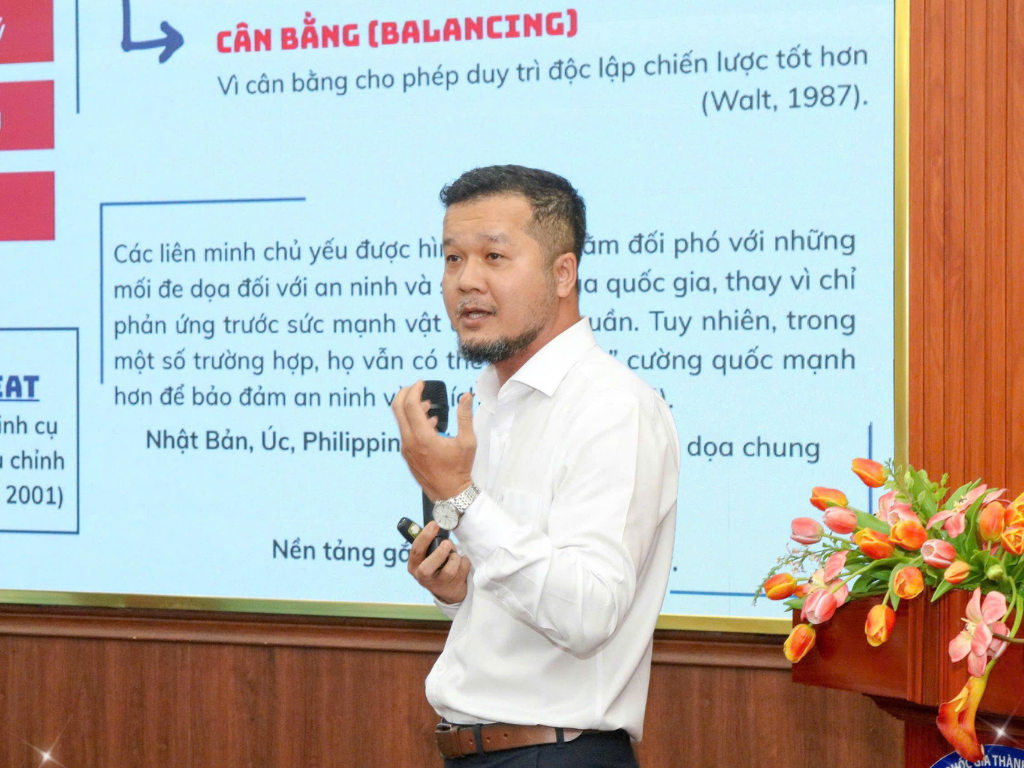
Photo: Dr. Nguyen Tang Nghi - Head of the Faculty of History and International Relations, University of Social Sciences and Humanities, Viet Nam National University Ho Chi Minh City.
Following the analyses of US strategic motivations, Dr. Pham Thi Yen from Sai Gon University focused on clarifying the process of restructuring the alliance network in the region through the paper “Restructuring the Indo-Pacific alliance network: Comparing US force aggregation strategies under Donald Trump 1.0 and Joe Biden”. The report focused on comparing how the two administrations built and strengthened allies and partners in the region. Extending these analyses, Assoc. Prof. Dr. Tran Nam Tien approached the issue from a more holistic perspective through the paper “US force aggregation in the Indo-Pacific from 2017 to 2025: A comparative perspective between the Donald Trump 1.0 and Joe Biden administrations”. The report not only compared the force aggregation methods of the two administrations but also evaluated the impacts of these strategic adjustments on the security architecture and balance of power in the Indo-Pacific region.
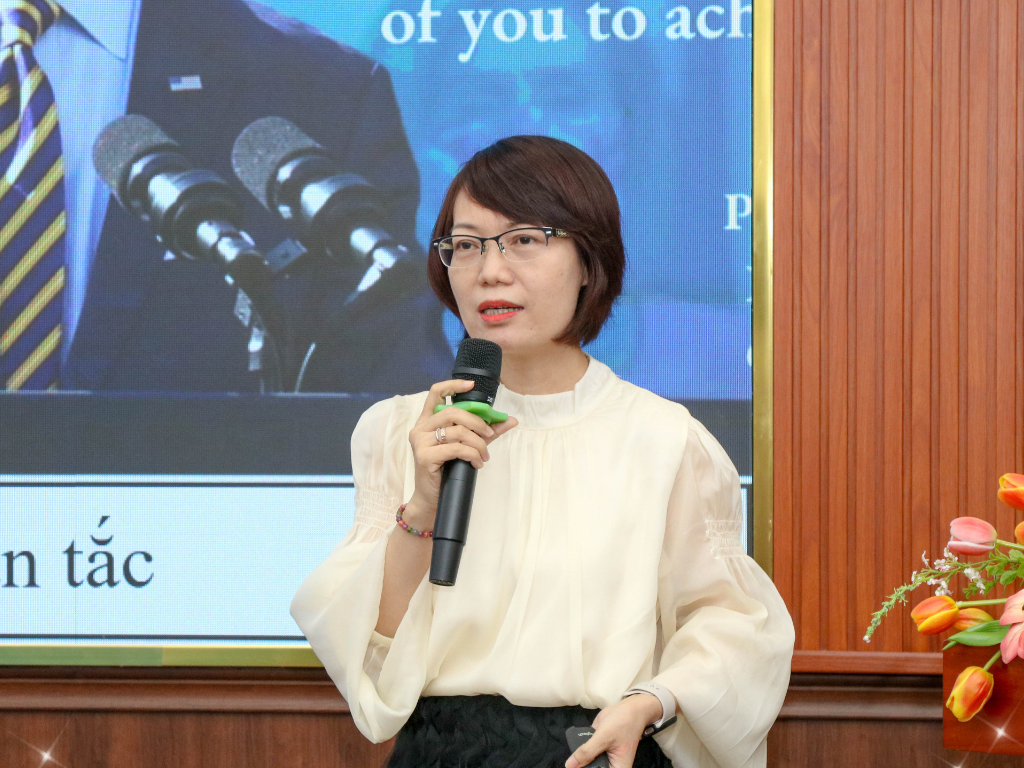
Photo: Dr. Pham Thi Yen - Sai Gon University.
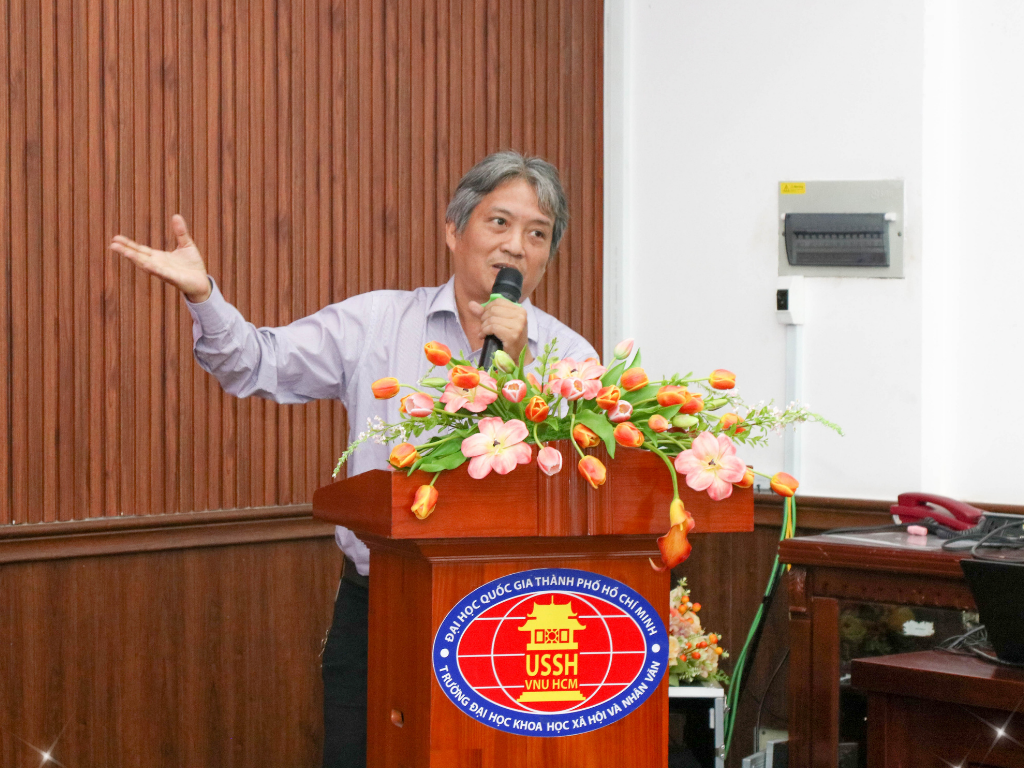
Photo: Assoc. Prof. Dr. Tran Nam Tien - Lecturer at the Faculty of History and International Relations, University of Social Sciences and Humanities, Viet Nam National University Ho Chi Minh City.
Continuing the analysis of US force aggregation strategies in the Indo-Pacific region, Dr. Nguyen Minh Man from Ho Chi Minh City University of Education presented the paper “Maritime security cooperation between the US and QUAD members in the 2017-2024 period”. The report focused on clarifying the process of strengthening cooperation between the US, Japan, India, and Australia in areas of maritime security, from strategic dialogues and joint military exercises to coordination in ensuring freedom of navigation and supply chain security. According to Dr. Nguyen Minh Man, the development of the QUAD not only reflects the US's efforts to strengthen partners in the region but also shows an increasingly close link between nations with shared strategic interests in the face of fluctuations in the regional security environment.
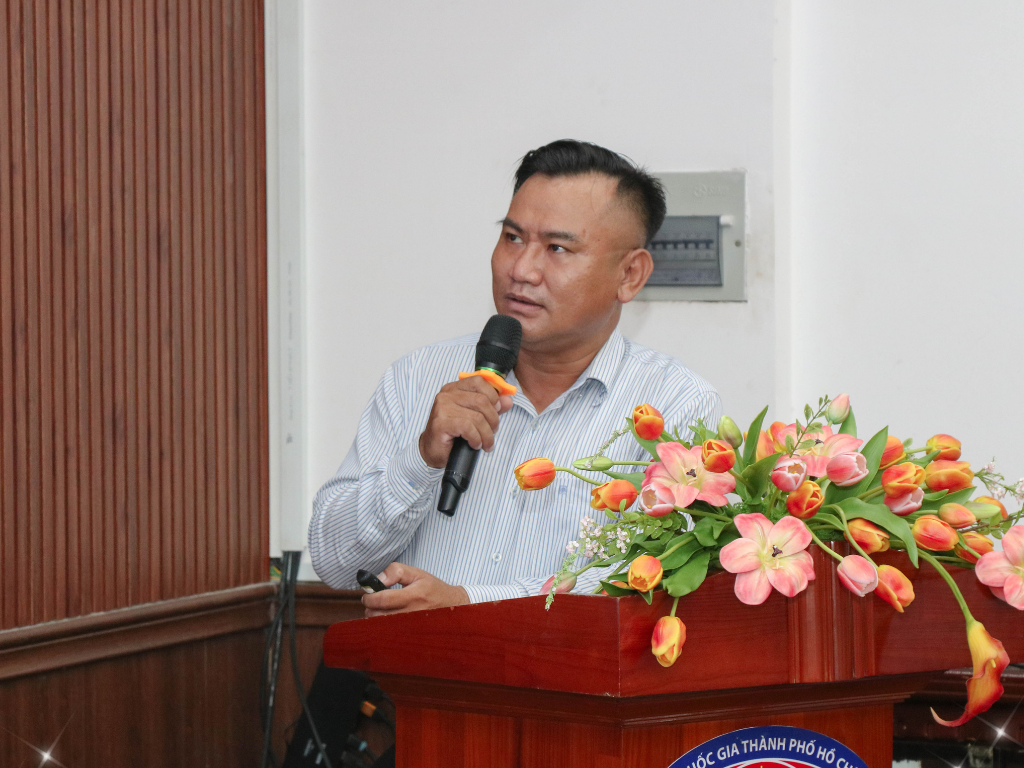
Photo: Dr. Nguyen Minh Man - Ho Chi Minh City University of Education.
Continuing in the second session, Dr. Nguyen Thi Hai Yen from the Institute for European and American Studies presented the topic “Force aggregation strategy in the high-tech and semiconductor sector under Joe Biden and implications for Vietnam”. In her paper, Dr. Nguyen Thi Hai Yen emphasized that the US, along with Japan, South Korea, and Taiwan, currently holds about 82% of the global semiconductor industry market share, thereby forming a technology linkage network that can be considered a “defensive alliance”. Furthermore, the US has also introduced extreme production management principles that run counter to free-market principles. Concluding the second session, Dr. Kieu Thanh Nga (Institute for South Asian, West Asian and African Studies) presented a paper titled “From transactional partner to strategic alignment: Adjustments in the US force aggregation approach to India in the 2017-2024 period”.
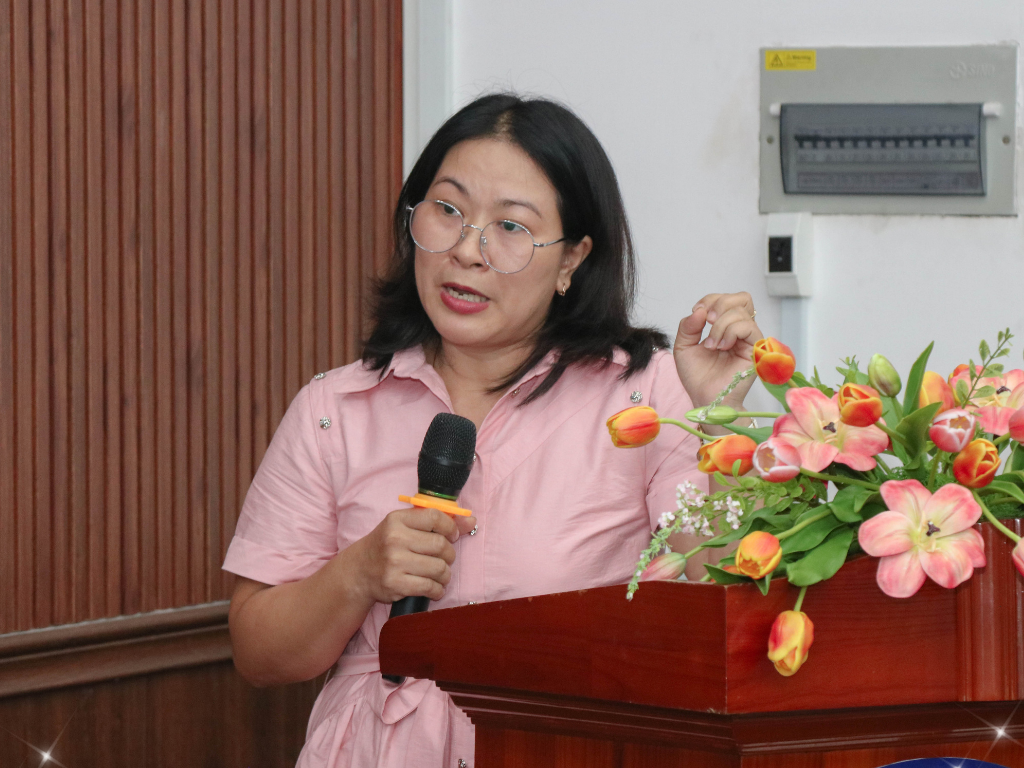
Photo: Dr. Nguyen Thi Hai Yen - Institute for European and American Studies.
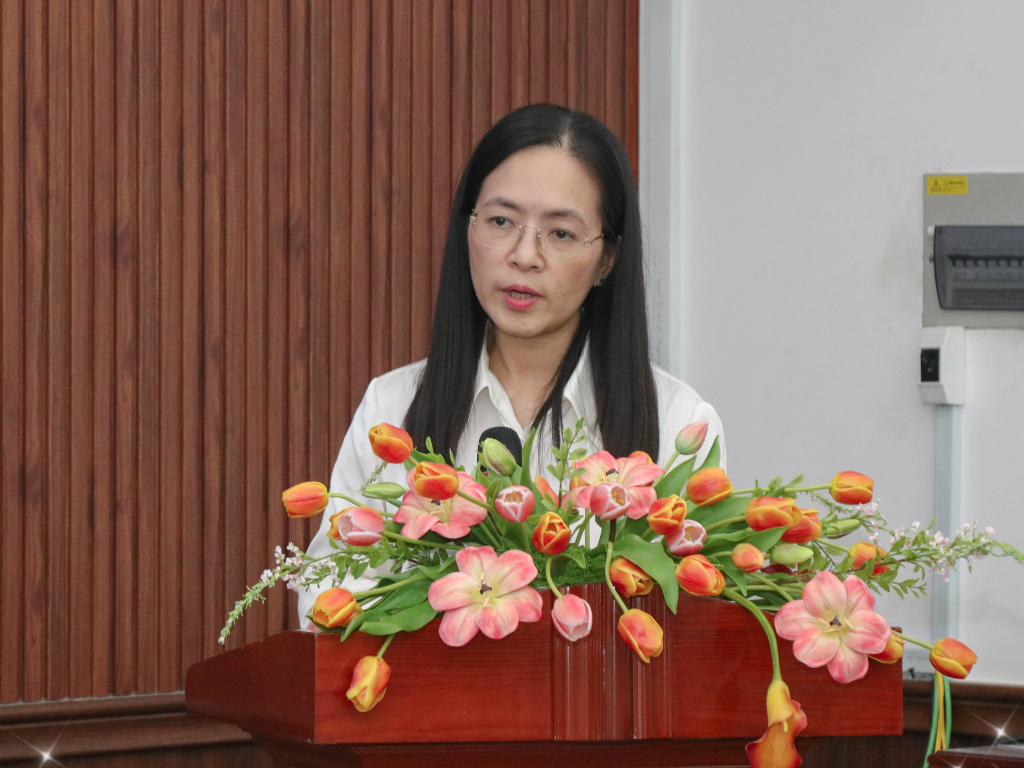
Photo: Dr. Kieu Thanh Nga - Institute for South Asian, West Asian and African Studies
With the papers presented, the National Scientific Conference “US force aggregation in the 2017-2024 period and its impacts on the world” has contributed to clarifying adjustments in US foreign policy and force aggregation methods under the two administrations of Donald Trump and Joe Biden. From perspectives on alliances, security, technology, and strategic partnerships, the reports have deeply analyzed the impacts of this strategy on global political, economic, and security landscapes in the context of increasing competition between great powers. The academic exchanges at the conference contribute to supplementing research foundations on international relations and support the assessment of development trends in the world order in the coming time.
The National Scientific Conference "US force aggregation in the 2017-2024 period and its impacts on the world" consists of 2 sessions: Session 1: Content on the Basis and practice of US force aggregation in the 2017-2024 period, chaired by Assoc. Prof. Dr. Tran Nam Tien and Assoc. Prof. Dr. Nguyen Xuan Trung. Including the papers:
Session 2: US force aggregation across different sectors and partners, chaired by Dr. Nguyen Tang Nghi and Assoc. Prof. Dr. Nguyen Xuan Trung. Including the papers:
|