Solutions to convey human values into OCOP products
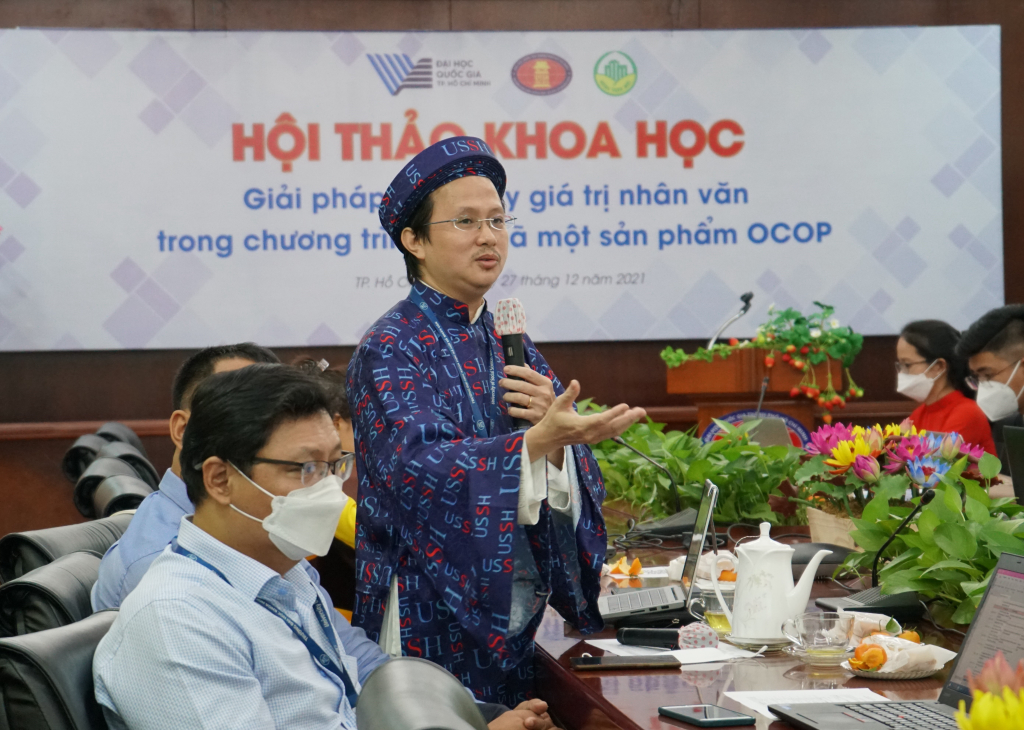
On December 27, 2021, the Central Coordination Office for the New Rural Development Program and the University of Social Sciences and Humanities, Vietnam National University Ho Chi Minh City (USSH, VNU-HCM) held the “Solutions to promote human values in the One commune, one product (OCOP) program” conference.
The "One commune one product" (OCOP) program is an important solution to develop products and services that have the advantage of their localities with the involvement of the private and cooperative sectors. On the topic of "New rural development" and OCOP, research groups and rapporteurs have put forward their works to assess the current situation and propose practical solutions to aid the production process of the South region ethnic minorities. In addition, the conference also discussed conveying human values into OCOP products that carry the pride of the locals, contributing to sustainable values and development needs of the Vietnam economy.
Implementing international OCOP experience to Vietnam
Dr. Pham Xuan Phu, Lecturer, An Giang University (AGU), referred to the Japanese OCOP experience in his research: “Farmers in Yamaguchi province, Japan, grow and polish their own rice, then do their own packaging and self-supply. What makes the products special is how the images of the province are distinctively printed on the packaging." After comparing the production process of OCOP products in Japan and Vietnam, he proposed some solutions based on the criteria: (1) Branding, (2) Quality, (3) Diversified distribution, (4) Short-term, medium-term and long-term planning for product value chain. Dr. Pham Xuan Phu suggested that there was a need for highly qualified officials responsible for oversight of rural development, as well as communications to bring OCOP products to consumers.
In her study "The application of history, culture and literary art in souvenir production", Ms. Dao Thi Diem Trang, MA, Lecturer, Van Lang University (VLU), categorized the products into three groups: tangible, intangible, and mixed. Her proposed solution is to embed history, culture and literary art into the product through the use of: (1) symbolism and (2) historical stories, folktales, and urban legends. For instance, in Canada, the image of maple leaves are fully utilized in promoting the cultural values of their homeland, namely the Canadian maple syrup products in maple leaf-shaped glass bottles that made a pleasant impression on consumers from across the globe.
“Korean also uses folktales about ginseng, mulberry, persimmon, and rice and infuses them into products, making them more attractive and increasing sales. They also make use of the legends of Yongduam Dragon Head Rock and Dokkaebi Mysterious Road to increase OCOP products’ outreach,” Ms. Trang added. Her presentation ends with some suggested solutions: (1) Researching and promoting local resources of history, culture, and literary art, (2) Establishing consumer trust and national pride, (3) Raising consumer awareness for product segments, (4) Giving out persuasive messages about supporting authentic products.
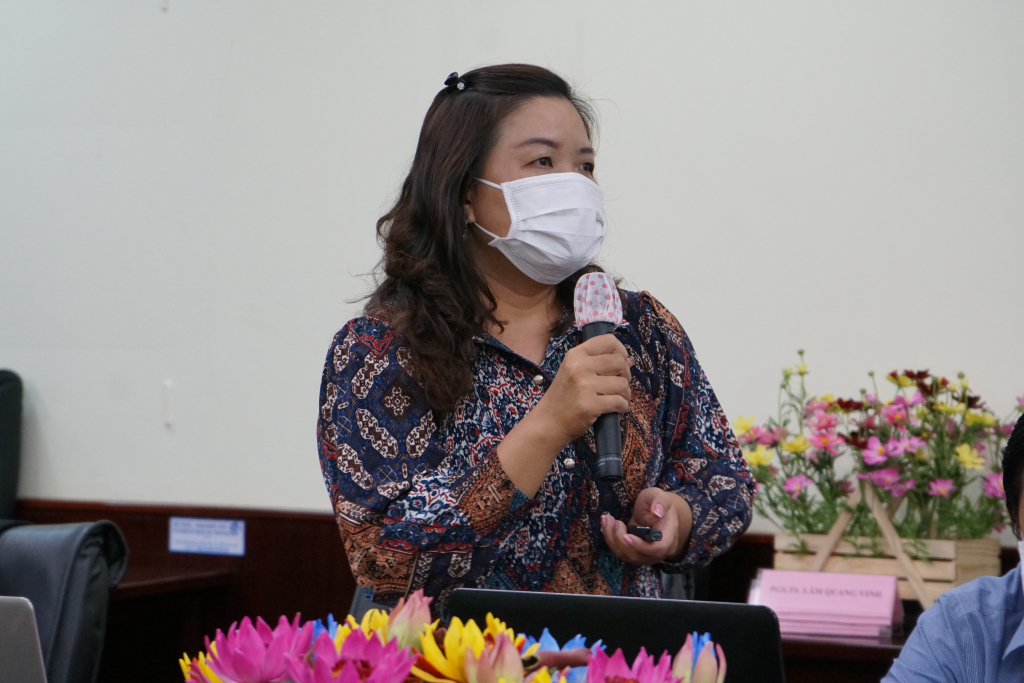
Ms. Dao Thi Diem Trang, M.A at the conference. Photo by: Hoang Yen
Bringing Vietnamese spiritual and cultural values into OCOP
Dr. Ngo Thi Thu Trang, Lecturer, USSH, VNU-HCM claimed that the program is currently oriented towards encouraging people from rural areas to revive their cultural values, thereby improving their incomes and the overall image of their homeland. The known OCOP product groups include: (1) Food, (2) Drink, (3) Herbal medicine, (4) Textile and apparel, (5) Decoration, furniture, and souvenir, (6) Community-based tourism and tourist attraction. Particularly, in order to convey human values into OCOP products, "we need to put the quintessence of knowledge and understanding about our culture into each product, turning the intangible values into a tangible product,” she stated.
Dr. Ngo Thi Thu Trang also referred to “Erithai”, a Vietnamese chocolate brand that won the French people's favour, to prove her point. "Erithai" was founded with the purpose to create jobs for people with disabilities in Ben Tre province and to stimulate the production of cocoa beans in their homeland. She concluded: "We must try our hardest to make OCOP products that represent Vietnamese indigenous values to our international partners."
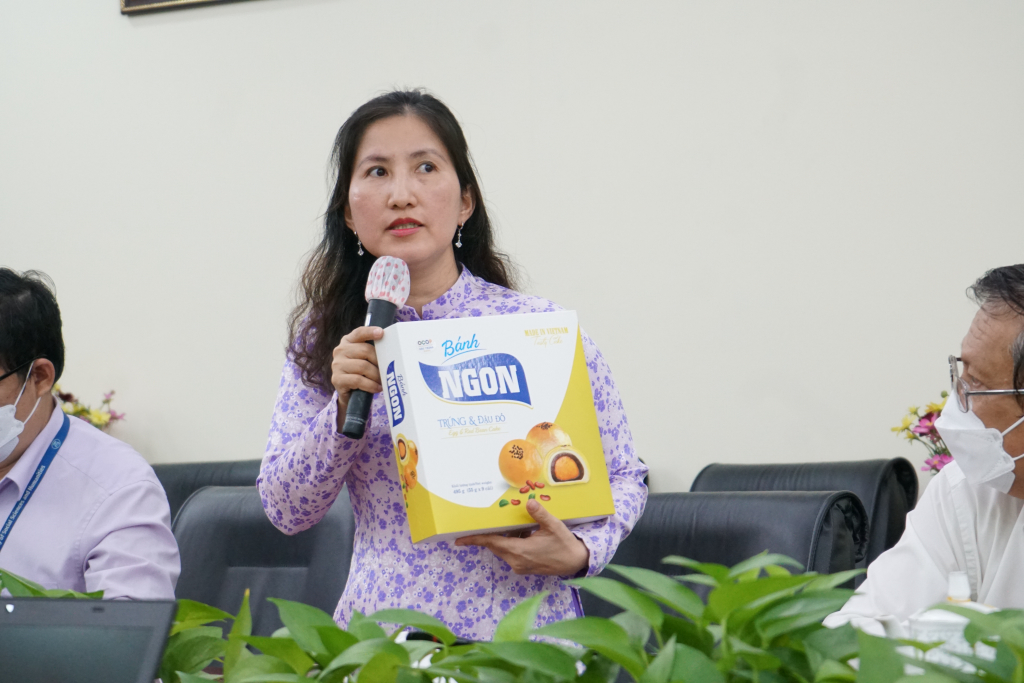
Dr. Ngo Thi Thu Trang introduced OCOP products conference. Photo by: Hoang Yen
In their research from the perspective of folklife tourism and community communication, Dr. Ho Minh Quang and Ms. Nguyen Thi Quynh Chi, MA, proposed a solution to convey humanity into OCOP products through building a model of "Trieu Chau cultural school" in Vinh Chau town. Dr. Ho Minh Quang explained: “This school model is a place to learn and experience culture, which is a must for not only the staffs but also the students. In other words, students will experience life in Chaozhou by attending the school.” Preserving and promoting the unique characteristics of the local culture can enhance the ability to produce OCOP products embedded with human values.
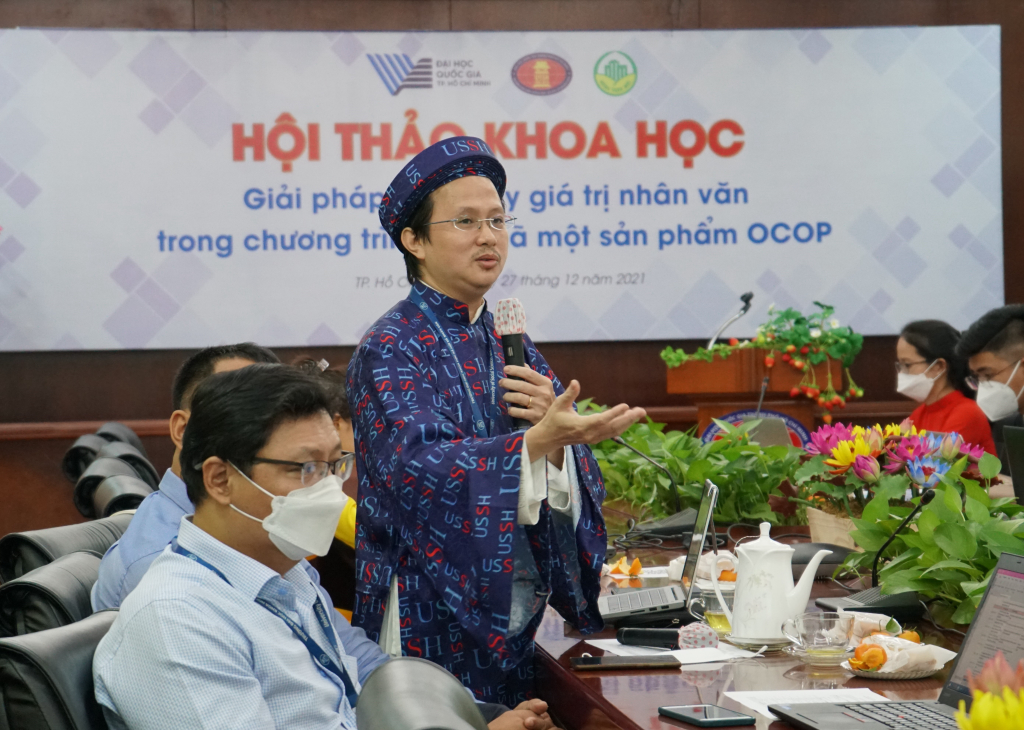
Dr. Ho Minh Quang proposed a solution to convey humanity into OCOP products. Photo by: Hoang Yen
Making OCOP happen with practical solutions
For the OCOP program to meet the development needs of Vietnam in general and the new rural areas in particular, the following solutions were put forward at the conference: (1) Raising public awareness, (2) Improving program implementation, (3) Implementing more efficient and effective OCOP development cycles, (4) Providing scientific and technological solutions, promoting applied research, innovating and perfecting production process technology, (5) Developing policies to support program implementation, (6) Mobilizing resources, (7) Promoting international cooperation, (8) Developing projects/plans with practical solutions.
To convey human values into OCOP products, researchers suggested a human-centered approach, combining both traditional values and new cultural values and creating a unique and distinctive character of the product.
THIEN TRUC - HOANG YEN
Translated by: My Phung