

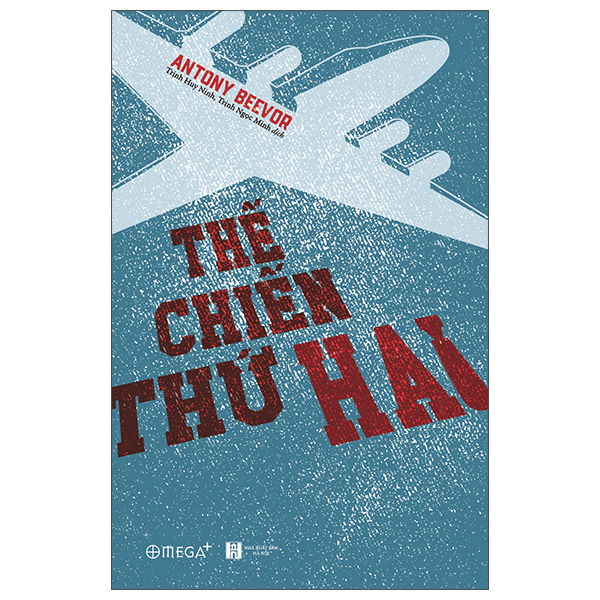
Over the past two decades, Antony Beevor has established himself as one of the world's leading historians of the Second World War with two award-winning books: Stalingrad: The Fateful Siege: 1942-1943, Berlin: The Downfall 1945. With The Second World War, he focuses on one of the bloodiest and most tragic events of the twentieth century: the entire Second World War.
This harrowing work takes us into a period of blood, ferocity, and the most far-reaching consequences in modern world history, beginning with Hitler's invasion of Poland on September 1, 1939, to V-J Day on August 14, 1945, and the aftermath left by the entire war. Through these pages, Beevor describes the conflict and its global scope: every corner of the world, every development, situation, and strategic move of the parties involved.
Thrillingly written and brilliantly researched, The Second World War is a grand and provocative narrative by Antony Beevor. This work also unintentionally reaffirms that its author is truly one of the first-rate military historians.
“Arguments about when this great war actually began have always arisen, but the Second World War was clearly a collection of many conflicts. While mostly nation against nation, the international civil war between the left and the right also permeated and even dominated many of those battles. Therefore, it is necessary to look back at some of the conditions that led to this, the most devastating and destructive mass of contradictions the world has ever known.” – The Second World War, excerpt from “Introduction”
EXCERPTS
“It is hard to suggest that a war as brutal as this could end without horrific vengeance. Collective violence, as the Polish poet Czesław Miłosz pointed out, destroys the very idea of humanity as a whole and all natural justice. ‘Murder becomes common in wartime,’ Miłosz wrote, ‘and is even considered legitimate if committed in the name of resistance. Looting also becomes normal, as do lies and fabrication. People learned to sleep amidst the sounds that once woke an entire neighborhood: machine gun fire, the moans of the dying, the curses of the police dragging away a neighbor.’”
– Excerpt from the chapter “Cities of the Dead”
“During the Second World War, those who suffered most in Europe were those caught between two tyrannical powers and those who ‘died as a consequence of the impact of both systems’. Since 1933, fourteen million people had died in Ukraine, Belorussia, Poland, the Baltic states, and the Balkans. An overwhelming majority of the 5.4 million Jews murdered by the Nazis in Hitler’s sham victory came from this region.
The Second World War, in its global scale, is the greatest human-made disaster in history. The statistics of the dead – whether sixty or seventy million – are far beyond what we can imagine. Those staggering numbers are dangerously chilling, as Vasily Grossman observed. According to him, the duty of the survivors is to try to see the millions of ghosts in mass graves as individuals, not as faceless entities in ridiculous and dehumanizing categories, for that is exactly what the perpetrators tried to achieve.
Besides the dead, there were countless others maimed both psychologically and physically. In the Soviet Union, the limb-less ‘samovars’ were collected from the streets. That was a fate with the implicit understanding that they were no longer human, a fate every Red Army soldier feared more than death. The maimed were an uncomfortable reminder that there was a whole world of suffering between the heroic martyr and the heroic survivor marching in a parade with medals on his chest on every anniversary.
Branded as the ‘good war’, the Second World War haunts subsequent generations more than any other conflict in history. It evokes mixed emotions because it may never have lived up to that title [...]. And although it ended in total defeat for the Nazis and fascist Japan, the clear victory did not lead to world peace [...].”
“Some argue that the Second World War still has a pervasive influence nearly seven decades after its end, as evidenced by countless books, films, and plays, while museums continue to produce works of remembrance. This phenomenon is not surprising, if only because the nature of evil always seems to exert an endless fascination. Moral choice is a fundamental element of human tragedy because it lies at the very heart of humanity itself.
No other period in history provides such a rich source for studying contradictions, the tragedies of individuals and the masses, the corruption of power politics, ideological hypocrisy, the vanity of commanders, betrayal, irony, sacrifice, unbelievable cruelty, and unexpected compassion. In short, the Second World War challenges the generalizations and human classifications that Grossman so vehemently rejected.
However, there remains a real danger that the Second World War becomes a quick reference point for both modern history and all transient conflicts. In a crisis, journalists and politicians instinctively look for parallels with the Second World War, either to dramatize the gravity of the situation or to try to sound warnings in the style of Roosevelt or Churchill.”
ABOUT THE AUTHOR
ANTONY BEEVOR (Born in 1946)
A renowned British historian and writer.
Having served for a significant period in the military, after his discharge, Beevor began writing, primarily focusing on valuable research works about famous wars in modern history.
He is a distinguished visiting professor of history, classical Greco-Roman literature, and archaeology at universities in the UK.
Antony Beevor's famous works:
Stalingrad: The Fateful Siege: 1942-1943, 1998
Berlin: The Downfall 1945, 2002
The Battle for Spain: The Spanish Civil War 1936-39, 2006
The Second World War, 2012
The Second World War
Over the past two decades, Antony Beevor has established himself as one of the world's leading historians of the Second World War with two award-winning books: Stalingrad: The Fateful Siege: 1942-1943, Berlin: The Downfall 1945. With The Second World War, he focuses on one of the bloodiest and most tragic events of the twentieth century: the entire Second World War.
This harrowing work takes us into a period of blood, ferocity, and the most far-reaching consequences in modern world history, beginning with Hitler's invasion of Poland on September 1, 1939, to V-J Day on August 14, 1945, and the aftermath left by the entire war. Through these pages, Beevor describes the conflict and its global scope: every corner of the world, every development, situation, and strategic move of the parties involved.
Thrillingly written and brilliantly researched, The Second World War is a grand and provocative narrative by Antony Beevor. This work also unintentionally reaffirms that its author is truly one of the first-rate military historians.
“Arguments about when this great war actually began have always arisen, but the Second World War was clearly a collection of many conflicts. While mostly nation against nation, the international civil war between the left and the right also permeated and even dominated many of those battles. Therefore, it is necessary to look back at some of the conditions that led to this, the most devastating and destructive mass of contradictions the world has ever known.” – The Second World War, excerpt from “Introduction”
EXCERPTS
“It is hard to suggest that a war as brutal as this could end without horrific vengeance. Collective violence, as the Polish poet Czesław Miłosz pointed out, destroys the very idea of humanity as a whole and all natural justice. ‘Murder becomes common in wartime,’ Miłosz wrote, ‘and is even considered legitimate if committed in the name of resistance. Looting also becomes normal, as do lies and fabrication. People learned to sleep amidst the sounds that once woke an entire neighborhood: machine gun fire, the moans of the dying, the curses of the police dragging away a neighbor.’”
– Excerpt from the chapter “Cities of the Dead”
“During the Second World War, those who suffered most in Europe were those caught between two tyrannical powers and those who ‘died as a consequence of the impact of both systems’. Since 1933, fourteen million people had died in Ukraine, Belorussia, Poland, the Baltic states, and the Balkans. An overwhelming majority of the 5.4 million Jews murdered by the Nazis in Hitler’s sham victory came from this region.
The Second World War, in its global scale, is the greatest human-made disaster in history. The statistics of the dead – whether sixty or seventy million – are far beyond what we can imagine. Those staggering numbers are dangerously chilling, as Vasily Grossman observed. According to him, the duty of the survivors is to try to see the millions of ghosts in mass graves as individuals, not as faceless entities in ridiculous and dehumanizing categories, for that is exactly what the perpetrators tried to achieve.
Besides the dead, there were countless others maimed both psychologically and physically. In the Soviet Union, the limb-less ‘samovars’ were collected from the streets. That was a fate with the implicit understanding that they were no longer human, a fate every Red Army soldier feared more than death. The maimed were an uncomfortable reminder that there was a whole world of suffering between the heroic martyr and the heroic survivor marching in a parade with medals on his chest on every anniversary.
Branded as the ‘good war’, the Second World War haunts subsequent generations more than any other conflict in history. It evokes mixed emotions because it may never have lived up to that title [...]. And although it ended in total defeat for the Nazis and fascist Japan, the clear victory did not lead to world peace [...].”
“Some argue that the Second World War still has a pervasive influence nearly seven decades after its end, as evidenced by countless books, films, and plays, while museums continue to produce works of remembrance. This phenomenon is not surprising, if only because the nature of evil always seems to exert an endless fascination. Moral choice is a fundamental element of human tragedy because it lies at the very heart of humanity itself.
No other period in history provides such a rich source for studying contradictions, the tragedies of individuals and the masses, the corruption of power politics, ideological hypocrisy, the vanity of commanders, betrayal, irony, sacrifice, unbelievable cruelty, and unexpected compassion. In short, the Second World War challenges the generalizations and human classifications that Grossman so vehemently rejected.
However, there remains a real danger that the Second World War becomes a quick reference point for both modern history and all transient conflicts. In a crisis, journalists and politicians instinctively look for parallels with the Second World War, either to dramatize the gravity of the situation or to try to sound warnings in the style of Roosevelt or Churchill.”
ABOUT THE AUTHOR
ANTONY BEEVOR (Born in 1946)
A renowned British historian and writer.
Having served for a significant period in the military, after his discharge, Beevor began writing, primarily focusing on valuable research works about famous wars in modern history.
He is a distinguished visiting professor of history, classical Greco-Roman literature, and archaeology at universities in the UK.
Antony Beevor's famous works:
Stalingrad: The Fateful Siege: 1942-1943, 1998
Berlin: The Downfall 1945, 2002
The Battle for Spain: The Spanish Civil War 1936-39, 2006
The Second World War, 2012
We highly recommend this book to our readers!
Bài viết liên quan


HUNTING FOR INTERNATIONAL SCHOLARSHIPS - WHY NOT GIVE IT A TRY? THE FLIGHT TO INTERNATIONAL INTEGRATION IS NOW OPEN FOR CHECK-IN!
Announcement regarding student exchange program with University of Paris Cité, France for the 2nd semester of the 2026-2027 academic year