

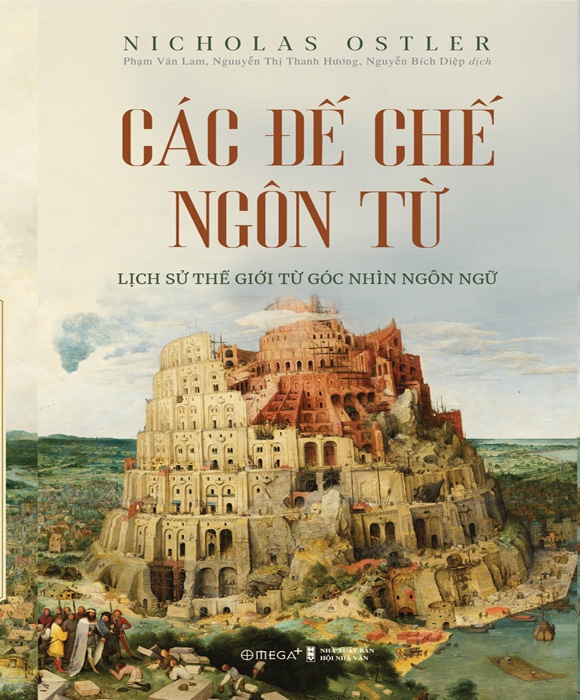
Empires of the Word - A Language History of the World
Author: Nicholas Ostler
Translators: Pham Thanh Lam, Nguyen Thi Thanh Huong, Pham Bich Diep
Publisher: The Gioi
Year of publication: 2023
"Empires of the Word" is one of the very few works that discuss the comprehensive history of languages around the world, thereby helping us visualize human history from a linguistic perspective. The book surveys major languages of the world, those that have the potential for strong dissemination and have been used across vast regions.
This book was first published in 2005 in the UK and received praise from prestigious newspapers such as The Independent, The Guardian, Kirkus review, Washington Post, Boston magazine, Chicago Tribune, and Los Angeles Times Book Review.
Author Nicholas Ostler is a student of the renowned linguist Noam Chomsky. To date, he has conducted in-depth research on a total of 26 languages worldwide. He holds degrees in linguistics from the University of Oxford and MIT.
The main content of the book is divided into 4 parts, 14 chapters, with 2 primary themes:
- Drawing a map of languages currently used around the world, indicating their origins and the relationships between them.
- Discussing the "rise" and "decline" of lingua francas, such as Greek and Latin, and the causes of those ups and downs.
The author, Ostler, argues that linguistic characteristics truly make a difference, with the goal of explaining why a language becomes important, capable of spreading far, and persisting for a long time. At the same time, he discusses the relationship between language and politics, religion, commerce, society, culture, etc. He compares languages at a macro level based on historical aspects rather than delving into the technical details of a language like grammar or phonology.
In the book, the author examines Akkadian, Aramaic, and Arabic, which are West Semitic languages that succeeded one another in civilizations and empires in the Middle East, while also looking at Chinese and Egyptian as vehicles for highly prestigious cultural traditions. In addition, the book also discusses Sanskrit, Greek, Celtic, Latin, German, and others.
Two short transition chapters between Part I and Part II of the book discuss the first and second obituaries of Latin: when it lost its monopoly in Europe in academia and when it was relegated to scriptures and no longer used in daily communication.
In the modern era, the author discusses Spanish in the New World, Portuguese, Dutch, French, and Russian as a contrast to the history of English.
The book closes with a survey of the top 20 leading languages, while summarizing the past, present, and potential future factors influencing the spread of languages.
The interesting point of the book lies in the discussion of the history of human language from a broader perspective, including both the specific history of individual languages and the relationships between them, as well as the link between language and human history.
The book is very suitable for readers who want an overview of the development history and the ups and downs of major languages worldwide, or who want to know about the origins - the "family" relationships of lingua francas like English, Chinese, and Spanish.
The book cover uses an image of the Tower of Babel, a legend in the Bible, to explain the linguistic disunity of peoples around the world.
EXCERPTS
"It is impossible to imagine human thought without the capacity for language, but a single, pure, uniform global language is merely the whimsical idea of philosophers. Language in practice appears in the form of many different local tongues such as English, Navajo, Chinese, Swahili, Burushaski, and thousands of others, and each of these languages links its speakers to a tradition that has existed for thousands of years. When adopted by humans, it grants access to a vast treasury of beliefs and knowledge: these assets empower us every time we think, listen, speak, read, or write, through which we can think and feel far differently from our ancestors. Our language places us in a cultural continuum, linking us to the past and also expressing our intentions to future generations."
"The linguistic history of the world can eloquently describe the true characteristics of nations, the movements and changes in the past, and at the same time offer many profound suggestions for the future."
"However, while a language can be very popular and that popularity is rarely reversible, it is not always safe. Even a language with a vast reach like English in the 21st century cannot be immune. It is still threatened by the old causes of language succession: changes in population growth, commercial patterns, and cultural prestige."
"This book records the history of the most widely spread languages in the human history we know. Somehow, and for many reasons, communities speaking these languages have managed to persuade others to join in, and thus have expanded. There are many motives for such persuasion - including military dominance, hopes for prosperity, conversion, attending boarding schools, military service, and many other factors. But at its root, this persuasion is the only way a language can spread, and this is truly no small matter, as anyone who has ever tried to learn another language knows."
"When considering human history, a speech community is a very natural unit. Language, by nature being a means of communication, divides humans into groups: only through a common language can a group of people act in harmony, and thus have a shared history. Furthermore, the language that a group shares is precisely the means by which the memories of their shared history can be shared. Language both gives life to a community's shared history and helps tell that history."
Respectfully introduced to readers!
Bài viết liên quan

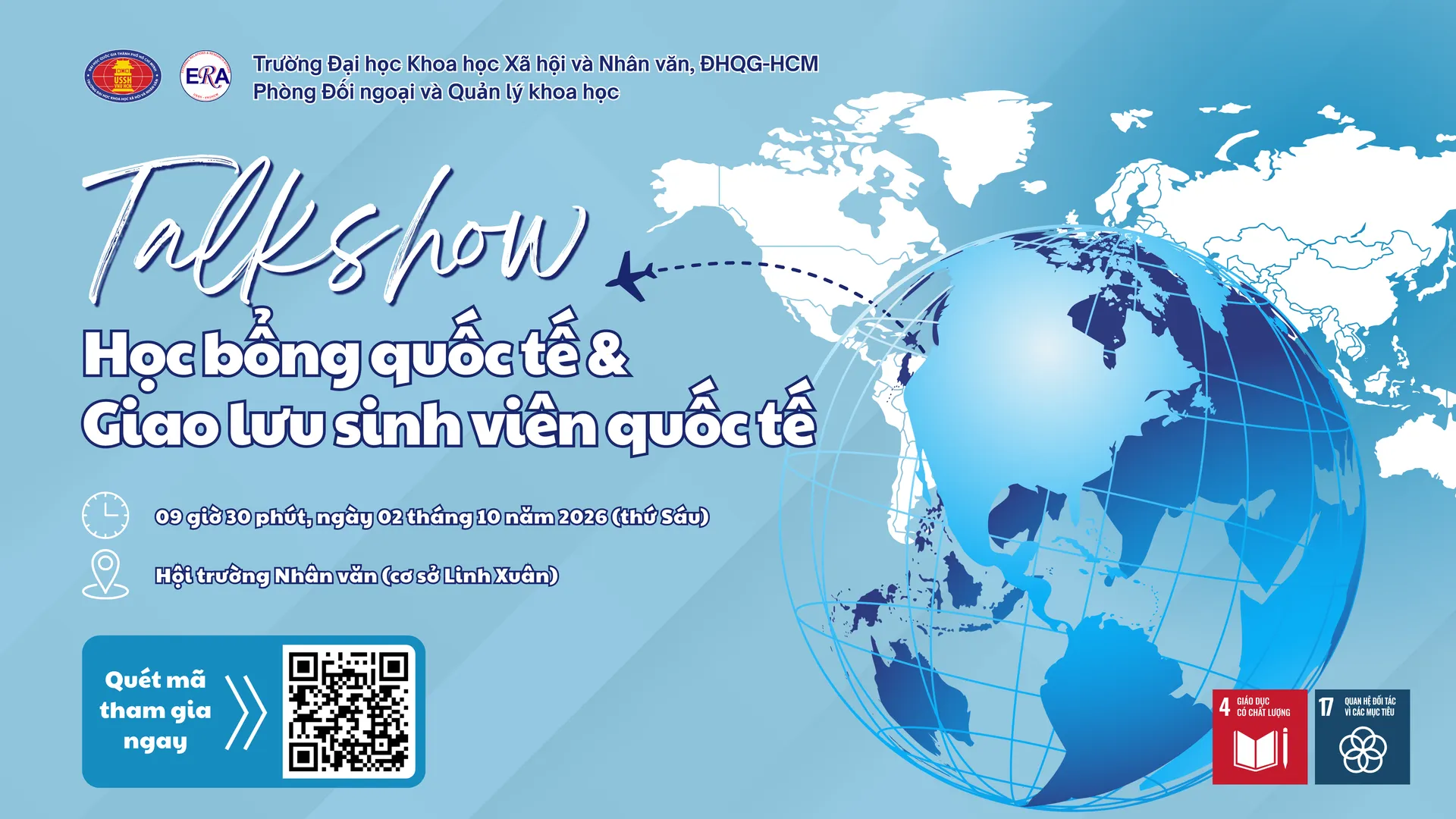
HUNTING FOR INTERNATIONAL SCHOLARSHIPS - WHY NOT GIVE IT A TRY? THE FLIGHT TO INTERNATIONAL INTEGRATION IS NOW OPEN FOR CHECK-IN!
Announcement regarding student exchange program with University of Paris Cité, France for the 2nd semester of the 2026-2027 academic year