Successfully organized the 2023 National Conference: "Geographical Science: New Approaches, Perspectives and Directions in Territorial Planning and Organization"
On the afternoon of December 28, the Department of Geography - University of Social Sciences and Humanities, Vietnam National University Ho Chi Minh City (University of Social Sciences and Humanities, Vietnam National University-HCM) coordinated with the Vietnam Geography Association to organize a National Conference “Geographical Science: New approaches, Perspectives and Directions in Territorial Planning and Organization”. The Conference aimed to clearly show the role of Geographical science in territorial planning and organization. It contributes to the locality's economic, cultural, and social development.
Prof. Dr. Mai Trong Nhuan, Chairman of the Interdisciplinary Professor Council of Earth Sciences and Mining, Prof. Dr. Nguyen Cao Huan - Chairman of the Vietnam Geographical Association, and other professors who are members of the Council of Interdisciplinary Professors of Earth Sciences-Mining, and New Professors and Associate Professors of Earth Sciences-Mining; with many leading industry experts; businesses and managers from many provinces and cities have attended the conference. Dr. Phan Thanh Dinh - Deputy Secretary of the Party Committee, Vice Rector of the USSH, VNU-HCM; Dr. Ngo Thi Thu Trang - Dean of Faculty of Geography; together with representatives of leaders of departments and divisions; lecturers, students, and scientists interested in Geography and Earth science and Mining in particular also attended.
Opening speech, Dr. Phan Thanh Dinh would like to thank the leading professors and associate professors who came and attended the conference with the very current and new topic of "Geographical Science: Approaches, perspectives and directions in territorial planning and organization", thank the domestic and foreign scientists who participated in writing the article, leaders at all levels, lecturers, graduate students, graduate students and students for their time to attend and contribute to the success of the Conference.
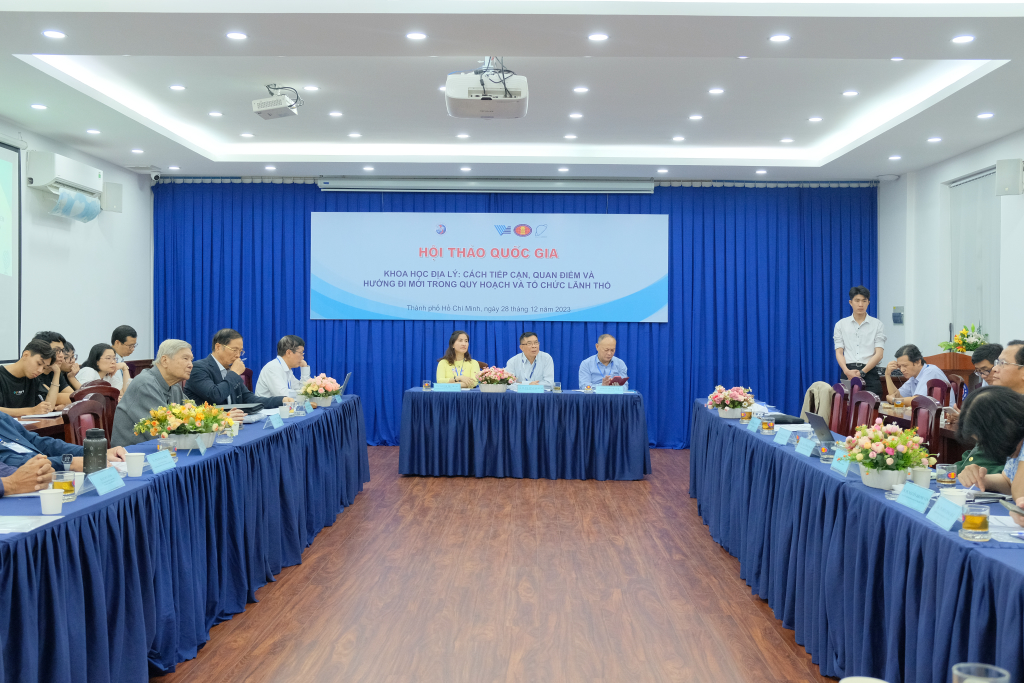
“This is an opportunity for experts and people interested in Geography in domestic and abroad to exchange scientific topics and present and discuss their theoretical and experimental results with colleagues. For the University, the organization of this conference is also an opportunity for officials and lecturers to meet and exchange knowledge, scholarship, and teaching experience with leading professors in the country, opening up opportunities for future research collaboration association.”
Speaking to welcome the conference, Professor Mai Trong Nhuan, Chairman of the Council of Interdisciplinary Professors of Earth and Mining Sciences, gave a very enthusiastic message to scientists and researchers in the South who need to try harder to build a strong research team for the Earth sciences and Mining and especially the cooperation and sharing between experts in different regions. He took a specific example from developing a marine spatial planning project to demonstrate the interdisciplinary nature of planning and the convergence of experts in many geology science and mining fields to implement this national mission. More than 20 Professors and Associate Professors from the North attended the conference in the South, which also partly demonstrated the spirit of North-South solidarity to develop interdisciplinary solid Earth sciences – Mine.
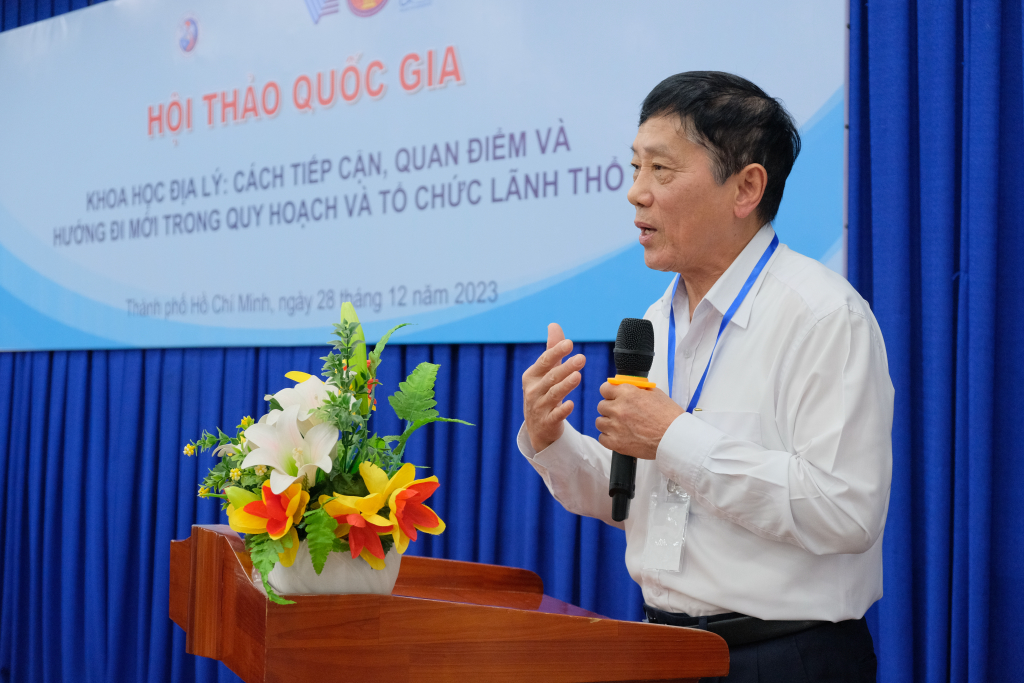
There were an introductory report and 4 oral presentations at the conference revolving around territorial planning issues affecting socio-cultural development, natural disaster prevention and population change. No.: (1) Urban Living Lab - innovative approach to spatial approach and territorial planning; (2) Circular economic model serves regional and local socio-economic planning and development; (3) Research on multi-agent modelling and participatory simulation methods to support territorial planning in coastal flood risk prevention; (4) Changes in fertility and death rates in Ho Chi Minh City from 1975 to 2019 are essential data for planning work.
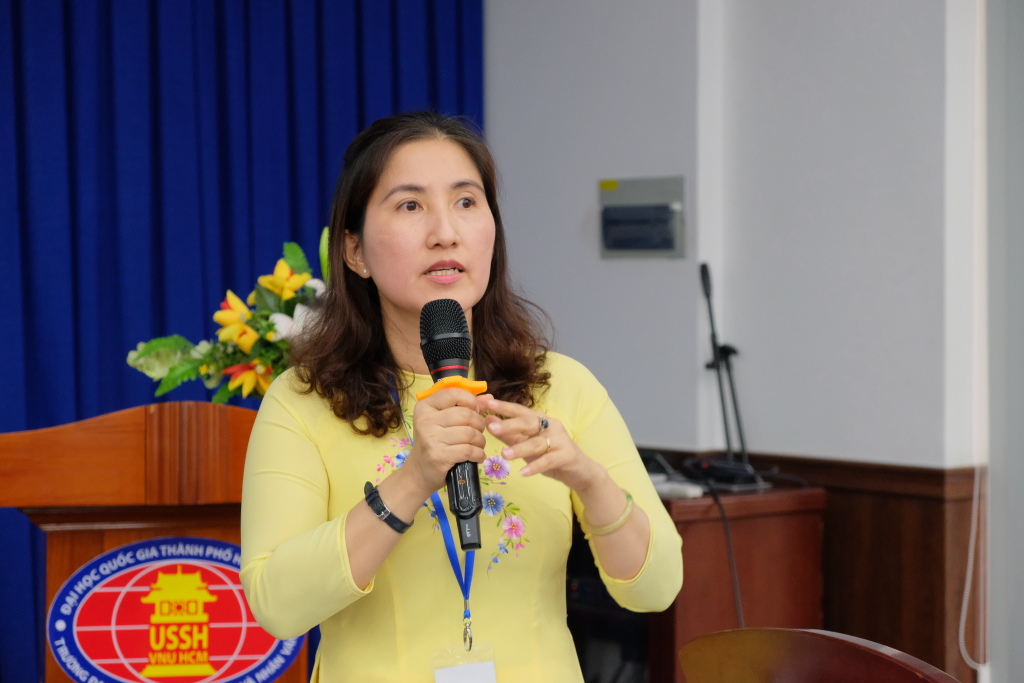
Dr. Ngo Thi Thu Trang presented the introductory report "Geographical Sciences: New Approaches, perspectives and Directions in Territorial Planning and Organization" - Photo: Huyen Linh
The presentations received much attention from participants, especially in addition to the participation of scientists, the conference also had the participation of businesses and representatives of government agencies. The conference brings theory into practice with discussions.
Associate Professor. Dr. Dang Van Phan - Chairman of the Ho Chi Minh City Geography Association: The 5 report contents are extensive, very interesting, and rich, but if condensed into one conference, it cannot convey all the authors' messages. There should be more scientific workshops for deeper discussion. Planning methods and planning contents are increasingly changing. This is a conference very close to geography (the first time there was a conference on territorial planning and organization). The issue is not evaluating natural resources. Geographers need to pioneer in territorial planning to guide national policy. The Mekong Delta's planning perspective is "to accord with nature". There are two rarely used methods in planning: Territorial balance matrix method and regional and inter-regional analysis methods.
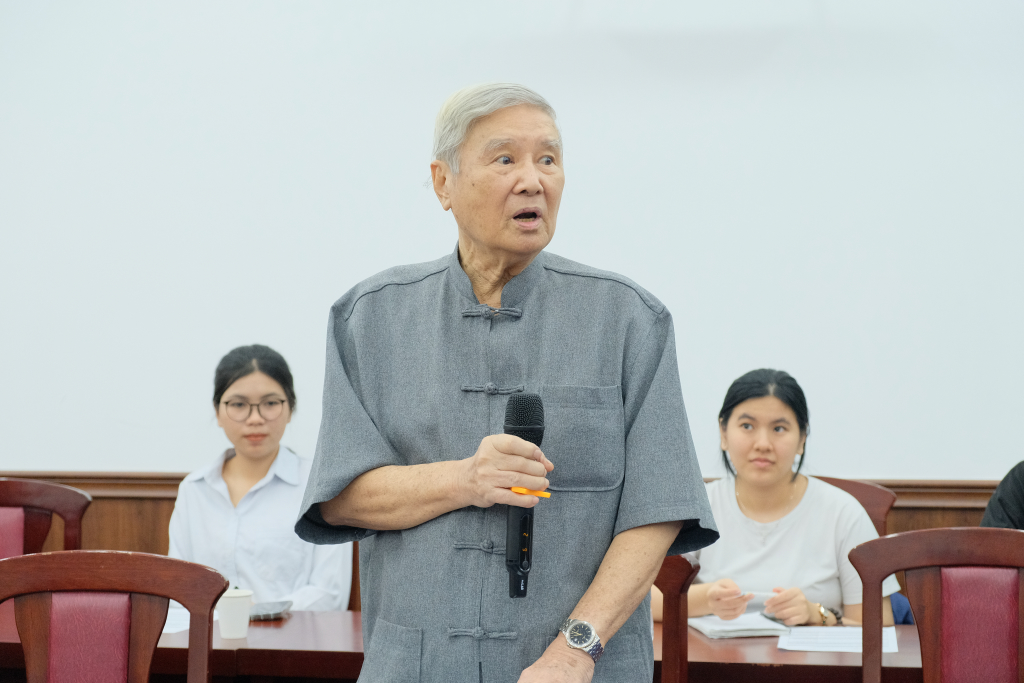
Associate Professor. Dr. Dang Van Phan - Vice President of the Vietnam Geographical Association, President of the Ho Chi Minh City Geographical Association presented contributions to the presentations - Photo: Huyen Linh
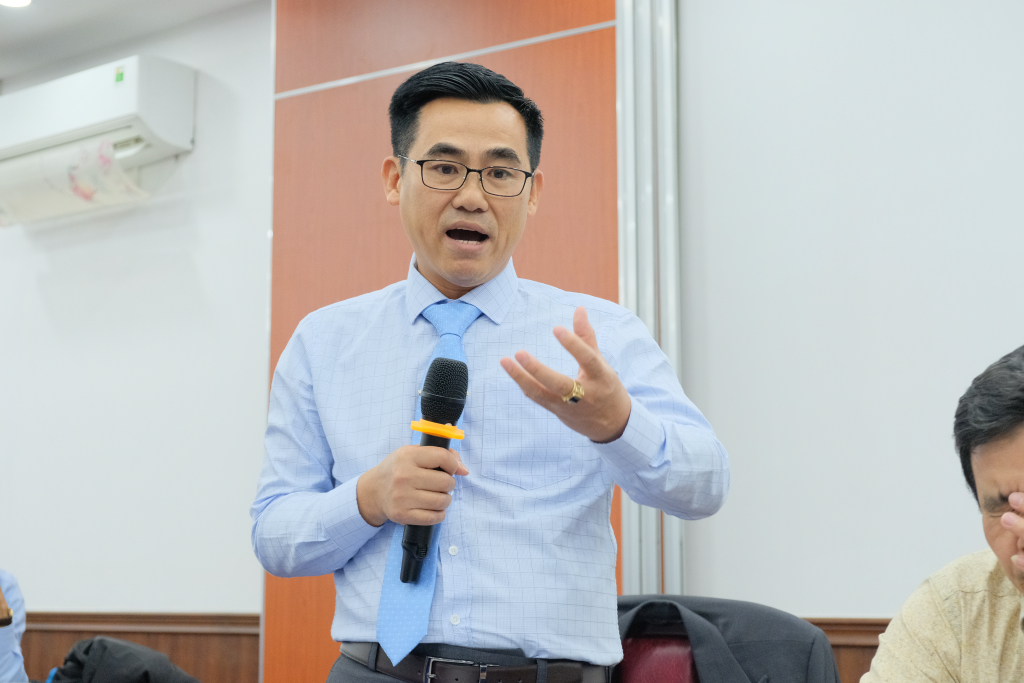
Mr. Truong Thanh Vien - Chairman of the Board of Directors of Truecoop Cooperative of Organic Cashew: The enterprise's successes in cashew production in Ninh Thuan province, future planning plans for cashew growing areas, prioritizing the development of human resources and technology. To plan effectively, planning land well and exploiting available resources is necessary.
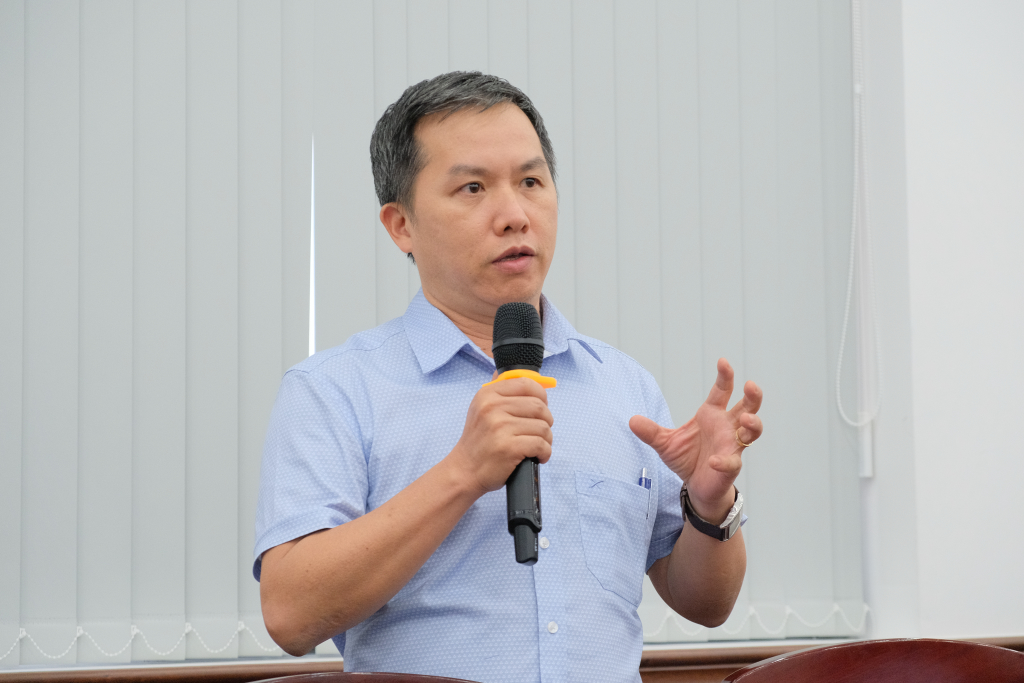
Dr. Architect. Nguyen Anh Tuan - Ho Chi Minh City Department of Planning and Architecture: the critical role of local data to the government in supporting decision making. The content series of this conference should be developed further for more in-depth research.
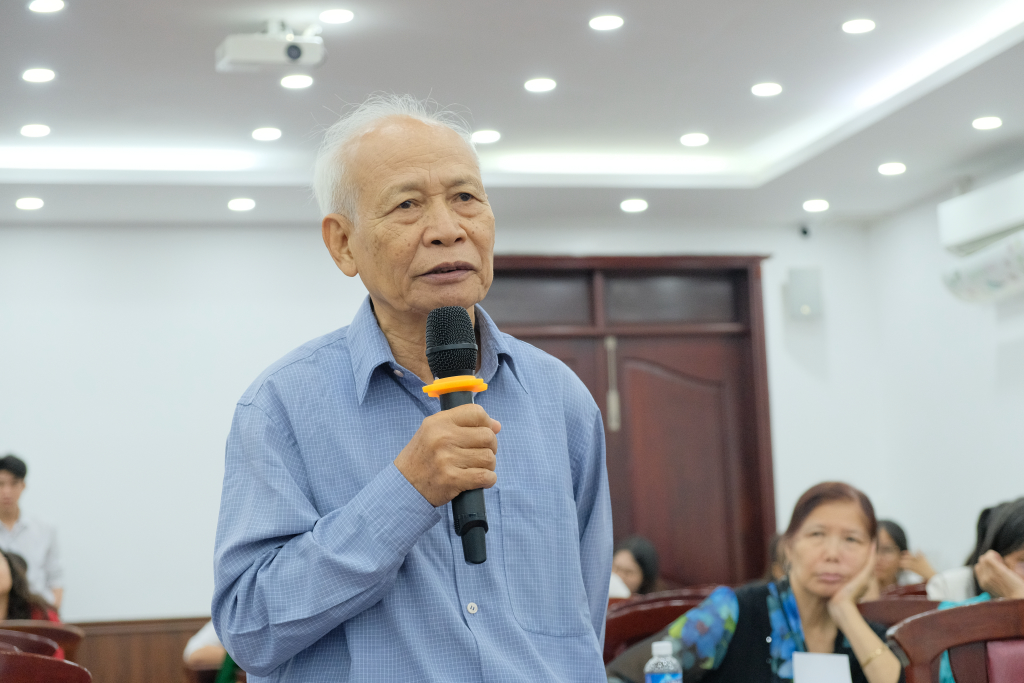
Dr. Doan Manh Dung: scientific research must apply to life. The "Three Resources theory": health, natural resources, intelligence. Territorial planning must apply these three types of resources.
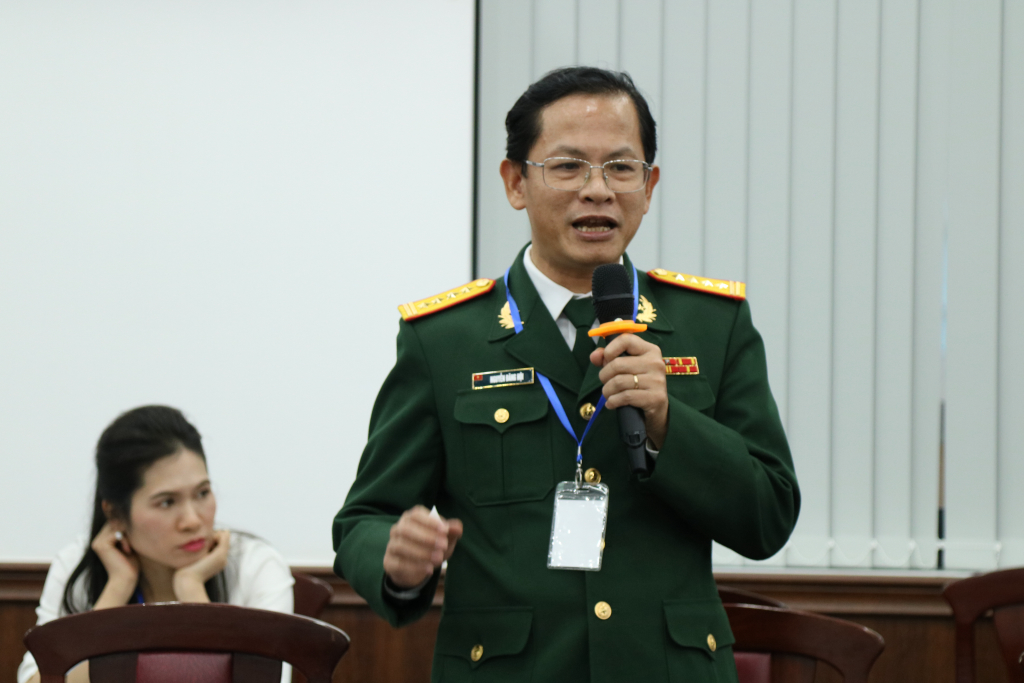
Prof. Dr. Nguyen Dang Hoi, Director of the Vietnam Institute of Tropical Ecology: Planning should be inter-regional, and there should be the military's participation in planning at all levels.
Geographical science, particularly, and Earth science -Mining, in general, have shown an increasingly more significant role and contribution to the country's development in recent years. In planning and territorial organization, we present theoretical and practical issues serving the country's sustainable development during the 4.0 industrial revolution. In which issues of nature, economy, society, environment, organization and territorial planning, sectoral planning concerning natural and human resources play a crucial role.
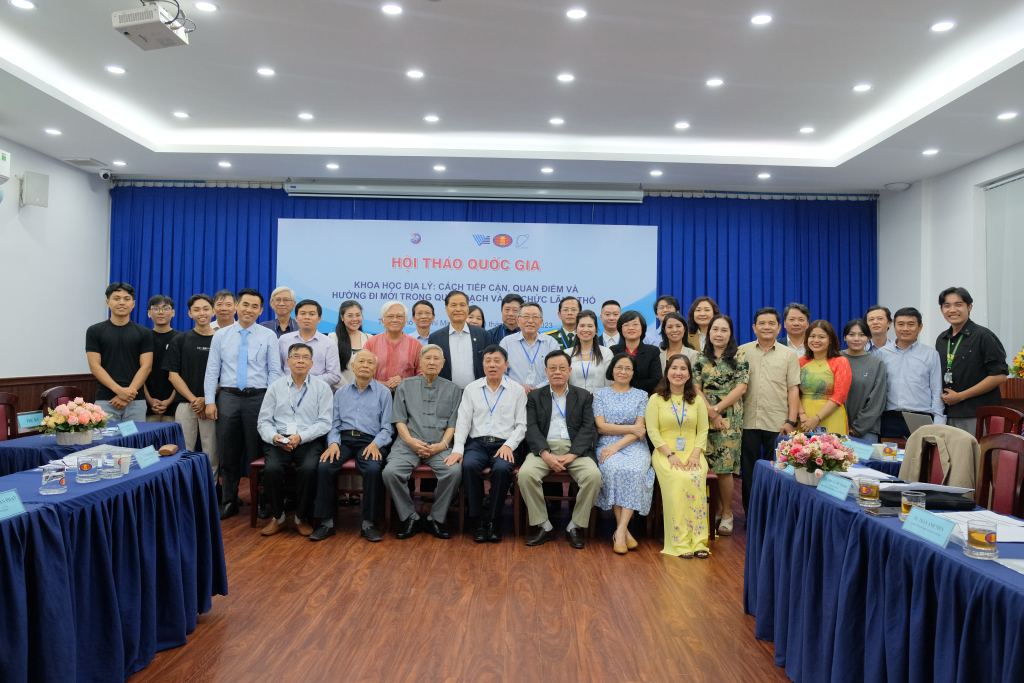
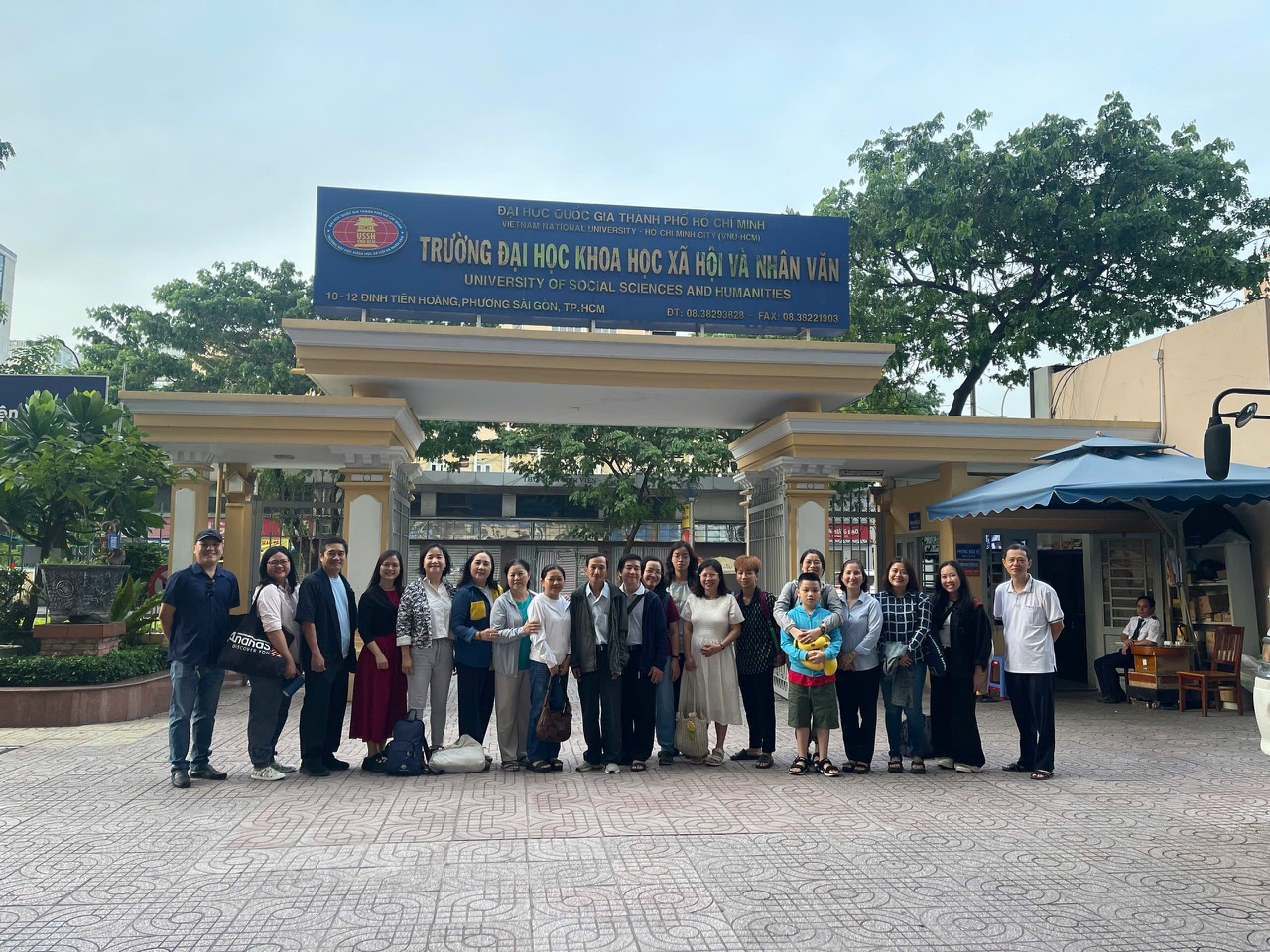
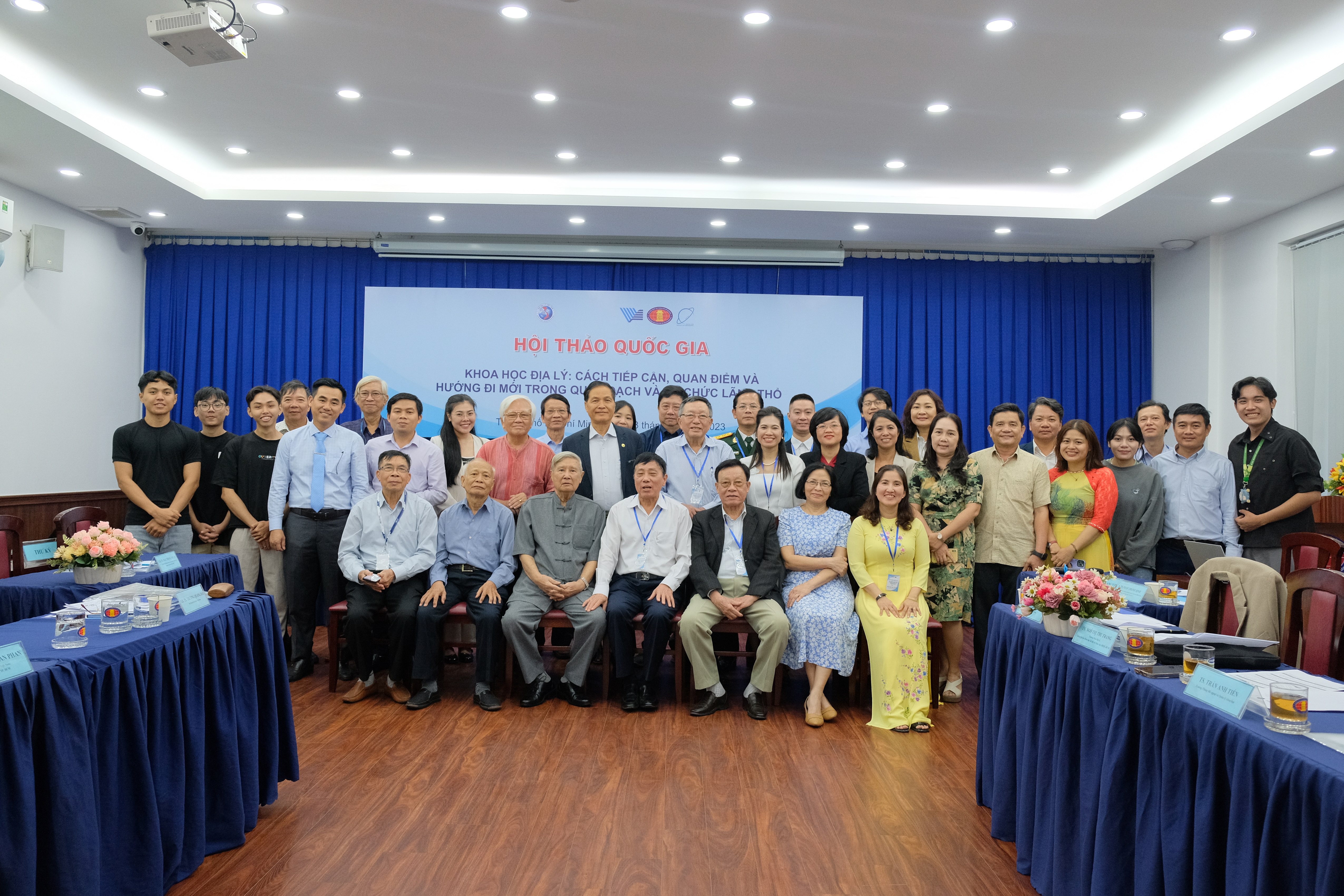
Experts, professors and participants took souvenir photos after the seminar - Photo: Huyen Linh
Summarizing the conference, Professor Truong Quang Hai said that the reports contributed to affirming the interdisciplinary, multidisciplinary, spatial, multi-scale, multi-scale nature of the science of Geography (Natural, Humanities, Environment, Technology) in planning and territorial organization:
Approach: (1) Systematic, integrated, multi-sectoral approach (master plan/level/structure; strategic planning; integrated planning, multi-sectoral integration; planning with the participation of community); (2) Approach to sustainable development; (3) Access to landscapes and ecosystems.
Planning viewpoints: (1) The development space must be organized effectively and uniformly between sectors, ensuring intra-regional and inter-regional links, exploiting comparative advantages and improving competitiveness; (2) Focused and essential development; (3) Efficient and economical use of resources, development of green economy and circular economy; environmental protection; proactively prevent and combat natural disasters and adapt to climate change; (4) The organization of development space must be associated with the development of a synchronous, modern infrastructure system and harmonious development of urban and rural areas; (5) The organization of development space must link the land area with the marine space, closely combining economic, cultural and social development with environmental protection, ensuring national defence and security.
Some new directions in planning and territorial organization: the trend of complex architectural planning in the form of airport urban areas and university urban areas; Strategic construction planning with long-term vision; integrating the content of sustainable development, climate change response, green urban development, and ecological urban areas; Establish mechanisms to coordinate sharing.
The conference provided an effective scientific activity for scientists and researchers to present, update their research, and orient research for the coming period. It was also an opportunity to demonstrate the role of Earth science - Mining in local socio-economic development. This is also a unique opportunity to connect leading Northern scientists with Southern experts, lecturers and students. The Conference was a great success and had great significance in connecting and motivating so that particularly geographical science, geology-mining science in general, could increasingly develop and assert its scientific mission and link science with practice to promote the country's socio-economic development.
English by HP