
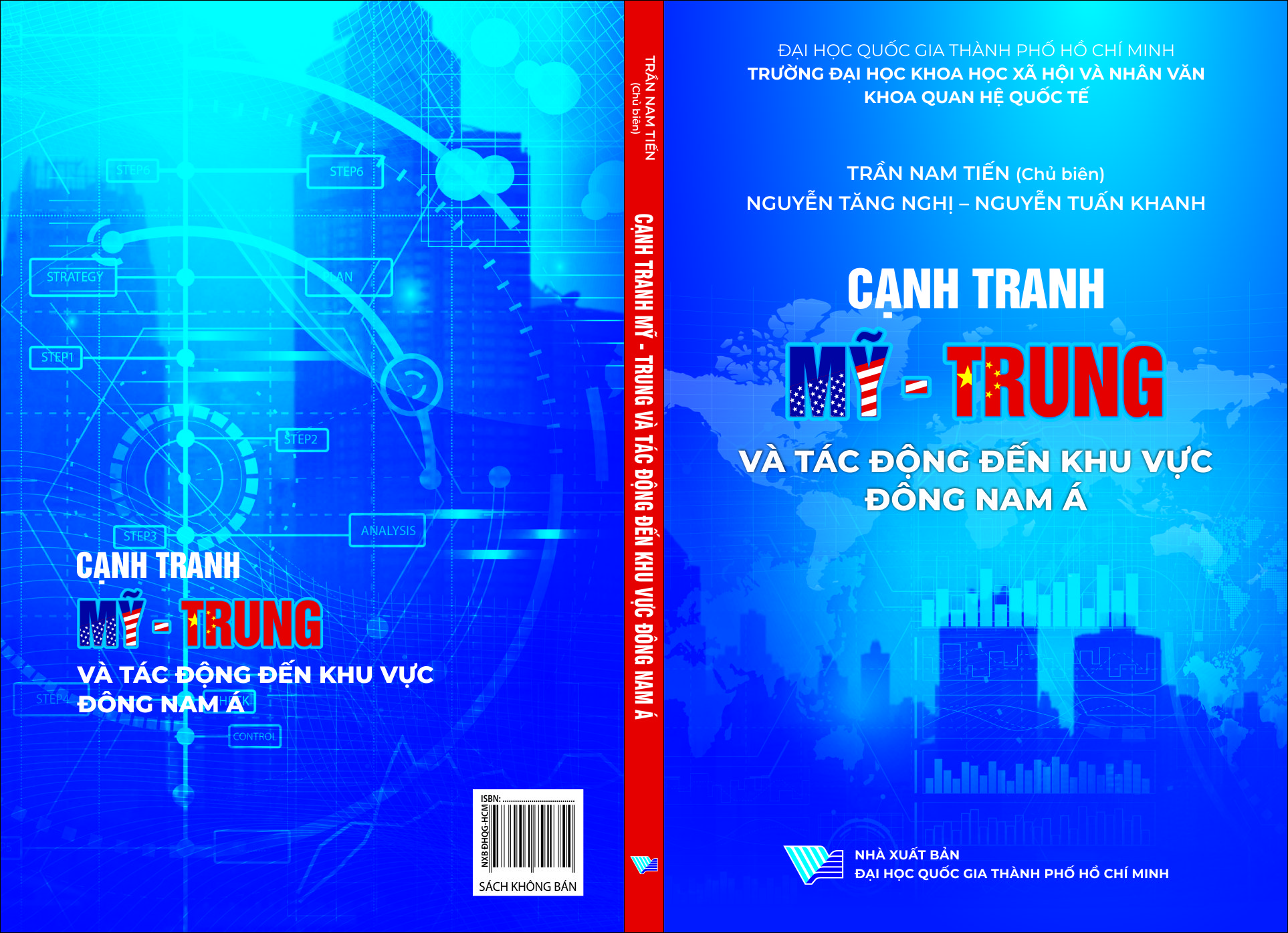
US-China Competition and its Impact on Southeast Asia
Authors: Tran Nam Tien (Editor-in-chief), Nguyen Tang Nghi - Nguyen Tuan Khanh
The history of international relations shows the significant role of major powers in shaping the international and regional political order. The foreign policies of superpowers - with their extensive reach and scale of impact - always have a significant influence on the political-diplomatic trends of the region and the world. Although the forms and methods of implementation differ, the ultimate goal remains to lead, determine the rules of the game, and ultimately establish a world order that favors them. However, with the complex interactions and interdependence in the context of globalization, the strategic adjustments of superpowers will inevitably create conflicts of interest. This creates major competition among superpowers. With their influence, the competition or strategic adjustments of superpowers always attract great attention from politicians and researchers worldwide, especially from middle-tier, small, and medium-sized nations. For Southeast Asia and Vietnam, this is certainly no exception. Understanding the nature of this competition will help nations timely adjust their foreign, security, and defense policies to adapt to the new situation.
In recent years, the strategic competition between the US and China has created significant transformations in global political life as well as in individual regions. China's "Belt and Road Initiative" (BRI) and the US's "Rebalance to Asia-Pacific" or "Indo-Pacific Strategy" are the clearest manifestations of the strategic competition between these two superpowers. This strategic competition spans many fields and takes place across many different regions.
The Indo-Pacific region is one of the geopolitical areas that feels the "heat" of the US-China strategic competition most clearly. On the other hand, the Indo-Pacific region is also one of the regions with a profound impact on global political life in terms of economy, trade, science - technology, etc. Therefore, over the past decade, the debate on the order or structure of the Indo-Pacific region in the context of US-China competition has always been a subject that receives much discussion and consumes a lot of ink from scholars and policymakers. Thus, security - political issues of the Indo-Pacific under the influence of US-China competition have been, are, and will be a major topic in the study of international relations.
Located at the center and acting as a bridge between these two oceans, Southeast Asia has become the focal point of competition between the US and China. On the other hand, the Southeast Asian region is also strongly influenced by polarization and division, making the impacts of this competition even more complex. US-China competition has, is, and will strongly impact the security, politics, economy, and diplomacy of every nation in the Southeast Asian region, including Vietnam. Therefore, clarifying the nature of the competition, the implementation process, and the scope of influence of this competition in the region is very important. For Vietnam, its important geostrategic position in Southeast Asia in particular and the Indo-Pacific region in general forces Vietnam to bear the direct impacts and influence of this competition. This requires Vietnam to research this competition in a full, comprehensive, and timely manner. From there, Vietnam can gradually adjust its policies accordingly and make accurate predictions about the complex movements of the US-China competition.
(Excerpt from the introduction by Dr. Nguyen Tang Nghi, Director of the Faculty of International Relations, University of Social Sciences and Humanities, Viet Nam National University Ho Chi Minh City)
Book Title: US-China Competition and its Impact on Southeast Asia
Table of Contents:
Part I. GENERAL ISSUES
1. US-China Competition: Focus and Trends (Dr. Hoang Hue Anh, Pham Thao Nguyen)
2. The US and China restart the era of great power competition in Southeast Asia (MSc. Huynh Thao Nguyen, MSc. Nguyen Thu Trang)
3. US-China influence competition in Southeast Asia (Assoc. Prof. Dr. Vo Xuan Vinh)
4. US-China strategic competition in Southeast Asia during the Donald Trump era: Identification and impact on the regional power order (Assoc. Prof. Dr. Tran Nam Tien)
5. Adjustments in the Biden administration's Southeast Asia policy in the context of increasing strategic competition with China (MSc. Nguyen Le Thy Thuong)
6. US-China strategic competition and the Joe Biden government's policy on political-security affairs in the Indo-Pacific region (Dr. Trinh Diep Phuong Vu)
7. US policy adjustments in relations with China and impacts on Southeast Asia (Assoc. Prof. Dr. Bui Hai Dang, Nguyen Do Minh Tri)
8. China's foreign security strategy through President Xi Jinping's Belt and Road Initiative: Achievements and challenges (Tran Duc Thang, Le Hoang Kiet)
9. China's balancing strategy with the US under Xi Jinping and implications for Southeast Asian politics (PhD Candidate Trinh Viet Dung, PhD Candidate Ho Dieu Huyen)
10. US-China competition strategy in the Asia-Pacific region: Differences in perception and problem-solving methods (Dr. Nguyen Tang Nghi)
11. The position of Southeast Asia for the US in curbing China's hegemonic ambitions: A case study of Vietnam (Assoc. Prof. Dr. Tran Xuan Hiep, Master's student Le Hoang Kiet, MSc. Tran Thi Thanh Hoa)
Part II. US-CHINA STRATEGIC COMPETITION IN SPECIFIC FIELDS
12. Vietnam's renewable energy transition in the context of US-China energy competition: The thin line of risk (MSc. Vu Thanh Cong)
13. US-China competition in artificial intelligence - Opportunities and challenges for Vietnam (MSc. Ha Thi Nga)
14. US-China competition in artificial intelligence and impact on Southeast Asia (Dr. Tran Hoang Long, MSc. Nguyen Dac Tung)
15. US and China's digital diplomacy in Southeast Asia: A comparative perspective (MSc. Thai Hoang Hanh Nguyen)
16. US-China soft power competition in Southeast Asia (Dr. Tran Nguyen Khang)
17. Approaches and use of US and China's soft power resources in strategic competition in Southeast Asia (Dr. Nguyen Dang Khanh)
18. Current US-China strategic competition in Southeast Asia in the cultural field (Dr. Nguyen Van Duan)
19. US-China competition in non-traditional security cooperation in the Mekong Sub-region (MSc. Ngo Thi Hong Ngoc, Dr. Hoang Cam Thanh)
20. Geopolitical competition between the US and China: Security implications for the East Sea region (Dr. Nguyen Thanh Trung, MSc. Nguyen Thi To Uyen)
21. US-China competition in the East Sea and its impact on international relations in Southeast Asia (Dr. Nguyen Xuan Cuong, Dr. Bui Thi Thu Hien)
22. US-China competition in the East Sea under President Joe Biden: From the perspective of US interests (Dr. Nguyen Thu Hanh)
23. China-US maritime competition in the East Sea and impacts on Vietnam (Dr. Le Tung Lam)
24. Connection flows in the Mekong Sub-region under the storm of US-China competition (MSc. Tran Quynh Huong, Le Ha Khanh Chi)
25. Myanmar in the US-China geopolitical competition in Southeast Asia (Dr. Nguyen Tuan Binh, Nguyen Huu Phuc)
Part III. REGIONAL REACTIONS AND IMPLICATIONS FOR VIETNAM
26. US-China competition in Southeast Asia: Impacts and reactions of ASEAN countries (Dr. Nguyen Tuan Khanh)
27. Some characteristics of US-China strategic competition and issues posed for Vietnam's national security (Dr. Le Hoang Viet Lam, MSc. Tran Thi Thanh Tam)
28. US-China strategic competition, security challenges for Southeast Asia and suggestions for Vietnam (PhD Candidate Bui Thi Hoa)
29. The role of ASEAN in US-China competition and implications for Vietnam (Dr. Le Quoc Bao)
30. Policy responses of Indonesia, Malaysia, and Vietnam to US-China competition (Master's student Tran Hoai Thu)
31. Malaysia's "Great Power Balancing" diplomacy in the context of China-US competition in Southeast Asia (MSc. Nguyen Thi Phuong Thao, PhD Candidate Tran Thai Bao)
32. Singapore's reaction under Prime Minister Lee Hsien Loong to China-US competition in Southeast Asia (PhD Candidate Truong Thi Hue)
33. US-China strategic competition and Vietnam's response (MSc. Truong Doan Man)
CONCLUSION (Assoc. Prof. Dr. Tran Nam Tien)
Bài viết liên quan

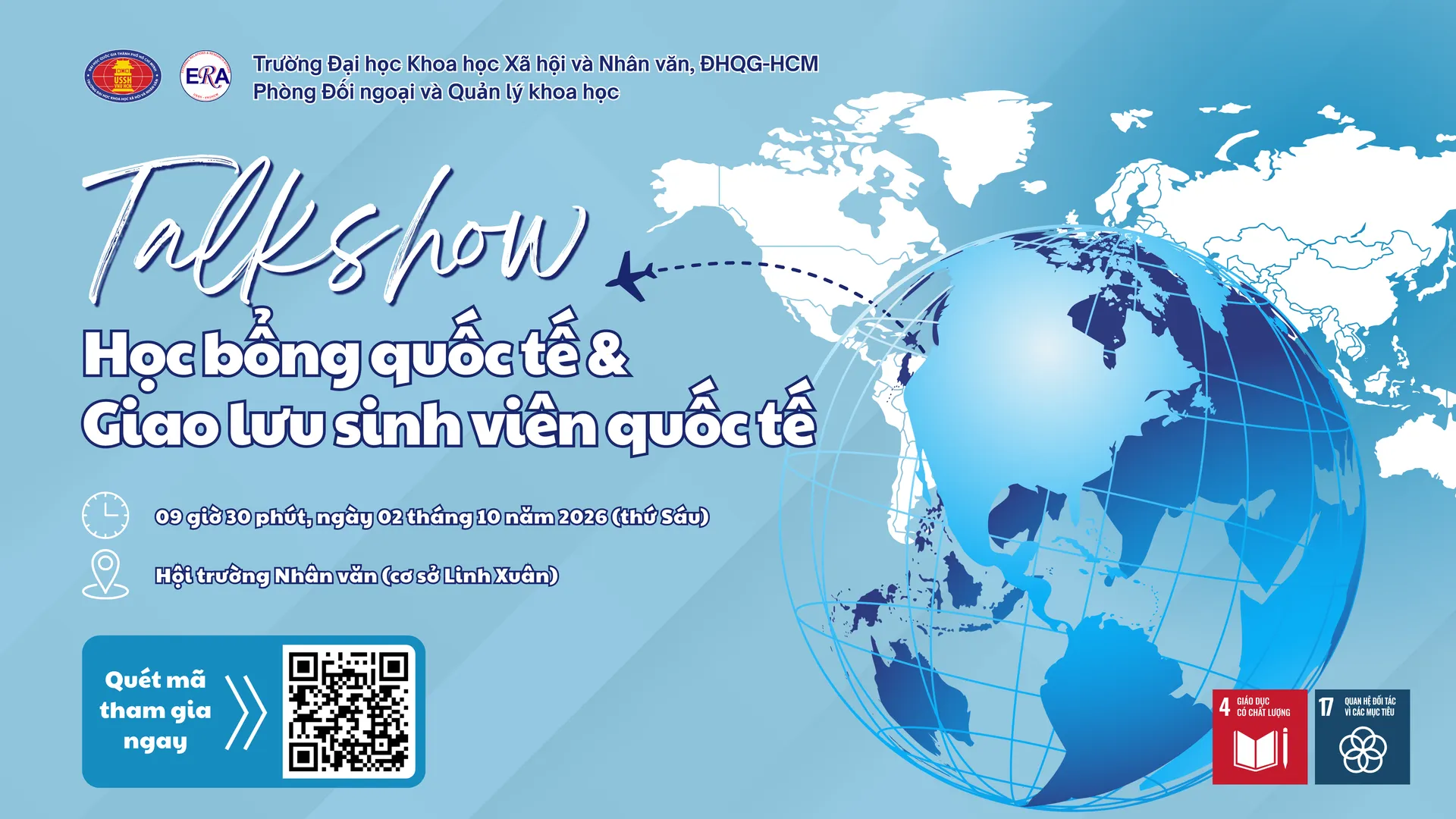
HUNTING FOR INTERNATIONAL SCHOLARSHIPS - WHY NOT GIVE IT A TRY? THE FLIGHT TO INTERNATIONAL INTEGRATION IS NOW OPEN FOR CHECK-IN!

Announcement regarding student exchange program with University of Paris Cité, France for the 2nd semester of the 2026-2027 academic year