
National Scientific Conference: “Theoretical and practical basis of non-material factors in international relations”
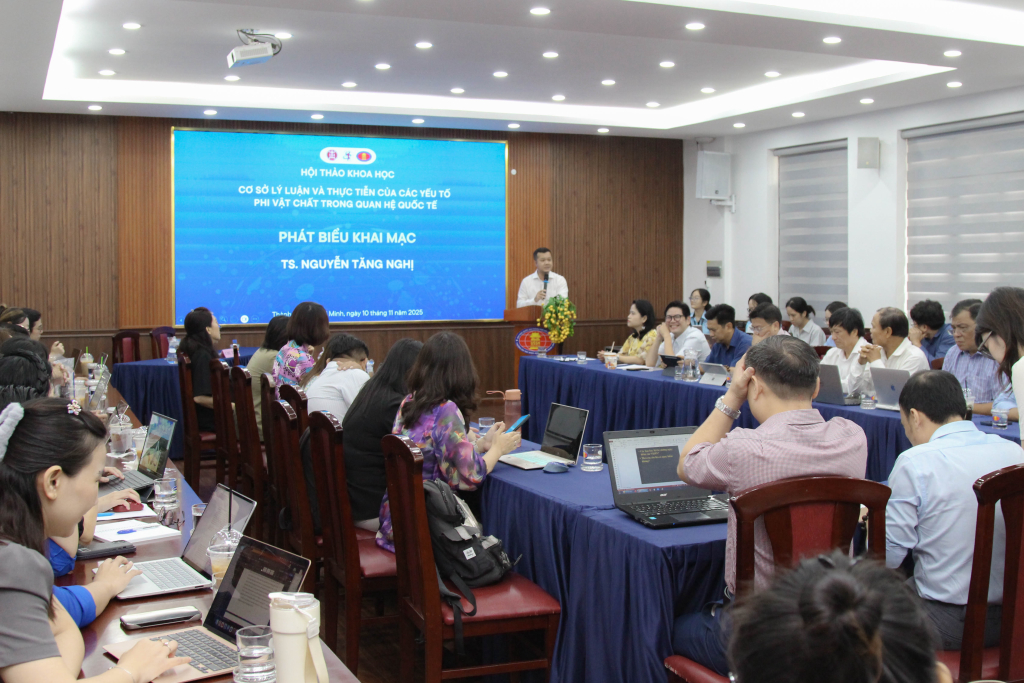
On the morning of November 10, 2025, at the University of Social Sciences and Humanities, Viet Nam National University Ho Chi Minh City (USSH, VNUHCM), a scientific conference themed “Theoretical and practical basis of non-material factors in International Relations” took place. The event was organized within the framework of the national-level project “The role of non-material factors in international relations and policy implications for enhancing Viet Nam’s international status” (Code: KX.06.10/21-30), led by Dr. Le Lena from the Faculty of International Studies, University of Social Sciences and Humanities, Viet Nam National University, Hanoi (USSH, VNU). The conference was co-organized by the USSH, VNU (the lead agency of the project) in coordination with the International Relations program, Faculty of History and International Relations, USSH, VNUHCM.
The conference attracted a large number of experts, scholars, lecturers, and students in the fields of international relations, politics, economics, and culture. This was an academic forum aimed at clarifying the concepts and nature of non-material factors, analyzing various theoretical approaches, and evaluating their role in foreign policy and national status. On that basis, the conference aimed to propose practical policy implications for Viet Nam in the context of increasingly deep international integration.
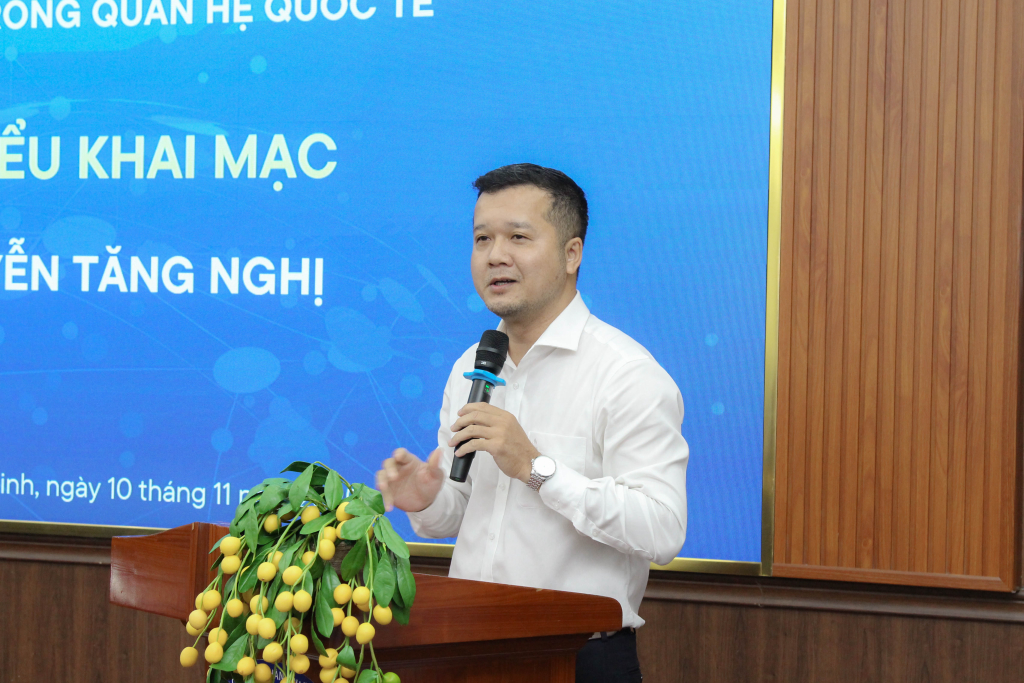
Dr. Nguyen Tang Nghi, Head of the Faculty of History & International Relations, University of Social Sciences and Humanities, VNUHCM, delivering the opening speech - Photo: Organizing Committee
In his opening remarks, Dr. Nguyen Tang Nghi (USSH, VNUHCM) emphasized that: “Clarifying the theoretical basis, operational mechanisms, and practical evidence of non-material factors in international relations not only contributes to completing the specialized knowledge system but also carries strategic significance for Viet Nam - a country rising strongly in the process of deep integration. In that context, capabilities such as national image, cultural appeal, and the ability to lead regional standards will become invaluable strategic resources, contributing to enhancing Viet Nam’s position and influence on the international stage.”
Dr. Nguyen Tang Nghi, Head of the Faculty of History & International Relations, University of Social Sciences and Humanities, VNUHCM, delivering the opening speech - Photo: Organizing Committee
In his keynote speech, Prof. Dr. Hoang Khac Nam - USSH, VNU, emphasized the importance of non-material factors in shaping and orienting human behavior, thereby profoundly impacting social life and international relations. He argued that values such as “propriety, righteousness, integrity, and honor” (le, nghia, liem, si) once considered the moral foundation of a nation, still hold their original significance in the modern world - where “character determines destiny” is true not only for individuals but also for nations. He also stressed that nurturing and promoting non-material factors - especially through education and social awareness - is a prerequisite for enhancing national status. As the role of humans is elevated, non-material factors increasingly become a focus in research and policy planning.
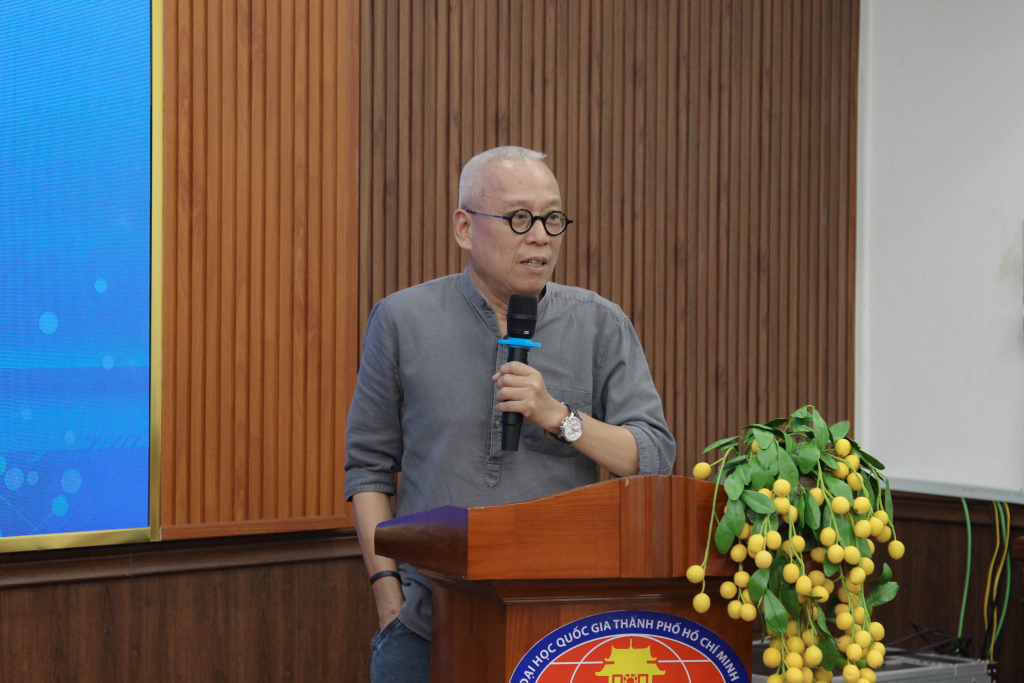
Prof. Dr. Hoang Khac Nam delivering the keynote speech at the conference - Photo: Organizing Committee
Session 1: Theoretical Foundation
Chair: Dr. Nguyen Tang Nghi - Dr. Le Lena
Prof. Dr. Hoang Khac Nam opened the session with a presentation on non-material factors in International Relations - “Concept, nature, and various aspects of non-material factors in International Relations”, focusing on the question: Is the history of international relations an inevitable process, or the result of human choices and actions?
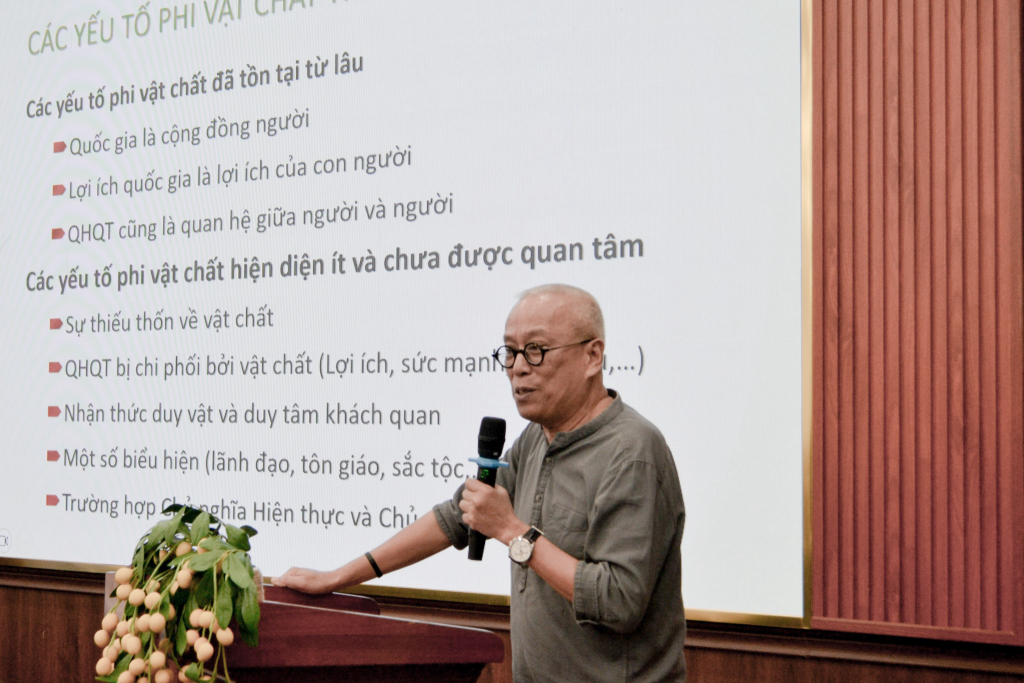
Prof. Dr. Hoang Khac Nam presenting the paper “Concept, nature, and various aspects of non-material factors in International Relations” - Photo: Organizing Committee
He approached the issue from a historical perspective, arguing that in the early stages of international relations, due to limited material conditions, nations mainly acted according to material interests, dominated by military and economic power. The prevailing materialist conception meant that the human, moral, and spiritual factors were less prioritized. However, since 1945, when material living conditions improved, non-material factors have gradually become a component of national power, and even a goal of foreign policy. Value systems, identity, humanitarian spirit, and legitimacy are seen as the foundations of soft power, shaping social structures and influencing national behavior in the international system.
Prof. Dr. Hoang Khac Nam emphasized that in the modern era, non-material factors - such as trust, values, communication, and democracy - are increasingly impacting international politics, but they cannot completely replace material factors. A sustainable policy must harmonize hard and soft power, humans and historical context. The presentation concluded: the history of international relations is not inevitable but always depends on the human ability to steer and create turning points with sound policies.
Following this, Dr. Tran Nguyen Khang (Faculty of History and International Relations, USSH, VNUHCM), with the presentation “Non-material factors in international relations: Theoretical basis, international practice, and policy implications for Viet Nam,” focused on systematizing core concepts such as identity, values and norms, national image - prestige, public opinion, culture, religion, and history, thereby defining these as components of soft power in foreign policy.
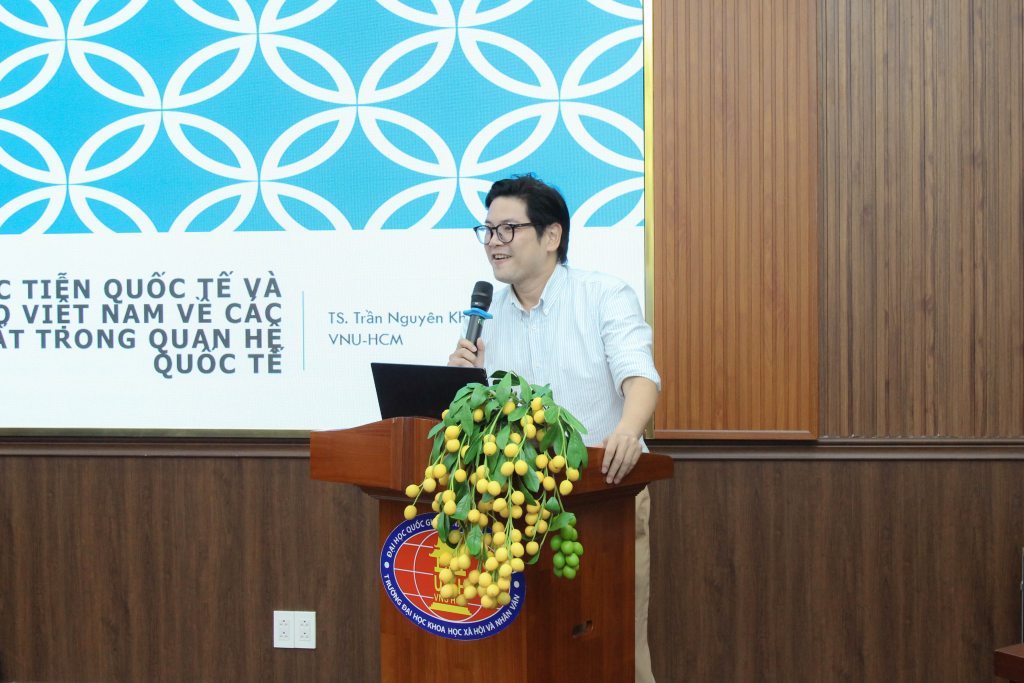
Dr. Tran Nguyen Khang presenting the paper “Non-material factors in international relations: Theoretical basis, international practice, and policy implications for Viet Nam” - Photo: Organizing Committee
He emphasized five characteristics of non-material factors: invisible, difficult to measure, having indirect but profound impact, intersubjective, and changeable according to context and discourse. From the perspectives of liberalism, constructivism, and critical theory, Dr. Khang analyzed how democratic values, freedom, and the rule of law are used by the United States as normative tools; how South Korea promotes cultural power through Hallyu; and China’s efforts to shape soft power through Confucius Institutes.
From these cases, he concluded that soft power is only sustainable when linked to material capacity - forming “smart power”. For Viet Nam, this requires interdisciplinary investment, consolidating identity, and placing communication and education at the center of foreign strategy.
Assoc. Prof. Dr. Bui Hai Dang (Center for Korean Studies, USSH, VNUHCM), with the final presentation of the session - “The role of identity in International Relations,” delved into how nations perceive themselves and how that perception shapes foreign behavior. He emphasized that identity is both a unifying foundation and a source of conflict: it creates trust, shared values, and a basis for cooperation, but at the same time, when differences arise, it can also create opposition and tension.
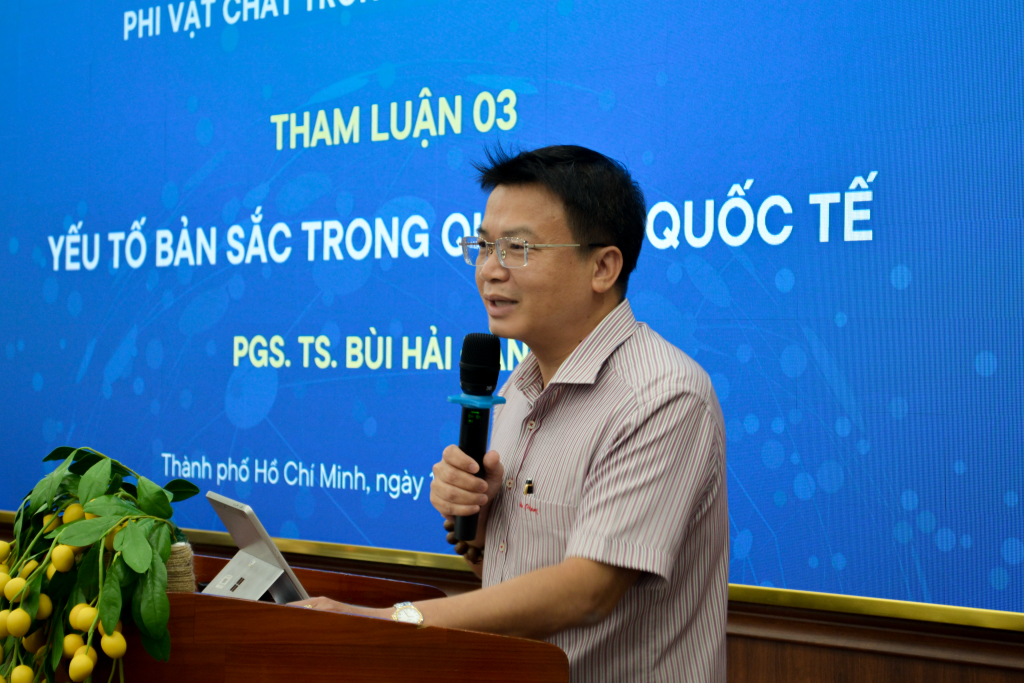
Assoc. Prof. Dr. Bui Hai Dang presenting the paper “The role of identity in International Relations” - Photo: Organizing Committee
From a constructivist perspective, he argued that identity is not fixed but can be adjusted and reconstructed to maintain stability in international relations. The France-Germany case shows the transformation of identity from confrontation to cooperation within the framework of NATO and the European Union, where countries share Western political identity and oppose the Soviet bloc. Conversely, the Russia-Ukraine conflict or the US-China competition reflect types of identity conflicts, as each side asserts its own model of values and order.
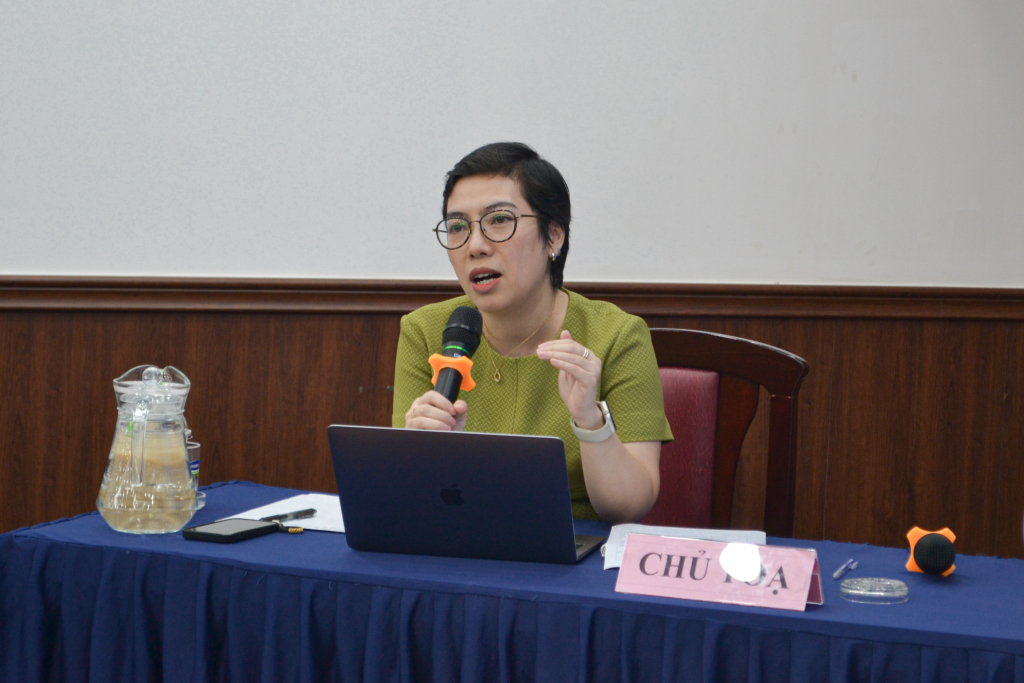
Dr. Le Lena commenting on the papers, concluding Session 1 - Photo: Organizing Committee
Session 2: Practice and Application
Chair: Dr. Nguyen Tang Nghi - Prof. Dr. Hoang Khac Nam
Moving from theory to practice, the second session opened with a case study of Viet Nam - United States relations. Assoc. Prof. Dr. Tran Nam Tien (USSH, VNUHCM) brought a highly-rated presentation on theoretical depth titled “Strategic trust in international relations: A case study of the Viet Nam - US Comprehensive Strategic Partnership.” In his presentation, he emphasized that strategic trust is one of the most important non-material factors, built through the process of creating shared values, reconciling perceptions, and establishing institutional frameworks, not just based on material interests.
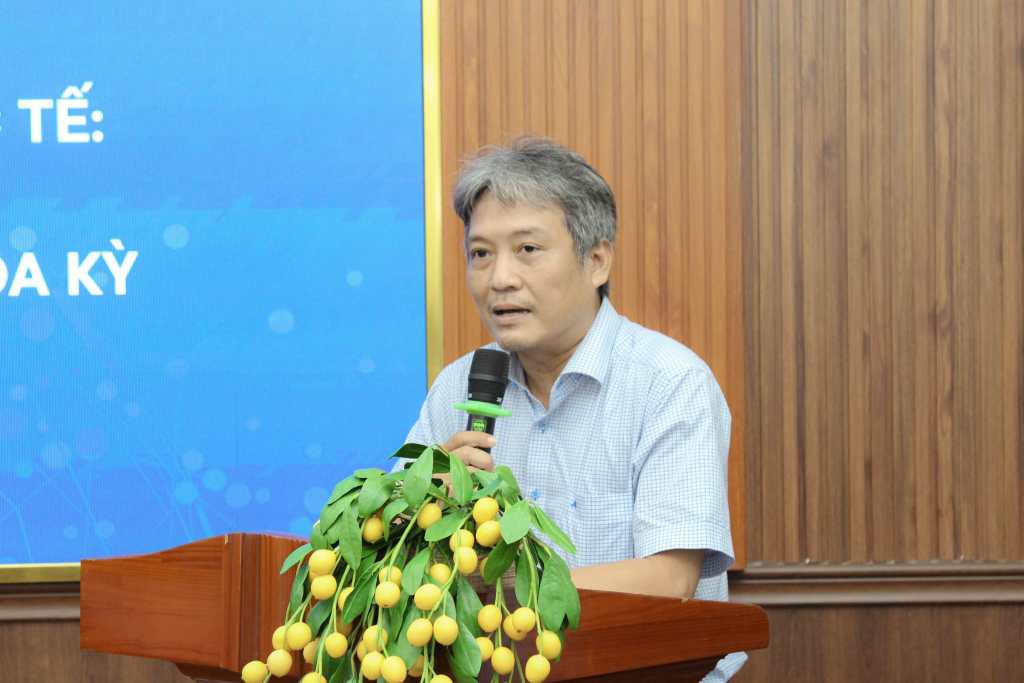
Assoc. Prof. Dr. Tran Nam Tien presenting the paper “Strategic trust in international relations: A case study of the Viet Nam - US Comprehensive Strategic Partnership” - Photo: Organizing Committee
From a constructivist perspective, he pointed out that trust does not form naturally but is built through the process of creating shared values and overlapping interests. The Viet Nam - US case demonstrates this: the 1995-2013 period was a process of reconciliation and healing the consequences of war, while the 2013 milestone, when the two countries established a comprehensive partnership, marked a transition from ordinary trust to strategic trust. The 2023 event, with the upgrade to a comprehensive strategic partnership, demonstrates the effort to transcend traditional institutional frameworks to aim for long-term and stable trust.
Under the institutional liberal approach, he further analyzed the impact of “institutional inertia” - where cooperation mechanisms and political commitments help maintain trust regardless of changes in leadership. The visit to the United States by General Secretary Nguyen Phu Trong in 2015 is seen as a milestone confirming mutual recognition of roles and legitimacy in bilateral relations.
Assoc. Prof. Dr. Tran Nam Tien concluded that in international relations, trust is a “luxury asset,” but the Viet Nam - US case shows it can be created and maintained when material and non-material factors are harmoniously combined in a long-term strategic vision.
Expanding the scope of analysis, Dr. Nguyen Thanh Trung (Fulbright University) with the presentation “Ideas, identity, and discourse: Development and impact in the field of International Relations” highlighted the role of ideas, identity, and discourse in shaping foreign policy and the structure of international relations. He pointed out that traditional materialist theories - realism and liberalism - meet limits when explaining fluctuations such as the Berlin Wall or the Cold War, thus paving the way for ideational theory, including constructivism and post-structuralism, where identities and norms are formed through intersubjective interactions and discourse.
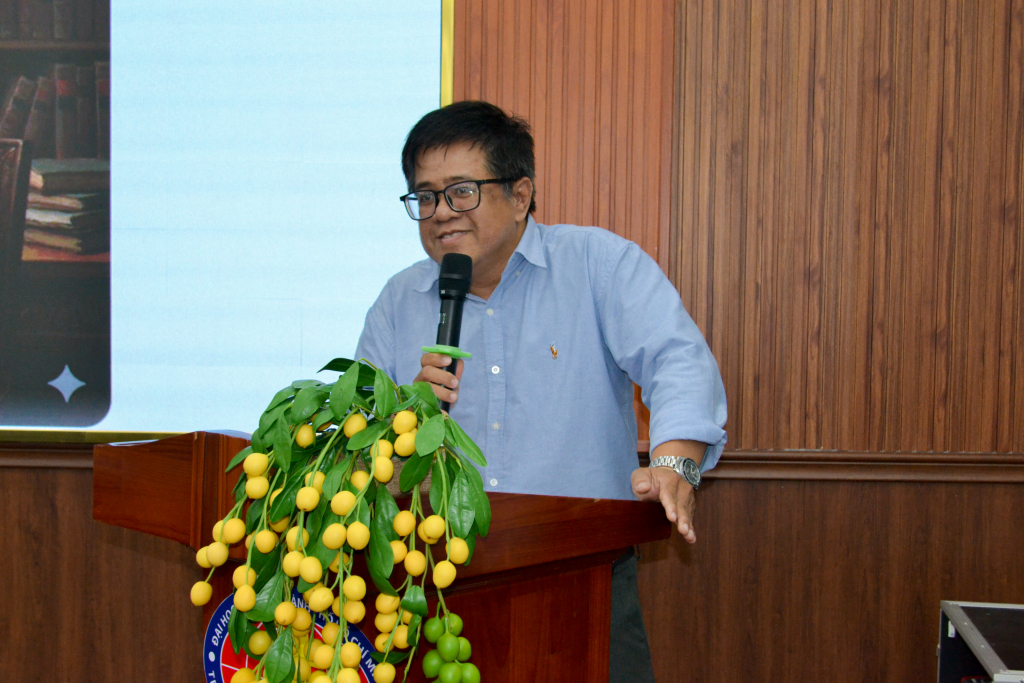
Dr. Nguyen Thanh Trung presenting the paper “Ideas, identity, and discourse: Development and impact in the field of International Relations” - Photo: Organizing Committee
Dr. Trung analyzed the norm life cycle (emergence, cascade, internalization) and the role of domestic cultural structure in forming national identity, while emphasizing that power and knowledge are always created through discourse, not only reflecting reality but actively constructing it. He provided a case study of ASEAN, where despite diversity, countries still maintain cohesion through the diffusion of norms and shared identity, demonstrating how power discourse reinforces regional leadership and cooperation.
The conclusion of the paper emphasized that in the post-material and information-explosion era, the way a country tells the story of itself and the world - through ideas, identity, and discourse - can be no less important than material power, while providing a theoretical basis for developing a truly global international relations theory, combining Western epistemology and other practical experiences.
Concluding the series of presentations, Dr. Le Lena presented the paper “Normative power of ASEAN and EU in Southeast Asia: Mechanisms and implementation practice,” bringing an in-depth comparative view on how the two regional organizations use normative power to influence the behavior of other actors. She analyzed the process of implementing this power including: building and choosing norms, spreading, internationalizing, through mechanisms such as diplomacy, initiatives, standard models, and programs promoting values.
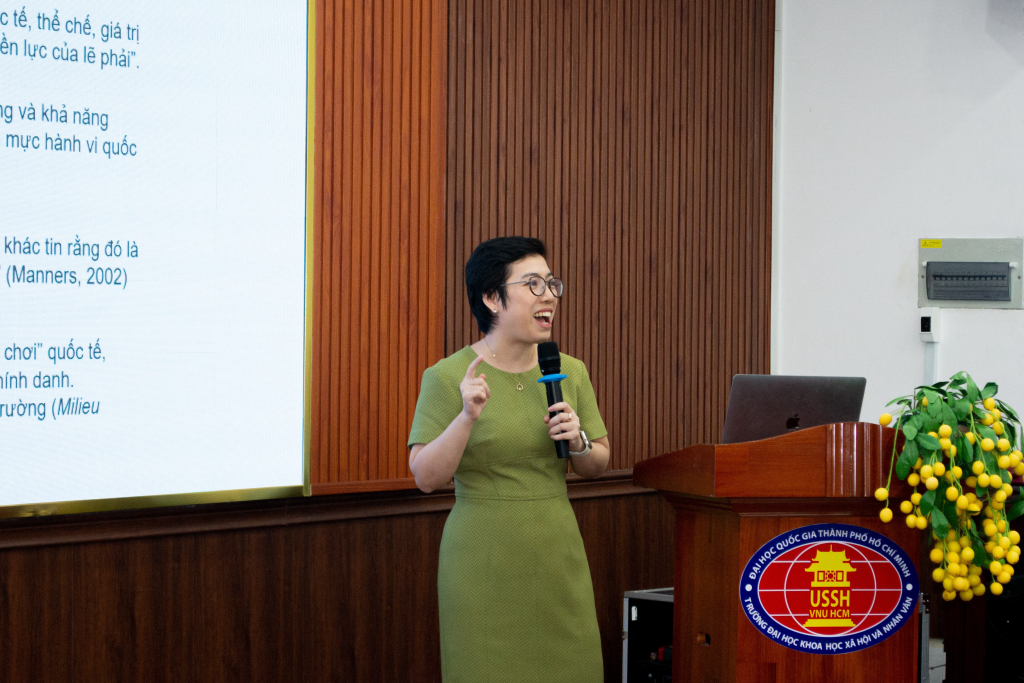
Dr. Le Lena presenting the paper “Normative power of ASEAN and EU in Southeast Asia: Mechanisms and implementation practice” - Photo: Organizing Committee
Dr. Le Lena emphasized that while ASEAN uses the “ASEAN Way” to maintain cohesion and stability in the region, the EU implements universal values such as democracy and human rights into common policy, combining soft and material power. The paper also pointed out the pluralism of norms in modern international relations, while raising questions about the ability of countries like China to build regional norms with “Eastern standards” in the context of globalization and cultural diversity.
Open discussion
Immediately after the presentation part, the discussion session took place vibrantly with many academic views raised around the role of non-material factors in international relations. Some opinions emphasized the interaction between the system structure and human behavior, arguing that the nation does not merely react to the international environment, but actively constructs meaning and interest through identity and norms.
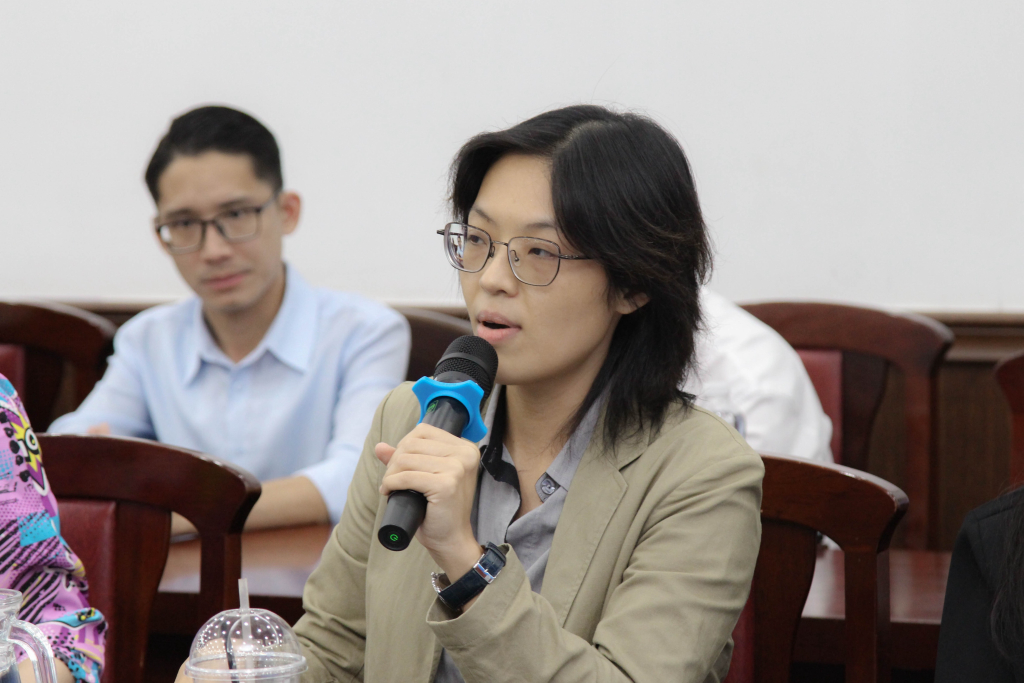
PhD Candidate Le Ngoc Thao Nguyen raising discussion questions at the conference - Photo: Organizing Committee
The speakers focused on discussing the central question: can non-material power - such as identity, discourse, culture, and trust - shape national action, or is material capacity the decisive factor in international politics? Some views argue that perception and culture are endogenous resources, contributing to regulating foreign policy, while shaping “national narratives” consistent with the interests and stances of the country in each historical period.
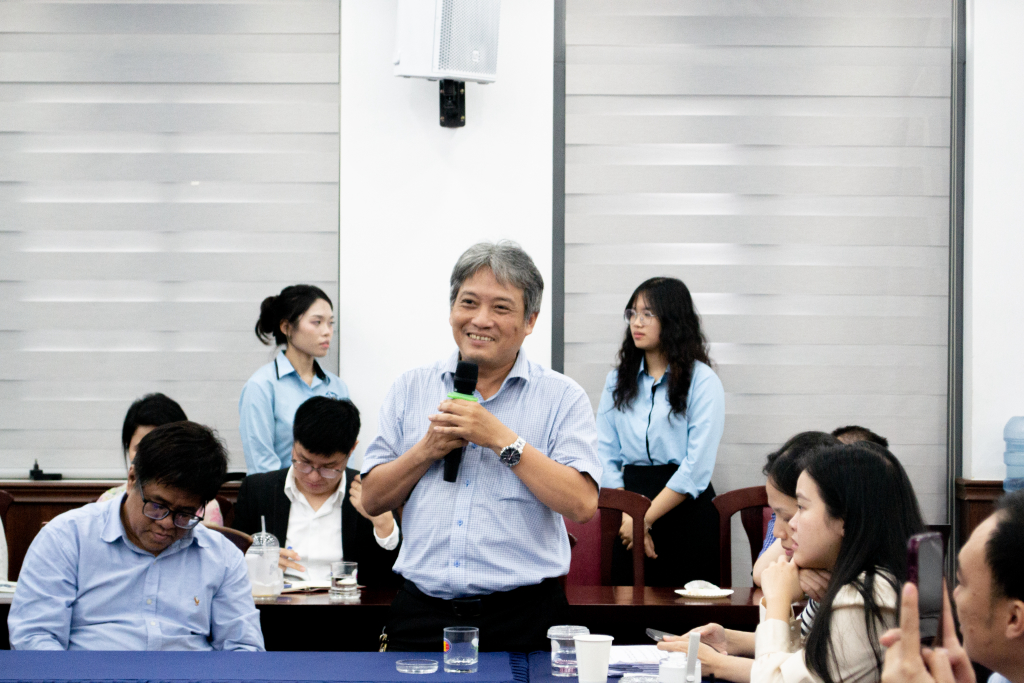
Prof. Dr. Tran Nam Tien answering discussion questions at the conference - Photo: Organizing Committee
In addition, the discussion also addressed the role of trust and credibility in international relations, as well as institutional mechanisms for soft power and normative power through state institutions. Many opinions agreed that normative power cannot completely replace material power, but needs to be combined to create overall strategic effectiveness in a competitive international environment.
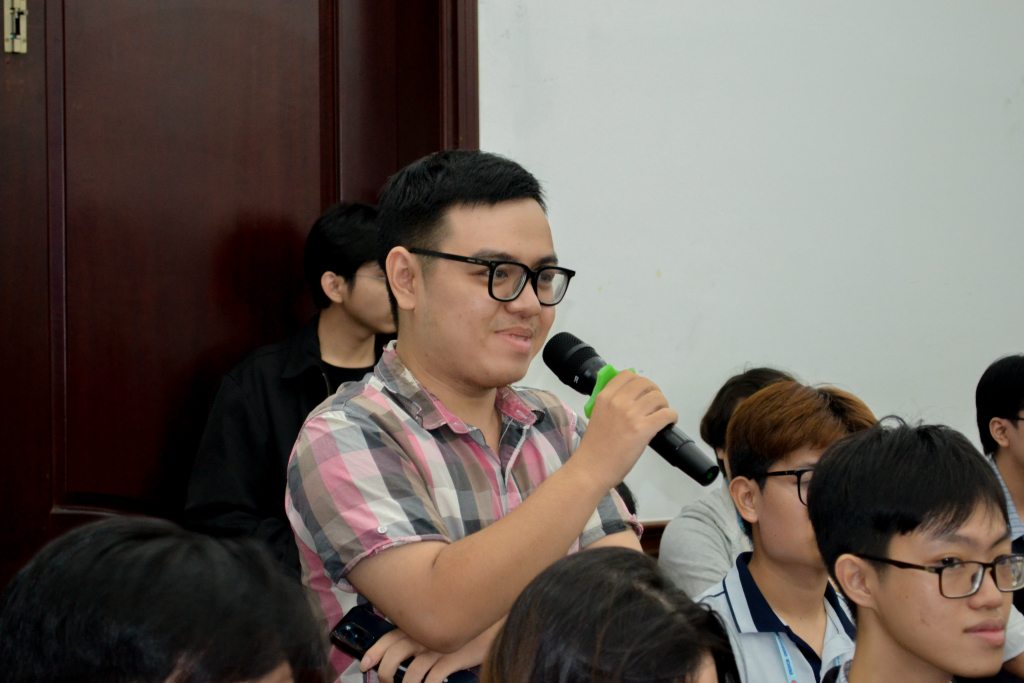
Students raising discussion questions at the conference - Photo: Organizing Committee
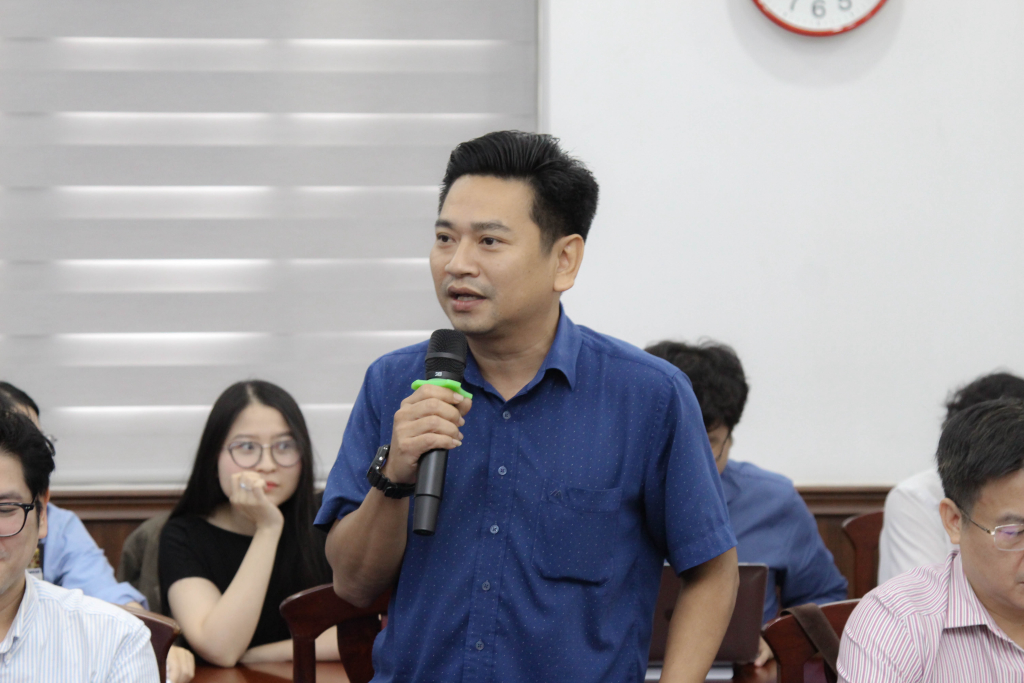
Dr. Nguyen Tuan Khanh participating in the discussion at the conference - Photo: Organizing Committee
Overall, the discussion session showed the multidimensionality in international relations theory and practice, while affirming the importance of balancing capabilities, identities, norms, and discourse in the process of planning and implementing foreign policy.
Closing speech
Concluding the conference, the Organizing Committee emphasized that the conference was successful in gathering many multidimensional perspectives, combining theory and practice. The event highlighted the importance of non-material factors, provided a theoretical basis and analytical framework from various theories, and opened up many new research directions in international relations, emphasizing the value of “living in life, one needs to have a heart.”
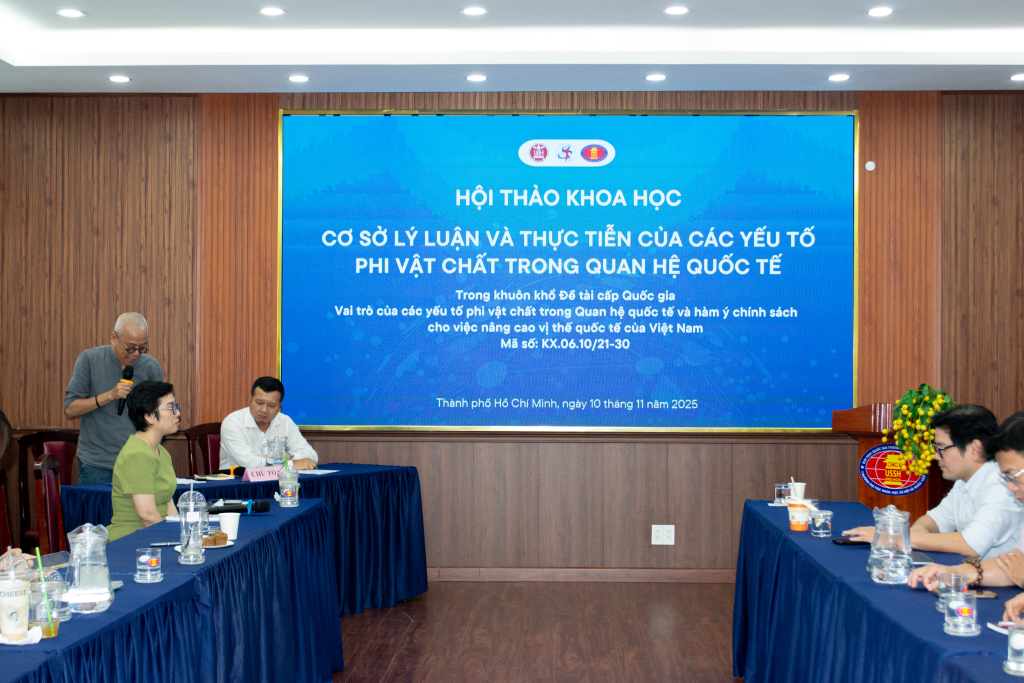
Prof. Dr. Hoang Khac Nam commenting on the papers of session 2, delivering the closing speech - Photo: Organizing Committee
In an increasingly complex international context, military and economic power are not enough to explain or predict national behavior. Non-material factors such as trust, identity, values, and discourse are increasingly becoming decisive factors. For Viet Nam, understanding and applying these factors is not only an academic requirement but also an essential strategy to enhance national status, building effective foreign policy in the process of deep international integration.
|
The National Scientific Conference “Theoretical and practical basis of non-material factors in international relations” took place on the morning of November 10, 2025, at the University of Social Sciences and Humanities, Viet Nam National University Ho Chi Minh City (USSH, VNUHCM). The event was within the framework of the national-level project “The role of non-material factors in international relations and policy implications for enhancing Viet Nam’s international status” (Code: KX.06.10/21-30) led by Dr. Le Lena (Faculty of International Studies, USSH, VNU). The conference was organized by the USSH, VNU (the lead agency of the project) in coordination with the International Relations program, Faculty of History and International Relations, USSH, VNUHCM. Session 1: Concept, nature, and various aspects of non-material factors in international relations Chair: Dr. Nguyen Tang Nghi - Dr. Le Lena
Session 2: Practical factors determining the existence and development of non-material factors in current international relations Chair: Dr. Nguyen Tang Nghi - Prof. Dr. Hoang Khac Nam
|
Anh Thy
Bài viết liên quan
HUNTING FOR INTERNATIONAL SCHOLARSHIPS - WHY NOT GIVE IT A TRY? THE FLIGHT TO INTERNATIONAL INTEGRATION IS NOW OPEN FOR CHECK-IN!
Announcement regarding student exchange program with University of Paris Cité, France for the 2nd semester of the 2026-2027 academic year