
National Scientific Conference “Foreign policy adjustments of Russia and China in the new context: theoretical, practical issues and impacts on global, regional, and Vietnam’s international relations”
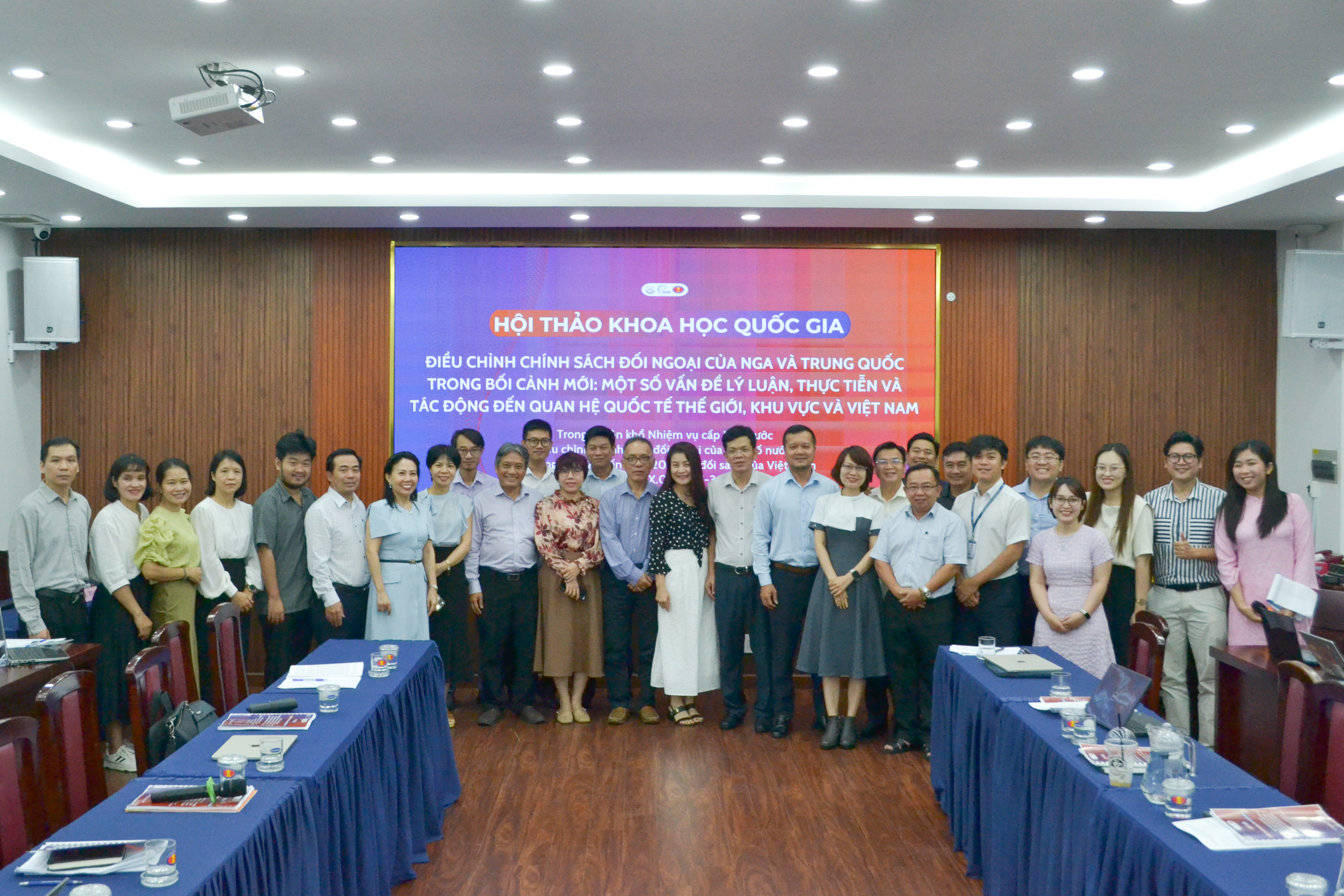
On the morning of November 14, 2025, at the University of Social Sciences and Humanities, Viet Nam National University Ho Chi Minh City (USSH, VNUHCM), a scientific conference was held on the topic “Foreign policy adjustments of Russia and China in the new context: theoretical, practical issues and impacts on global, regional, and Vietnam’s international relations”. The event was organized within the framework of the State-level project: “Foreign policy adjustments of some major powers from February 2022 to 2030 and Vietnam’s policy response”, code: KX.06.01/21-30, led by Assoc. Prof. Dr. Dang Minh Duc.
The conference was co-organized by the Institute of European and American Studies in coordination with the Department of International Relations, Faculty of History and International Relations, USSH, VNUHCM.
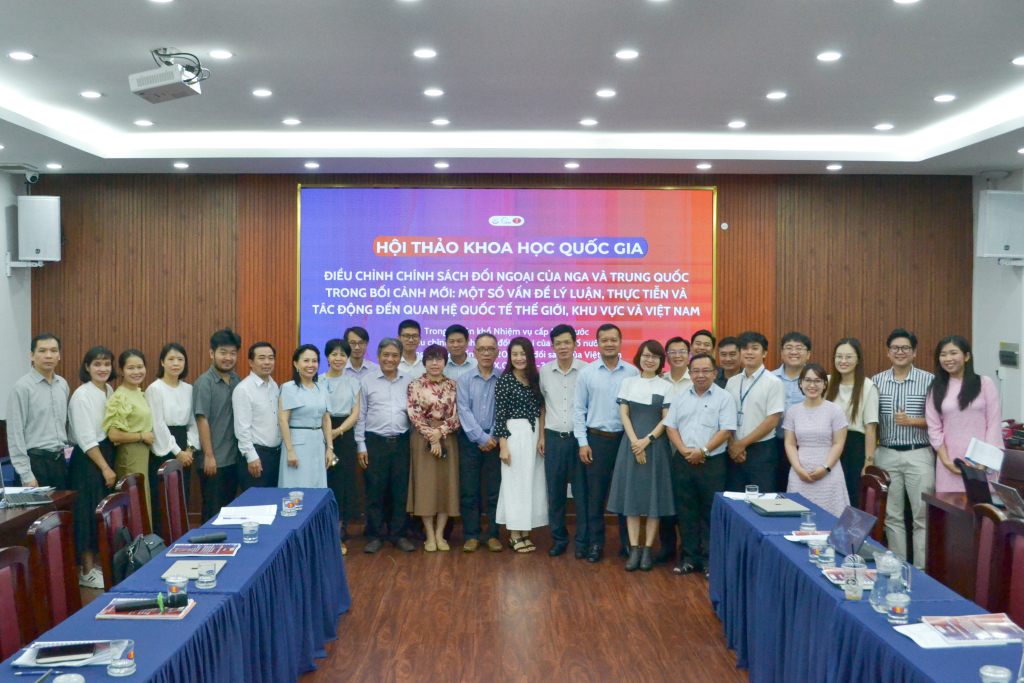
Scientific conference “Foreign policy adjustments of Russia and China in the new context: theoretical, practical issues and impacts on global, regional, and Vietnam’s international relations” - Photo: Organizing Committee
This was a multidimensional and vibrant exchange forum for speakers, experts, scholars, lecturers, PhD students, and students to discuss and interpret the theoretical foundations, characteristics, roles, and approaches to strategic partnerships in international relations and their application to the case of Vietnam.
In his keynote speech, Assoc. Prof. Dr. Dang Minh Duc - Deputy Director of the Institute of European and American Studies, affirmed: “Foreign policy is a continuation of domestic policy, playing a steering role in protecting national interests. (...) Major developments and events in the world, especially global and regional challenges, are forcing major powers to adjust their foreign policies.”
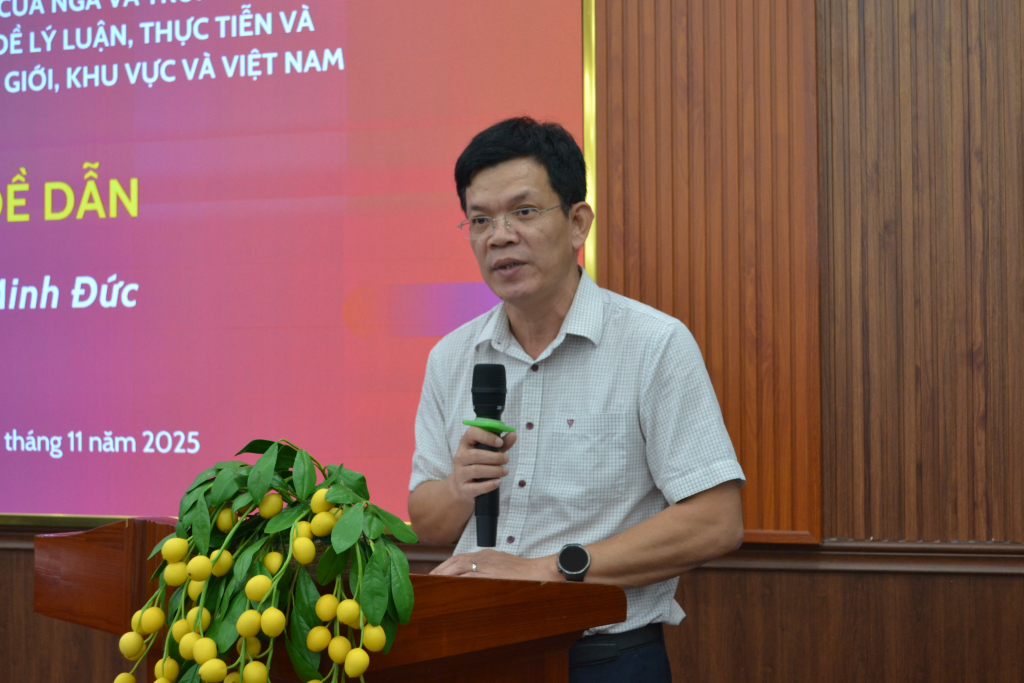
Assoc. Prof. Dr. Dang Minh Duc delivering the keynote speech - Photo: Organizing Committee
According to him, the changes in the foreign policies of Russia and China are assessed as: “multi-layered, multi-level, and strategically long-term”. Facing this complex and volatile international situation, he emphasized that identifying the theoretical foundations to understand the nature of strategic adjustments is extremely necessary for Vietnam. This will contribute to helping Vietnam maintain independence, self-reliance, multilateralization, and diversification of foreign relations.
Session 1: Foreign policy adjustments of Russia in the new context: Theoretical, practical issues and impacts on global, regional, and Vietnam’s international relations
Chairs: Dr. Nguyen Tang Nghi and Assoc. Prof. Dr. Dang Minh Duc
Assoc. Prof. Dr. Tran Nam Tien (USSH, VNUHCM) opened with the presentation “Foreign policy of the Russian Federation after the Russia-Ukraine conflict: Identification and vision to 2030”, analyzing Russia’s 2021 national security strategy, which is considered the foundation for its new foreign policy, identifying US and Western interference in the “Post-Soviet” space as a direct threat that exceeds Russia’s tolerance. The presentation discussed and reviewed new foreign policy documents signed by President Putin, including the “Russian World” doctrine (September 2022) and the new Foreign Policy Concept (March 2023), defining the core goals as ensuring security, sovereignty, territorial integrity, while strengthening Russia’s position as a responsible, influential, and independent power in the world system.
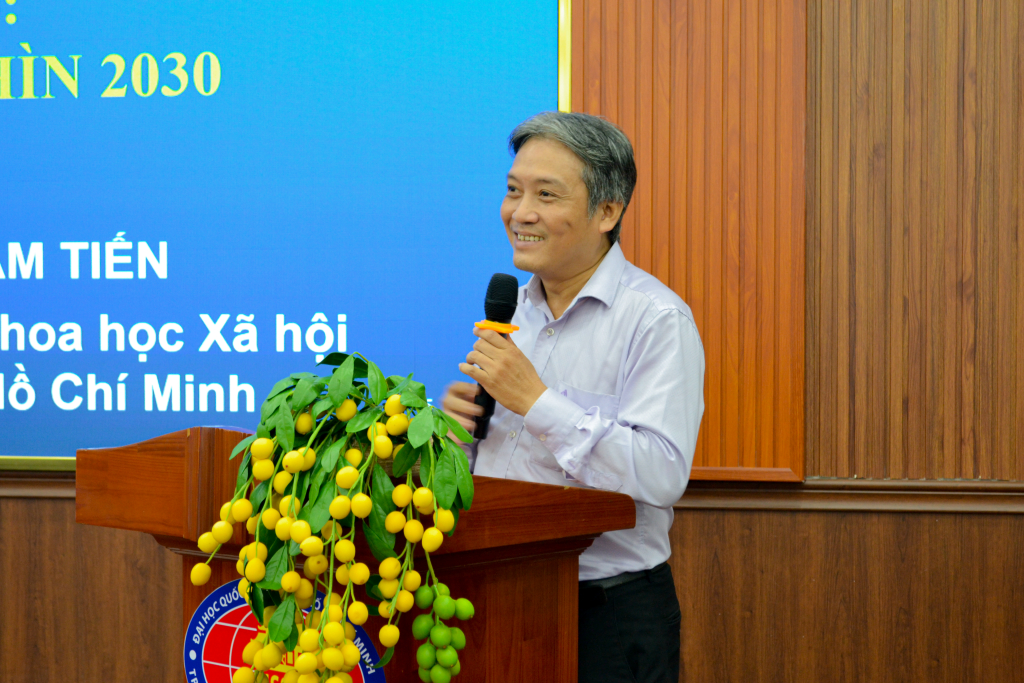
Assoc. Prof. Dr. Tran Nam Tien presenting the paper “Foreign policy of the Russian Federation after the Russia-Ukraine conflict: Identification and vision to 2030” - Photo: Organizing Committee
According to Assoc. Prof. Dr. Tran Nam Tien, Russia’s foreign policy since 2022 is characterized by a long-term strategic axis, driven by a systematized ideological commitment to dismantle US hegemony and assert Russia’s position as an independent, powerful center of the modern world. This new strategic identity is operated through a two-sided policy: maximum confrontation with hard power combined with pragmatic, instrumental alignment with the East and normative engagement with the Global South.
Following that, Dr. Dinh Le Hong Giang (Center for Russia and CIS Studies, Institute of European and American Studies) presented the paper “Two strategic trends (centripetal and centrifugal) in relations between CIS countries and Russia, and Russia’s policy response after 2022”. The paper focused on explaining how CIS (Commonwealth of Independent States) countries position Russia in their strategic calculations, and how Russia responds to this increasingly clear differentiation after the event on February 24, 2022.
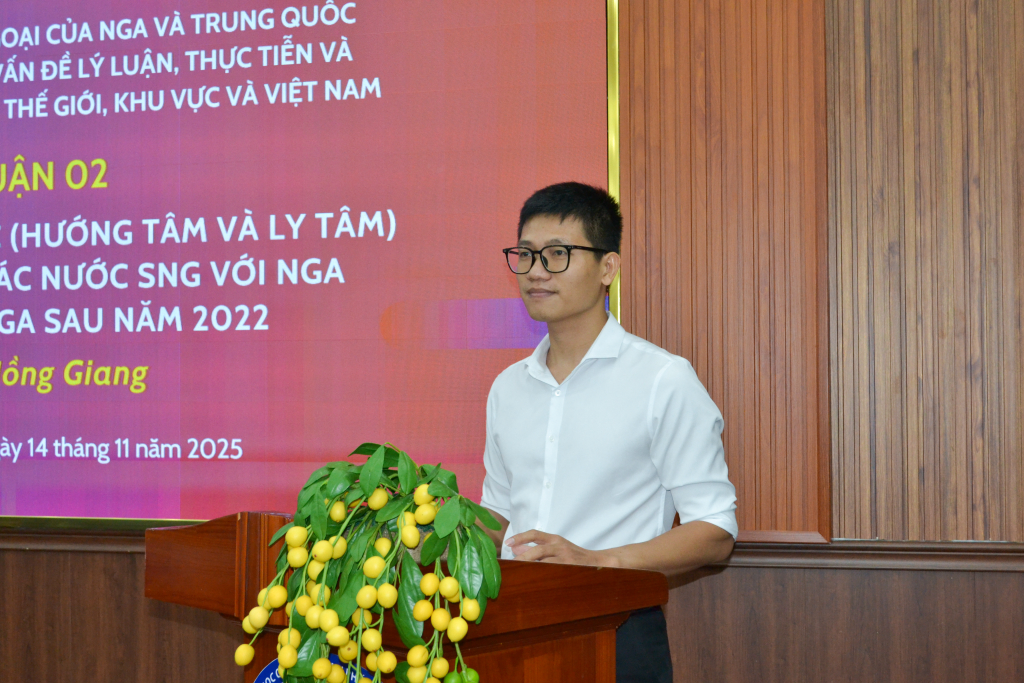
Dr. Dinh Le Hong Giang presenting the paper “Two strategic trends (centripetal and centrifugal) in relations between CIS countries and Russia, and Russia’s policy response after 2022” - Photo: Organizing Committee
Dr. Giang pointed out that the two opposing trends - centripetal (increasing levels of dependence or alignment with Russia) and centrifugal (seeking to distance and diversify foreign relations) - have become sharper since 2022. Against this background, the paper analyzed the factors shaping Russia-CIS relations: Russia’s role as the regional order-creating nucleus, the emergence of middle powers in the post-Soviet space, and Moscow’s ability to gather forces. A series of typical cases were used to illustrate how each country chooses its own strategy, from strengthening alignment to proactively separating from Russia’s orbit.
He also identified centrifugal manifestations even though the centripetal trend remains dominant in some institutional structures. Faced with these fluctuations, Russia has deployed many counter-measures to maintain its influence and protect its interests in the post-Soviet space, while not accepting moves deemed as direct challenges to Moscow’s regional position.
In general, the presentation helped paint a continuing picture of strategic adjustments in the region, clarifying how CIS countries - as the most significant group of traditional partners for Vietnam - are reconfiguring relations with Russia and forcing Moscow to adapt to maintain its central role.
The final presentation of session 1, “The inevitability of increasing relations with China for Russia in the context of geopolitical changes since 2022”, presented by Dr. Vu Thuy Trang (Center for Russia and CIS Studies, Institute of European and American Studies), emphasized that correctly identifying the inevitability of the Russia-China trend is a crucial issue for Vietnam - a country that simultaneously maintains Comprehensive Strategic Partnerships with both sides.
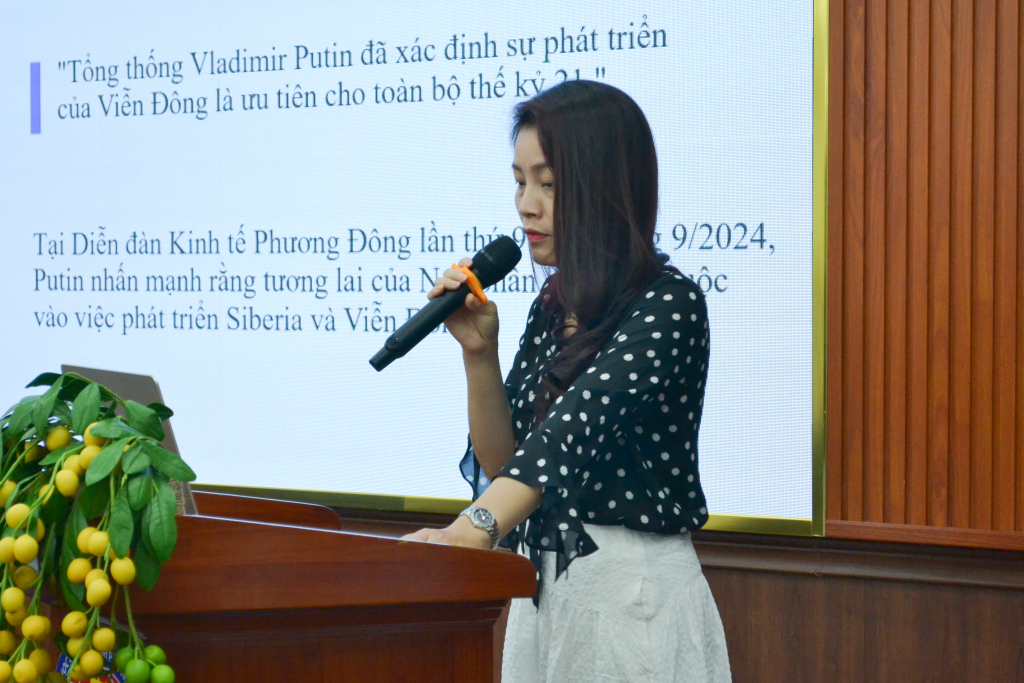
Dr. Vu Thuy Trang presenting the paper “The inevitability of increasing relations with China for Russia in the context of geopolitical changes since 2022” - Photo: Organizing Committee
Dr. Vu Thuy Trang pointed out that the tightening of Russia-China relations was not a spontaneous reaction to the geopolitical shock post-2022, but was placed on the foundation of bilateral interests and a shared perception of the shift in global power. China plays a central role in Russia’s pivot-to-the-East strategy, becoming the key partner for Moscow to pursue its core objectives, especially in the development orientation of the Far East region.
Russia-China relations are described as relations based on substantive interests: China has expanded its economic presence in Russia, while Russia is currently the second-largest investor in China, after the United States. Along with material interests, the two countries share views on the bias of the Western-led international order. But despite many similarities, Russia still avoids establishing a formal alliance with China because this is not a comprehensive cooperative relationship. Strategic barriers, such as a lack of overlapping interests in some areas and an incomplete level of trust, still maintain a certain distance between the two sides.
The conclusion of the presentation showed that strengthening relations with China helps Russia compensate for the shortfalls caused by Western sanctions and strengthens coordination in multilateral mechanisms. However, this relationship structure still stops at the level of a Strategic Partnership based on interests, not an alliance.
Session 2: Foreign policy adjustments of China in the new context: Theoretical, practical issues and impacts on global, regional, and Vietnam’s international relations
Chairs: Assoc. Prof. Dr. Dang Minh Duc and Assoc. Prof. Dr. Bui Hai Dang
Opening session 2, Dr. Nguyen Xuan Cuong (Institute of Asia-Pacific Studies) presented the paper “China’s strategy and foreign policy through a number of global initiatives”, outlining Beijing’s foreign policy structure through key initiatives: Belt and Road Initiative (BRI), Global Development Initiative (GDI), Global Security Initiative (GSI), and Global Civilization Initiative (GCI). These initiatives are designed to serve China’s long-term goals: national rejuvenation, shaping a “new-style” international relations model, and building a Community of Common Destiny.
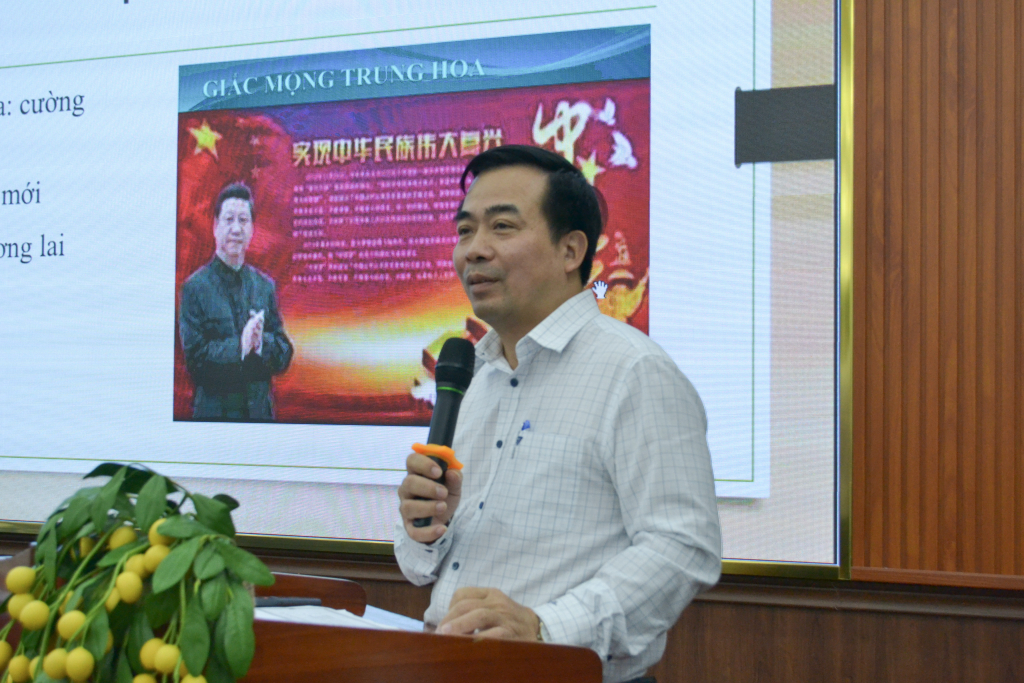
Dr. Nguyen Xuan Cuong presenting the paper “China’s strategy and foreign policy through a number of global initiatives” - Photo: Organizing Committee
Implementing global initiatives helps China consolidate its role in the region and expand its influence to the international scope, while proposing ways to interpret and handle global issues according to standards defined by China. This is also a tool for Beijing to engage in competition between major powers as an entity with a global vision and sufficient material capacity to pursue the goal of becoming a superpower.
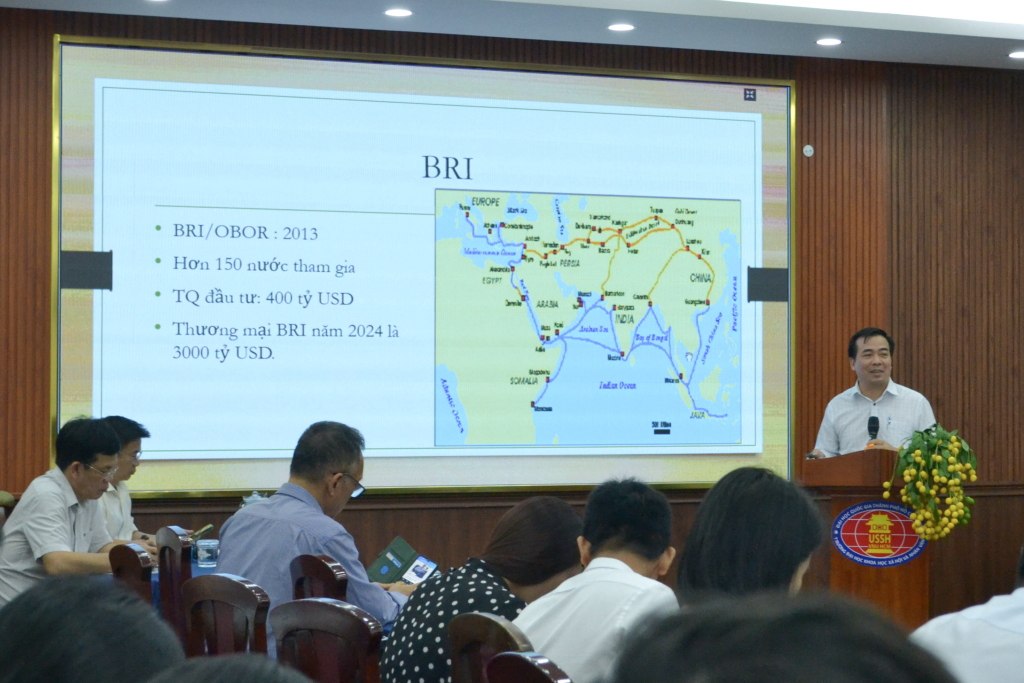
Dr. Nguyen Xuan Cuong presenting the paper “China’s strategy and foreign policy through a number of global initiatives” - Photo: Organizing Committee
However, China faces resistance from the United States’ vast network of allies, causing global governance structures to become increasingly fragmented as both sides strive to gather forces in opposite directions. The presentation showed that China has established a strategic vision and implementation mechanism, but the success level of these initiatives cannot yet be measured.
Expanding the scope of analysis, the paper “US-China competition in the Indo-Pacific region: A look from power transition theory”, presented by Dr. Nguyen Tang Nghi (USSH, VNUHCM), applied Organski’s theoretical framework to interpret two core dynamics of US-China competition: power transition and rule competition.
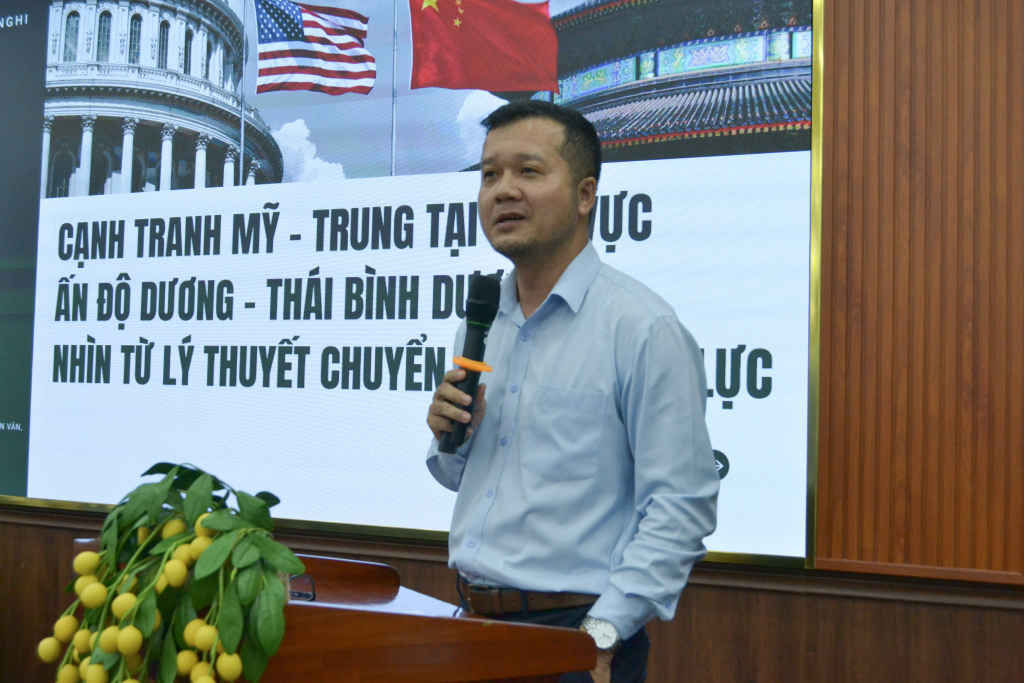
Dr. Nguyen Tang Nghi (USSH, VNUHCM) presenting the paper “US-China competition in the Indo-Pacific region: A look from power transition theory” - Photo: Organizing Committee
The presentation showed that China has risen strongly in terms of economy, military, and technology since the 1980s, associated with the strategy “韬光养晦” (tao guang yang hui) - which should be understood correctly as “having talent and wisdom but keeping a low profile so others do not know about you”, not “hiding oneself to wait for the right time” according to the popular interpretation. Beijing’s expansion of power and challenge to the US-led order, especially in hotspots like the East Sea, is direct evidence of the logic of power transition theory.
Dr. Nghi also analyzed the spillover effects of US-China competition on countries in the region: flexible diplomacy, diversification of relations and supply chains (China+1), strengthening defense capabilities, and adjusting security policies to reduce dependence risks. This is an inevitable adaptation process for countries in the intermediate position between the two power poles.
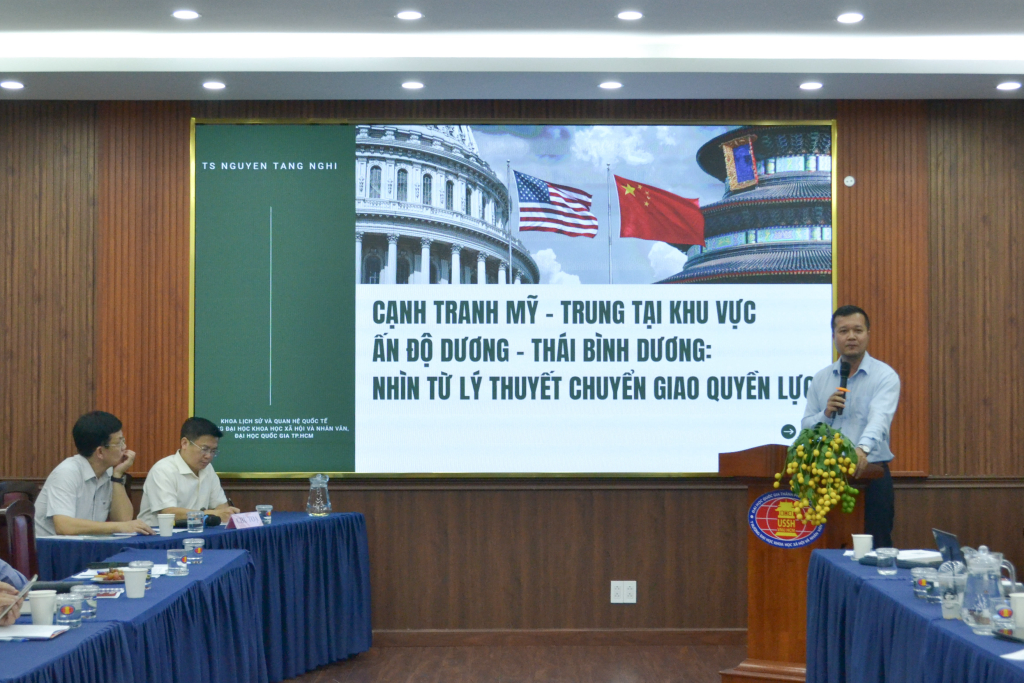
Dr. Nguyen Tang Nghi presenting the paper “US-China competition in the Indo-Pacific region: A look from power transition theory” - Photo: Organizing Committee
He concluded that US-China competition is currently a typical case of Organski’s model, in which the rising state challenges the hegemon. Consequently, the regional order is entering a polarized phase, forming new alliance structures and forcing countries to continuously recalibrate their strategies to survive in an environment of fluctuating power.
The final presentation closing session 2 - “Russia-China foreign policy fluctuations and strategic implications for Vietnam”, presented by Dr. Nguyen Thai Giao Thuy (Ho Chi Minh City University of Foreign Languages and Information Technology - HUFLIT), focused on analyzing changes in the foreign policies of Russia and China in the context of a multipolar international environment and increasingly intensifying US-China-Russia strategic competition.
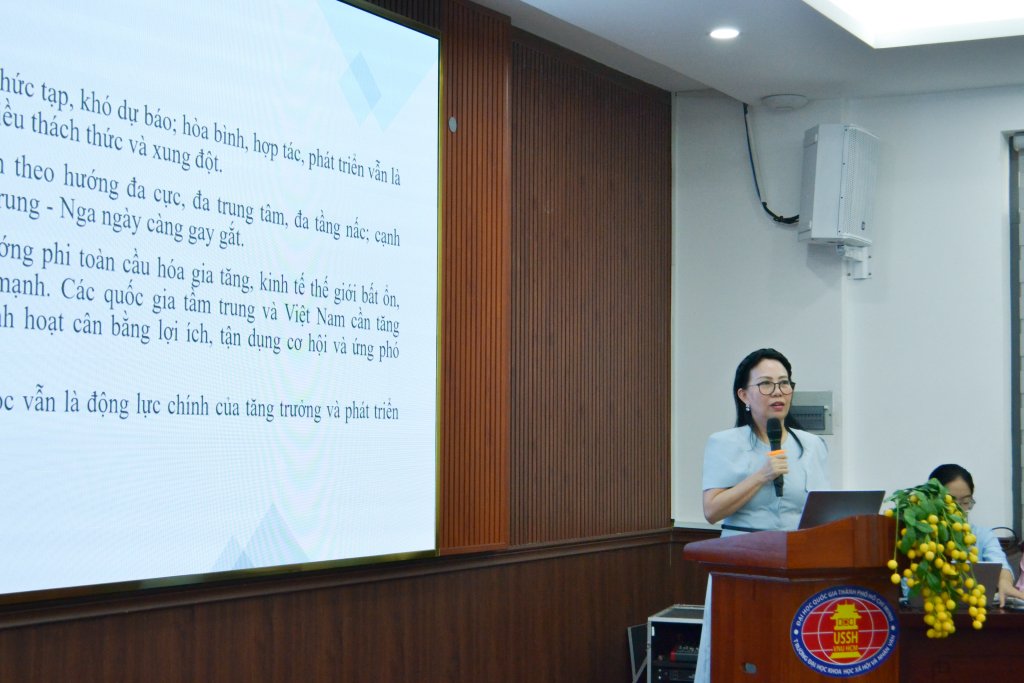
Dr. Nguyen Thai Giao Thuy presenting the paper “Russia-China foreign policy fluctuations and strategic implications for Vietnam” - Photo: Organizing Committee
The presentation emphasized that Russia-China relations have developed deeply since 2012 under the leadership of Putin and Xi Jinping, with Russia following a trend of de-Westernization and an “Eastward Pivot” strategy after the 2022 Ukraine conflict, making China a comprehensive strategic partner. Simultaneously, China aims to assert its central regional role, expanding global economic cooperation through initiatives such as the Belt and Road Initiative (BRI) and raising its position in the multipolar order.
Dr. Nguyen Thai Giao Thuy pointed out that Russia-China relations have profound impacts on the international situation and regional security. Whether it is US-China competition or the increasingly close relationship between Russia and China, everything is both an opportunity and a challenge for Vietnam’s foreign policy, posing issues related to sovereignty, security, and human rights. Therefore, Vietnam needs to prepare a flexibly adaptive diplomacy, promote its role in multilateral mechanisms, strengthen its position and influence, while protecting national interests regarding security, economy, and politics, associated with the development of economic and energy diplomacy to respond to non-traditional security challenges.
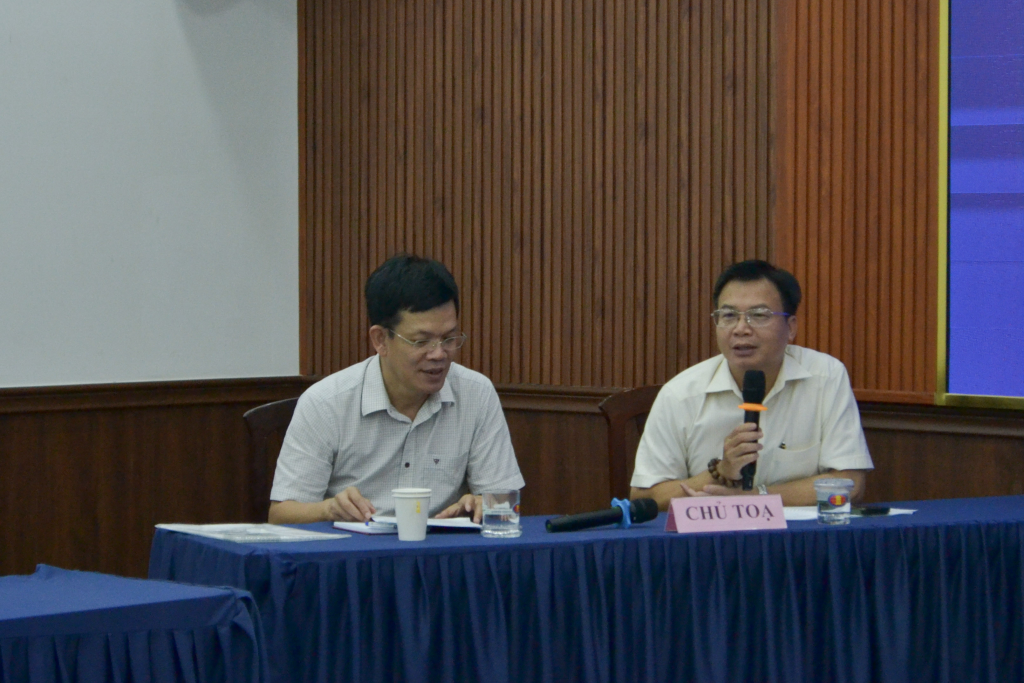
Assoc. Prof. Dr. Bui Hai Dang giving remarks, closing session 2 - Photo: Organizing Committee
Open discussion:
Immediately after the presentations, the discussion session took place in a vibrant atmosphere with many academic perspectives revolving around the central question: In the context of rapidly changing security dynamics, how should Vietnam adjust its defense and security policy in the face of strategic competition between major powers, especially Russia, the US, and China?
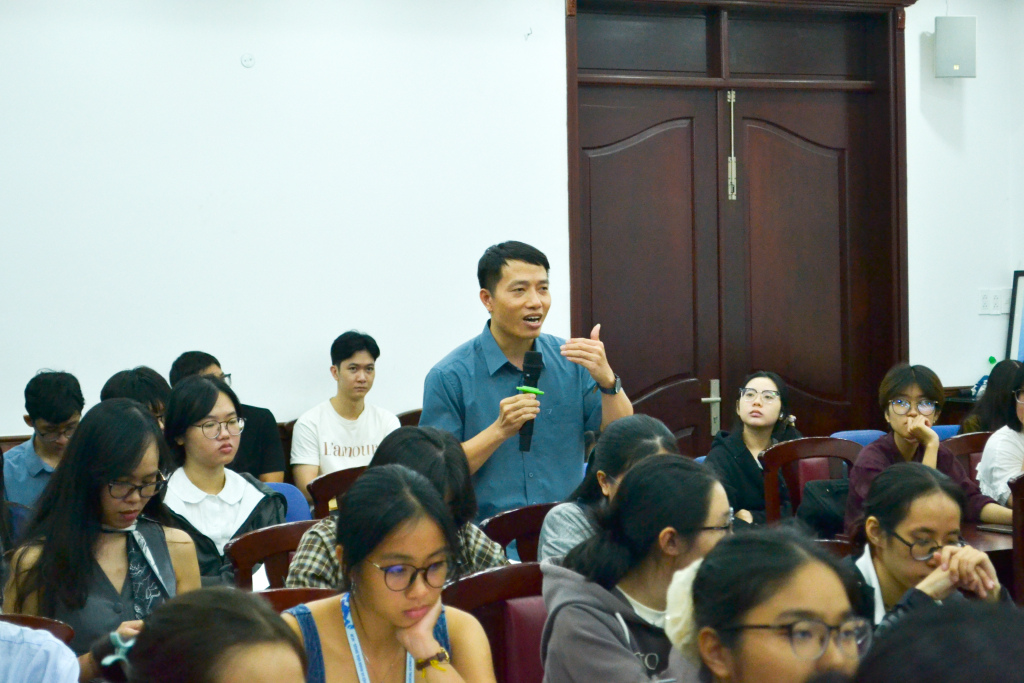
The discussion session took place vibrantly with contributions and multidimensional perspectives from attendees - Photo: Organizing Committee
Another discussion topic was the impact of US-China competition on Russia and whether this affects Vietnam’s defense policy adjustments. Some delegates analyzed that Russia currently lacks sufficient resources to expand its influence in many regions at the same time, especially when under pressure from the Ukraine war. Besides, opinions also emphasized that Russia-China competition is not direct or overly intense because it is mainly associated with different strategic interests. This makes the strategic space for small and medium-sized countries, including Vietnam, need to be considered more carefully.
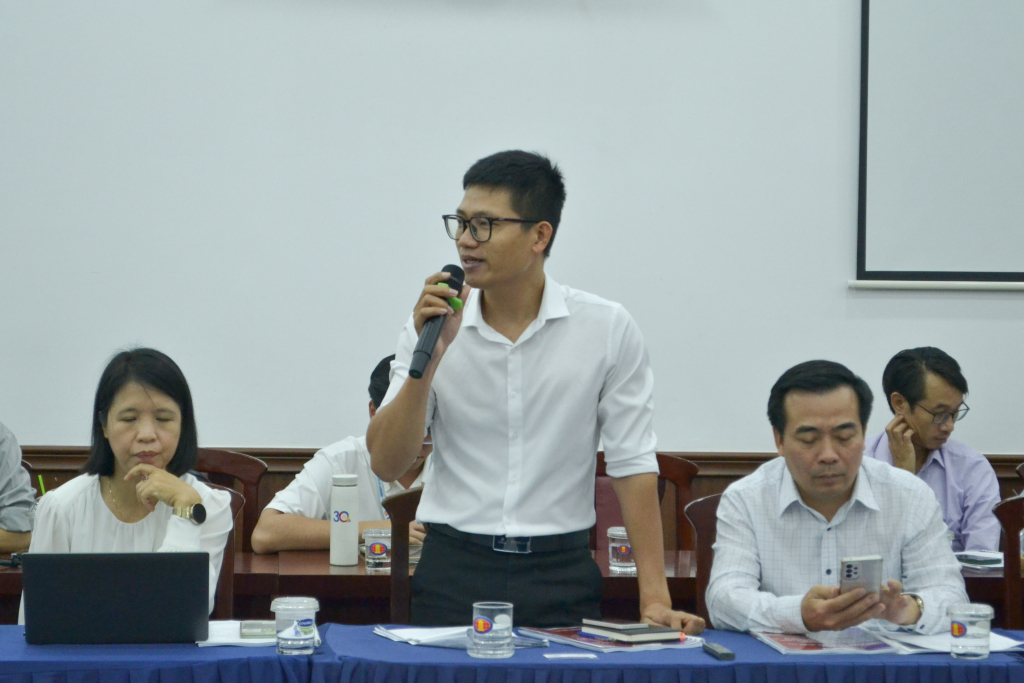
Dr. Dinh Le Hong Giang answering questions raised at the conference - Photo: Organizing Committee
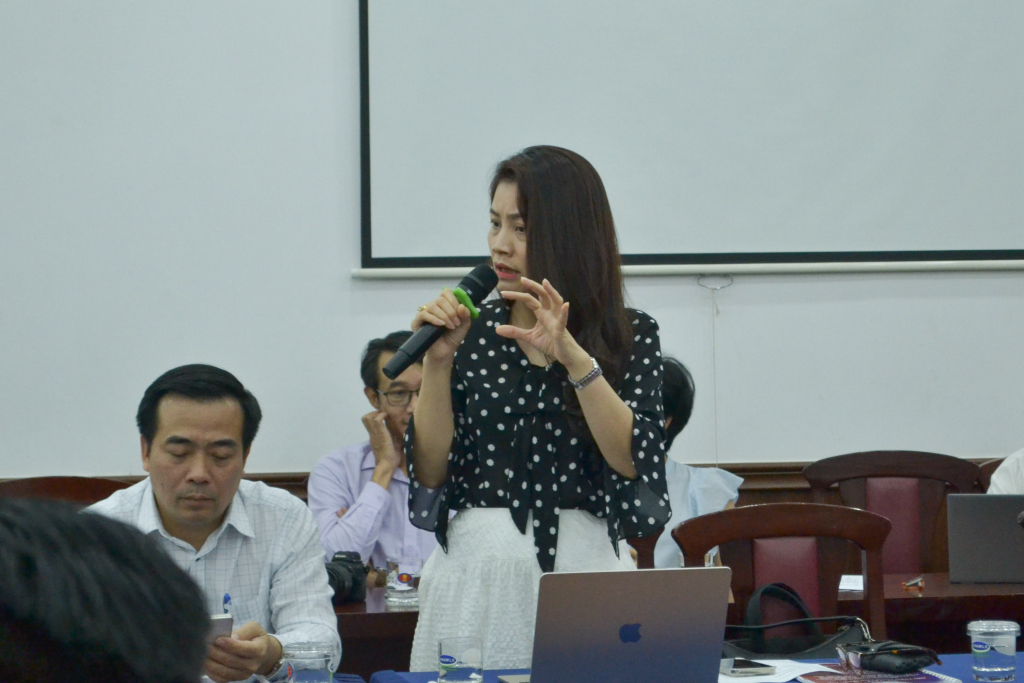
Dr. Vu Thuy Trang answering questions raised at the conference - Photo: Organizing Committee
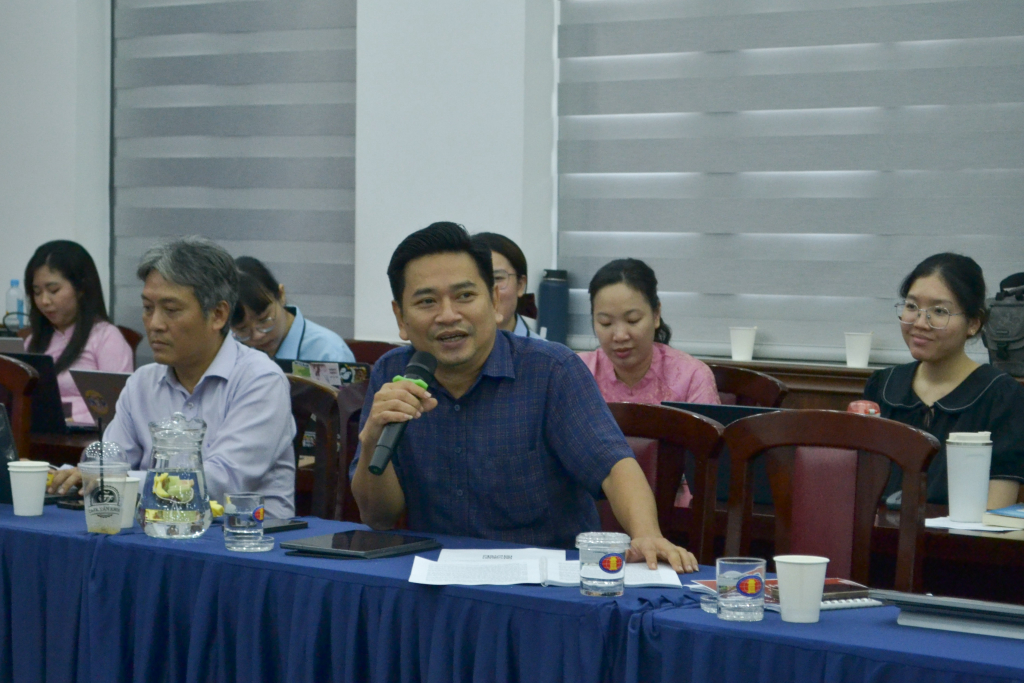
Dr. Nguyen Tuan Khanh participating in the discussion at the conference - Photo: Organizing Committee
Overall, the discussion session reflected the multidimensional nature of the perception of Vietnam’s defense and security in a complex geopolitical context. Opinions all agreed that Vietnam needs to be flexible, cautious, but more proactive in evaluating partners, balancing the need for defense modernization and the changing strategic environment, in order to ensure the nation’s long-term security interests.
Closing remarks:
In his summary, Assoc. Prof. Dr. Dang Minh Duc emphasized that the conference attracted many high-quality papers, accompanied by in-depth questions and comments, reflecting multidimensional interest in the foreign policy adjustments of Russia and China in the current context. The exchanges showed that the impacts of these adjustments were not only concentrated in Europe and Asia, but also spread to Central Asia, Africa, and many other regions, while bringing practical theoretical and real-world value, providing an important basis for the Project Management Board to finalize the research project.
The success of the conference was confirmed thanks to the active participation, contribution of opinions, and knowledge sharing of researchers, experts, and delegates, creating a rich, multidimensional, and highly applicable scientific forum.
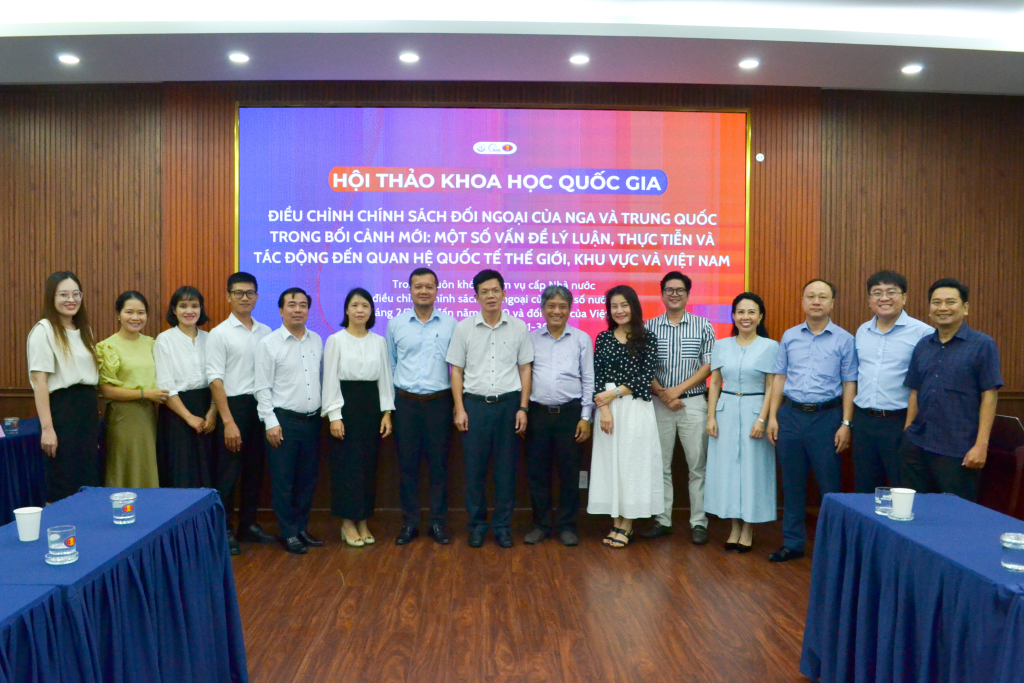
Group of speakers, experts, scholars, lecturers - Photo: Organizing Committee
|
National Scientific Conference “Foreign policy adjustments of Russia and China in the new context: Theoretical, practical issues and impacts on global, regional, and Vietnam’s international relations” took place on the morning of November 14, 2025, at the University of Social Sciences and Humanities, Viet Nam National University Ho Chi Minh City (USSH, VNUHCM). The event was organized within the framework of the State-level project: “Foreign policy adjustments of some major powers from February 2022 to 2030 and Vietnam’s policy response”, code: KX.06.01/21-30, led by Assoc. Prof. Dr. Dang Minh Duc. The conference was co-organized by the Institute of European and American Studies - the project’s lead agency - in coordination with the Department of International Relations, Faculty of History and International Relations, University of Social Sciences and Humanities, Viet Nam National University Ho Chi Minh City. Session 1: Foreign policy adjustments of Russia in the new context: Theoretical, practical issues and impacts on global, regional, and Vietnam’s international relations Chairs: Dr. Nguyen Tang Nghi and Assoc. Prof. Dr. Dang Minh Duc
Session 2: Foreign policy adjustments of China in the new context: Theoretical, practical issues and impacts on global, regional, and Vietnam’s international relations Chairs: Assoc. Prof. Dr. Dang Minh Duc and Assoc. Prof. Dr. Bui Hai Dang
|
Thuong Tuong
Bài viết liên quan
HUNTING FOR INTERNATIONAL SCHOLARSHIPS - WHY NOT GIVE IT A TRY? THE FLIGHT TO INTERNATIONAL INTEGRATION IS NOW OPEN FOR CHECK-IN!
Announcement regarding student exchange program with University of Paris Cité, France for the 2nd semester of the 2026-2027 academic year