
Scientific conference “Theoretical basis of strategic partnerships in International Relations and its application in researching Vietnam’s strategic partnership relations”
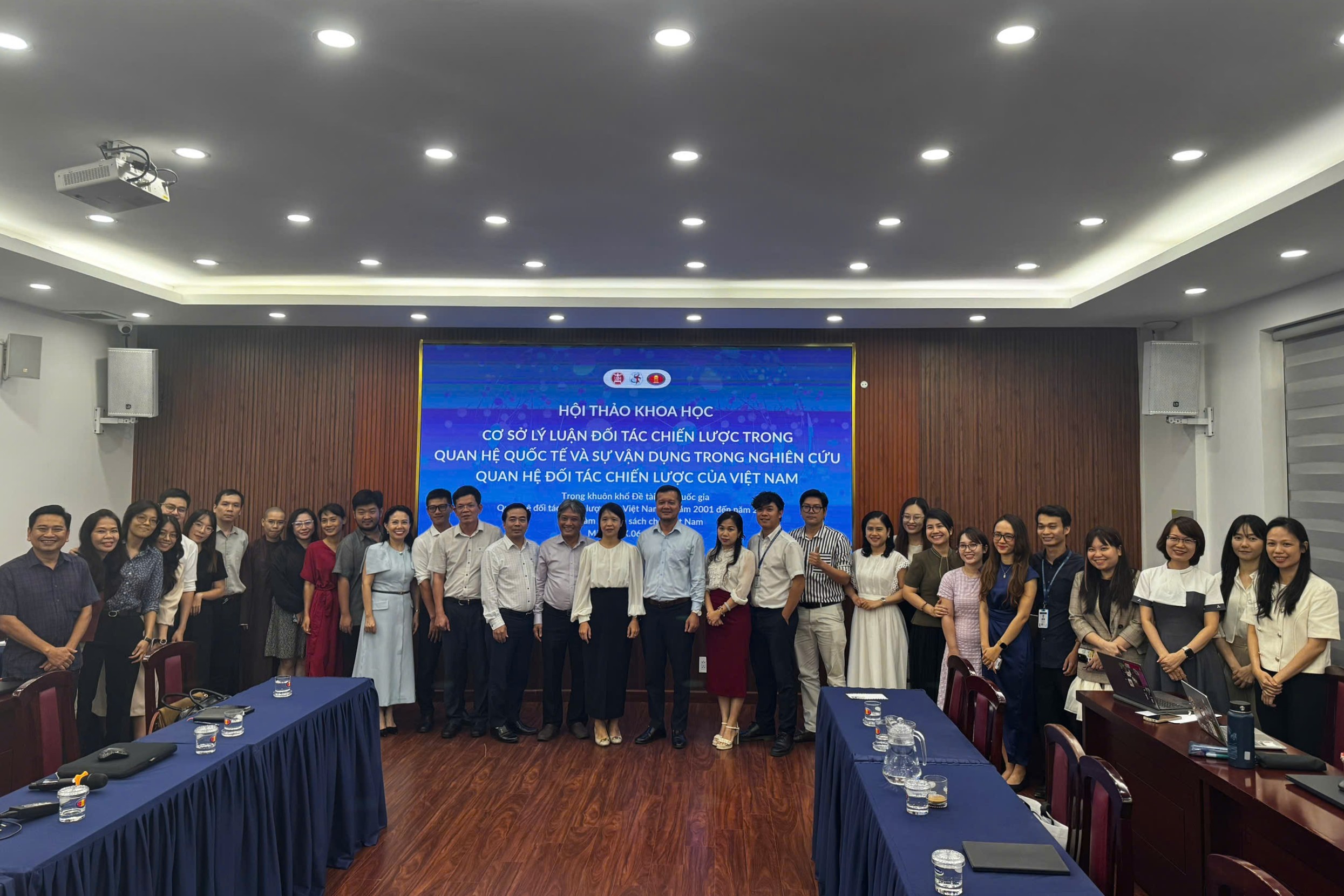
On the afternoon of November 14, 2025, the scientific conference titled “Theoretical basis of strategic partnerships in International Relations and its application in researching Vietnam’s strategic partnership relations” was held at the University of Social Sciences and Humanities, Viet Nam National University Ho Chi Minh City (USSH, VNUHCM). The event was organized within the framework of the national-level project “Vietnam’s strategic partnership relations from 2001 to 2025 and policy implications for Vietnam”, code: KX.06.09/21-30, led by Assoc. Prof. Dr. Tran Thien Thanh, Dean of the Faculty of International Studies, University of Social Sciences and Humanities, Vietnam National University Hanoi (USSH, VNUH). The conference was co-organized by the USSH, VNUH - the project's presiding agency - in collaboration with the Department of International Relations, Faculty of History and International Relations, University of Social Sciences and Humanities, VNUHCM.
The conference attracted a large number of scientists, managers, lecturers, and students. This served as an academic forum to “decode” the essence of Comprehensive Strategic Partnership (CSP) in a world context characterized by clear polarization, while clarifying the theoretical basis and application in Vietnam's case studies. On that basis, the conference aimed to propose specific theoretical frameworks for Vietnam, along with quantitative and qualitative criteria for evaluating relations, and transferring research results for policy consultation purposes.
In his opening remarks, Dr. Nguyen Tang Nghi - Dean of the Faculty of History and International Relations, USSH, VNUHCM, emphasized that this conference marked the conclusion of the series of national scientific seminars organized by the Faculty in 2025, while also serving as an important academic highlight, raising foundational questions for current research and foreign policy planning.
He affirmed that the core objective of the conference was to clarify the nature, structure, and operational dynamics of comprehensive strategic partnerships, especially in a context where the international system is witnessing increasingly clear polarization and more complex forms of competition among power centers. According to him, accurately identifying “geopolitical turning points”, along with closely monitoring US-China strategic competition and shifts in the roles and orientations of ASEAN, are prerequisite conditions for Vietnam to proactively build a foreign policy adjustment strategy that is flexible among poles, while maintaining the principles of independence, self-reliance, and proactive integration.
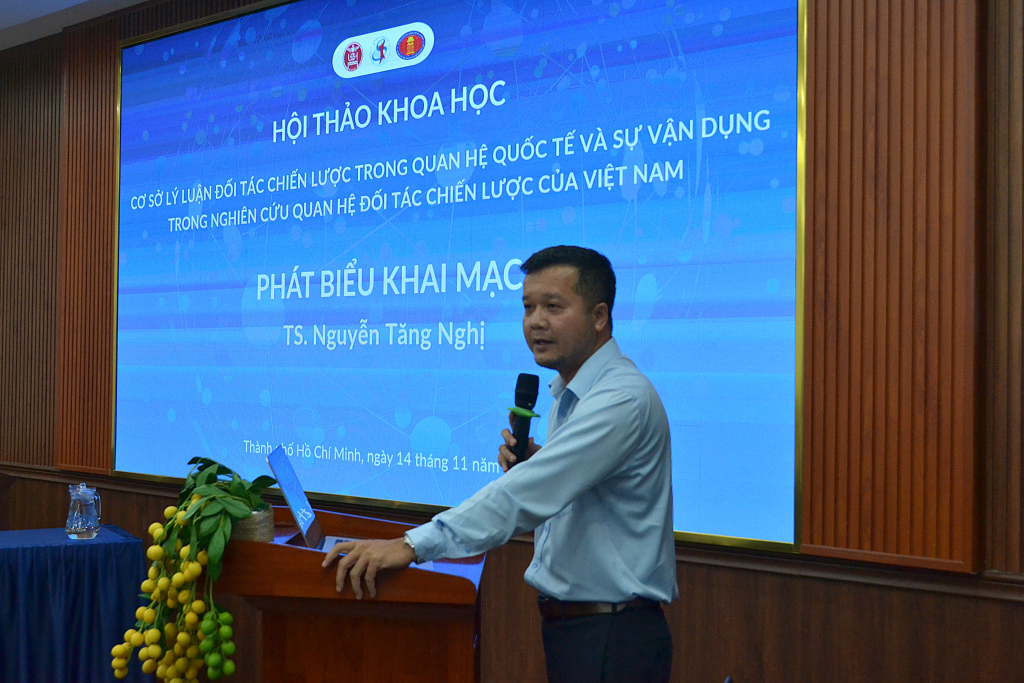
Dr. Nguyen Tang Nghi, Dean of the Faculty of History and International Relations, USSH, VNUHCM delivering the opening speech - Photo: Organizing Committee
In his introductory remarks, Assoc. Prof. Dr. Tran Thien Thanh - Project Lead, emphasized the requirement to clarify the theoretical basis and the method of application in the contemporary international relations context. After the Cold War ended, the bipolar order shifted to unipolar and gradually formed a multipolar state, while the powerful development of information technology increased the level of interdependence among nations. Security is no longer limited to traditional security but extends to non-traditional challenges with complex and rapidly spreading characteristics.
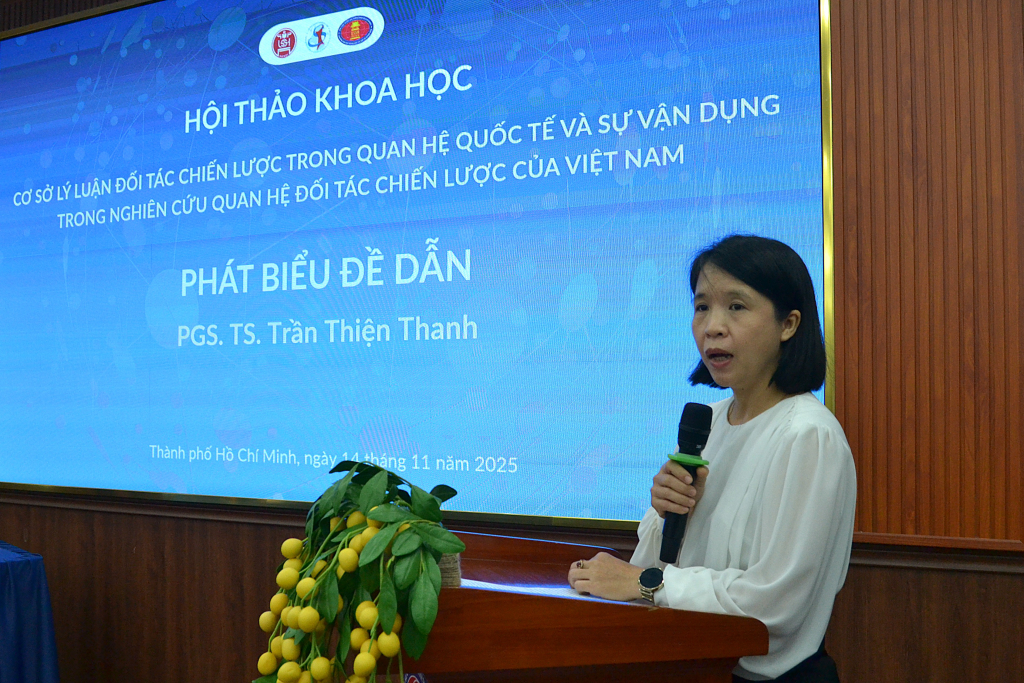
Assoc. Prof. Dr. Tran Thien Thanh delivering the introductory remarks - Photo: Organizing Committee
In that context, concepts such as “partner”, and especially “strategic partner”, appear more and more frequently in the foreign affairs of international actors. However, the content of “strategic partner” still lacks consensus and is not tied to specific legal obligations, causing difficulties for research in both theoretical and practical aspects. This poses a need to continue clarifying the concept, characteristics, models, and roles, as well as evaluating implementation effectiveness to serve policy planning and open up further research directions.
Session 1 - Theoretical basis of strategic partnerships in international relations
Session 1 opened with the presentation “On Vietnam’s partnership frameworks” by Prof. Dr. Nguyen Vu Tung (Diplomatic Academy of Vietnam). The Chair summarized that after the collapse of the bipolar order, the world shifted to a multipolar state with a “one superpower, many great powers” trend, in which countries continue to find ways to strengthen their security. For small and medium-sized countries, strengthening strategic advantages contributes to reducing the level of competition and polarization, limiting pressure from major powers, and creating conditions for a more democratic international life.
At the same time, global issues like terrorism and transnational challenges become more serious, while multilateral institutions, despite ineffective operations, are still expected to play a role in addressing issues beyond national scope. In the Asia-Pacific region, development is distinct as the US views China as its primary strategic rival and increases competition in the Indo-Pacific space using both hard and soft tools. However, this region still maintains economic dynamism, prioritizes the protection of peace and security, with ASEAN playing an important role in the regional structure.
Peace, cooperation, and development continue to be the major trends. Since the early 1950s, forms of partnership began to appear as a novelty in the practice of international relations. The highest goal of these partnership models remains promoting socio-economic development.
Regarding Vietnam, the foreign policy line is consistently determined on the principle of “more friends, fewer enemies”. Since the 7th National Congress, the policy of “making friends with all countries” has been strongly implemented, creating a foundation for the approach of multilateralization and diversification of international relations. Defining the concepts of “partner” and “object” helps Vietnam overcome both ambiguous and unguarded tendencies in policy planning. National interest is placed at the center, expressed through key principles of foreign policy such as not taking sides, prioritizing peace, and proactively integrating and expanding cooperation. The report also mentioned how Vietnam develops partnerships in a flexible way, suitable for each partner and level of cooperation, aimed at maximizing national interest in the context of current complex strategic competition.
In the continuation, Assoc. Prof. Dr. Tran Nam Tien (USSH, VNUHCM) presented a paper on the “Comprehensive Strategic Partnership” framework of the United States, placed in comparison with Vietnam. The paper started by systematizing the theoretical basis of “strategic partner” and “comprehensive strategic partner” - CSP, clarifying the concept, characteristics, nature, and forms of expression. According to his interpretation, this is a cooperation model “aimed at development goals rather than directed at threats”, not requiring choosing sides or binding alliances. This approach is suitable for the multipolar international relations environment, where actors prioritize national interests, reduce dependence, and expand the range of autonomous action.
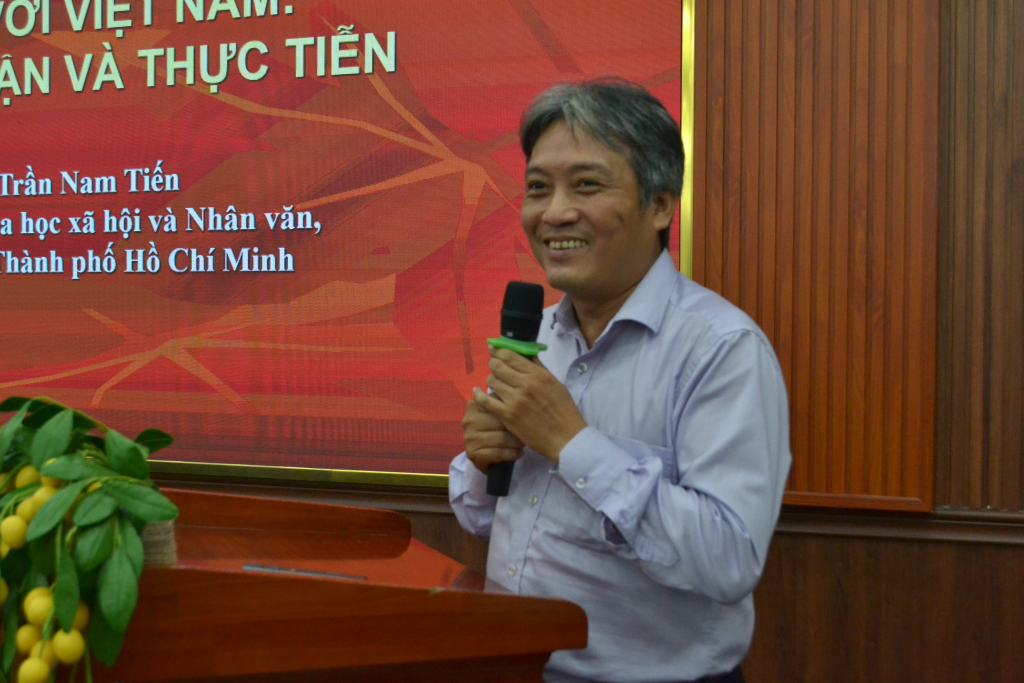
Assoc. Prof. Dr. Tran Nam Tien presenting his paper - Photo: Organizing Committee
The paper deployed a multi-dimensional analysis on the foundation of major international relations theories: realism (emphasizing interests and balance of power), liberalism (prioritizing mutually beneficial cooperation and institutions), and constructivism (valuing perception, trust, and discourse). From there, the CSP model is explained as a flexible tool, blending both material interests and cognitive factors, allowing countries to design the level of cooperation by sector without being bound by military commitments. In practice, the paper pointed out the shift in how the US approaches partnerships after the Cold War. From the Cold War-style alliance structure, the US shifted to an open cooperation model, based on the principle of “mutual benefit” while still ensuring the maximum strategic interests of Washington. This framework has high adaptability, applied in many current power competition scenarios, especially in the US-China competition environment.
Compared with Vietnam, the paper noted that the early stage of Vietnam-US relations faced many challenges due to differences in perception, level of political trust, and interest interpretation. However, the cooperation process gradually stabilized and was promoted systematically. Upgrading the relationship from the state level to the party level was presented as an important step to reinforce strategic trust, creating a foundation for operating the partnership framework in a substantive, balanced, and predictable manner. The CSP relationship between the two countries is thus placed in the dynamic context of the regional order, reflecting the efforts of adjustment and adaptation of both Vietnam and the US before major strategic shifts.
Following the analyses on the theoretical and practical basis of strategic partnerships, Dr. Huynh Thi Thanh Loan (Institute of West Asian, South Asian and African Studies) presented the paper “International perspectives on Vietnam’s strategic partnerships: From criteria building to practical implementation”, providing an overall view of how Vietnam establishes, operates, and shapes strategic partnerships with major powers and regional partners.
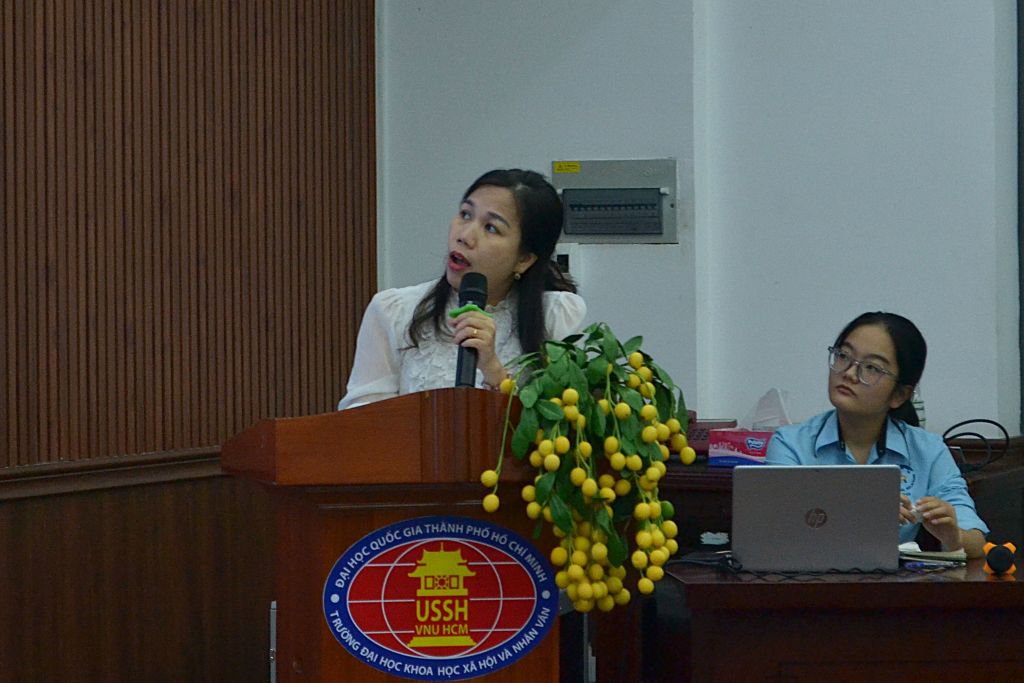
Dr. Huynh Thi Thanh Loan presenting her paper - Photo: Organizing Committee
The paper delved into analyzing Vietnam’s key relationships, including Vietnam - China, Vietnam - Russia, Vietnam - US, as well as partners like South Korea, Thailand, and Australia. In each case, Dr. Loan emphasized the mechanism of building trust, developing cooperation platforms, while considering the specific factors of each partner. Vietnam - China relations are evaluated on the basis of balancing economic - security interests with historical and geopolitical challenges; Vietnam - Russia relations focus on traditional cooperation and strategic sectors, especially in the context of recent international instability. Relationships with the US and Asia-Pacific partners were analyzed in a multilateral, flexible, and predictable direction, reflecting Vietnam’s strategic adaptability in the regional competition environment.
From practical analyses, the paper synthesized the criteria for forming Vietnam’s strategic partnerships into four groups: basic foundation, strategic motivation, implementation mechanism, and specific characteristics of each relationship. National interest is placed at the center, governing all policy decisions. Through this, the paper not only provided a rigorous theoretical framework but also shaped practical methods for Vietnam to implement foreign policy effectively, both ensuring national interest and maintaining flexibility in cooperation with strategic partners.
Discussion Session 1:
Following the presentations on the theoretical and practical basis of strategic partnerships, the first discussion session focused on exchanging theoretical and practical issues raised from how Vietnam builds and operates strategic partnerships. Dr. Hoang Cam Thanh (USSH, VNUHCM) emphasized that international scholars often look at partners and objects in strategic relations, raising questions about how Vietnam “positions” itself before power conflicts among major countries. Accordingly, combining constructivist theory with national interest can help legitimize actions, gain support from other countries while still maintaining an independent and flexible stance.
The discussion also focused on classifying and evaluating Vietnam’s CSPs. Dr. Hoang Cam Thanh raised the issue of resource dispersion when Vietnam establishes multiple strategic relations simultaneously: for example, China is the first partner, Russia appeared later but currently military and diplomatic cooperation with Russia is increasing, while economic cooperation is still limited. The question was raised whether there is an “inflation” phenomenon in establishing CSPs. Dr. Huynh Thi Thanh Loan responded that Vietnam does not disperse resources but allocates them reasonably depending on the characteristics of each partner.
Dr. Tran Nguyen Khang (USSH, VNUHCM) emphasized that Vietnam’s partnerships operate according to a layered and multi-level network model, in which each relationship is maintained, strengthened, and expanded strategically. He explained that through the principle of “be friend with everyone” or “smart diplomacy”, Vietnam can optimize national interest and increase influence in the current international order, leveraging network structure to balance strategic advantages and maintain a flexible position in relations with many different partners.
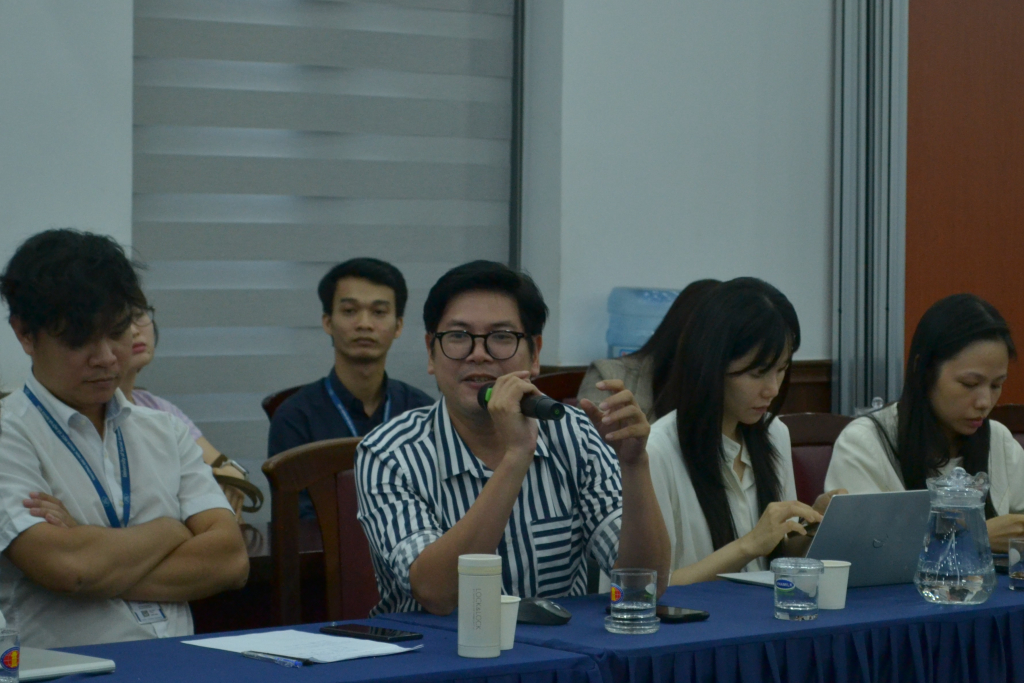
Dr. Tran Nguyen Khang participating in the discussion at the conference - Photo: Organizing Committee
The discussion session also touched on the role of public diplomacy and international comparative perspectives, countering Assoc. Prof. Dr. Tran Nam Tien’s point on the differences in viewing strategic partners from the US perspective. The position and context of each country influence the way strategic partners are shaped, in which this concept remains relatively loose, lacks legal binding, and is novel, raising questions about whether it should be placed in a certain framework or flexibly based on each relationship.
Dr. Tran Nam Tien emphasized that the development of partnerships does not rely entirely on Vietnam’s desire but is also influenced by the will of other partners, therefore Vietnam needs to consider choosing priority development with whom. He noted the risk of expanding too many relations within ASEAN, while Vietnam already belongs to the regional “common house”, raising questions about the necessity of some additional relations. On that basis, Dr. Nguyen Tuan Khanh (USSH, VNUHCM) proposed changing the perspective, stating that it is difficult to choose a common standard applied to all relationships, and a flexible approach is needed, depending on the context of each partner and strategic goal.
Session 2: Application in researching Vietnam’s strategic partnership relations
Opening Session 2 on the application in researching Vietnam’s strategic partnership relations, Dr. Tran My Hai Loc (University of Economics - Finance Ho Chi Minh City) presented the paper “Identity-building approach in analyzing Vietnam’s strategic partnership relations with major countries”. The paper focused on how Vietnam applies the theoretical basis of strategic partnerships to both protect national interest, optimize international cooperation, and enhance its position in the international arena. The paper emphasized the determination to combine national strength with the trends of the era, viewing the establishment of strategic partnerships as a leading diplomatic tool.
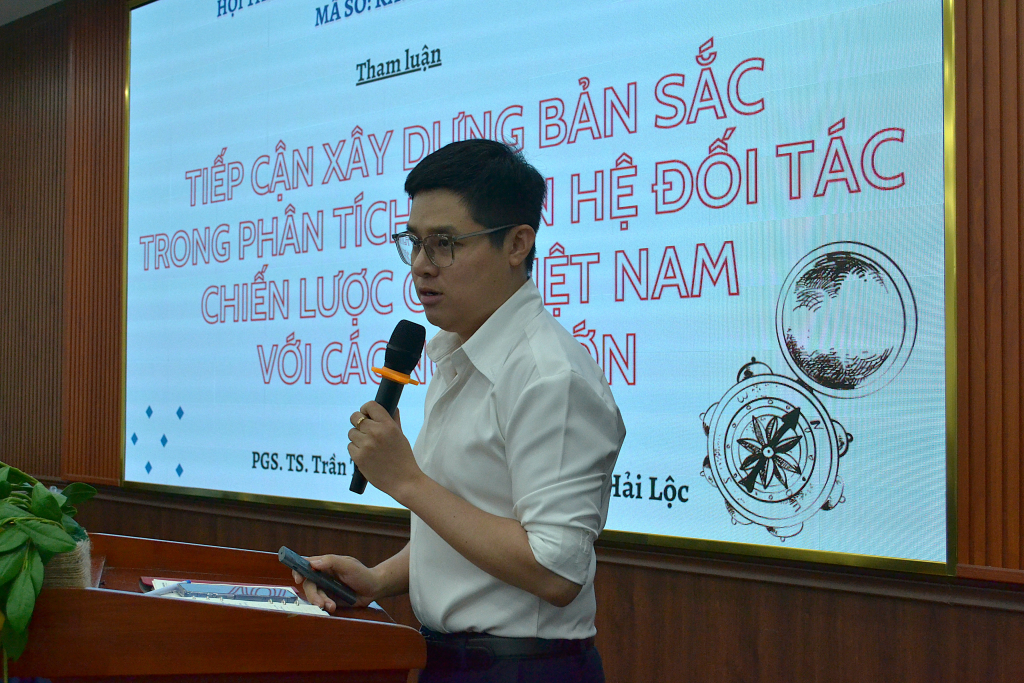
Dr. Tran My Hai Loc presenting her paper - Photo: Organizing Committee
Dr. Tran My Hai Loc presented that the foundation for building Vietnam’s strategic partnership relations with major countries is based not only on interests brought by hard power but also on the ability to reconstruct identity and diplomatic discourse, aimed at optimizing international cooperation. This process includes replacing traditional alliances with non-military forms of cooperation, strengthening relations with partners, establishing relations with adversarial partners, while shaping the international role order and enhancing Vietnam’s position.
Regarding the theoretical basis, Dr. Hai Loc presented the concept and main characteristics of strategic partnership relations, while analyzing the foundation for building these relationships with major countries, based on the policy directions of the Party, inherited and developed from Ho Chi Minh’s thought. Vietnam often establishes partnership frameworks with partners with a long history of cooperation, sharing many similarities, and having the ability to complement each other. These frameworks are designed to protect national security, consolidate the legal basis, leverage comparative advantages, and expand development space, while enhancing Vietnam’s position. The content of relations is differentiated and designed specifically, flexibly for each partner, reflected through joint statements and specific cooperation mechanisms.
The paper went from theory to practice, analyzing the concept, process, and Party’s view on strategic work, while being similar to Dr. Huynh Thi Thanh Loan’s paper in emphasizing the role of historical trust. A specific case mentioned a lot is historical trust in relations with Russia and China. Through this, the paper concluded that Vietnam’s strategic partners are designed in a specialized, flexible manner with each partner - clearly shown in the 14 current strategic partnership relations - helping Vietnam enhance its identity and international position in the context of multipolarity and global strategic competition.
Following was the paper “The US and the comprehensive strategic partnership network: A model of power adjustment in the post-unipolar era” by Dr. Le Lena (USSH, VNUH), analyzing the important strategic shift in US foreign policy to maintain influence and protect national interests in the context of a world undergoing major changes in power structure. The opening of the paper posed the issue in the context of China’s rise, the trend of strategic shift to the Indo-Pacific region, and the decline in trust in the US global leadership role. In that picture, relations with allies and partners are increasingly viewed as a key “strategic asset”.
The core question that the paper raised was how the US reshaped its international alliance system (from a traditional military alliance model to a more flexible model) to adapt to the post-unipolar world. Regarding analytical methodology, the paper compared the two main alliance strategic models of the US: the post-war “hub-and-spoke” model (reflecting unipolar structure), and the modern “latticework” model. The latticework model allows partners to cooperate cross-wise, creating flexibility and strategic expansion capability without needing binding commitments like in traditional treaties.
The paper delved into analyzing Washington’s new diplomatic tool: CSP, which is the highest level of cooperation but does not have legal, security, or military obligations. CSP is designed based on three principles: bilateral interest coordination (not based on fear of common threats), goal-oriented cooperation (economy, technology), and preserving the policy sovereignty of each country. The emergence of CSP reflects the clear layered structure in the modern foreign affairs system of the US, including Dialogue Partner, Comprehensive Partner, Strategic Partner, and CSP. These levels allow the US to maintain high openness and flexibility in policy implementation. The conclusion of the paper affirmed that the transition from hard alliance models to goal-oriented, multi-level connection networks reflects the profound strategic adaptation of the US before systemic changes. The new model helps the US create a strategic connection ecosystem based on interest convergence and policy flexibility instead of traditional commitments. The case of US-Vietnam relations being upgraded to CSP in 2023 is a testament to this spirit: mutually beneficial and maintaining strategic independence, thereby consolidating the network of US influence in the Indo-Pacific region.
The final paper of Session 2 - “Strategic Partners in International Relations: Comparative analysis and Policy implications for Vietnam” by MA. Phan Thi Anh Thu (Ho Chi Minh City Open University), MA. PhD Candidate. Le Thi Bich Ngoc (USSH, VNUHCM) and Dr. Ha Trong Nghia (Ho Chi Minh City Open University) aimed to provide a theoretical basis for Vietnam’s strategic partnerships, while analyzing in comparison the implementation methods with several other countries, from which to draw policy implications.
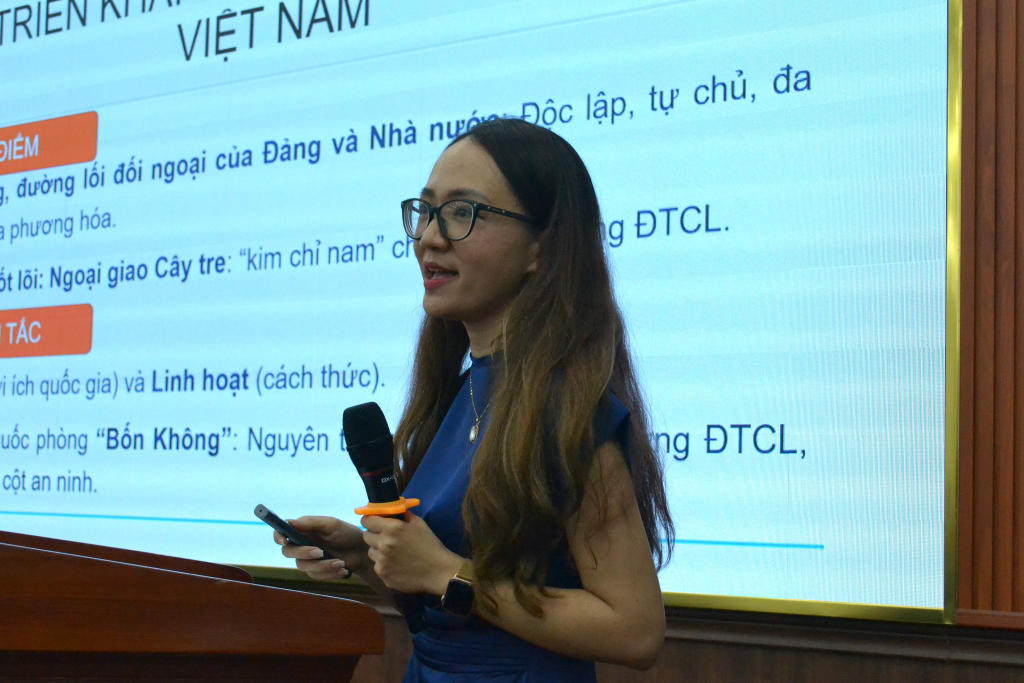
MA. Phan Thi Anh Thu presenting her paper - Photo: Organizing Committee
The paper clarified Vietnam’s views and goals in building strategic partnerships, emphasizing the establishment of a clearly hierarchical network consisting of three levels, ensuring the development of relations with each partner according to different content. This approach helps Vietnam maintain flexibility, balance among relationships, while avoiding the phenomenon of inflating the number of partners while reducing quality.
The paper compared the implementation of strategic partnership relations between Vietnam and some countries, in which it offered four analytical criteria: position, strategic goal, nature of application, and implementation method. According to these criteria, Vietnam is identified as a developing country, maintaining balance and autonomy, approaching partnerships from the angle of interest balance, while implementing comprehensive and inclusive relationships.
Through applying theories in international relations, the paper pointed out that the goal of building Vietnam’s strategic partnership network is to increase influence, instead of one-way dependence on any country. A diverse, flexibly adaptive model that maximizes national interest while still maintaining independence and identity is evaluated as a reasonable and feasible choice in the current complex international context.
Discussion Session 2:
Discussion session 2 focused on analyzing discourse, identity, and action in Vietnam’s strategic partnerships, while evaluating the application of theories such as constructivism. Some opinions emphasized that, although applying constructivism helps analyze actions and political beliefs, the direct link between identity and discourse remains unclear. While discourse is often studied using non-structural or post-structural approaches, there was a suggestion to consider changing the theoretical framework to better suit the linguistic nature and ways of expressing identity in foreign policy.
The discussion also noted the issue of terminology and translation, especially when comparing with English concepts, to avoid misunderstanding terms like “strategic partner” or “comprehensive strategic partner”. One point emphasized is that Vietnam has never defined the US as an “enemy” since integration, reflecting a flexible and non-confrontational approach in foreign policy.
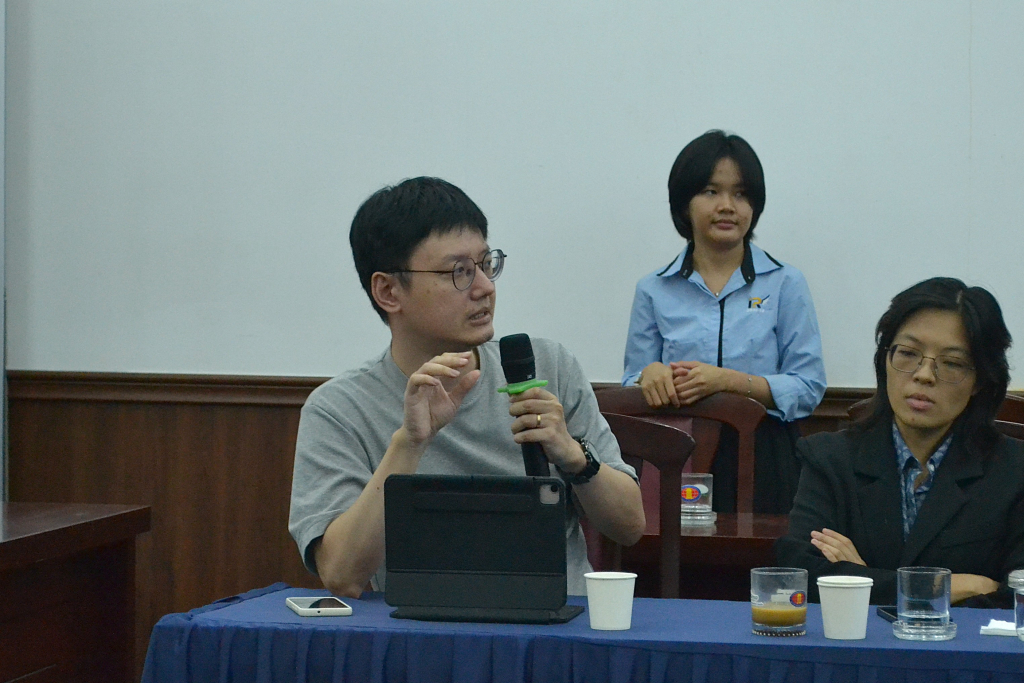
MA. Nguyen The Phuong (University of Economics - Finance Ho Chi Minh City) participating in the discussion at the conference - Photo: Organizing Committee
Regarding the decision-making structure, the papers pointed out that the Ministry of Foreign Affairs, Ministry of National Defense, and policy-planning groups play important roles in forming foreign affairs thinking and deciding to establish CSPs. Dr. Dao Minh Hong (University of Economics - Finance Ho Chi Minh City) clarified that there is no common definition of CSP, but this concept depends on the policy and thinking of each country; and there is also no fully adequate research theory on CSP, making research difficult. If these issues are resolved, it will be an important contribution to theory and practice.
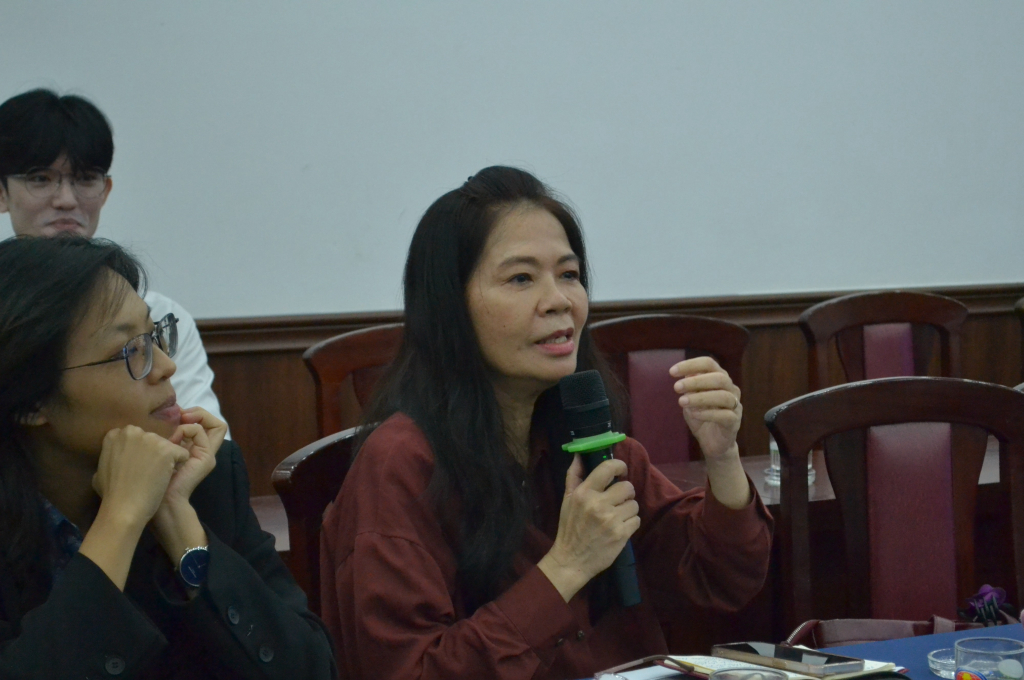
Dr. Dao Minh Hong participating in the discussion at the conference - Photo: Organizing Committee
A limitation pointed out was that the papers did not mention the perspective on CSP of China and India, countries that play the role of middle powers and have significant influence in terminology and strategic partnership practice, which should have been analyzed to compare and supplement the overall picture.
Closing:
In his closing remarks, Assoc. Prof. Dr. Tran Thien Thanh emphasized that the conference not only had scientific contributions but also suggested and created an initial draft for the next research project. The recent discussion section connected perspectives, analysis, and exchange on the theoretical basis, practice as well as strategic application strategies of Vietnam’s strategic partnerships, affirming the attractiveness and importance of the topic.
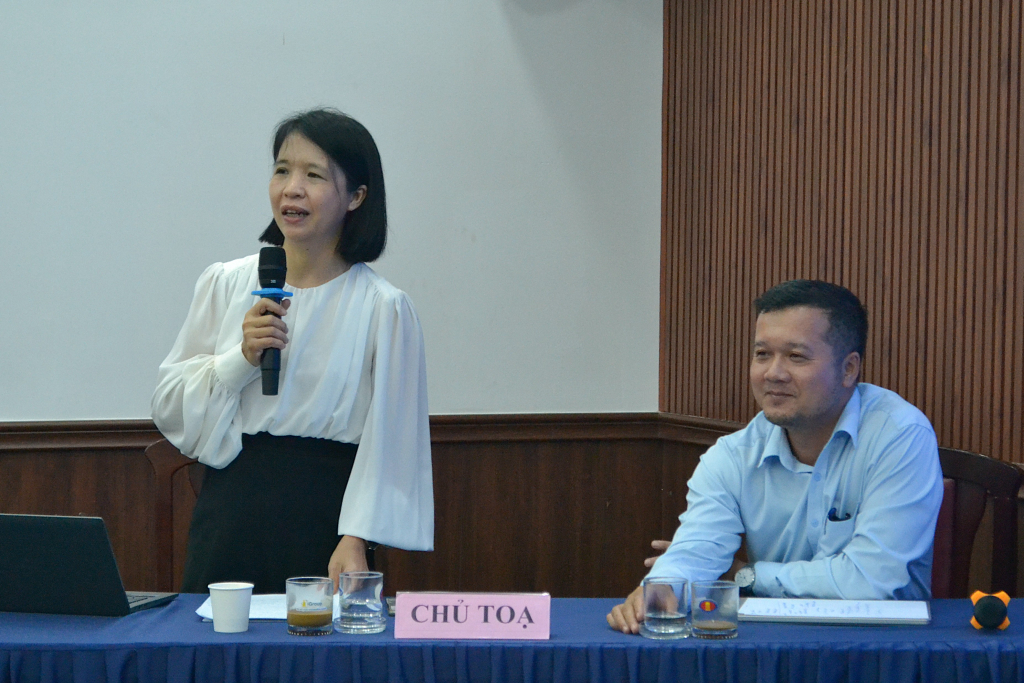
Assoc. Prof. Dr. Tran Thien Thanh summarizing the conference - Photo: Organizing Committee
The conference summarized key issues on the topic “Theoretical basis of strategic partnerships in International Relations and its application in researching Vietnam’s strategic partnership relations”. Theoretical analyses and practical evidence on strategic partnerships not only provide an important foundation for Vietnam’s diplomatic research but are also directly related to fields of development, economic, political, social, and cultural cooperation. In the context of Vietnam raising the quality and scope of foreign relations, delving into existing relationships and expanding new ones, the papers and contributions in the conference play a role in consolidating the research basis, while suggesting next steps for the completion and implementation of the project in the future.
|
The National Scientific Conference “Theoretical basis of strategic partnerships in International Relations and its application in researching Vietnam’s strategic partnership relations” took place on the afternoon of November 14, 2025 at the University of Social Sciences and Humanities, Viet Nam National University Ho Chi Minh City (USSH, VNUHCM). The event was organized within the framework of the national-level project “Vietnam’s strategic partnership relations from 2001 to 2025 and policy implications for Vietnam”, code: KX.06.09/21-30, led by Assoc. Prof. Dr. Tran Thien Thanh, Dean of the Faculty of International Studies, University of Social Sciences and Humanities, Vietnam National University Hanoi (USSH, VNUH). The conference was co-organized by the USSH, VNUH - the project's presiding agency - in collaboration with the Department of International Relations, Faculty of History and International Relations, University of Social Sciences and Humanities, VNUHCM. Chairing Committee:
Secretariat:
Session 1: Theoretical basis of strategic partnerships in international relations
Session 2: Application in researching Vietnam’s strategic partnership relations
|
Anh Thy
Bài viết liên quan
HUNTING FOR INTERNATIONAL SCHOLARSHIPS - WHY NOT GIVE IT A TRY? THE FLIGHT TO INTERNATIONAL INTEGRATION IS NOW OPEN FOR CHECK-IN!
Announcement regarding student exchange program with University of Paris Cité, France for the 2nd semester of the 2026-2027 academic year