
On the morning of January 18, 2026, before officially concluding the "Northward" journey, students of the QH22-24 cohort had the opportunity to visit Tran Quoc Pagoda and the Vietnam Military History Museum - two locations rich in historical, cultural, and national spirit values. This meaningful "journey to history" left each student with memories of a Hanoi that is sacred and vivid, a Hanoi with a beautiful blend of antiquity and modernity that leaves a lasting impression on everyone who visits.
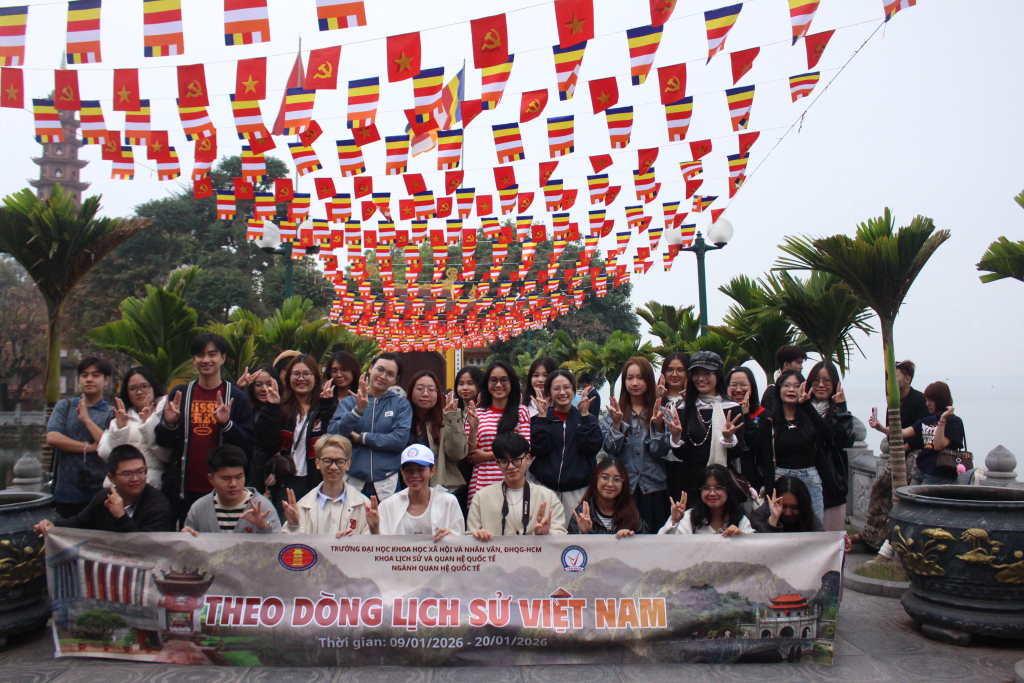
Students from group 6 taking commemorative photos at Tran Quoc Pagoda - Photos taken and compiled by the Faculty Media Team
The final morning of the trip in Hanoi began at Tran Quoc Pagoda - the oldest pagoda in Thang Long - Hanoi, with a history spanning nearly 1,500 years. Due to its historical values and unique architecture, the pagoda was recognized as a National Cultural and Historical Relic in 1989. Today, Tran Quoc Pagoda is not only famous as a sacred Buddhist site attracting many devotees for pilgrimage, but also as a popular destination for domestic and international tourists visiting Hanoi. Located on a small "island" on the east side of West Lake, tucked away on the bustling Thanh Nien Street, Tran Quoc Pagoda, with its ancient beauty, stands out like a highlight in the vibrant picture of Hanoi's daily life. Stepping into the pagoda grounds, students could not help but be amazed by the exquisite carved architecture and the lively space surrounded by lush trees and the emerald waters of West Lake.
Khanh Ly, a student majoring in International Relations, shared her experience visiting the millennium-old pagoda: "When I learned that the pagoda has undergone many restorations but still retains the distinctive architecture of Buddhism, I was truly impressed and admired the efforts of those working on the restoration and preservation. Walking through the pagoda grounds, I was particularly moved to see with my own eyes the Bodhi tree gifted to Vietnam by the President of India in 1959 during his visit to the capital, Hanoi. Knowing that the tree was a cutting from the Great Bodhi Tree at Bodh Gaya - where Buddha Shakyamuni meditated over 25 centuries ago - I feel that this place not only holds deep spiritual significance but also serves as a vivid symbol of the friendly diplomatic relationship between Vietnam and India."
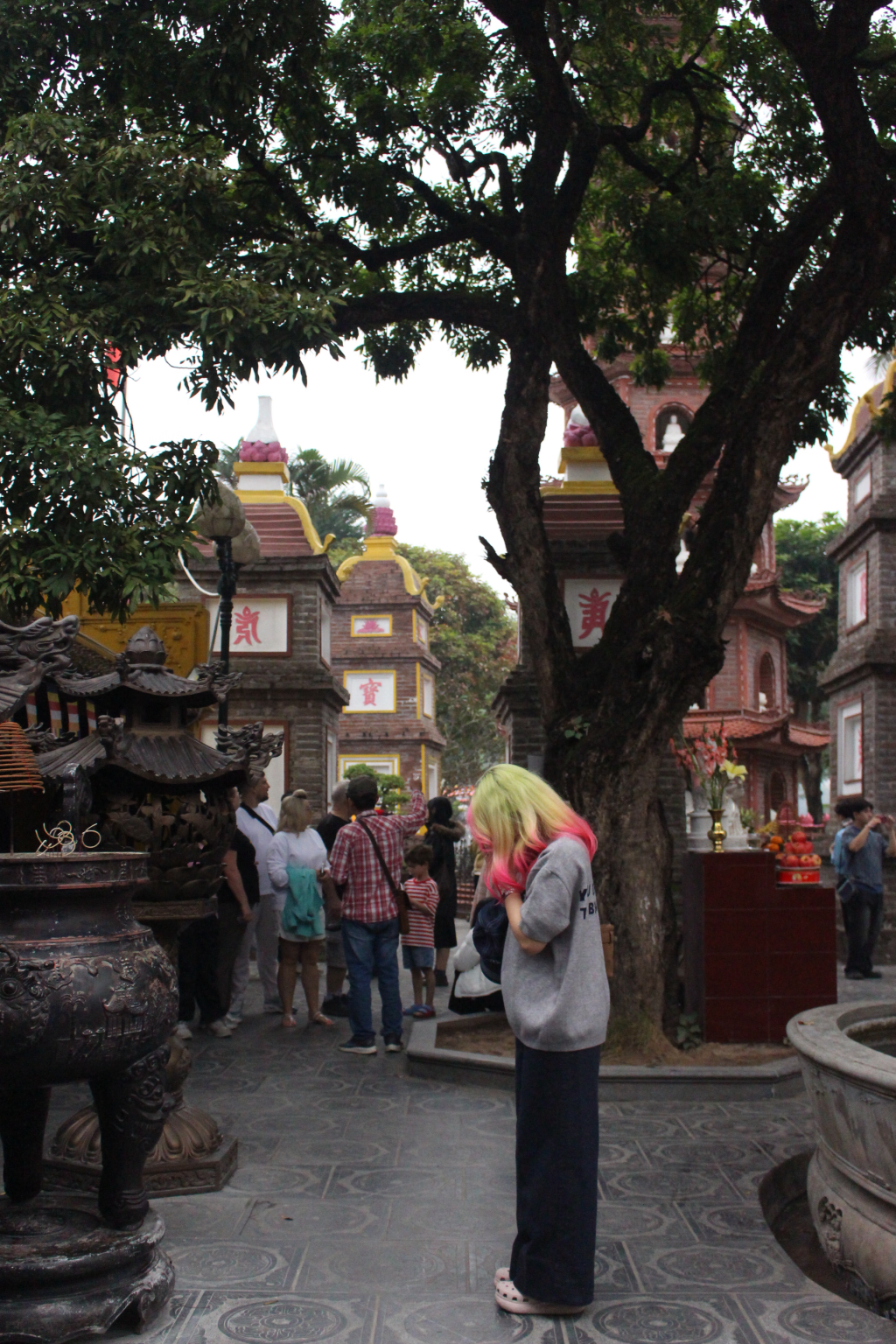
A student showing devotion - Photos taken and compiled by the Faculty Media Team
Concluding the journey, the delegation visited the Vietnam Military History Museum on Thang Long Avenue - a place currently housing over 150,000 artifacts, especially four national treasures: MiG-21 aircraft number 5121, MiG-21 aircraft number 4234, T-54 tank number 843, and the Ho Chi Minh Campaign determination map. Construction began in 2019 and it opened to visitors in 2024; the museum has attracted significant interest from people across the country, with an average of 20,000 visitors per day and over 40,000 on weekends, becoming a prominent "cultural phenomenon" of the capital, Hanoi.
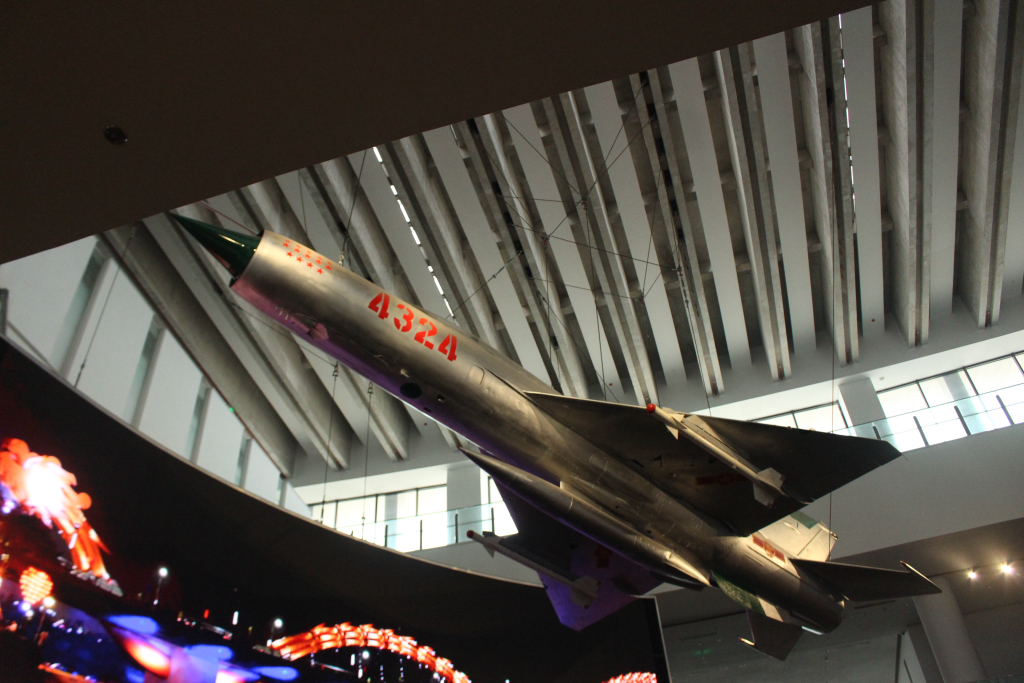
MiG aircraft number 4324 - one of the four national treasures kept at the museum - Photos taken and compiled by the Faculty Media Team
Here, students had a very special visiting experience as the museum applies many new display methods, combined with 3D mapping technology; information search screens, photo media, automatic audioguides, and QR codes to look up information on artifacts, images, and over 60 video clips introducing campaigns, battles, and historical figures. Covering an area of over 386,600m2, with three main exhibition spaces: the front yard, the Victory tower, and the museum building block consisting of 4 upper floors and 1 ground floor, the delegation was able to relive the proud four-thousand-year history of the nation. The tour was like a vivid slice of history, taking students from the founding days of the Hung Kings, the millennium of resistance against Northern domination, the ten feudal dynasties, and the resistance wars against the French colonialists and the American empire, to finally end with impressive images of the post-war national recovery and reconstruction.
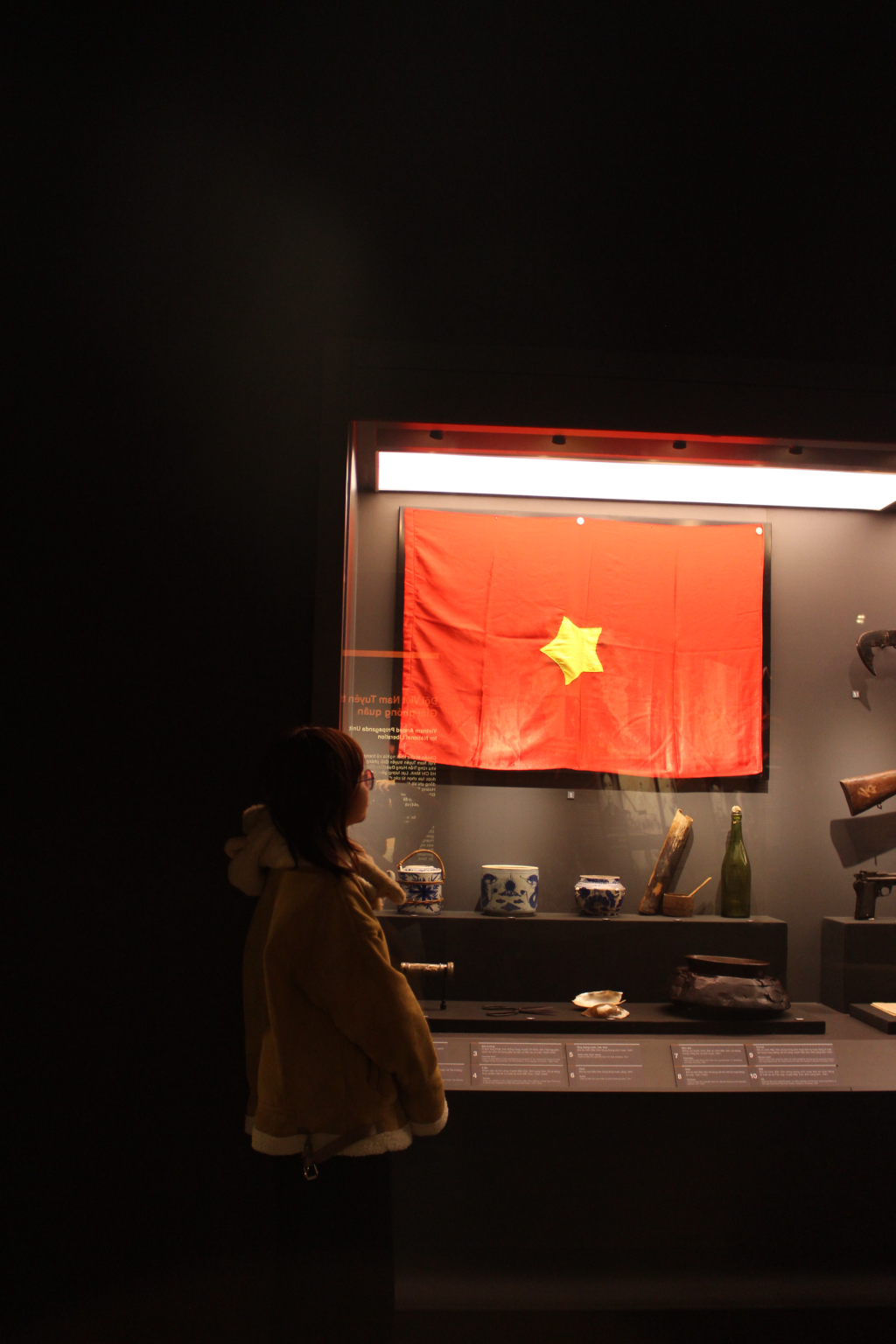
Quietly observing the historical relics - Photos taken and compiled by the Faculty Media Team
Standing before artifacts steeped in the colors of time, Tuyet Nghi, a 2nd-year International Relations student, could not hide her emotions: "Previously, I only accessed history through somewhat dry text. But today, when I could touch the past, I truly 'felt' it and became even more admiring of the nation's resilient vitality. Our country has gone through so many ups and downs to reach the position we have today - that is a pride that any future diplomat needs to remember."
On the final day in Hanoi, the delegation had the opportunity to enter the vibrant historical and cultural space of the capital. The experiences that closed the journey not only helped members understand more deeply the historical values of Hanoi but also left behind many emotions and became a memorable mark of this meaningful field trip.
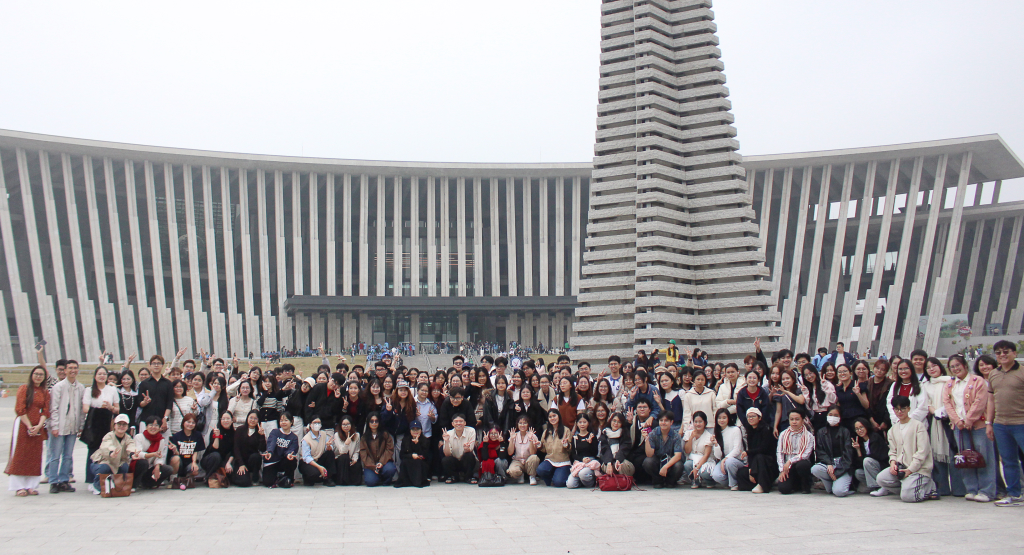
The delegation taking a commemorative photo before saying goodbye to Hanoi - Photos taken and compiled by the Faculty Media Team
Executed by: Faculty Media Team
|
"FOLLOWING THE NORTHWARD JOURNEY" is a series of articles updating information and photos about the 2026 domestic Field Trip program for students of the QH22-24 cohort, International Relations major, Faculty of History and International Relations, executed by the Faculty Media Team. |
Bài viết liên quan

Announcement regarding student exchange program with University of Paris Cité, France for the 2nd semester of the 2026-2027 academic year