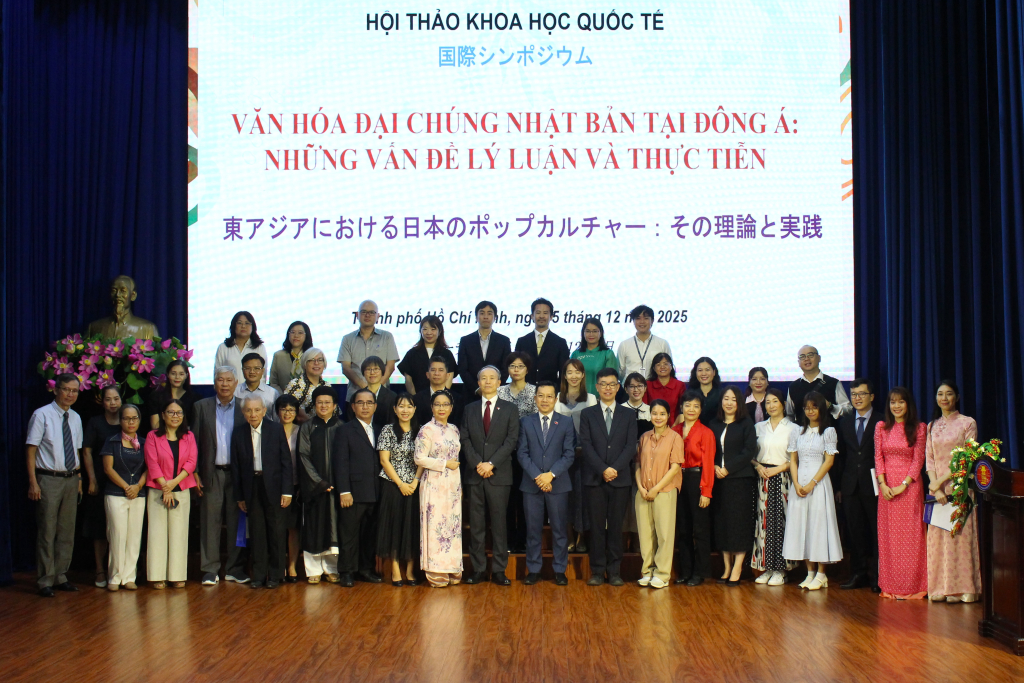
On December 5, the Faculty of Japanese Studies, the University of Social Sciences and Humanities, Viet Nam National University Ho Chi Minh City (USSH-VNUHCM) hosted the International Scientific Conference "Japanese Popular Culture in East Asia: Theoretical and Practical Issues," drawing scholars from Vietnam, Japan, and South Korea to the university. Papers at the forum analyzed how Japanese popular culture is received in Vietnam while offering multiple perspectives on its global spread.
Attendees include Consul General of Japan in HCMC Ono Masuo; Prof. Dr. Yamanaka Chie (Kyoto Sangyo University); Assoc. Prof. Dr. Abe Yasuhito (Doshisha University); Assoc. Prof. Dr. Mori Tomoomi (Setsunan University); and Assoc. Prof. Dr. Nguyễn Tiến Lực (Hung Vuong University, HCMC). Representing the host institution were Dr. Lê Hoàng Dũng - Vice President of USSH-VNUHCM; Dr. Huỳnh Phương Anh - Dean of Faculty; Dr. Huỳnh Trọng Hiền - lecturer; and students interested in Japanese culture.
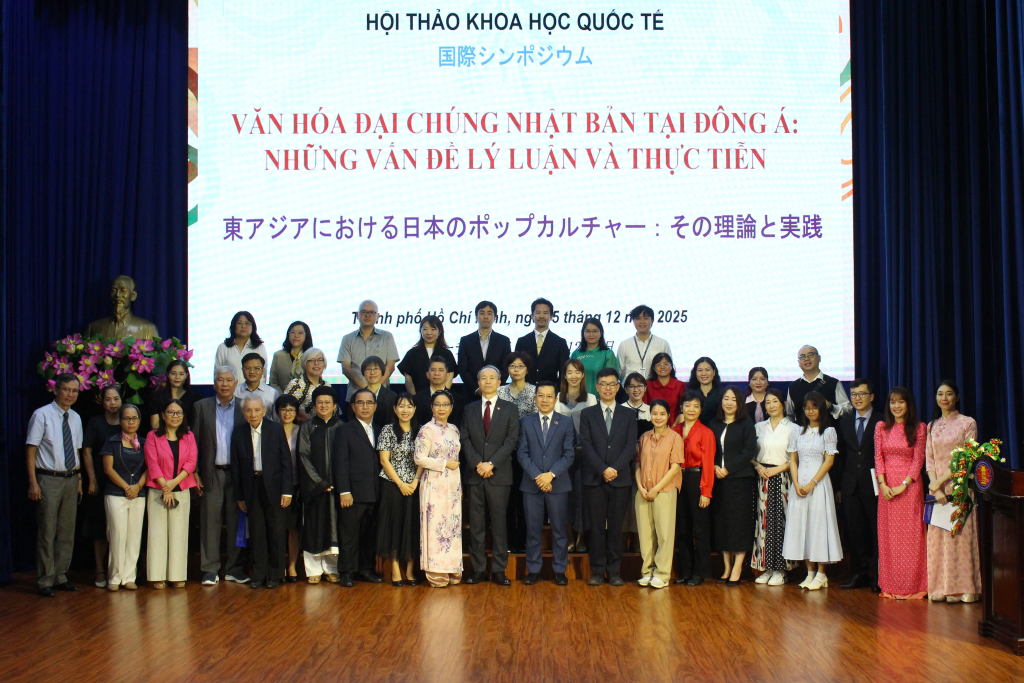
The conference, held at Văn Khoa Hall, Saigon Campus, brought together numerous scholars in the field of Japanese Studies - photo by: NGUYỆT NGÂN
In his opening remarks, Dr. Lê Hoàng Dũng noted that Japanese popular culture has become a powerful force with multi-layered socio-economic impacts across East Asia. He said these cultural flows offer new approaches to understanding regional integration and expressed hope the conference would clarify key theoretical and practical issues for Vietnam and the wider region.
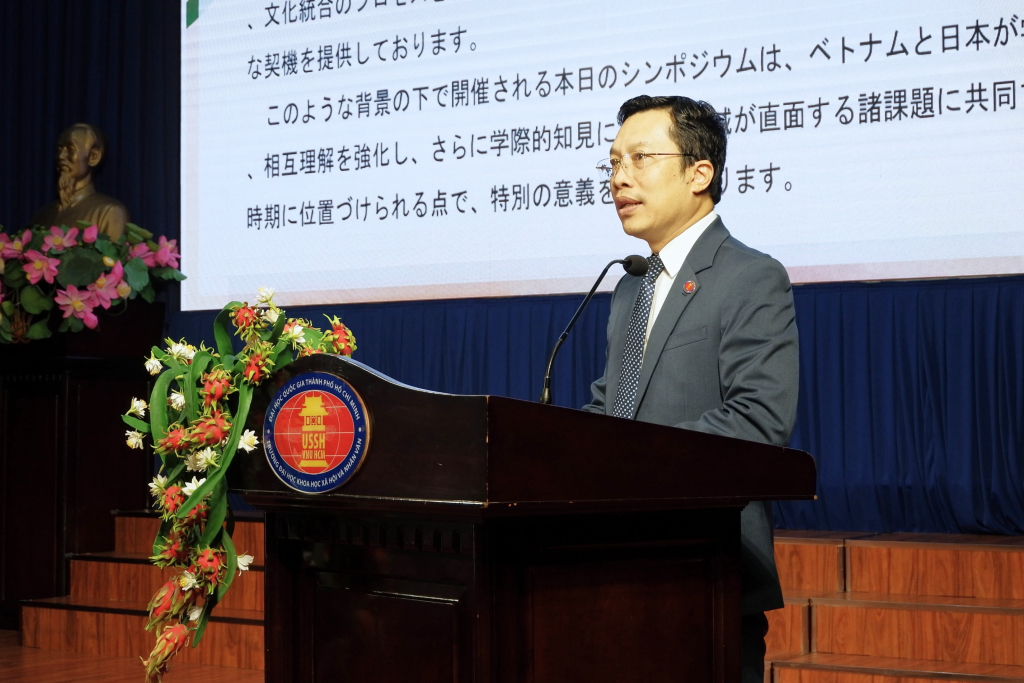
Dr. Lê Hoàng Dũng expressed his hope that the Faculty of Japanese Studies will continue to receive support from the Consulate General of Japan in HCMC and the Japan Foundation (JF) in upcoming academic activities - photo by: NGUYỆT NGÂN
Consul General Ono Masuo commended USSH and Vietnamese researchers for their work in Japanese language education and bilateral academic exchange, adding that Japanese popular culture has crossed national borders to become a key pillar of international cultural relations.
The conference attracted over 20 submissions, with 13 selected for presentation across a Plenary Session and three Thematic Breakout Sessions. Discussions centered on three key themes: the global spread of Japanese popular culture; fan community formation and transnational cultural flows in East Asia; and contemporary issues in the cultural industry.
In her keynote address, Vice Dean Dr. Nguyễn Thị Phương Hảo traced the roots of Japanese cultural diffusion in East Asia to the 1980s, when Japan led the world in science, technology, and electronics. She argued that the rise of mass media and globalization enabled manga, anime, J-pop, video games, cuisine, and fashion to gain a strong following in Vietnam and across the region.
Prof. Dr. Yamanaka Chie introduced Gakushu Manga - a comic genre blending education and entertainment born from the intersection of educational policy and the manga industry, central to Japan's Cool Japan cultural promotion strategy. She described it as an effective tool for standardizing values and spreading key messages of Japan's industrial society, one that both mirrors national cultural policy and cultivates global-minded thinking among readers.
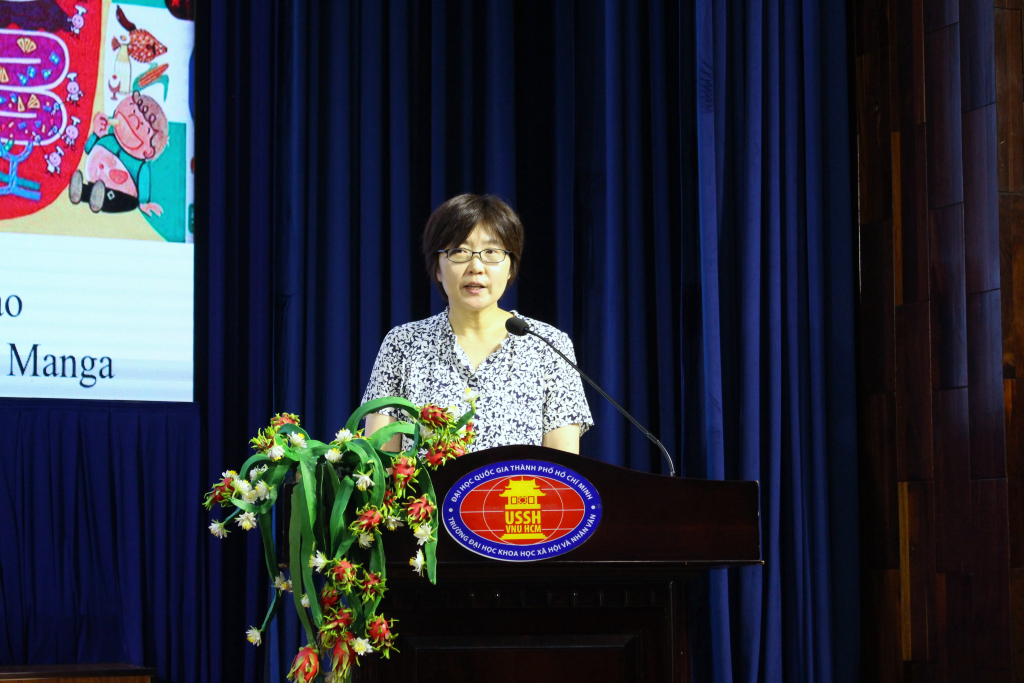
Prof. Dr. Yamanaka Chie analyzed how Gakushu Manga reflects Japan’s cultural and educational strategies in the context of globalization - photo by: NGUYỆT NGÂN
Assoc. Prof. Dr. Abe Yasuhito and Assoc. Prof. Dr. Mori Tomoomi presented research on SenGun - a publication series by the female fan community "SenGun Joshi-kai" focused on North Korea. In a context where information on the country remains scarce, the publication gives fans a space to share a more relatable image of North Korea. The researchers argued that fan culture has transcended geopolitical boundaries, helping to reshape a national image long overshadowed by prejudice.
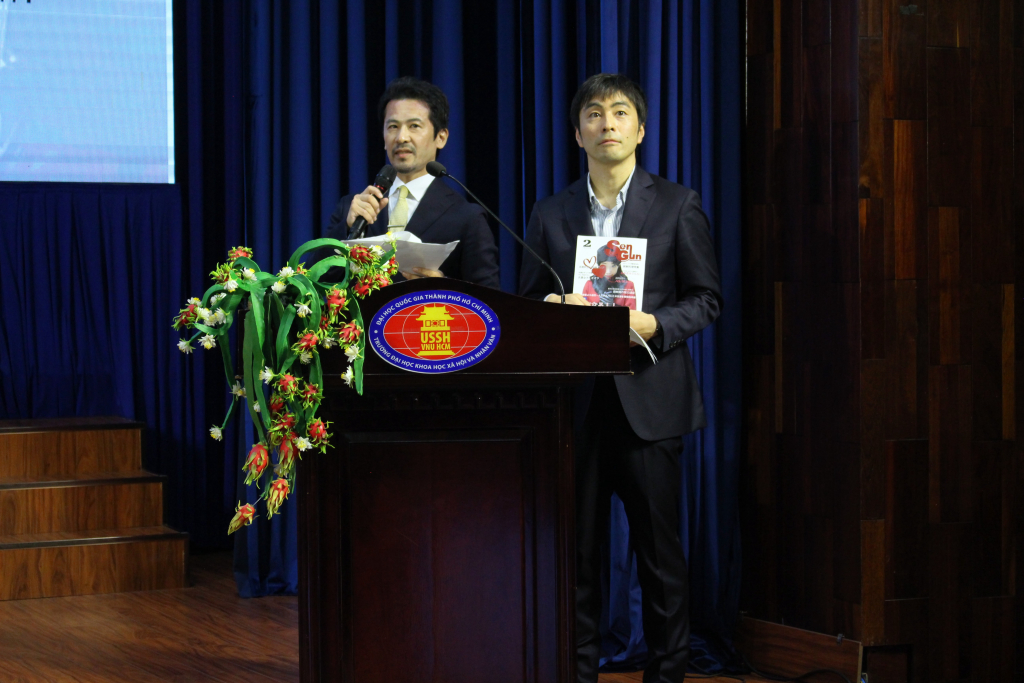
Assoc. Prof. Dr. Abe Yasuhito and Assoc. Prof. Dr. Mori Tomoomi presented a novel study on approaches to popular culture in North Korea - photo by: NGUYỆT NGÂN
Closing the morning session was Assoc. Prof. Dr. Nguyễn Tiến Lực’s examination of the spread of Japanese popular culture in Vietnam through the case of the Vietnam-Japan Cultural Exchange Festival. He argued the festivals help bridge the public to Japanese culture through a blend of traditional and contemporary elements while creating new interactive spaces for urban youth.
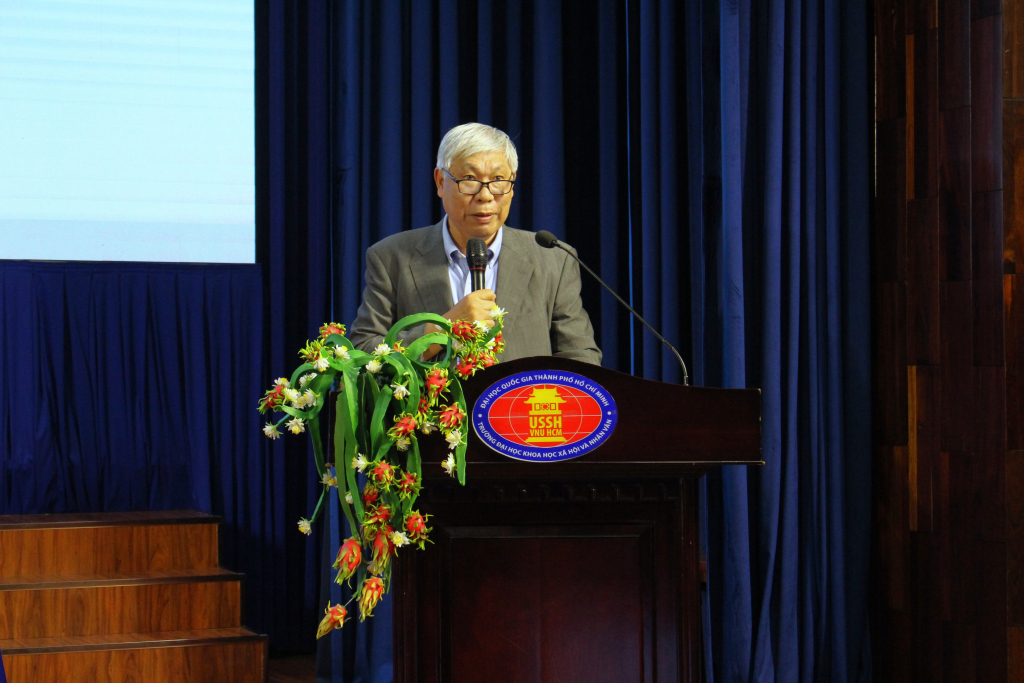
Assoc. Prof. Dr. Nguyễn Tiến Lực presented research on the role of Vietnam–Japan exchange festivals in fostering cultural interaction among urban youth - photo by: NGUYỆT NGÂN
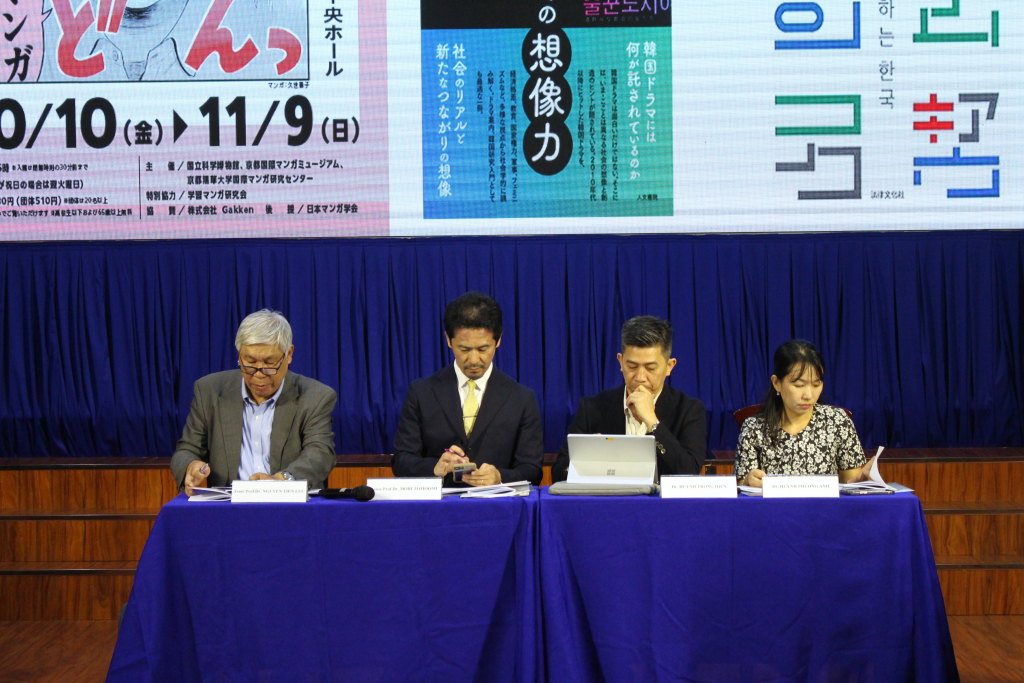
A discussion session featured lively exchanges around the presented research topics - photo by: NGUYỆT NGÂN
The afternoon session featured three parallel breakout sessions offering a wide-ranging look at Japanese culture's regional reach.
- Session 1 covered the reception of popular culture in South Korea and Southeast Asia, with implications for Vietnam's cultural industry strategy.
- Session 2 examined Otaku culture in South Korea, Japanese music in Vietnam, the impact of the digital media environment, and cultural diplomacy through creative content.
- Session 3 explored the cultural experiences of Taiwanese women in Japan, Japanese cultural identity amid globalization, the appeal of City Pop, and popular culture's role in education.
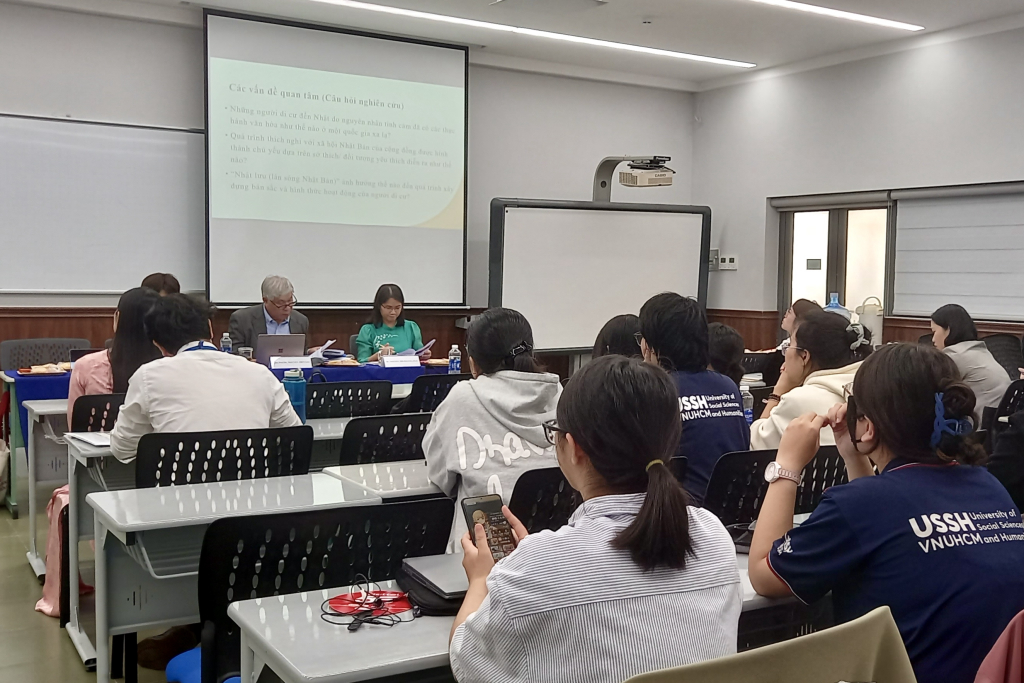
Students actively attended the panel sessions and engaged in discussions on Japanese popular culture and its reception in the region - photo by: TSUBASA Japanese Studies Media Club
Beyond academic exchange, the conference opened new research directions for specialists and laid the groundwork for future collaboration and scholarly engagement between USSH and its Japanese partner institutions.
Source: NGUYỆT NGÂN - CẨM TÚ
Translated by: Như Quỳnh Lý