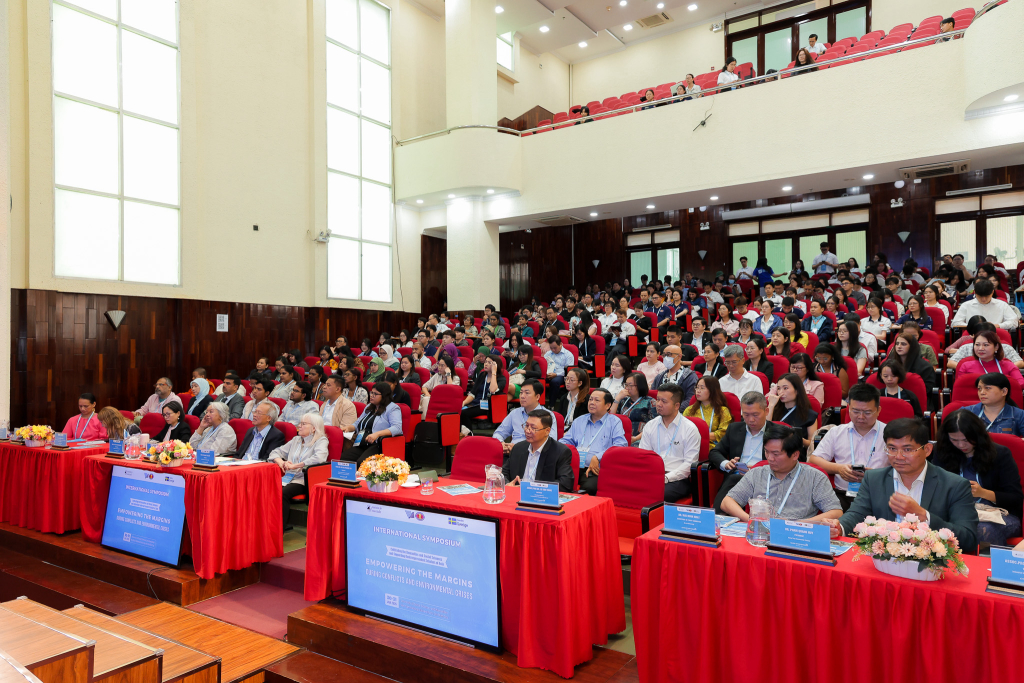
On January 30, the International Conference "Empowering the Margins during Conflicts and Environmental Crises" officially opened at the University of Social Sciences and Humanities, Viet Nam National University Ho Chi Minh City (USSH-VNUHCM). The conference was held under the “Cultivating the Humanities and Social Sciences and Supporting Underrepresented Scholars of South and Southeast Asia (CHSS)” project, co-hosted by USSH and the Association for Asian Studies (AAS), backed by the Swedish International Development Cooperation Agency (SIDA).
The event brought together scholars, experts, and researchers from Southeast Asia and South Asia to present research findings and propose solutions to support marginalized communities amidst conflicts and environmental crises.
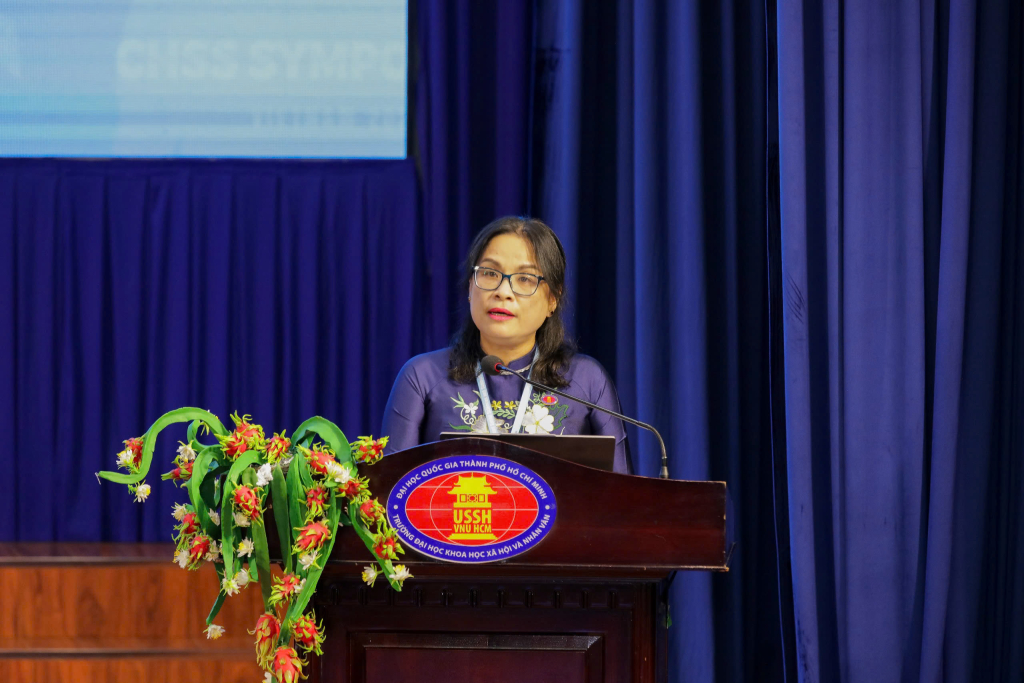
Prof. Dr. Ngo Thi Phuong Lan, President of USSH, VNU-HCM, delivers the opening address - Photo by: LÝ NGUYÊN
The University is pleased to present the full text of the opening address by Prof. Dr. Ngo Thi Phuong Lan, President of USSH.
“Distinguished delegates,
Honored representatives of the Association for Asian Studies (AAS),
Dear colleagues and fellow scholars,
On behalf of the USSH-VNUHCM, I would like to extend a warm welcome to all participants of this International Conference on "Empowering the Margins during Conflicts and Environmental Crises."”
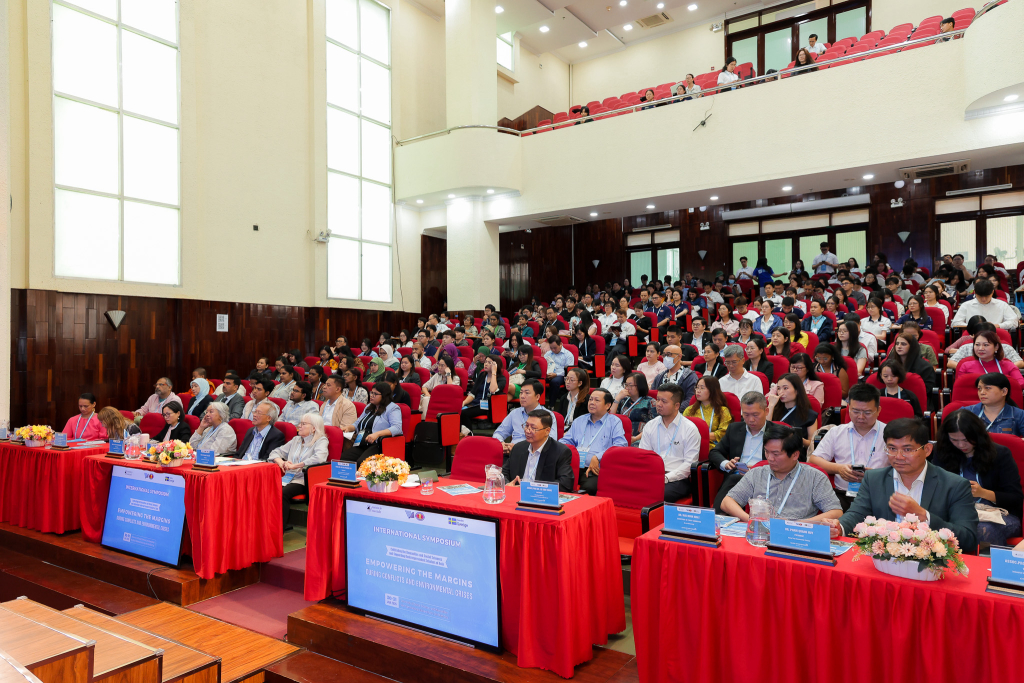
Overview of the opening session of the International Conference "Empowering the Margins during Conflicts and Environmental Crises" at USSH-VNUHCM - Photo by: LÝ NGUYÊN
“This conference is an annual event under the CHSS project - a major initiative in the field of humanities and social sciences aimed at building research capacity, supporting academic publication, and fostering collaboration networks with universities in remote areas and with marginalized or conflict-affected communities across Southeast Asia and South Asia.
I would like to extend my sincere gratitude to the Association for Asian Studies (AAS) for leading the project's academic, administrative, and financial activities, and to the Swedish International Development Cooperation Agency (SIDA) for its strategic partnership in advancing the field of humanities and social sciences in underserved areas in Southeast Asia and South Asia.
We live in an era where environmental crises, social unrest, armed conflict, forced displacement, and psychological violence no longer exist in isolation - they evolve in multidimensional, complex ways into truly global challenges. In this context, humanities and social sciences must go beyond reflecting reality: its aim should be to analyze and interpret these phenomena to aid the search for solutions and support models for communities and nations.”
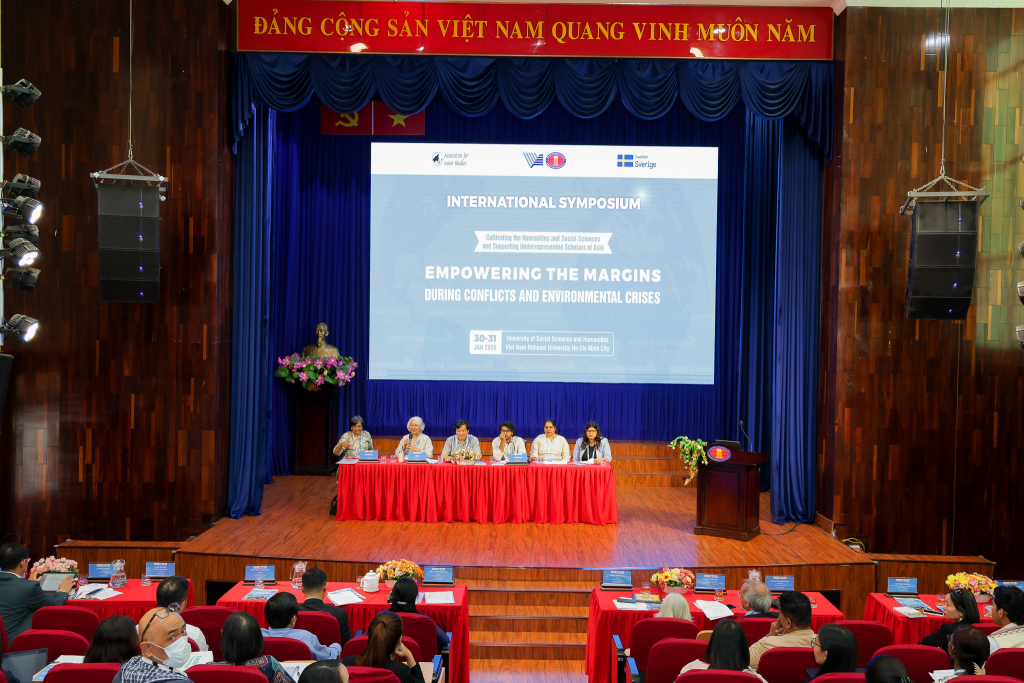
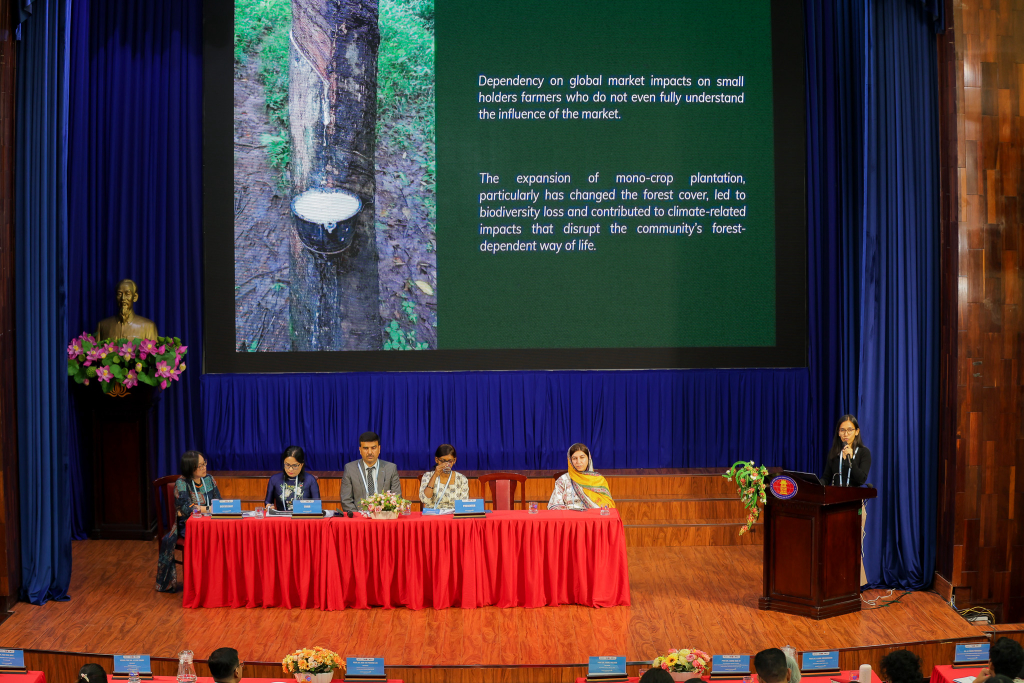
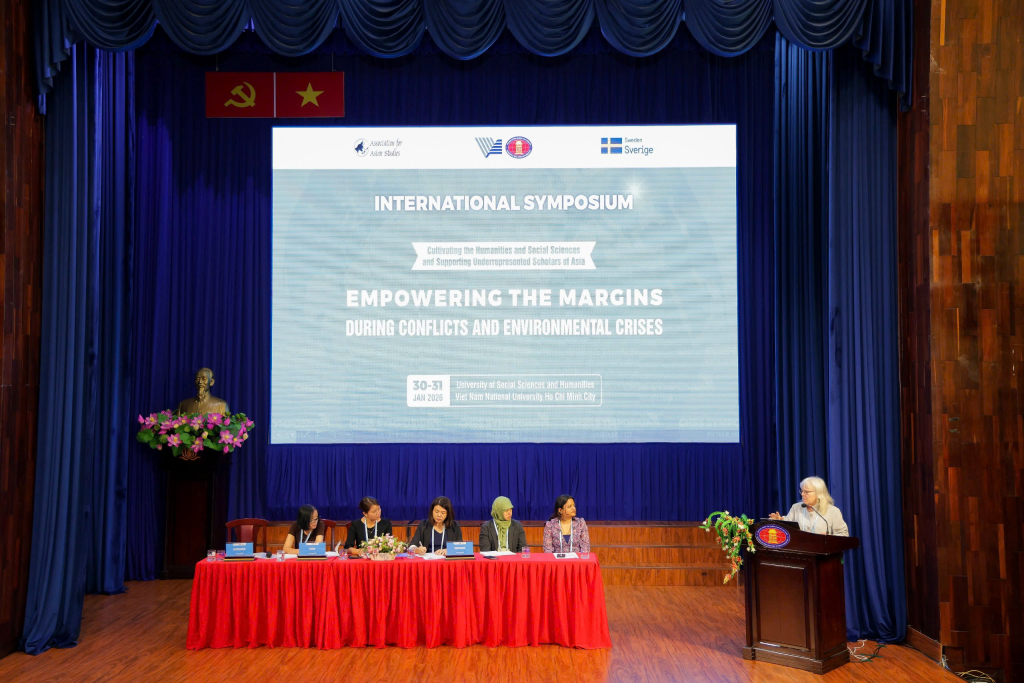
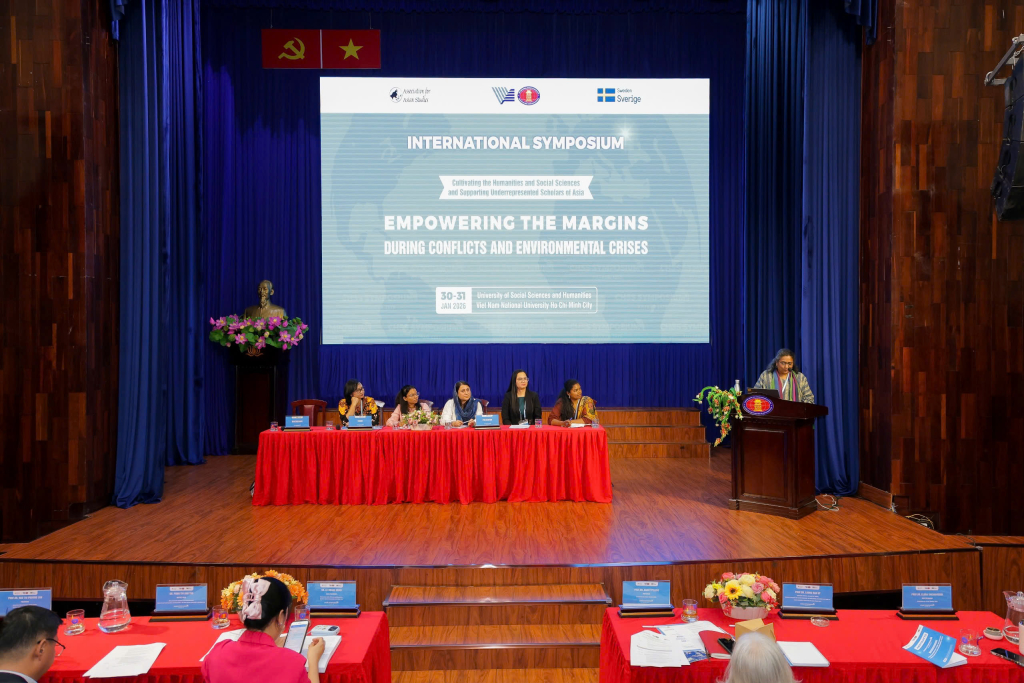
Delegates engage in academic discussion at a thematic session during the conference - Photo by: LÝ NGUYÊN
“The conference's focus on "Voices from Southeast Asia and South Asia" carries deep academic and practical significance. These are diverse spaces that routinely face the intersecting pressures of poverty, inequality, environmental risk, social conflict, and prolonged livelihood disruption. Listening to and empowering marginalized groups - women, ethnic minorities, migrants, and those in affected areas - is no longer a matter of human rights and ethics. It has become an urgent scientific imperative to build knowledge grounded in lived reality, in the spirit of "leaving no one behind" embedded in the Sustainable Development Goals.
This year's conference attracted around 300 participants, including 45 international scholars across Southeast Asia and South Asia. Over two days of thematic sessions, the event covers a broad range of issues - from identity, migration, gender, and ecology to climate risk governance and social movements in contexts of conflicts and instability.
I am confident the conference will deliver concrete scientific and practical contributions in three key areas:
- Strengthening interdisciplinary and transdisciplinary research methods on social conflicts and environmental crises within the specific contexts of Southeast Asia and South Asia.
- Bridging academia and policy to identify solutions that enhance community resilience and the effectiveness of social support systems.
- Supporting early-career scholars in developing research skills and joining regional academic networks, in line with the scholarly development mission of the AAS-led CHSS project.
I would like to express my deep appreciation to Professor Luong Van Hy from the University of Toronto, Canada, as well as to all professors and scholars joining as chairs and speakers. With their diverse expertise and open academic dialogue, I trust this conference will go beyond sharing research findings to become an opportunity for expanded cross-border collaboration - fully aligned with the goals of the CHSS project.
As the host institution, USSH, VNU-HCM views this conference not only as a prestigious academic event but also as a valuable opportunity to demonstrate its commitment to community service and international partnership. We pledge to provide the best possible organizational conditions while strictly upholding standards for international academic events, guided by the principles of accountability, respect, care, and transparency.
Once again, I would like to extend my warmest welcomes and sincerest thanks to all delegates, partners, and scholars for joining and contributing to this important international event.
Wishing the conference every success!
Thank you.”