
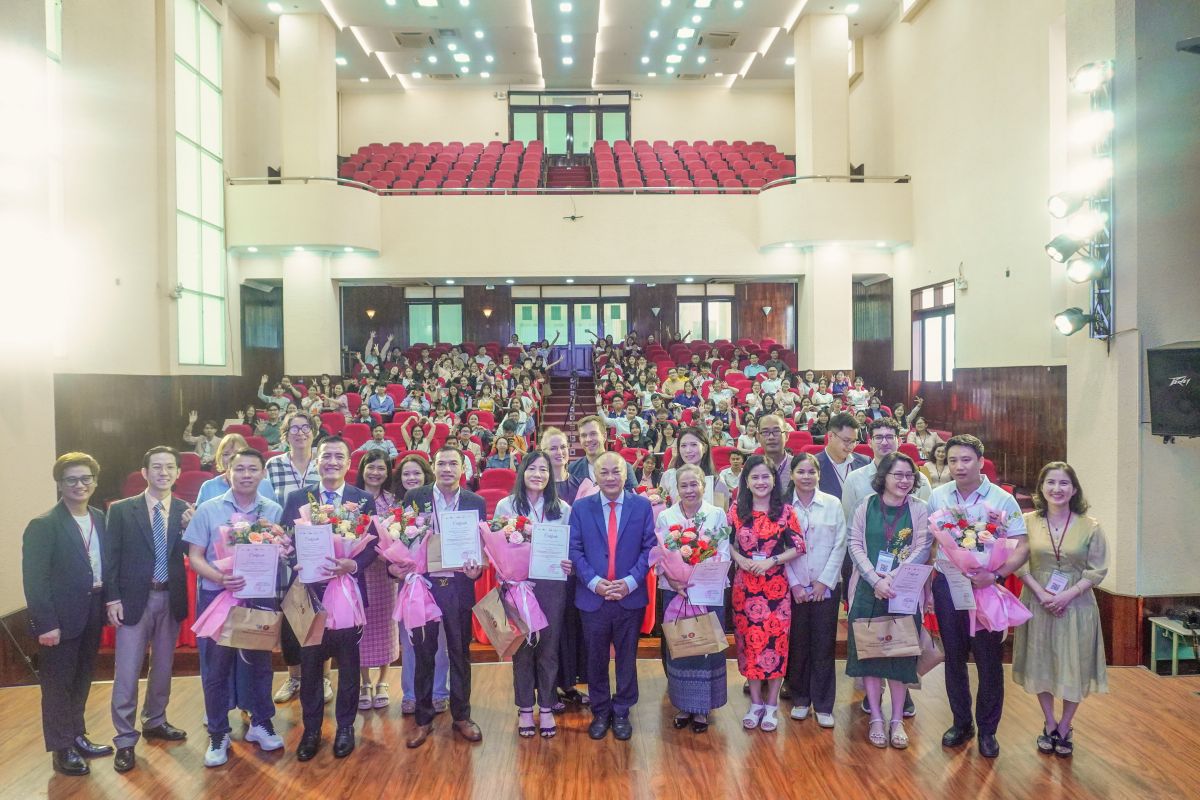
On March 19, at the University of Social Sciences and Humanities, Viet Nam National University Ho Chi Minh City (USSH-VNUHCM), the MentalHigh Project Coordination Board, in collaboration with the Faculty of Education and the Mental Health Research and Support Program under the Institute for Social Sciences and Humanities Research, organized a scientific workshop titled “Enhancing Mental Health and Well-being in Higher Education Institutions.”
The event was held as a part of the international project “Capacity Building for Mental Health in Higher Education Institutions in Southeast Asia.”
In his opening remarks, Dr. Phan Thanh Dinh, Vice President of the University, emphasized that the workshop serves as an important platform for shaping modern psychological support approaches for students. He also highlighted the importance of developing mental health care networks: “Building a healthy, supportive learning and working environment oriented toward well-being has become a key mission of modern higher education.” According to him, such efforts are essential to effectively address academic pressures and life challenges faced by young people.
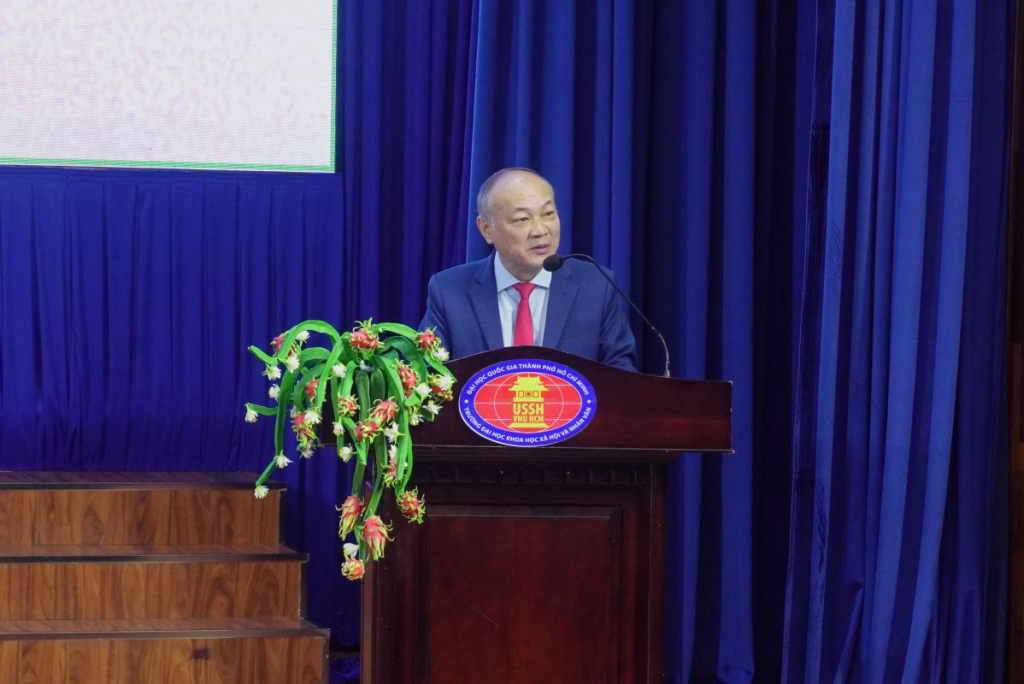
Dr. Phan Thanh Dinh noted that mental health care networks should be comprehensive and interconnected across universities
In a keynote presentation, representing the organizing unit, Assoc. Prof. Dr. Duong Minh Quang, Dean of the Faculty of Education, underscored the proactive role of higher education institutions in developing mental health support measures. He stressed the need to strengthen interdisciplinary collaboration and adopt context-appropriate models.
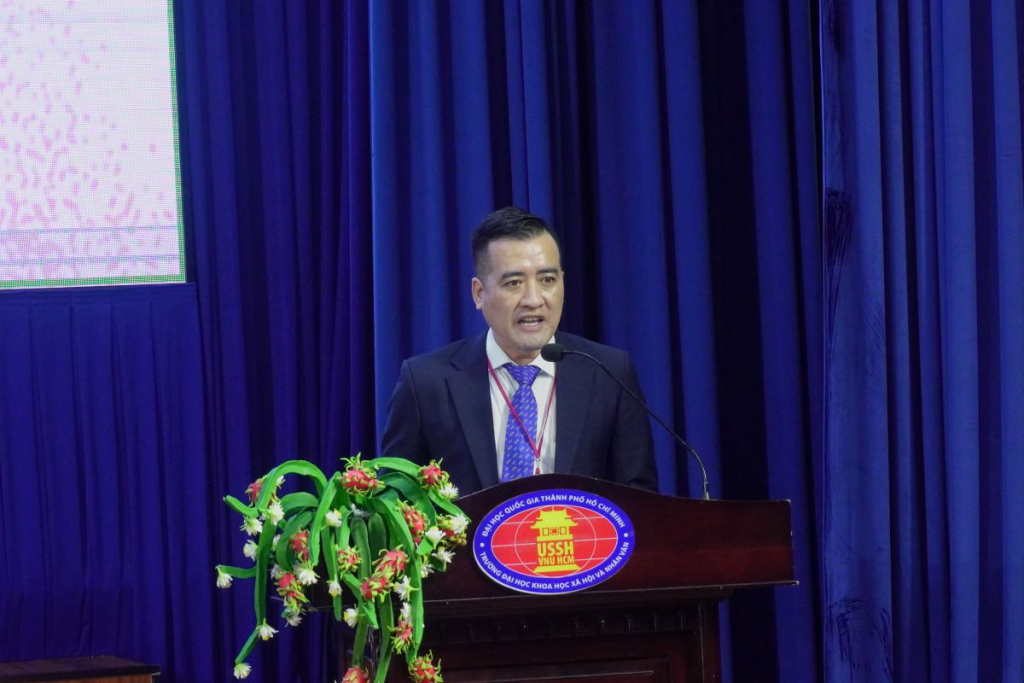
Assoc. Prof. Dr. Duong Minh Quang discusses directions for enhancing mental health support solutions in higher education through the application of modern technologies
The workshop featured six thematic presentations centered on the MentalHigh project. Opening sessions provided an overview of capacity-building goals for mental health support across universities in Southeast Asia. Subsequent presentations highlighted the urgent need to translate research into practical support tools. Notably, the presentation “Digital Interventions in the MentalHigh Project: MoodCare” introduced a digital solution through the MoodCare course, enabling students to monitor their emotional well-being and access personalized psychological support tools quickly. The solution attracted significant attention for its scalability and alignment with young people’s technology usage habits.
In addition, a series of presentations on the ShiningMind platform, including “SHININGMIND: Enhancing Mental Health Literacy through a Mobile Application” and “ShiningMind App: Feasibility Study Results,” focused on improving mental health literacy via a mobile application. Initial findings indicate high feasibility, contributing to reducing stigma around mental health issues and encouraging students to actively seek support when needed.
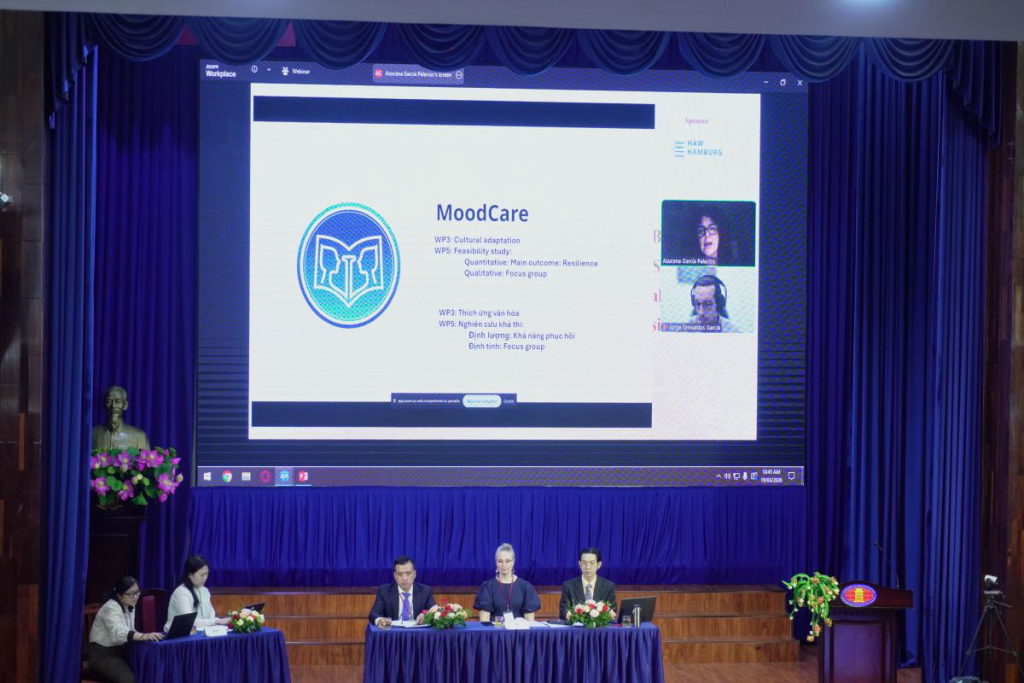
Presentations employing diverse approaches clarified current challenges and proposed solutions for mental health care in university settings
A key highlight of the workshop was the roundtable discussion titled “Student Voices & Adapting MentalHigh Tools to Local Contexts.” During the session, students shared firsthand experiences of academic pressure, societal expectations, and the need for culturally appropriate mental health services. In the open discussion session, experts and participants further exchanged insights and refined proposed measures, working toward building and strengthening effective mental health support models.
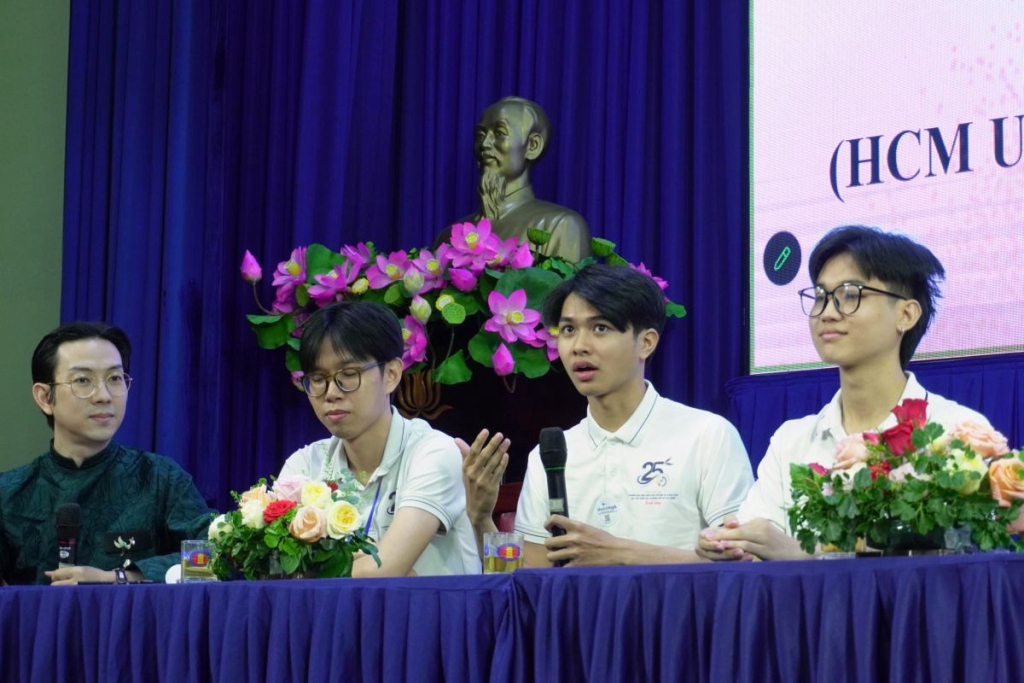
Students, scholars, and experts engage in lively discussions on barriers to accessing the proposed applications
Beyond its academic significance, the workshop also opened up practical directions for improving students’ mental well-being, contributing to sustainable development goals in higher education in Vietnam and across Southeast Asia.
Story & Photo by THANH KHUÊ, KHÔI NGUYÊN
Translation by THÁI TƯỜNG