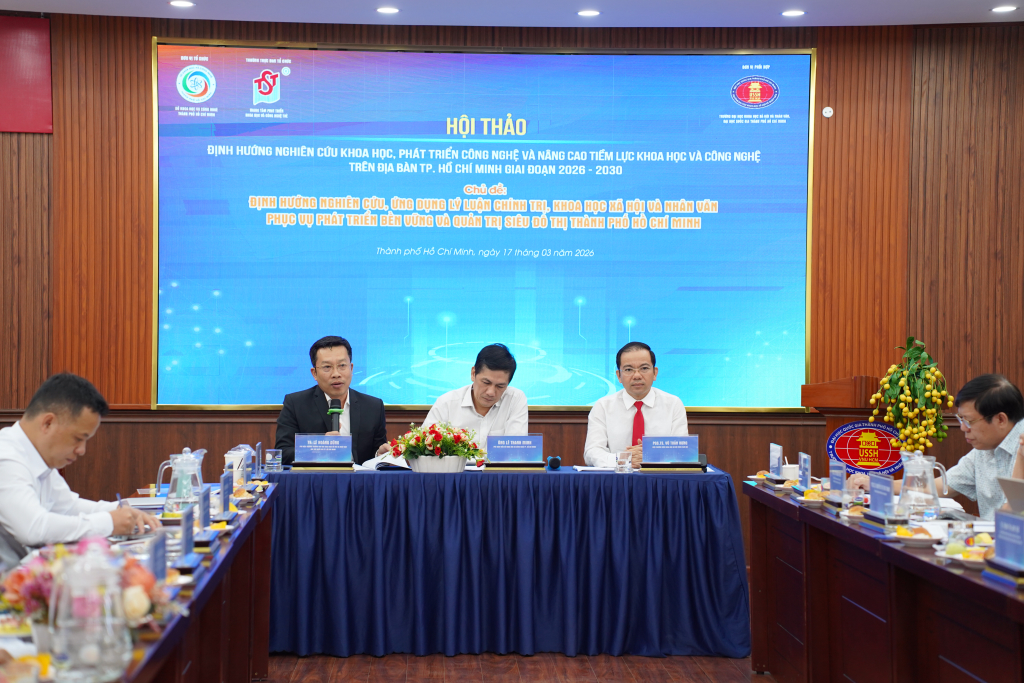
On March 17, the University of Social Sciences and Humanities, Viet Nam National University Ho Chi Minh City (USSH-VNUHCM), in collaboration with the Ho Chi Minh City Department of Science and Technology (DOST), held a scientific workshop titled “Orienting Scientific Research, Technological Development, and Enhancing Science and Technology Capacity in Ho Chi Minh City for the 2026–2030 Period.” The forum attracted a wide range of experts in megacity governance, constructive security, and public policy.
A 14-Million-Person Megacity and New Governance Demands
In his opening remarks, Mr. Le Thanh Minh, Deputy Director of the Ho Chi Minh City Department of Science and Technology, described the workshop as a key platform for generating scientific evidence to shape the city’s science, technology, and innovation agenda over the next five years.
He emphasized that the discussions aim to provide a solid theoretical and scientific foundation for the city’s development in the coming phase. As Ho Chi Minh City targets high and sustainable growth driven by the digital economy and innovation, there is an urgent need to strengthen the role and capacity of the social sciences and humanities in addressing major challenges in megacity governance, social welfare, and national security.
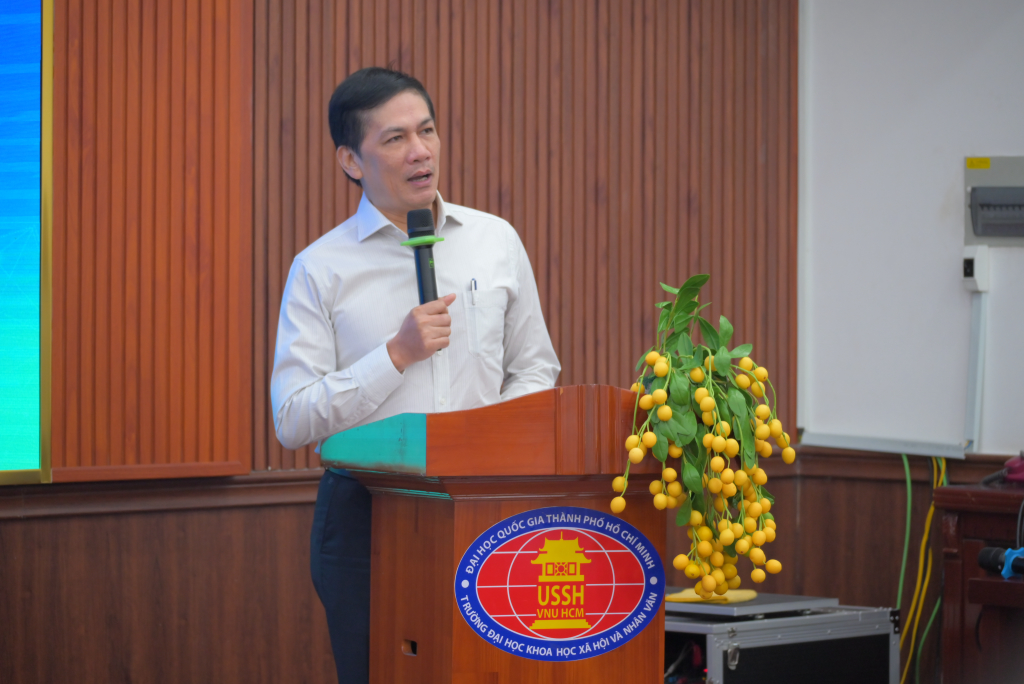
Mr. Le Thanh Minh outlines key priorities for the 2026–2030 period
The workshop focused on defining priority tasks for Ho Chi Minh City in the 2026–2030 period. Through four keynote presentations, participants underscored the urgent need to translate theoretical research into actionable policies while building expert networks and establishing mechanisms for scientific review of pressing urban governance issues. By assessing current conditions and research priorities, the workshop reaffirmed that a strong foundation in social sciences and humanities is essential for policy orientation, enabling the city to enhance its global competitiveness and effectively manage its megacity model in a new development phase.
Opening the presentation session, Mr. Tran Dinh Truc, Head of the Science Management Division at DOST, presented a report on “The Current State of Scientific Research and Technological Development in Ho Chi Minh City (2020–2025) and Directions for the Next Phase.” According to the report, the city produced more than 1,000 international publications during the period, with a relatively high rate of research application and technology transfer, contributing over 55% to the city’s total factor productivity (TFP).
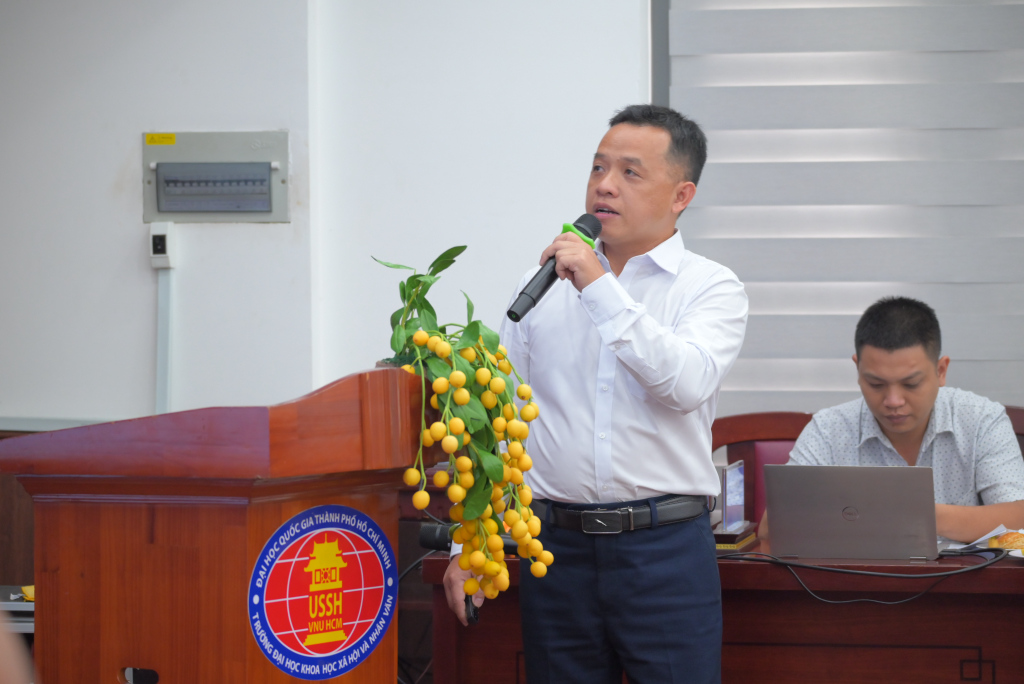
Mr. Tran Dinh Truc sets a target of 3,500 international publications annually and raising the application rate of research outcomes above 60% to support digital governance and improve quality of life
Continuing the program, Prof. Dr. Vo Xuan Vinh, Director of the Institute of Business Research at the University of Economics Ho Chi Minh City, presented on “Improving Mechanisms for Translating Theoretical Research into Policy Actions: From Theory to Practice.” He pointed out a mismatch between the supply and demand of research: while scholars tend to focus on long-term, macro-level theoretical work, policymakers require immediate, practical solutions to emerging issues. He stressed that policies grounded in robust scientific evidence are more likely to be effectively implemented. He also called for feedback and monitoring mechanisms to evaluate the real-world application of research after project completion.
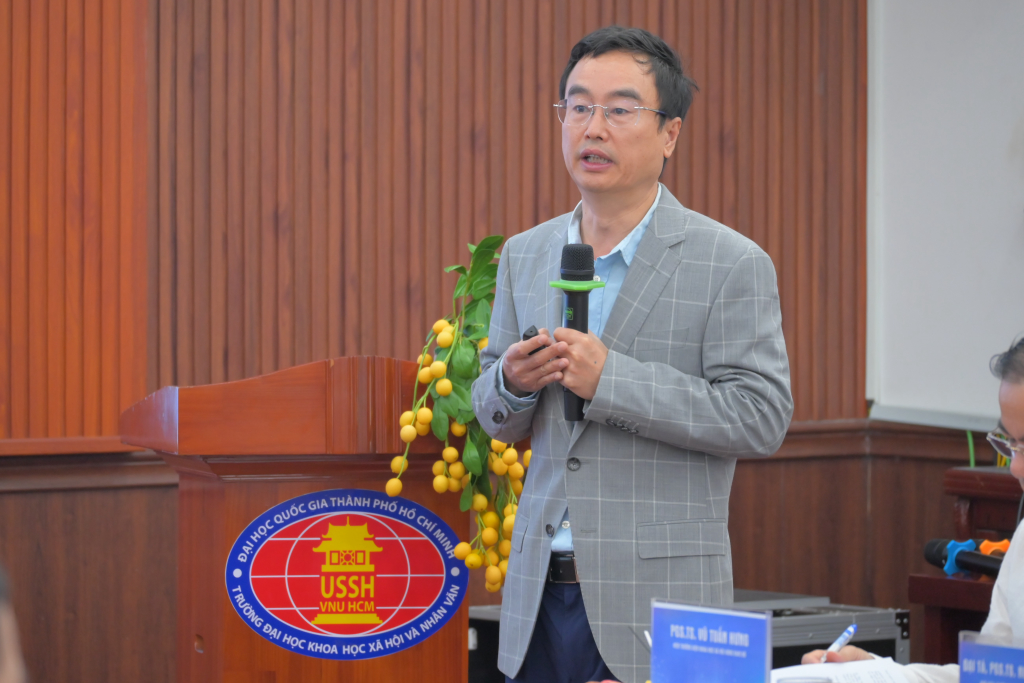
Prof. Dr. Vo Xuan Vinh proposes establishing intermediary organizations or think tanks to translate academic knowledge into policy language
Shaping Urban Security in the Digital Era
From the perspective of urban security, Colonel, Assoc. Prof. Dr. Le Thi Hien Luong, Dean of the Faculty of Political Theory and Social Sciences and Humanities at the People’s Security University, presented on “Assessing the Urgency and Coverage of Social Sciences and Humanities Research Directions in the Draft Program for 2026–2030.” She argued that security in the current context goes beyond traditional risk prevention and control, encompassing the effective design and operation of social institutions that support development. This reflects a “build-to-protect” approach, emphasizing the interaction between traditional and non-traditional security. She identified three key pillars of constructive security: institutions, technology, and community. In the digital environment, safeguarding ideological foundations and cultural security is becoming increasingly critical.
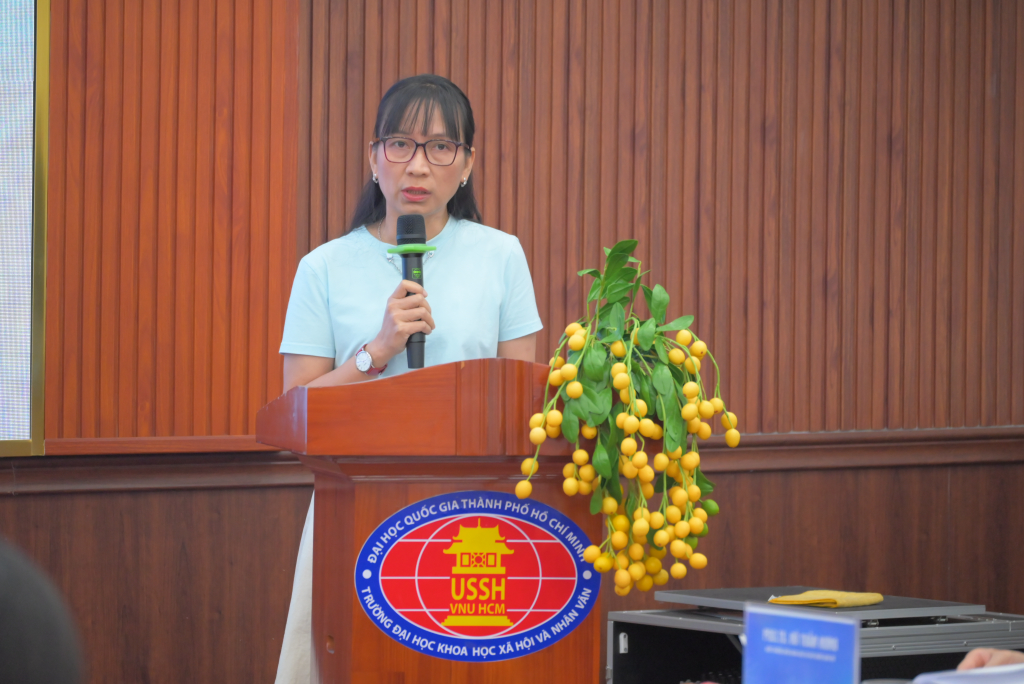
Colonel, Assoc. Prof. Dr. Le Thi Hien Luong proposes expanding research into megacity psychology, social risk governance, data security, and AI ethics
Addressing the development of expert networks and scientific review mechanisms, Assoc. Prof. Dr. Vu Tuan Hung, Director of the Southern Institute of Social Sciences, presented on “Building Expert Networks and Scientific Review Mechanisms for ‘Hot’ Issues in Ho Chi Minh City’s Megacity Governance.” He noted that Ho Chi Minh City has effectively become a megacity of 14 million people, requiring complex and interdisciplinary governance approaches. The city, he observed, possesses a vast “goldmine” of knowledge, with approximately 93,000 university lecturers—including over 30,000 holding postgraduate degrees—and a network of 149 research institutes and science and technology organizations. However, this resource remains underutilized. He proposed establishing specialized advisory panels to conduct rapid assessments and provide timely consultation on urgent issues such as the night-time economy, digital governance, and non-traditional security.
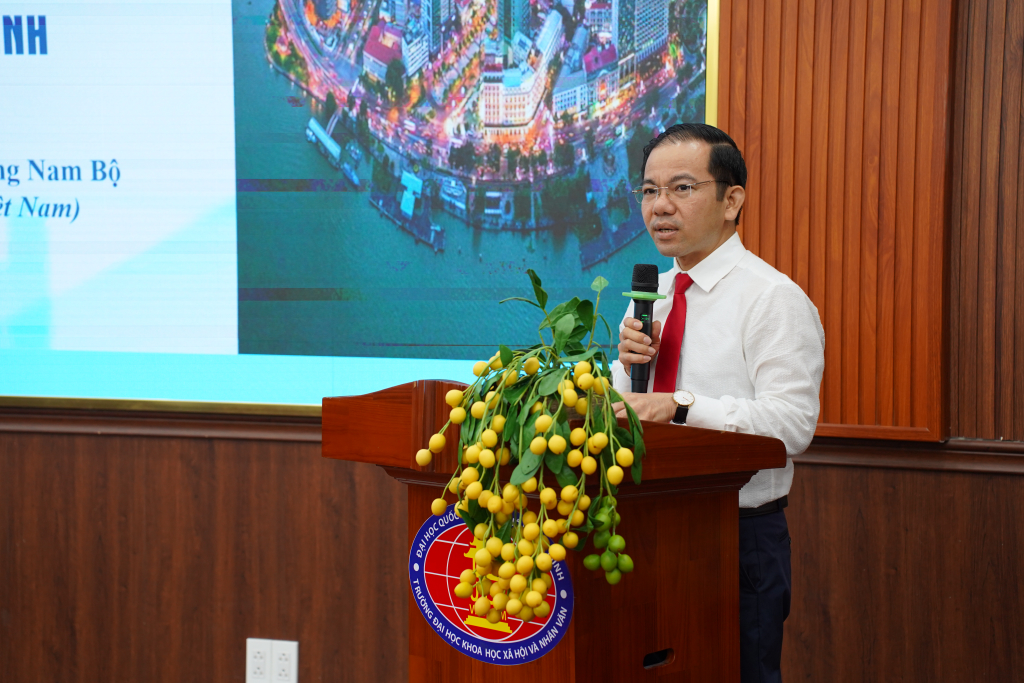
Assoc. Prof. Dr. Vu Tuan Hung also highlighted the importance of multi-stakeholder collaboration among government, academia, and businesses to build a robust knowledge ecosystem and support long-term development toward 2045
During the open discussion session, participants raised concerns about establishing social risk governance systems and inter-agency coordination mechanisms to address emerging challenges such as cybercrime, financial fraud targeting vulnerable groups, and security in education. Many emphasized prioritizing research on urgent, context-specific policy mechanisms to remove bottlenecks in megacity development programs, while clearly defining the roles and responsibilities of stakeholders in promoting innovation and commercializing scientific outputs.
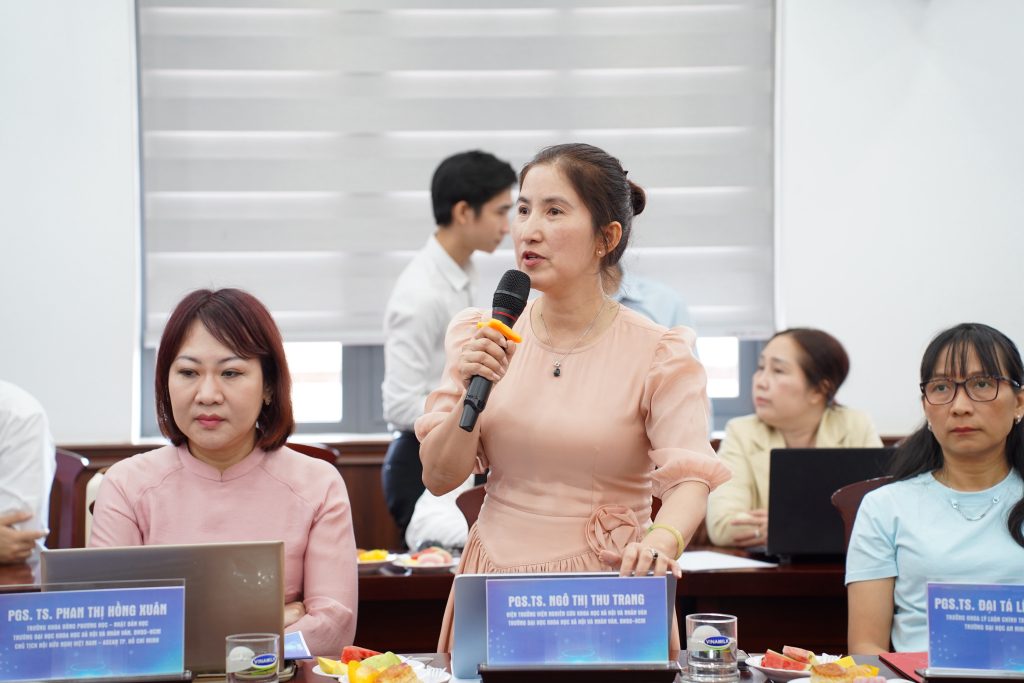
Assoc. Prof. Dr. Ngo Thi Thu Trang proposes identifying Ho Chi Minh City’s competitive advantages and branding to guide targeted research directions
Responding to these concerns, representatives from the Department of Science and Technology affirmed that the city is shifting toward a demand-driven research commissioning mechanism. For the 2026–2030 period, the city aims to achieve a 60% application rate of research outcomes. Research programs will focus on pressing issues such as developing a digital megacity system, smart flood prevention solutions, green tourism in Can Gio, and circular economy models in satellite urban areas.
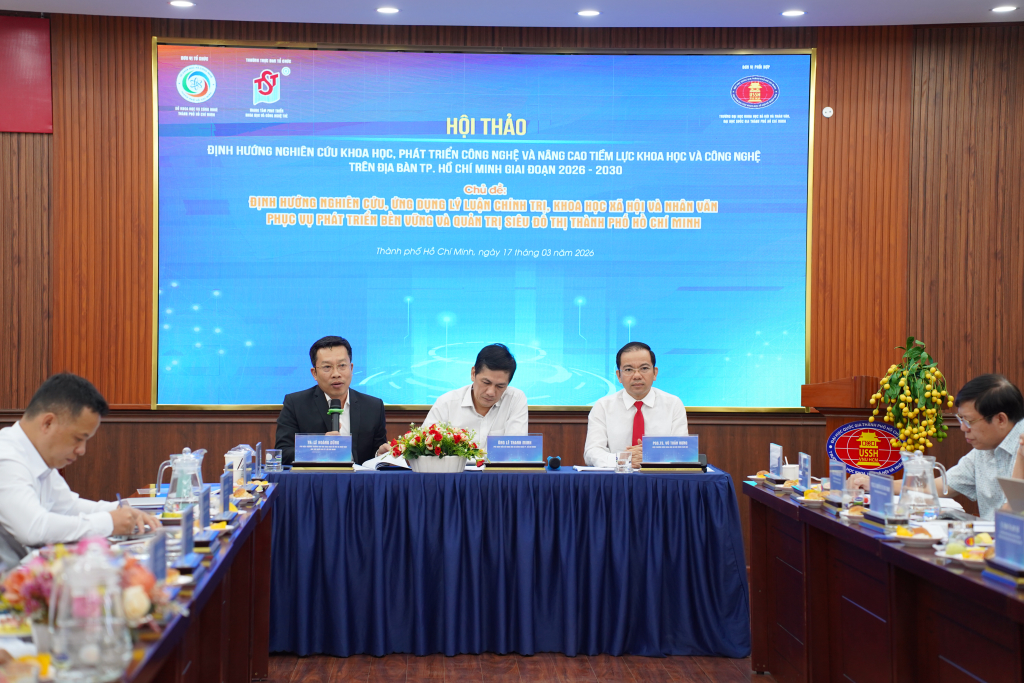
The panel moderating the open discussion session responds to questions and gathers feedback from scientists and experts
As discussion moderator, Dr. Le Hoang Dung, Vice President of USSH-VNUHCM, underscored the urgent need to strengthen linkages among research institutes, universities, businesses, and government agencies to ensure that research findings are effectively translated into practice. He stressed that research solutions should address bottlenecks in policy mechanisms to directly support the city’s development programs. He expressed hope that scientific outputs would go beyond academic completion and serve as robust evidence to support the Ho Chi Minh City People’s Committee in policy implementation and governance.
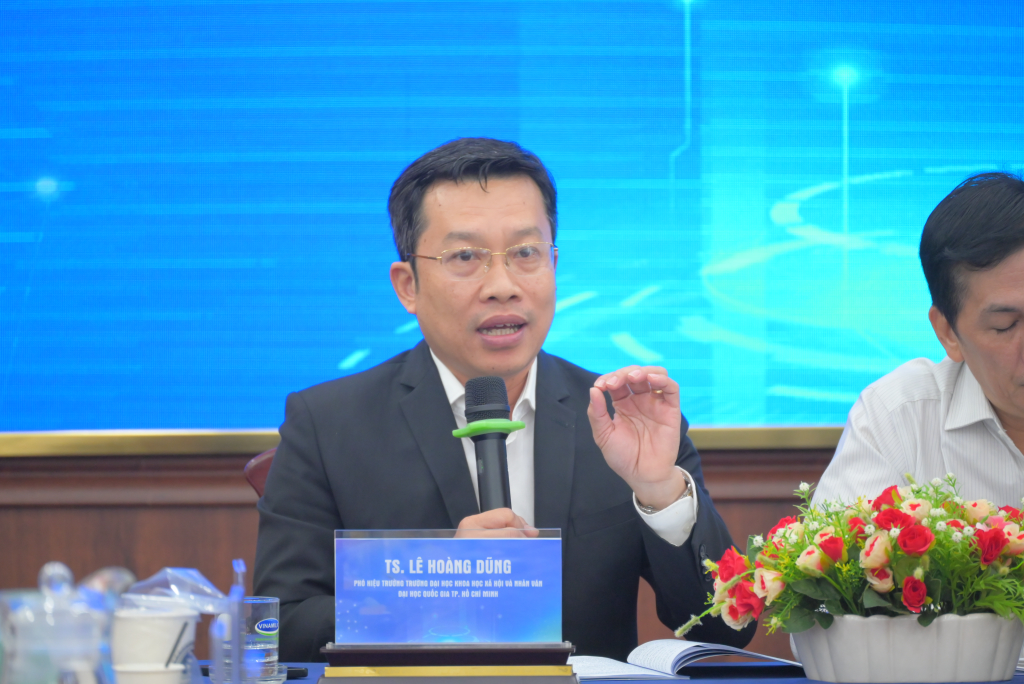
Dr. Le Hoang Dung encourages scientists and lecturers to actively contribute ideas and participate in policy-making processes to support socio-economic development programs
The workshop concluded with substantive contributions from participating scholars. The Department of Science and Technology confirmed that it will synthesize feedback and finalize the draft program for submission to the city’s People’s Committee. Mr. Le Thanh Minh expressed confidence that, with the active engagement of research institutions and universities—particularly the strengths of USSH-VNUHCM—the city will be able to build a robust social sciences and humanities ecosystem commensurate with its position as a leading megacity in the region.
Story & Photo by Ý NGUYỄN, HẠNH NGUYÊN
Translation by THÁI TƯỜNG