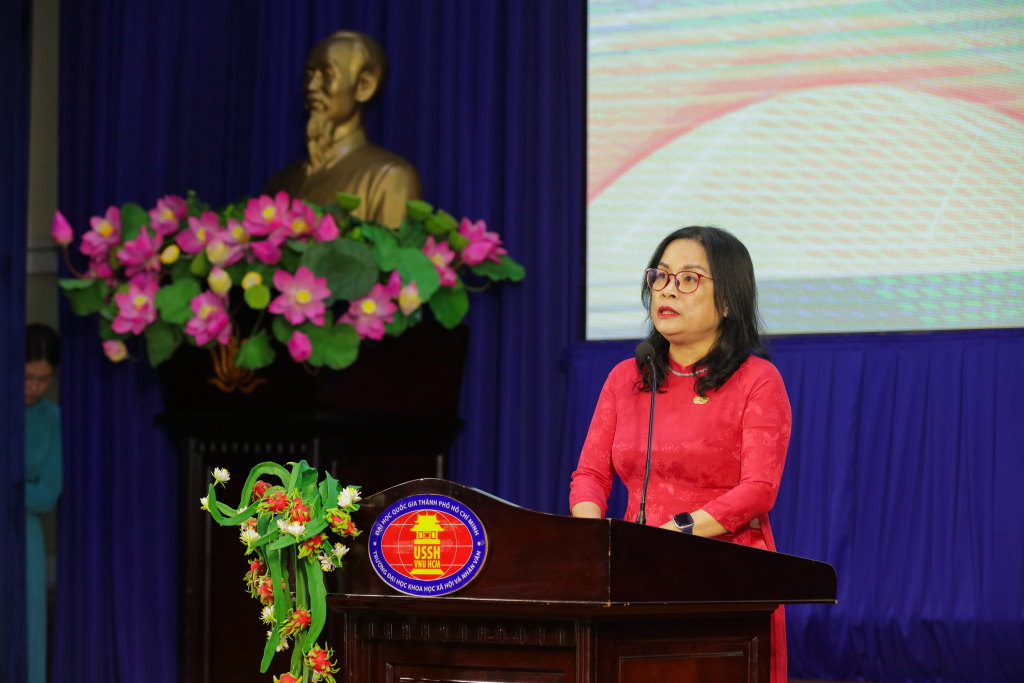
On the morning of March 26, the University of Social Sciences and Humanities, Viet Nam National University Ho Chi Minh City organized the national scientific conference “Social Sciences and Humanities: Knowledge, Identity and Resources for National Development.” The event serves as a key highlight in celebration of the university’s 30th anniversary (1996–2026), attracting a large number of researchers, leaders from member institutions of Viet Nam National University Ho Chi Minh City, and leading experts in the field.
A Cross-Century Legacy and the Aspiration to Shape the Future
In her opening remarks, Prof. Dr. Ngo Thi Phuong Lan, President of the University, stated that the conference is not only an opportunity to reflect on the 30-year journey of institutional identity, but also marks a transition from the role of “interpreting the past” to “shaping the future.”
In the digital era, social sciences and humanities are positioned as a “soft infrastructure” to preserve national identity, helping society avoid being assimilated when integrating into the global environment. She emphasized: “The greatest legacy we inherit today is not merely growth figures or existing achievements, but the system of humanistic values — the source and heartbeat of this university.”
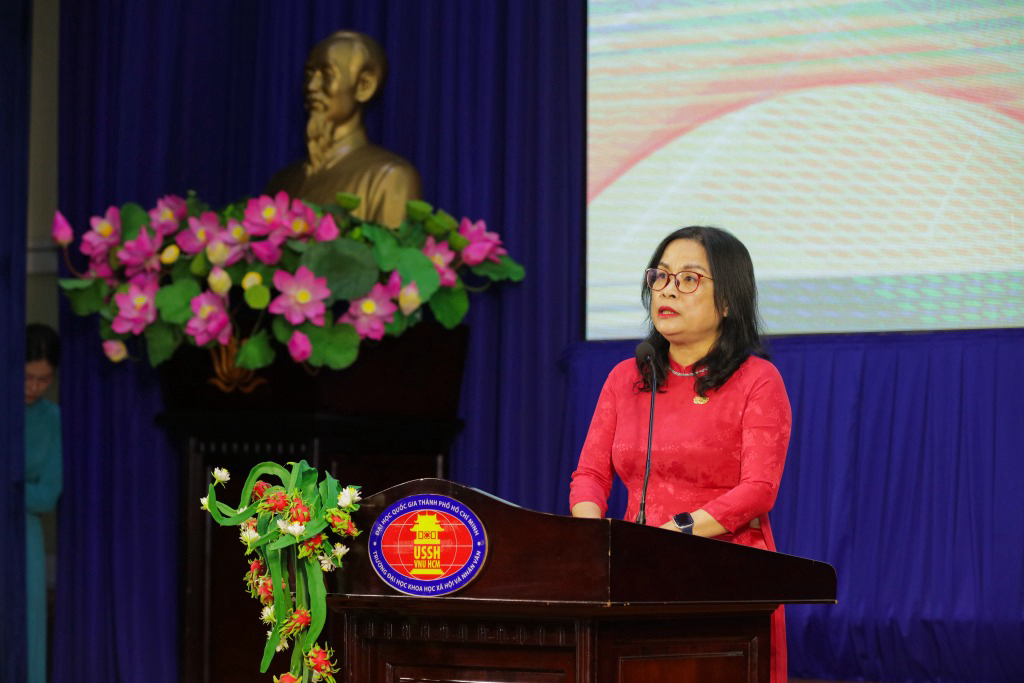
Prof. Dr. Ngo Thi Phuong Lan expresses hope for practical solutions to position social sciences and humanities as a direct driver of national prosperity – Photo: LY NGUYEN
The conference focuses on six full-length presentations, divided into two main sessions. Session 1, titled “The Identity of Social Sciences and Humanities in the Context of Digital Transformation,” offers in-depth perspectives on how humanistic knowledge shapes contemporary values through three key presentations. Following this, Session 2, titled “Human Resources in Social Sciences and Humanities in the Context of Digital Transformation,” focuses on the human factor, the core of all development resources, through three practical perspectives.
Opening the session, Dr. Trieu Thanh Le and a group of authors from the Faculty of Journalism and Communication presented a report titled “The Faculty of Journalism and Communication in Enhancing Community Information Verification Capacity: A 10-Year Journey and Future Directions.” The report highlights the urgency of media literacy education in response to “information disorder” and algorithmic manipulation, demonstrating that social sciences and humanities are directly involved in regulating the information space, rather than merely studying society.
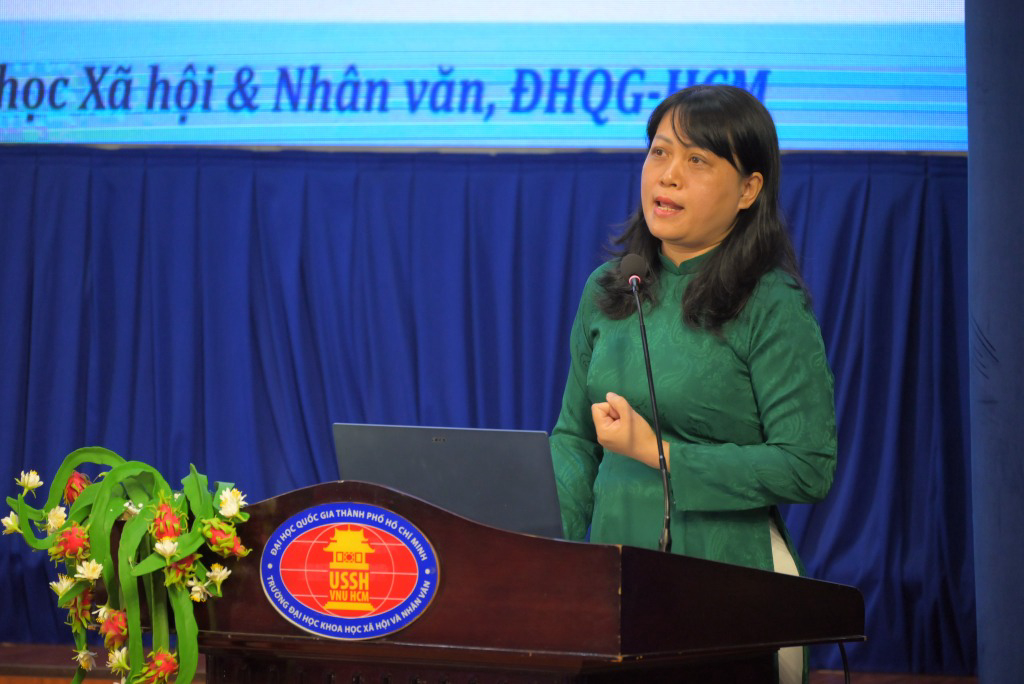
Dr. Trieu Thanh Le highlights information verification as an essential “antibody” against misinformation – Photo: HANH NGUYEN
Continuing the program, Assoc. Prof. Dr. Tran Thi Mai, Senior Lecturer from the Faculty of History and International Relations, presented “Historical Science in the Context of Globalization, International Integration and Digital Transformation: Opportunities, Challenges and Development Directions.” She noted that globalization is expanding the scope of research and fundamentally transforming how time and space are perceived in historical studies. History can no longer be confined within national frameworks or heavily political perspectives, but requires multidimensional approaches such as global history, transnational history, and expanded research into culture, regional studies, and maritime domains.
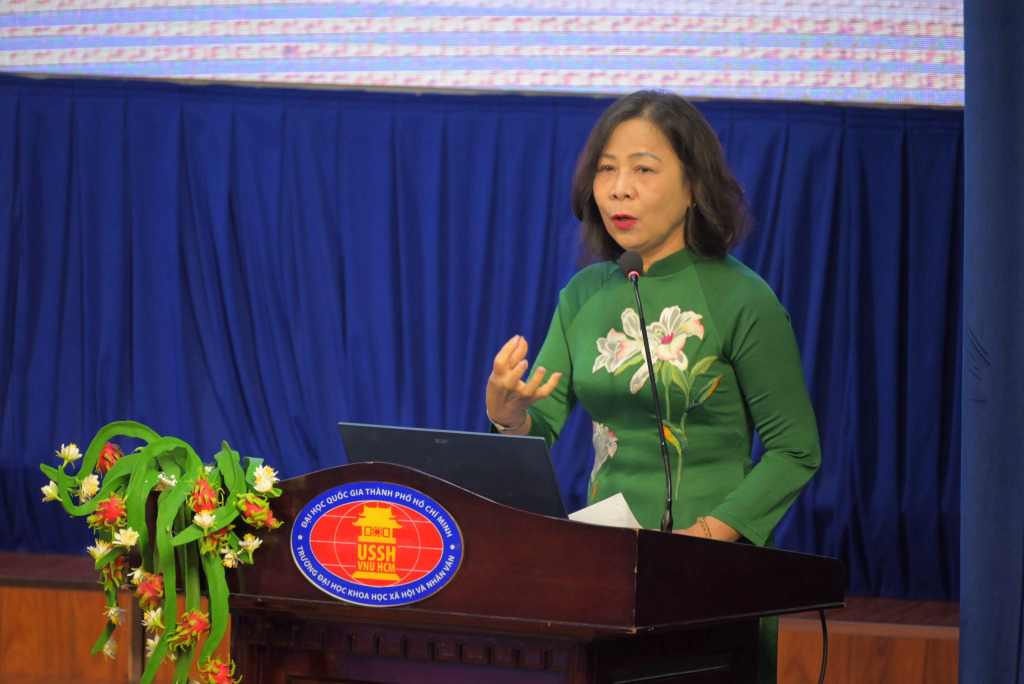
Assoc. Prof. Dr. Tran Thi Mai calls for digital data systems, stronger global collaboration, and enhanced social critique in historical studies to support national development – Photo: HANH NGUYEN
Sharing a similar perspective on adaptation in a multidimensional environment, Dr. Vu Doan Lien Khe, Lecturer from the Faculty of Oriental Studies – Japanese Studies, presented “The Role of Social Sciences and Humanities in Japanese Studies Training in Viet Nam (A Review of 30 Years of Development at the University of Social Sciences and Humanities, VNUHCM).” Reflecting on three decades of development, the author affirmed that Japanese studies is not merely language training, but an interdisciplinary area studies field grounded in social sciences and humanities.
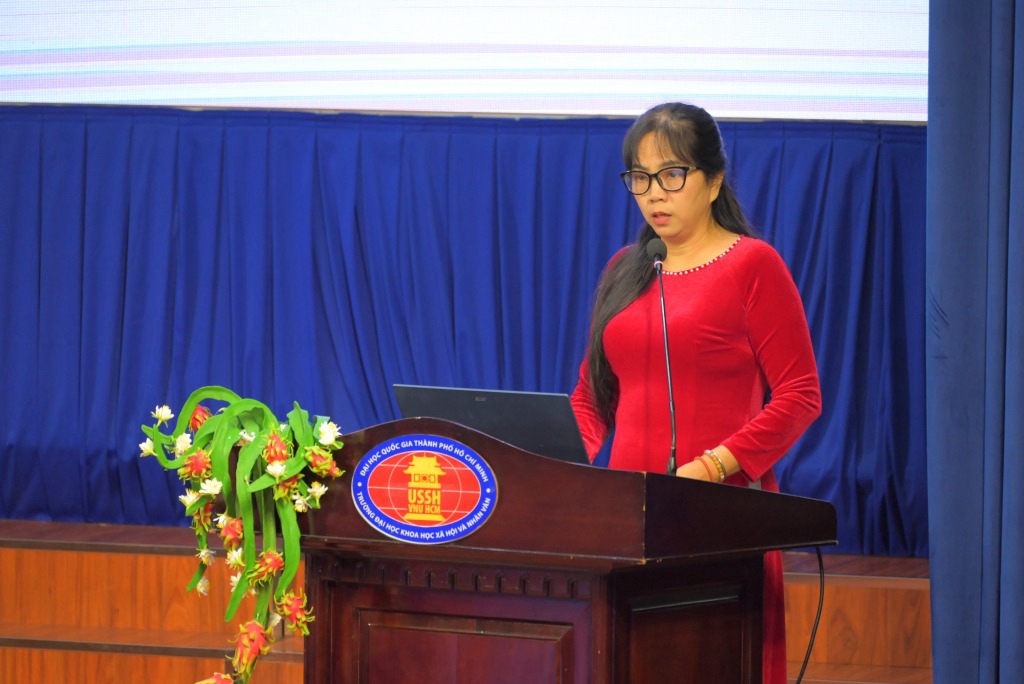
Dr. Vu Doan Lien Khe highlights how the university’s academic ecosystem nurtures graduates who are both academically strong and culturally perceptive – Photo: HANH NGUYEN
“Infrastructure of Infrastructure” for Sustainable Development
Opening Session 2 on human resources, Assoc. Prof. Dr. Vo Van Thang, former President of An Giang University (VNUHCM), presented “Promoting Vietnamese Human Resources from a Philosophical Perspective on Values: The Transformation from Social Sciences and Humanities Knowledge into Sustainable Development Drivers.”
From a philosophical perspective on values, he stated that knowledge in social sciences and humanities is not merely academic theory, but operates as a core “operating system” of society. Within this system, cultural values, ethical standards, and critical thinking are nurtured, then strongly transformed into practical capabilities and internal national strength.
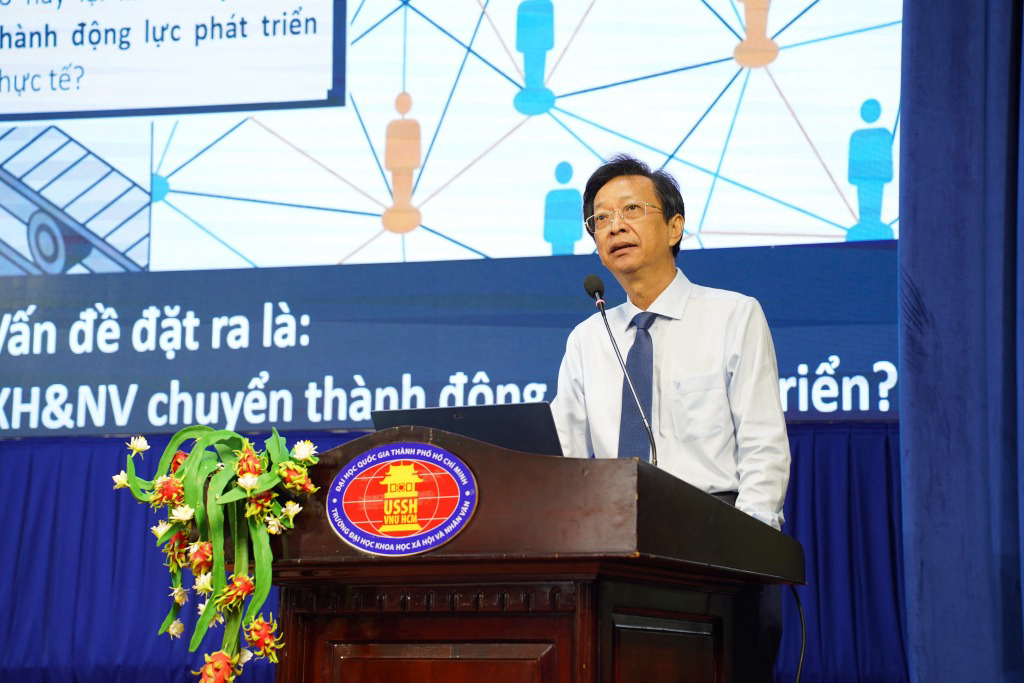
Assoc. Prof. Dr. Vo Van Thang highlights the transformation of social sciences knowledge into action as an “operating system” for national strength – Photo: HANH NGUYEN
From a practical healthcare perspective, Assoc. Prof. Dr. Pham Anh Vu Thuy, Vice President of the University of Health Sciences (VNUHCM), presented “The Role of Social Sciences and Humanities in the Modern Healthcare System in Viet Nam.” He affirmed that social sciences and humanities are an essential foundation for building a human-centered healthcare system. Their contributions are clearly reflected through key pillars such as bioethics, medical communication, and medical sociology. The presentation demonstrated that social sciences and humanities have become a direct resource in addressing real-world challenges in the healthcare sector.
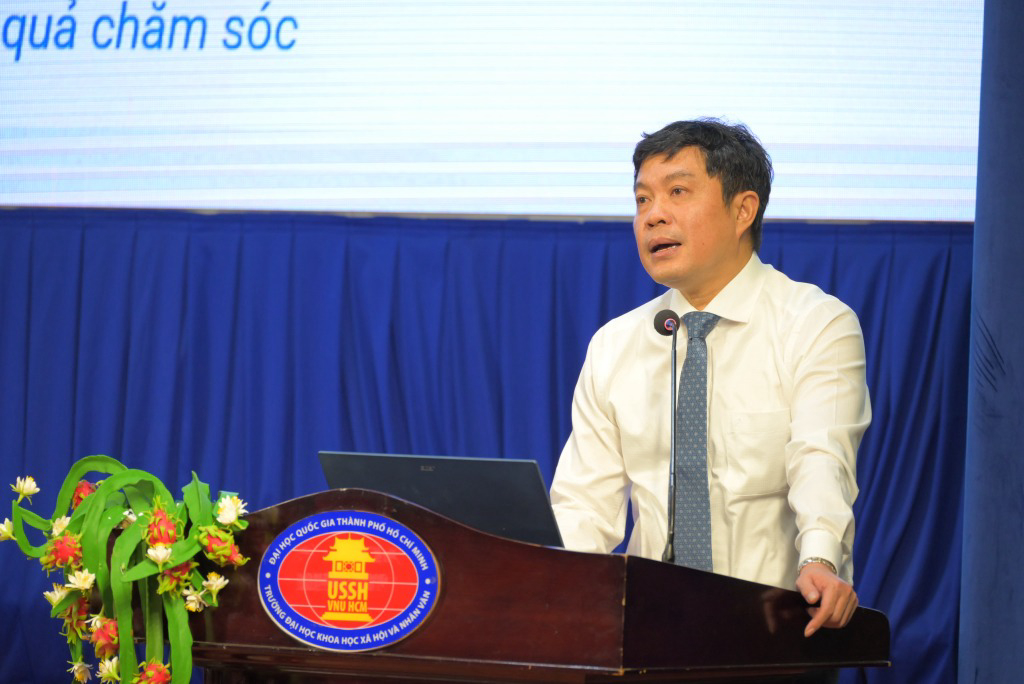
Assoc. Prof. Dr. Pham Anh Vu Thuy affirms social sciences and humanities as a foundation for human-centered healthcare through bioethics and medical communication – Photo: HANH NGUYEN
In addition, the conference also placed strong emphasis on ideological orientation through the presentation “Enhancing Training and Development of Teaching Staff to Improve the Quality of Political Theory Education at VNUHCM” by Assoc. Prof. Dr. Cao Xuan Long and Dr. Vu Toan. The authors affirmed that political theory lecturers play a key role in helping younger generations remain resilient amid complex information flows. This further reinforces that social sciences and humanities are not merely theoretical, but directly address real-world human and societal challenges.
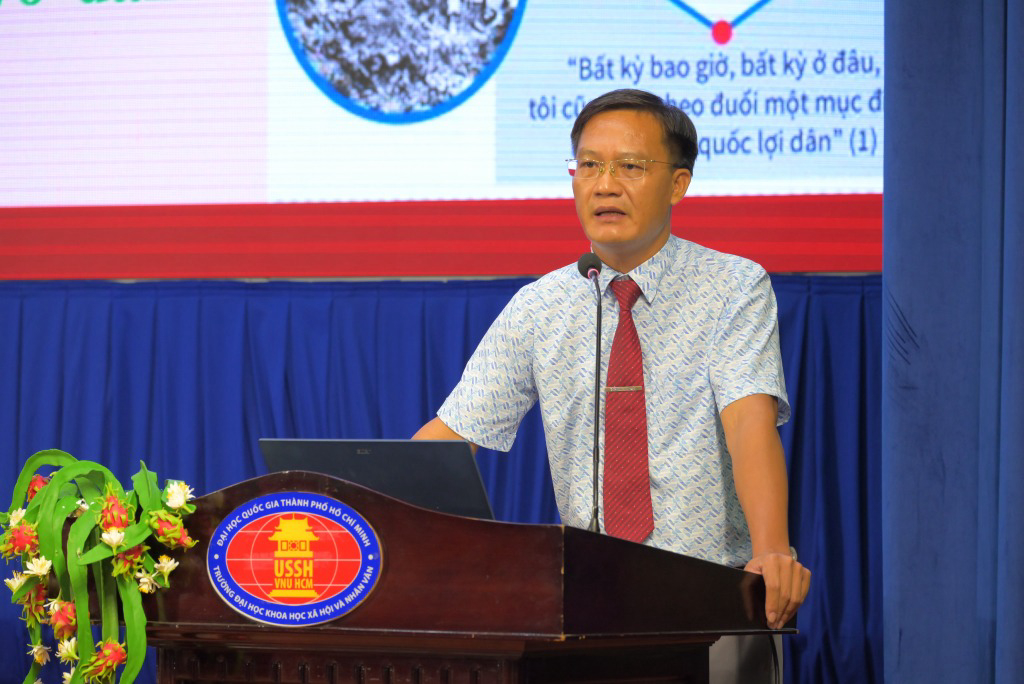
Assoc. Prof. Dr. Cao Xuan Long and Dr. Vu Toan highlight the key role of lecturers in guiding ideology and strengthening youth resilience – Photo: HANH NGUYEN
At the open discussion session, delegates expressed interest in the adaptability of social sciences and humanities from multiple perspectives, including media, history, healthcare, and area studies education. The discussions reaffirmed that humanistic knowledge is directly shaping values in the digital era, while highlighting the urgent need to strengthen interdisciplinary approaches to address key practical challenges.
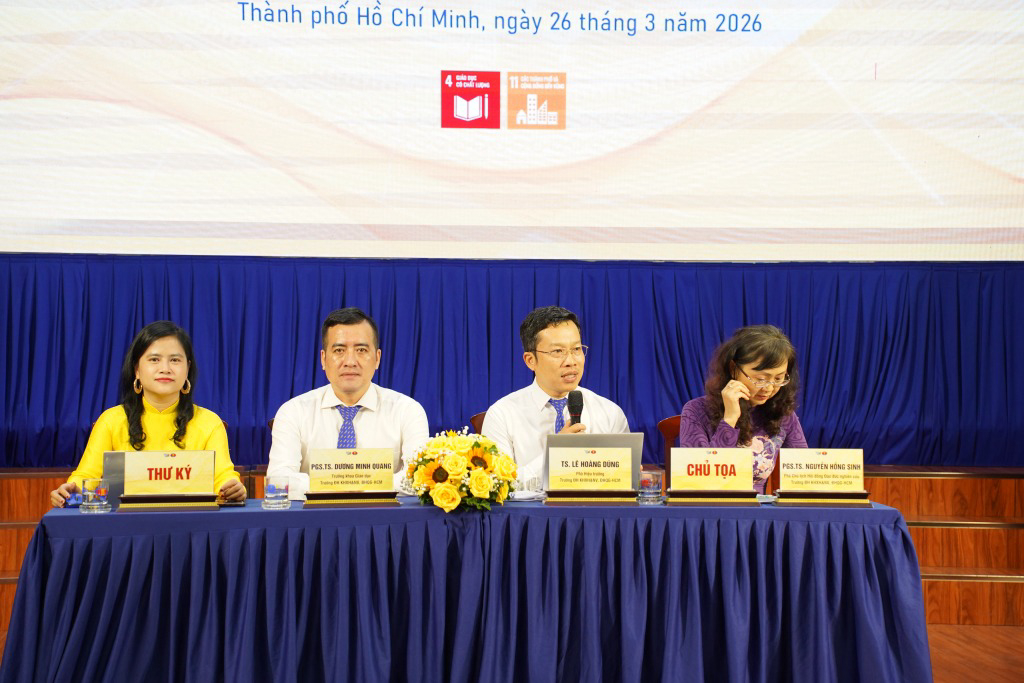
The panel moderating the open discussion session gathers and synthesizes insights from researchers and experts – Photo: HANH NGUYEN
In concluding the conference, Prof. Dr. Vo Van Sen, Chairman of the Scientific and Training Council, summarized the key arguments and affirmed that knowledge in social sciences and humanities is the “infrastructure of infrastructure.” From the multidimensional perspectives presented, he concluded that the era of technology and machinery cannot dominate humans or overshadow identity. On the contrary, humanistic knowledge will transform technology into a powerful tool to further honor and elevate scientific achievements and core values.
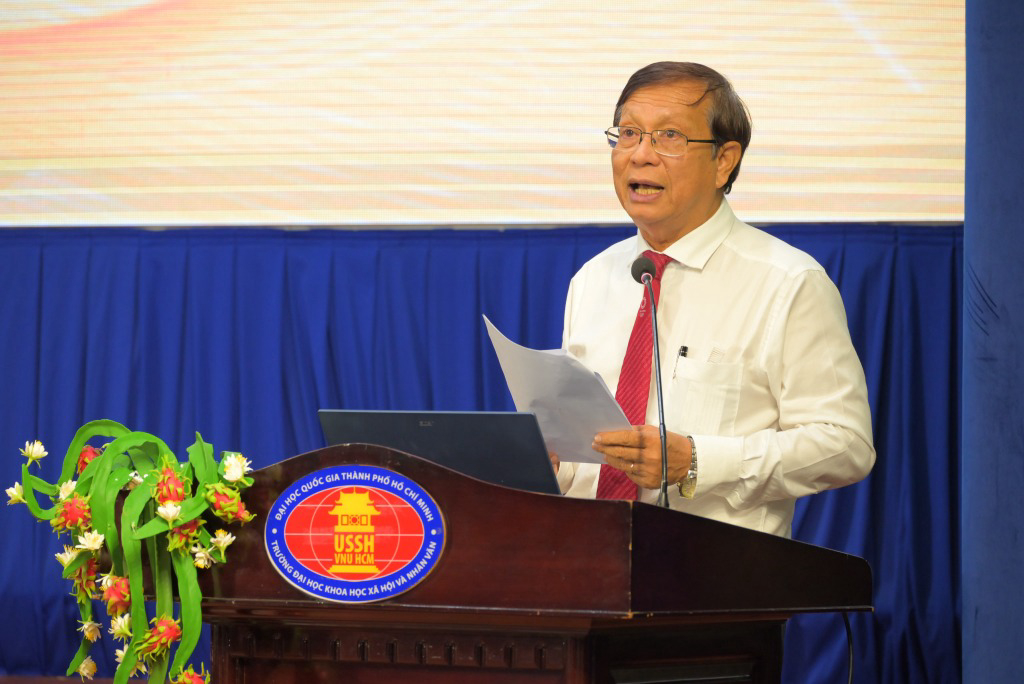
Prof. Dr. Vo Van Sen emphasizes that digital transformation requires methodological innovation while maintaining academic depth and standards – Photo: HANH NGUYEN
The conference concluded with a strong commitment from the university to continue developing fundamental sciences alongside social innovation, positioning social sciences and humanities as a direct resource for the country’s sustainable development.
Y NGUYEN – HANH NGUYEN – KHOI NGUYEN – BAO NGOC
TRANSLATED BY: TIEN VU