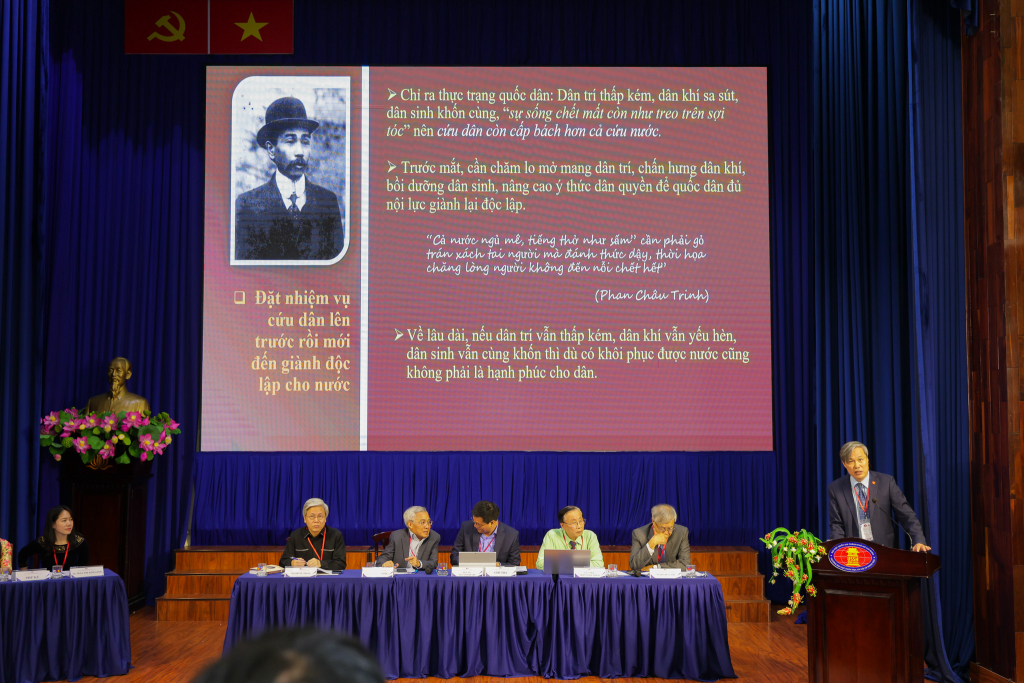
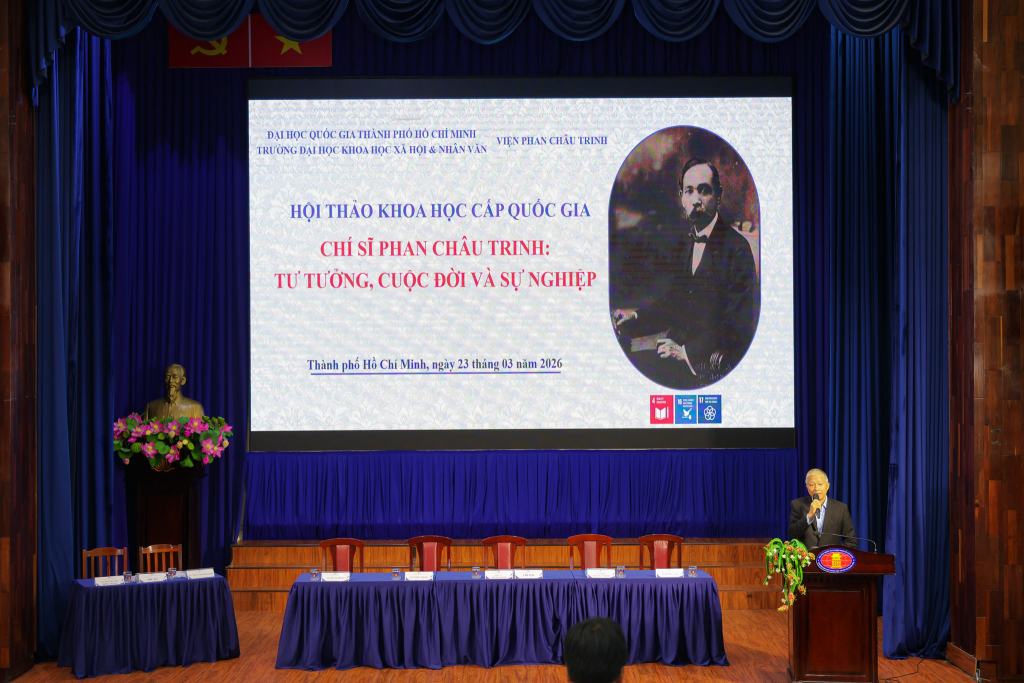
On March 23, the University of Social Sciences and Humanities, Viet Nam National University Ho Chi Minh City (USSH-VNUHCM), in collaboration with the Phan Chau Trinh Institute, organized a national scientific conference titled “Patriot Phan Chau Trinh: Thought, Life, and Legacy.”
The event, co-hosted by the Faculty of Cultural Studies and the Faculty of History and International Relations, attracted a large number of scholars, researchers, and experts from across the country.
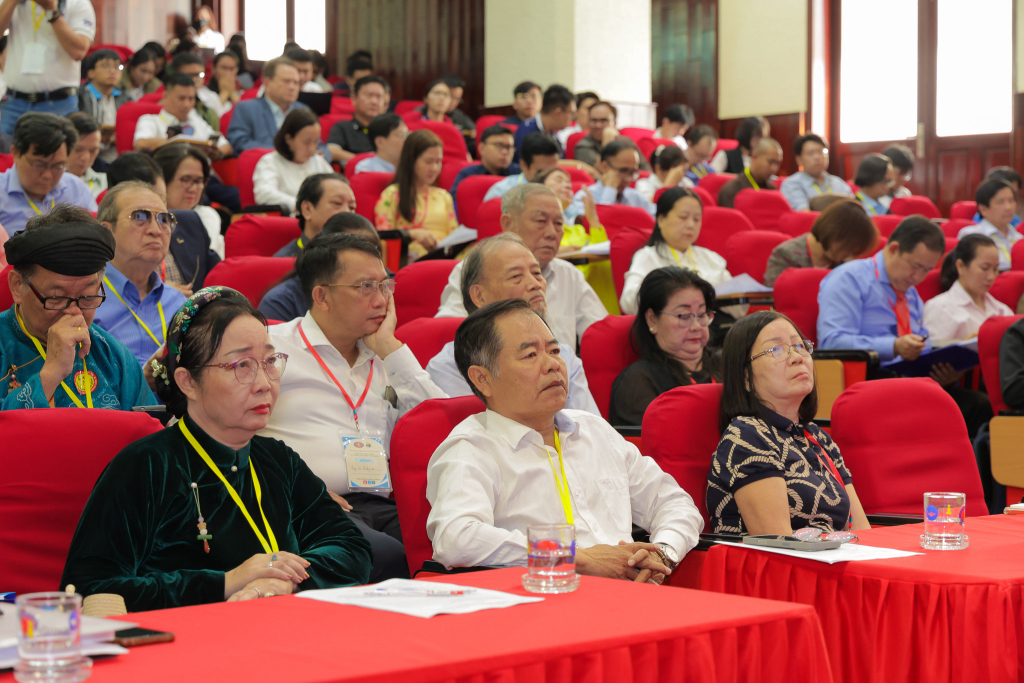
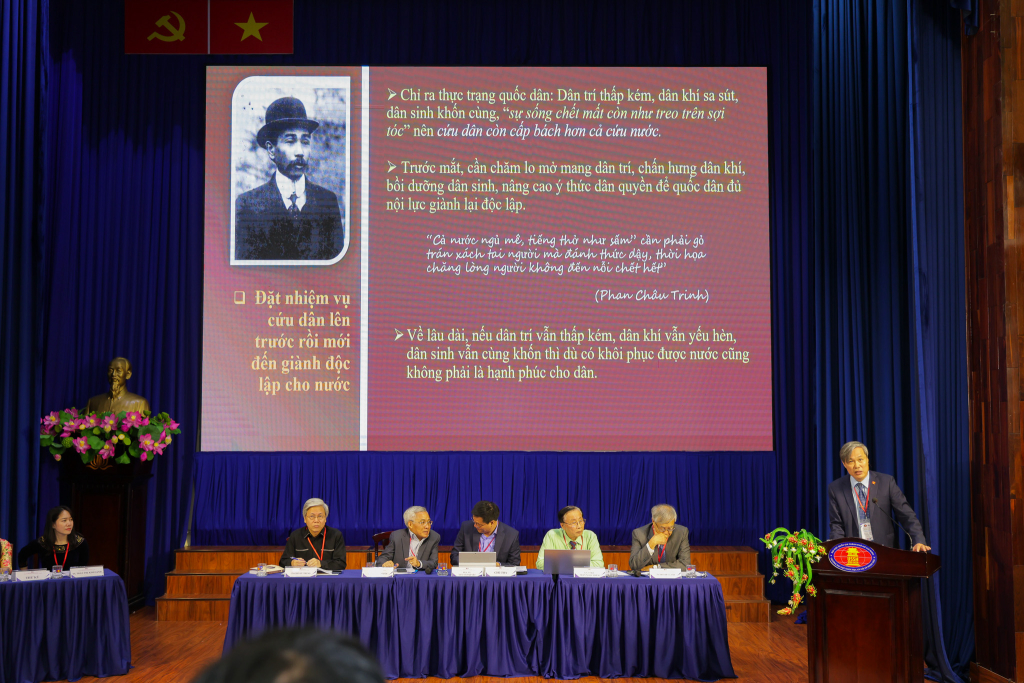
Overview of the national scientific conference “Patriot Phan Chau Trinh: Thought, Life, and Legacy” at the Van Khoa Hall
Reaffirming the Relevance of Phan Chau Trinh’s Thought Today
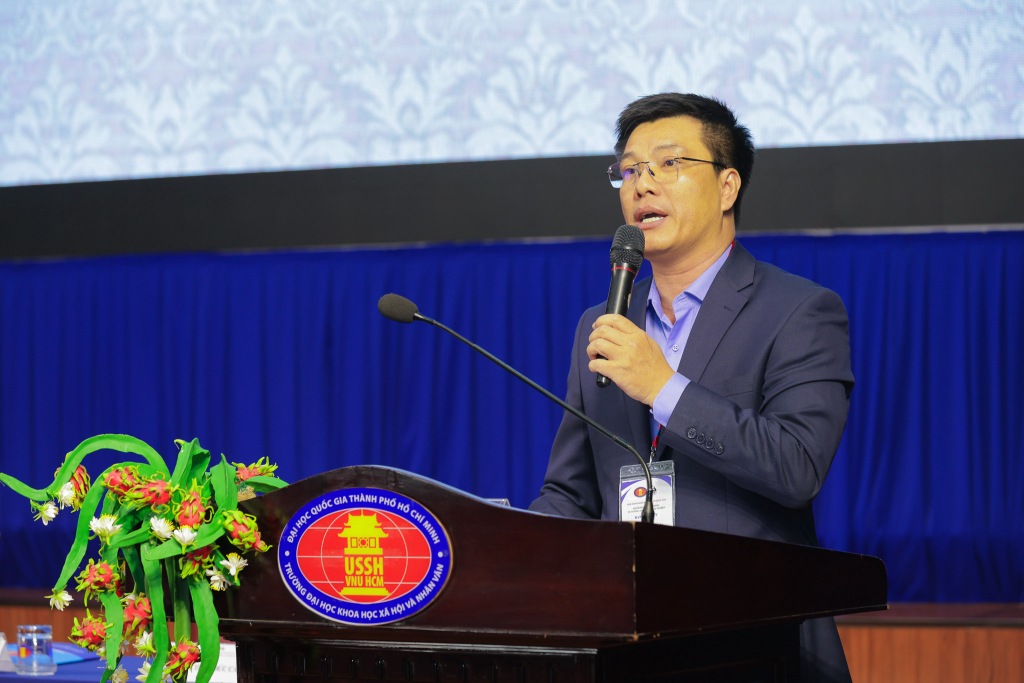
Assoc. Prof. Dr. Luu Van Quyet delivers the opening remarks
In his opening remarks, Assoc. Prof. Dr. Luu Van Quyet, Vice President of USSH, emphasized that more than a century after the passing of Phan Chau Trinh, the issues he raised remain highly relevant. From concerns over “public awareness, civic spirit, and people’s livelihood” to ideas on social reform, the role of education, and civic consciousness, his thought continues to offer valuable insights for contemporary society.
What distinguishes Phan Chau Trinh’s thinking lies not only in his reformist approach but also in its foundational nature—placing people and knowledge at the center of development. In a rapidly changing world, revisiting such core intellectual values is not an act of nostalgia but a practical necessity for sustainable development.
Speaking at the conference, Dr. Tran Duc Canh, Acting Director of the Phan Chau Trinh Institute, affirmed that Phan Chau Trinh was one of Vietnam’s most prominent early 20th-century thinkers and reformers. His progressive ideas laid the groundwork for modern perspectives on democracy, civil rights, and knowledge-based social development.
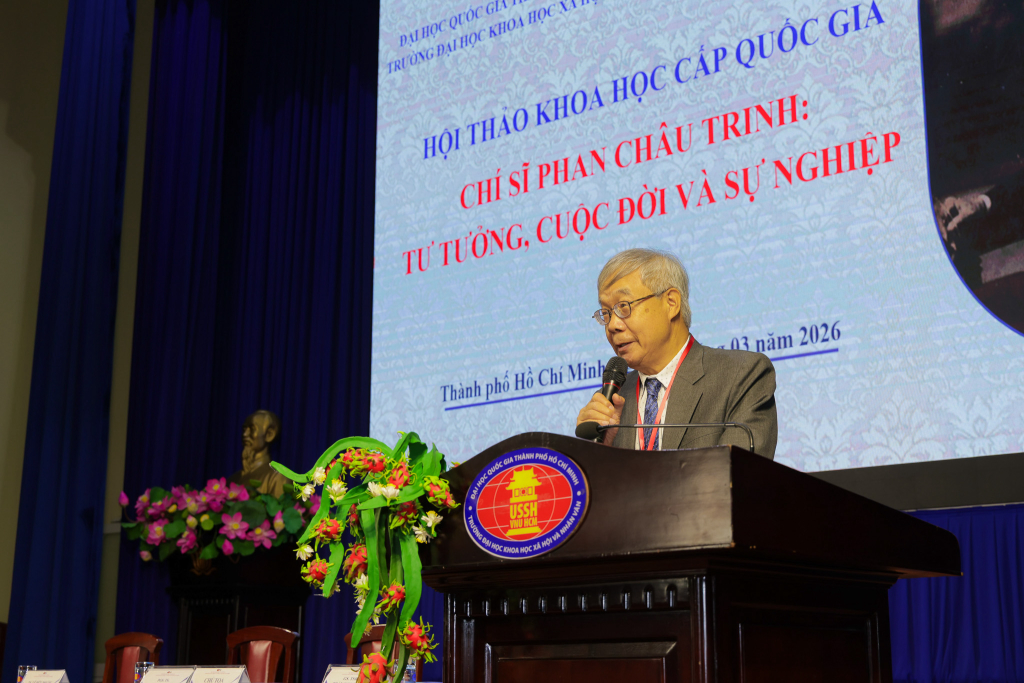
Dr. Tran Duc Canh delivers welcome remarks
Representing the family, Mr. Nguyen Dong Hoa expressed his deep emotion that, more than a century later, Phan Chau Trinh’s ideas continue to be studied, analyzed, and disseminated in contemporary life. He described this as a source of inspiration for future generations to preserve and promote the values left by the patriot.
Mr. Nguyen Dong Hoa speaks at the conference
A Multidisciplinary Academic Forum with Insights from History, Thought, and Education
In the keynote overview, Assoc. Prof. Dr. Phan Anh Tu, Dean of the Faculty of Cultural Studies, noted that the conference received more than 130 papers from scholars nationwide, of which 65 were selected for the proceedings. These studies approached Phan Chau Trinh’s thought from multiple perspectives—including history, philosophy, cultural studies, and education—focusing on issues such as reformist ideology, civil society building, educational development, and international integration.
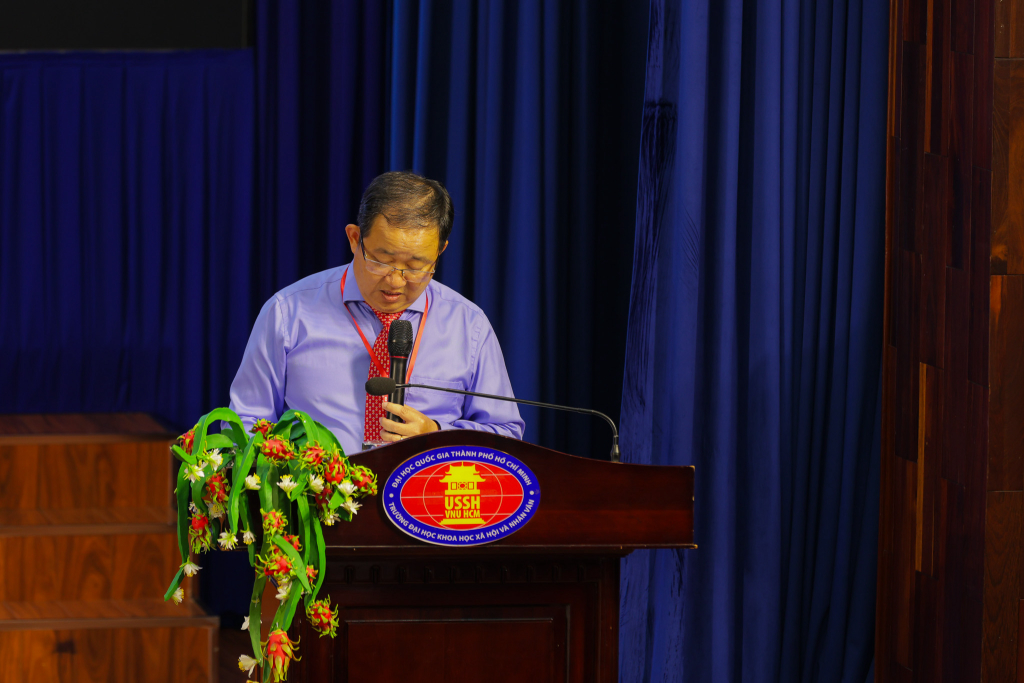
Assoc. Prof. Dr. Phan Anh Tu presents the conference overview
During the morning plenary session, keynote presentations addressed core aspects of Phan Chau Trinh’s thought, from his life and reformist ideology to the emancipatory values of modern education. In the afternoon, the conference was divided into two thematic panels, creating space for in-depth discussions on his life and career as well as his intellectual legacy and contemporary relevance.
Notably, plenary presentations offered a relatively comprehensive analytical framework. From a historical and practical perspective, Dr. Le Huu Phuoc, former Vice President of USSH, focused on the final years of Phan Chau Trinh’s life in Saigon (1925–1926), highlighting the role of public lectures, journalism, and social advocacy in disseminating reformist ideas. His funeral in 1926, in particular, was viewed as a major social event reflecting the profound influence of his patriotic and democratic ideals on the public.
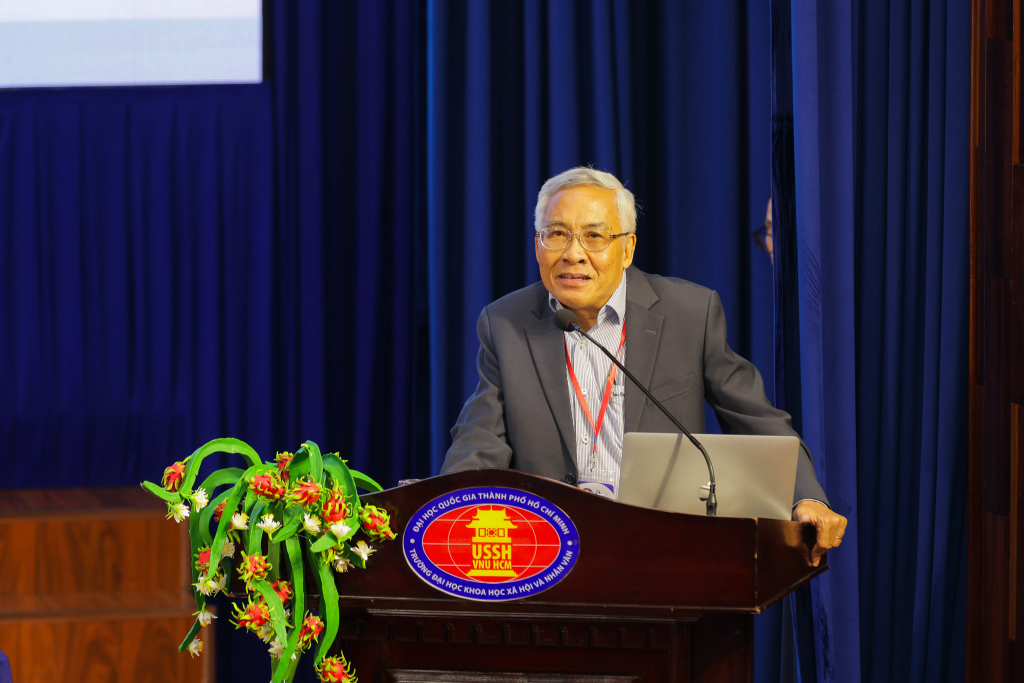
Dr. Le Huu Phuoc presents at the plenary session
From an ideological perspective, Assoc. Prof. Dr. Ngo Van Minh, former Dean of the Faculty of Ethnic and Religious Studies at the Academy of Politics Region III, emphasized the “non-traditional” nature of Phan Chau Trinh’s path to national salvation. Rather than advocating violent struggle or reliance on external forces, he proposed a foundational reformist ideology centered on raising public awareness, fostering civic consciousness, and building a knowledge-based democratic society. These ideas not only demonstrated forward-thinking vision but also laid the groundwork for modern social development in Vietnam.
Assoc. Prof. Dr. Ngo Van Minh presents on Phan Chau Trinh’s reformist thought
From the perspective of education and human development, Dr. Gian Tu Trung from the IRED Institute of Education approached Phan Chau Trinh’s thought as a source of inspiration for individual empowerment in the modern era. He emphasized self-directed learning, critical thinking, civic responsibility, and personal development as essential foundations for building a learning society and a sustainably developed nation. This perspective highlights the role of individuals as active agents of development, extending reformist ideas from the societal level to deeper cultural and educational dimensions.
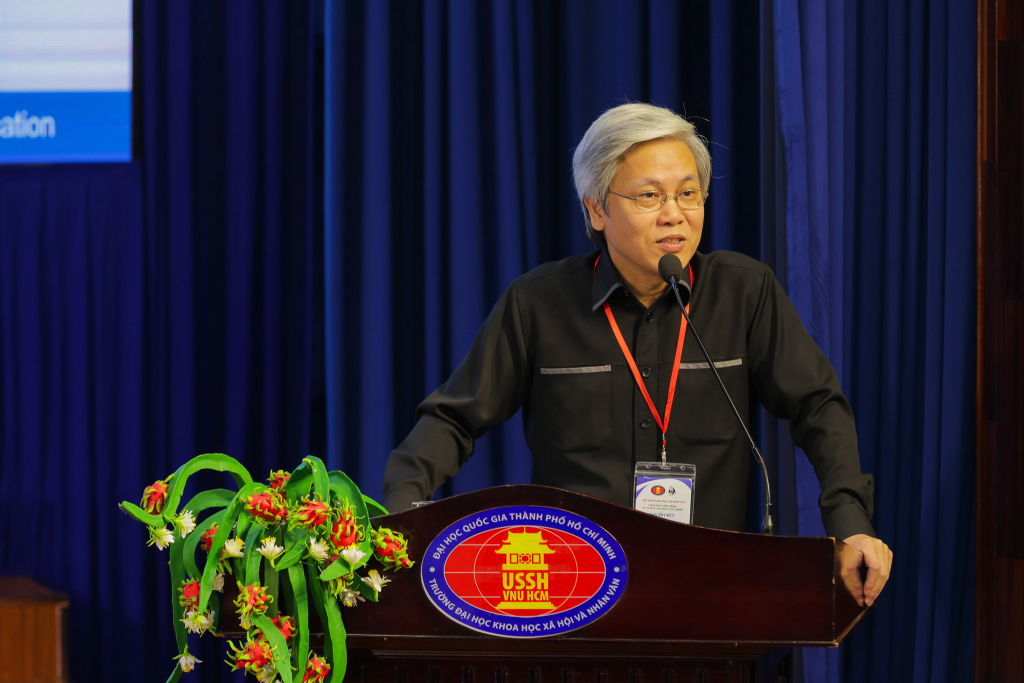
Dr. Gian Tu Trung shares perspectives on emancipatory thought and human development
Following the plenary session, the conference continued with specialized panels, enabling focused academic exchange. The panel “Phan Chau Trinh: Life and Career” examined his background, key milestones, and contributions in the early 20th-century historical context.
The panel “Phan Chau Trinh: Thought and Contemporary Relevance” explored his reformist ideology, views on democracy, public awareness, and civil rights, as well as their applicability today. Another panel on cultural heritage and traditional values addressed the identification, preservation, and promotion of his intellectual legacy in contemporary life, particularly in education, research, and media.
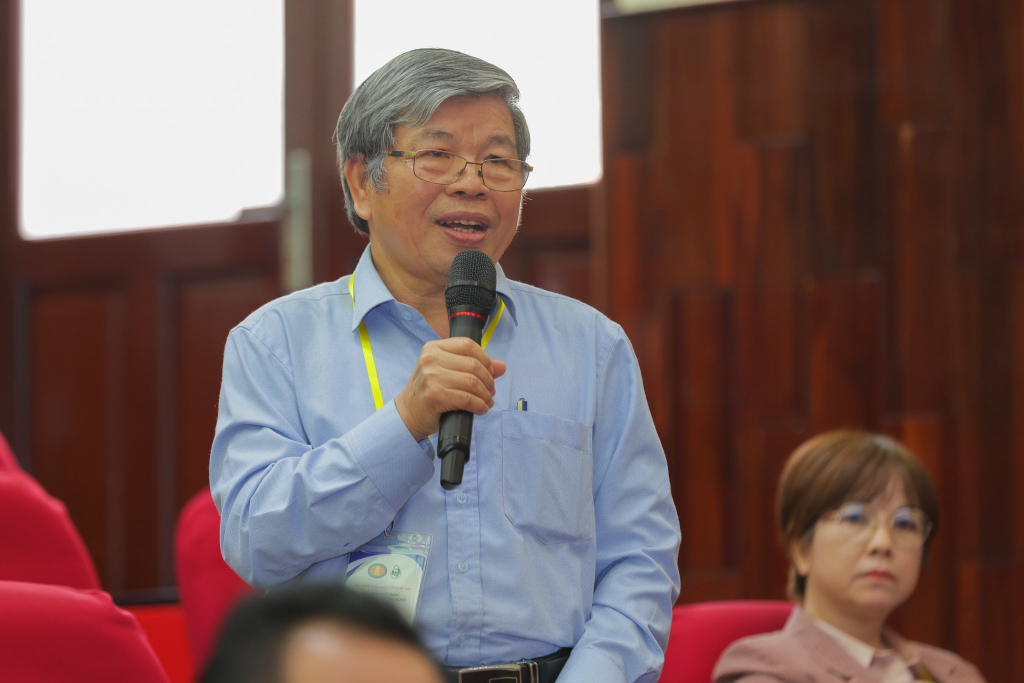
Delegates engage in academic discussions during the plenary session
Through its presentations and scholarly discussions, the conference not only deepened understanding of the historical significance and intellectual depth of Phan Chau Trinh’s legacy but also raised important theoretical and practical issues for the present. In particular, it highlighted the relevance of reformist thought, democratic values, the centrality of education, and civic consciousness in the process of building a modern society.
The conference also underscored the need to preserve and promote Phan Chau Trinh’s intellectual heritage through education, research, and communication, thereby transforming these values into a vital source of inspiration for Vietnam’s development in the 21st century.
Story & Photo by NGUYÊN QUYÊN, LÝ NGUYÊN
Translation by THÁI TƯỜNG