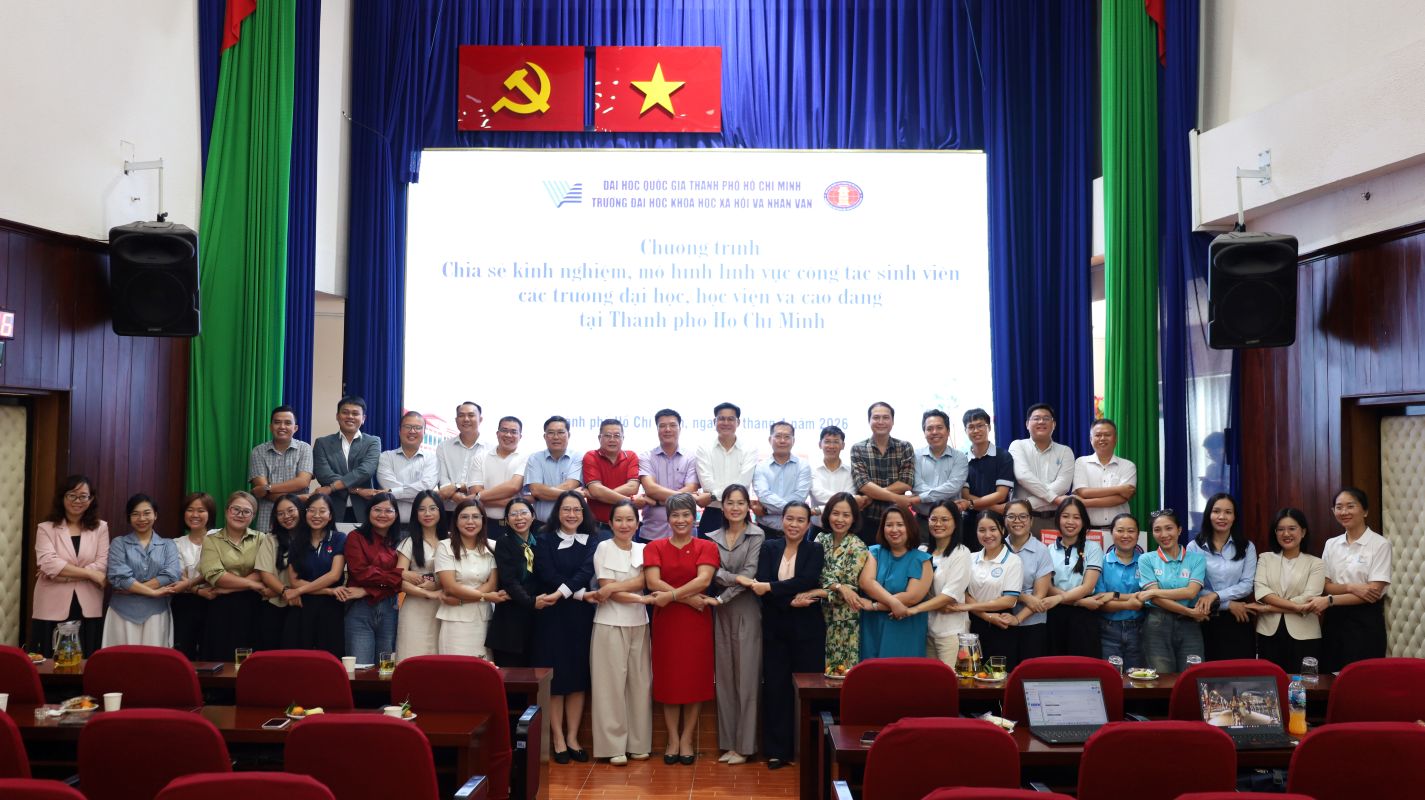
The University of Social Sciences and Humanities, Viet Nam National University Ho Chi Minh City (USSH-VNUHCM) hosted a program on April 18 titled “Sharing Experiences and Models in Student Affairs among Higher Education Institutions in Ho Chi Minh City.” The event brought together representatives from more than 20 local universities and colleges to exchange best practices and student support solutions.
Assoc. Prof. Dr. Luu Van Quyet, Deputy Secretary of the Party Committee and Vice President of the University, delivered the opening remarks, envisioning the program as a recurring professional forum for institutions to collaboratively develop and share effective student affairs models. “Student affairs is no longer just about service; it must involve accompanying learners and actively participating in the educational process," he underscored.
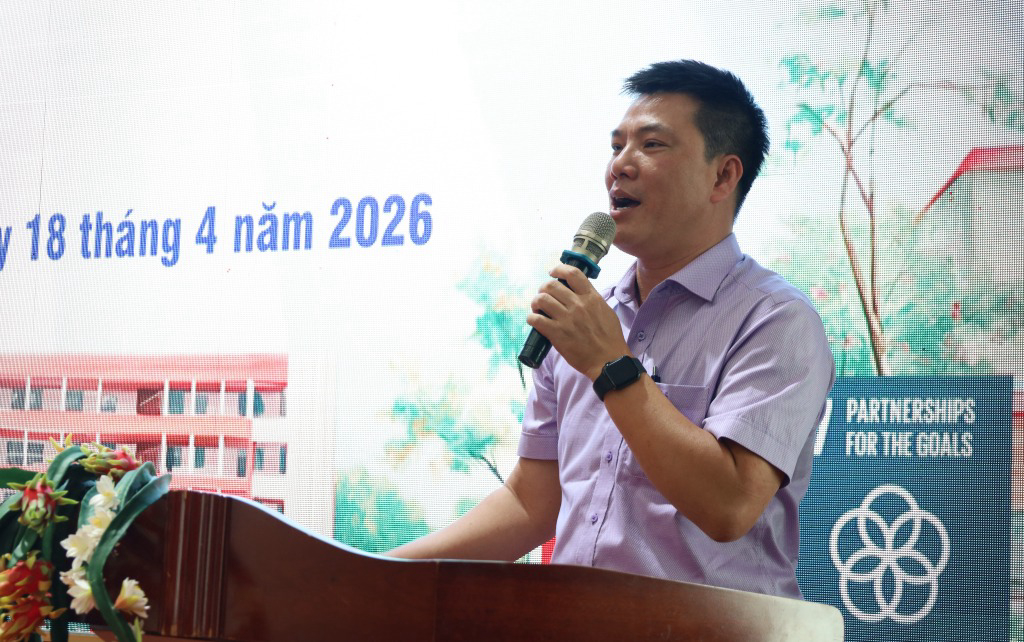
Assoc. Prof. Dr. Luu Van Quyet emphasizes the "learner-centered" philosophy as the guiding principle across all student support initiatives at USSH-VNUHCM - Photo by: MY NGAN
Following the opening remarks, Mr. Tran Nam, MA, Head of the Office of Student Affairs, presented the University's Student Affairs Framework, effective from 2025. Benchmarked against leading global institutions, the framework aligns closely with the University's “Comprehensive - Liberal - Multicultural” educational philosophy. It centers on five pillars: Knowledge, Society, Well-being, Arts, and Career. Each pillar maintains a consistent core focus while offering adaptable annual initiatives. Highlighting the Well-being pillar, the university introduced Blackbox, an anonymous messaging feature on its internal mobile app. This platform allows students to confidentially share their challenges at any time and receive immediate support from the counseling team.
Furthermore, Mr. Tran Nam, MA, introduced the Sustainable University strategy, set to officially launch in 2025. The strategy is built upon five pillars: Infrastructure, Social Equity, Knowledge Transfer, Education and Research, and Practical Application. Notably, the University has already integrated Sustainable Development into its core curriculum as a compulsory subject. He emphasized that as multinational corporations increasingly prioritize a sustainability mindset, exposing students to the 17 Sustainable Development Goals (SDGs) and allowing them to practice these principles on campus will give them a competitive edge in the global workforce.
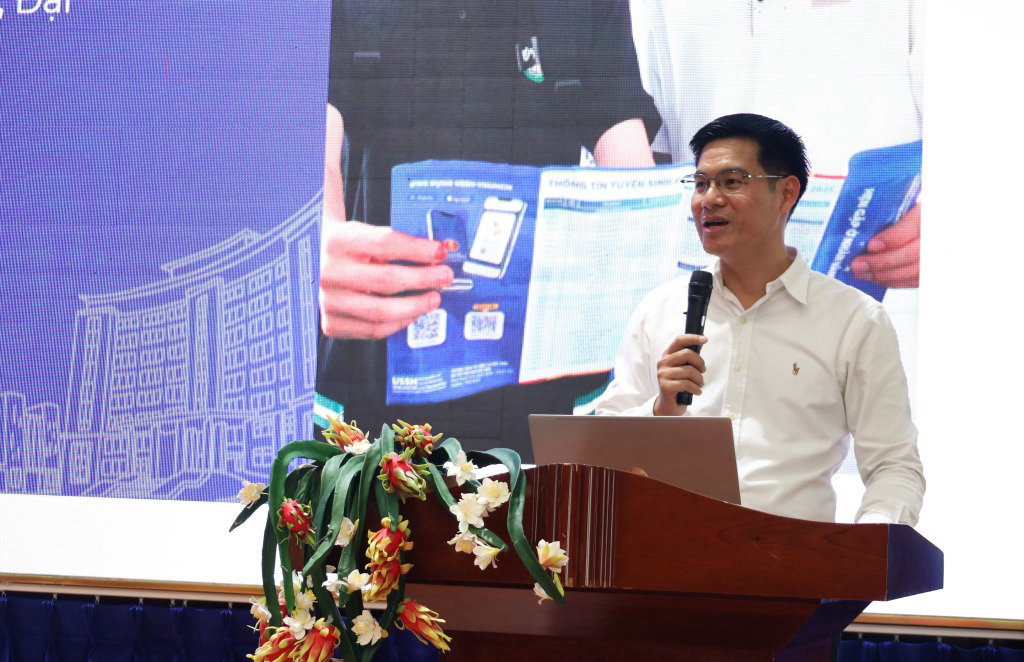
Mr. Tran Nam, MA, shares how the University is preparing to undergo evaluation based on university sustainability ranking standards - Photo by: MY NGAN
Subsequently, Ms. Nguyen Luu Tam Anh, MA, a specialist at the Office of Student Affairs, presented two concurrent models currently implemented at the University. The USSH Mentoring program pairs upperclassmen (Mentors) with incoming freshmen (Mentees) during the first two months of the academic year. Beyond assisting with academics and the transition to university life, Mentors undergo rigorous training to recognize early signs of mental health crises, serving as the first point of contact between at-risk students and the University's professional support. To address core issues, the University has developed a three-tiered Mental Health Care pyramid model: prevention, screening using the DASS-21 scale, and specialized intervention. Furthermore, a seamless coordination protocol has been established among the Office of Student Affairs, the Medical Station, faculties, and the Psychological Center.
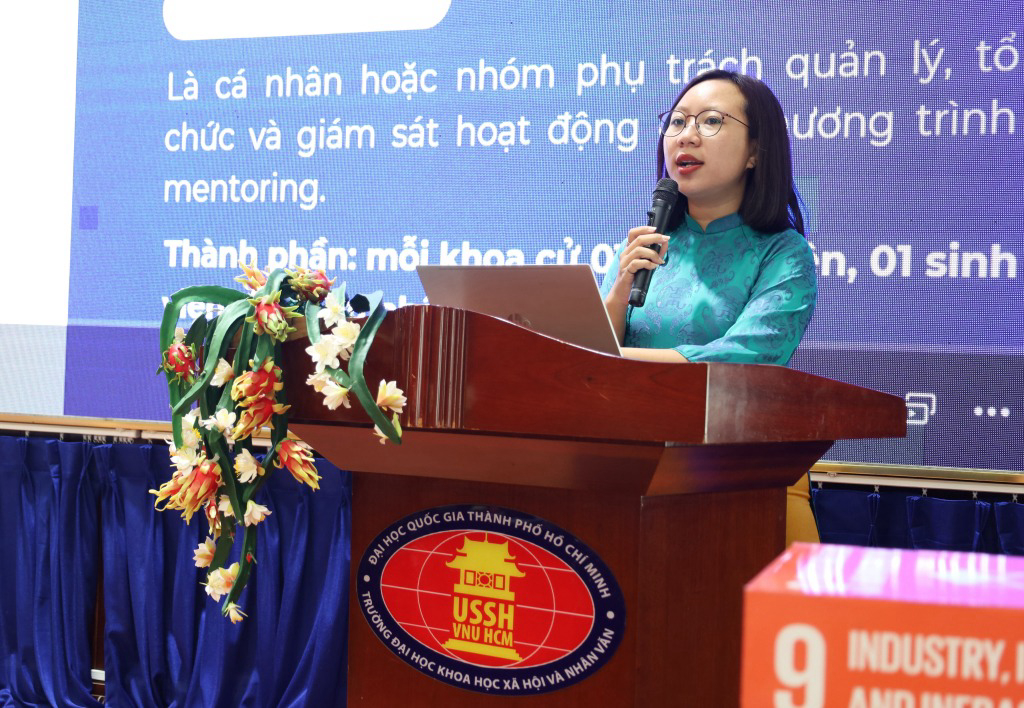
Ms. Nguyen Luu Tam Anh, MA, acknowledges that establishing the Mentoring network is a practical solution that not only helps prevent mental health risks but also significantly alleviates the workload of Academic Advisors - Photo by: MY NGAN
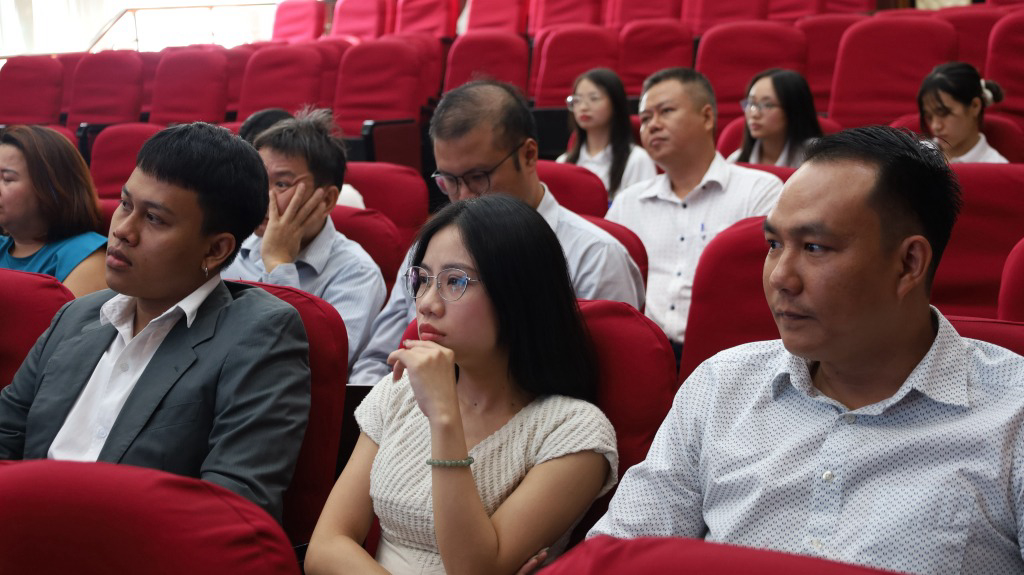
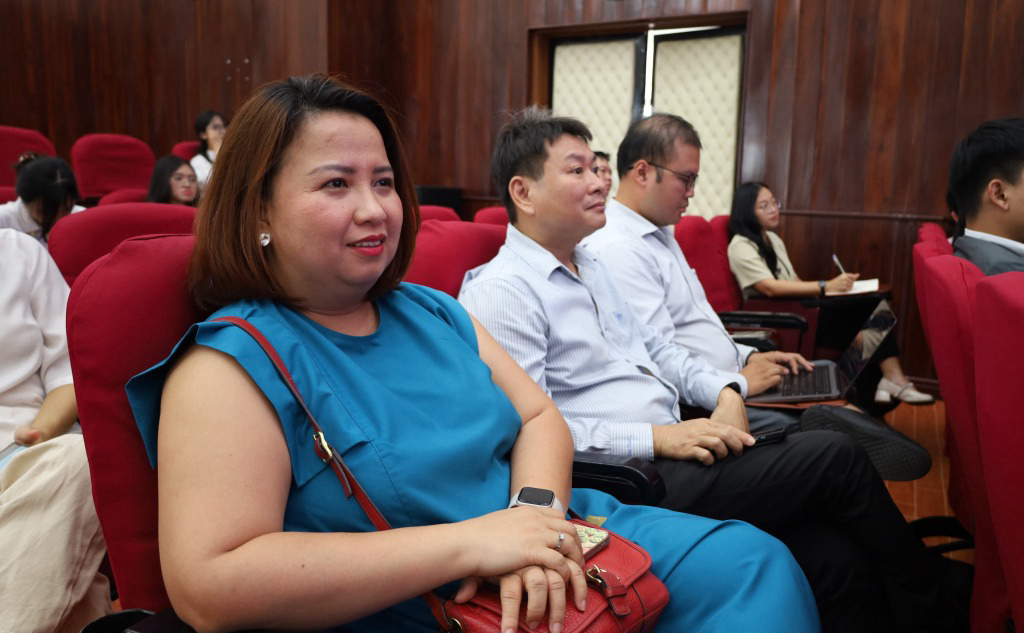
Representatives attend presentations on practical student affairs models - Photo by: MY NGAN
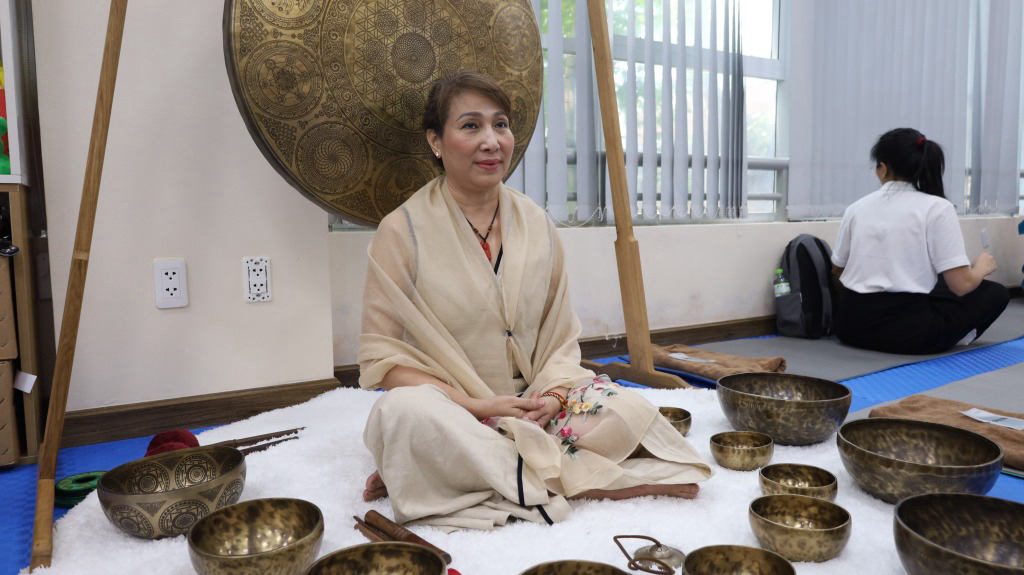
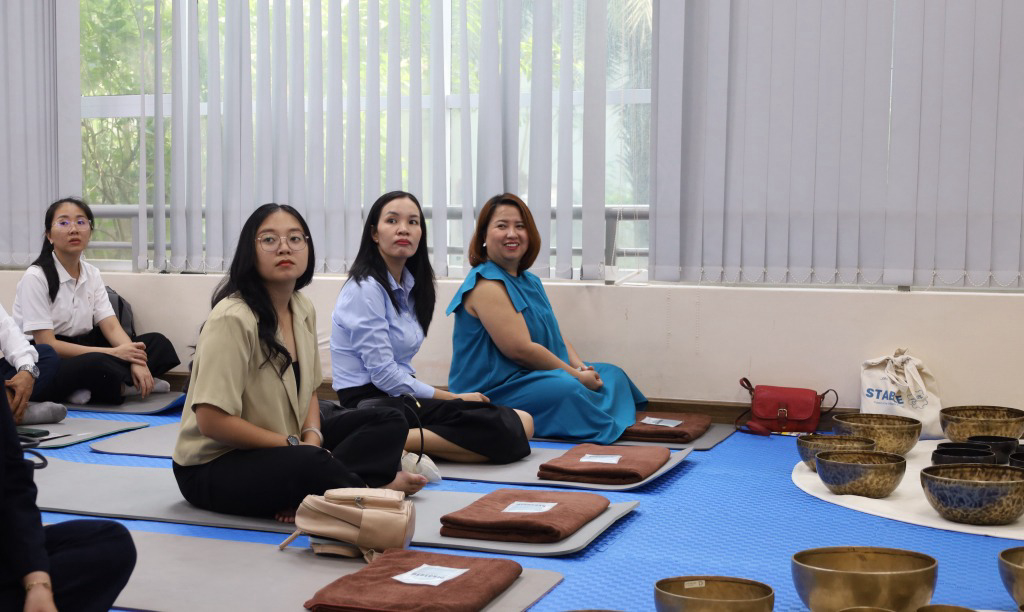
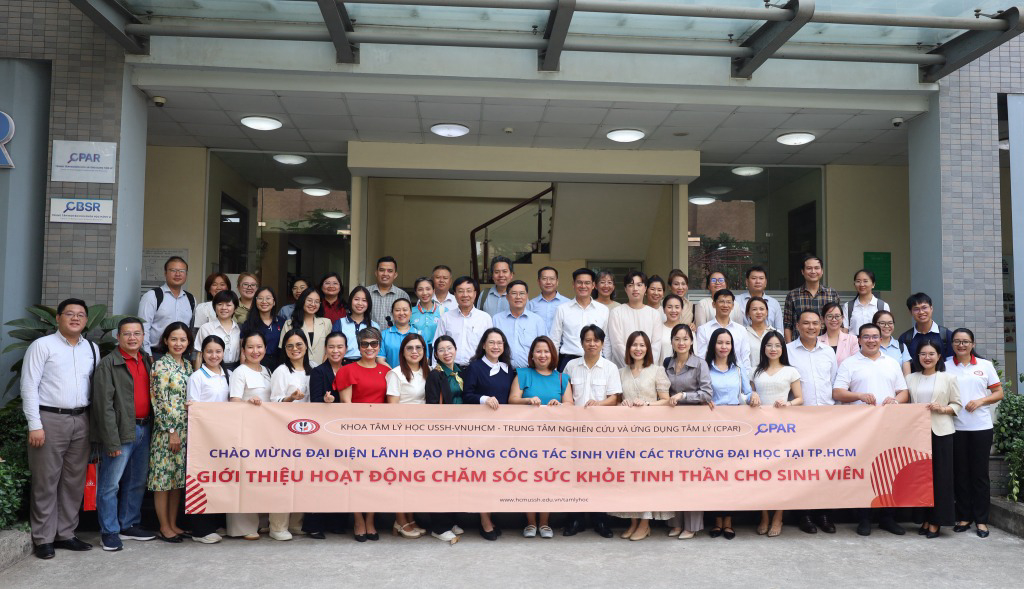
Representatives visit and experience sound therapy at the Center of Psychological Application and Research (CPAR) - Photo by: MY NGAN
The program concluded with numerous practical models and solutions aimed at directly supporting and engaging students. Moving forward, the University shall oversee and implement student support initiatives more rigorously, directly contributing to the overall enhancement of educational quality.
MY NGAN - TUYET TRINH
Translated by: My Phung