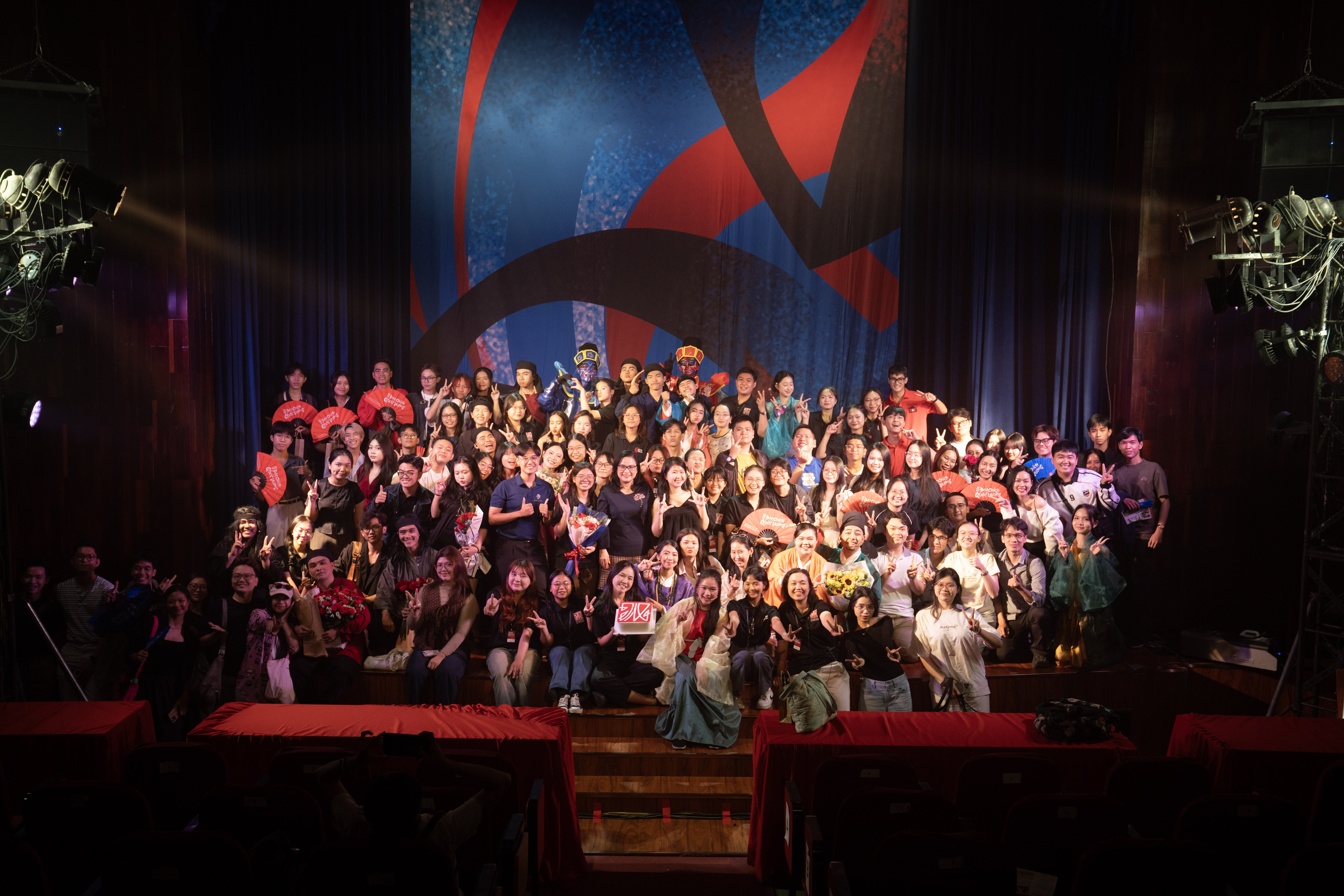
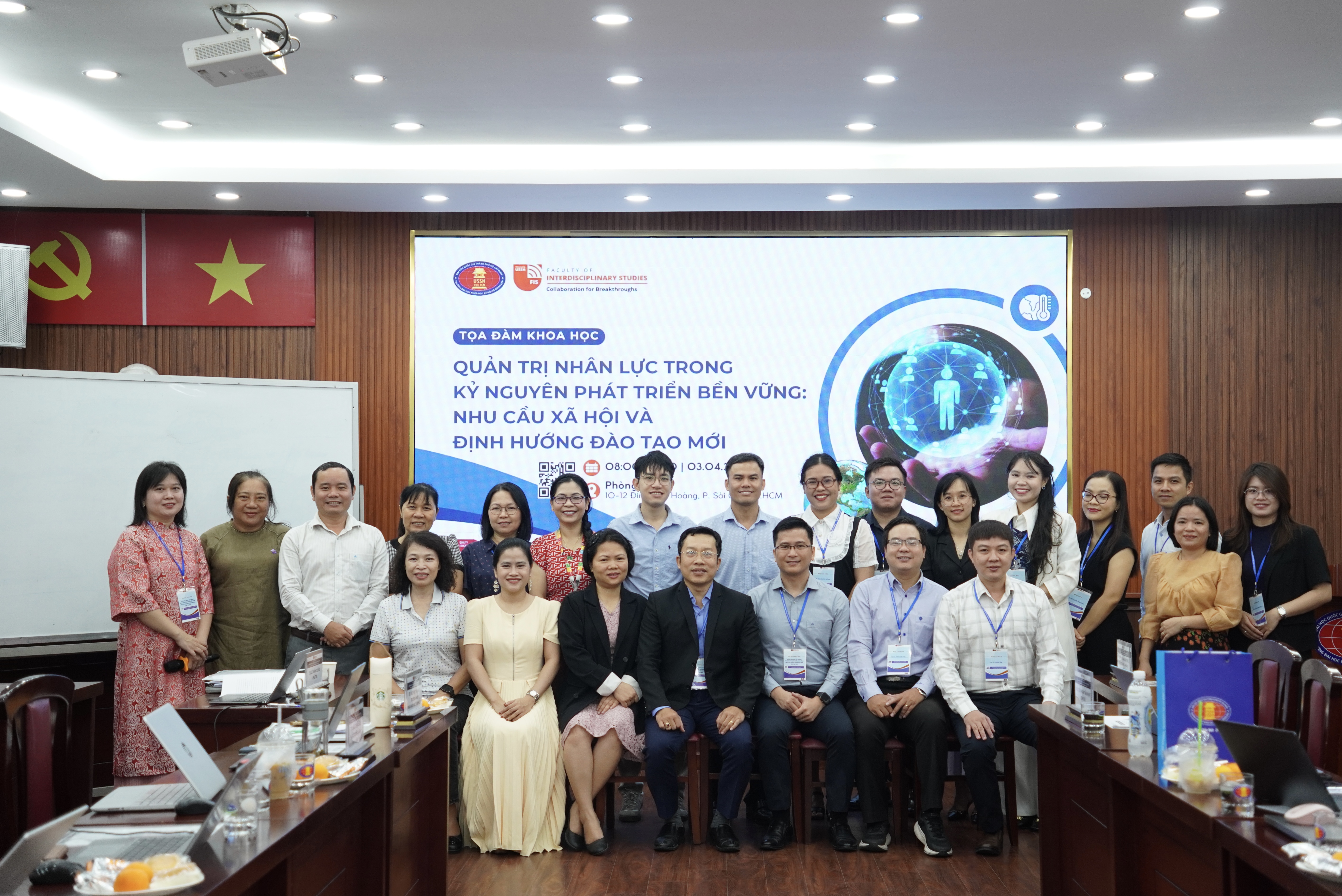
On April 3, the Faculty of Interdisciplinary Sciences at USSH-VNUHCM hosted a seminar entitled: “Human Resource Management in the Era of Sustainable Development: Social Needs and New Educational Orientations". The program aimed to develop a Human Resource (HR) training model aligned with contemporary trends.
Dr. Le Hoang Dung, Vice President of USSH-VNUHCM, commenced the event by underscoring the necessity for breakthroughs in HR training. Highlighting the strategic importance of personnel, he asserted that human resources constitute the key factor and play a decisive role in all organizations, spanning the local, national, and global levels. In the new era, HR training must transcend technical skills to foster adaptability and sustainable development.
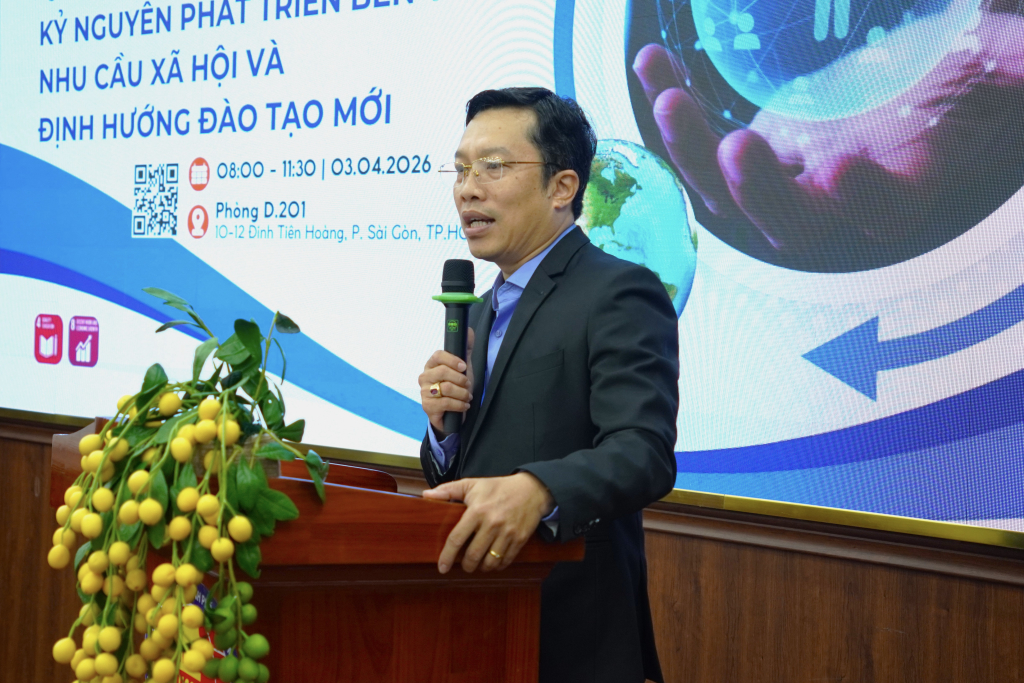
Dr. Le Hoang Dung expresses his expectations for non-traditional HR training programs - Photo by: MAI HUONG
The seminar featured six papers analyzing the shift from traditional HR to an integrated approach that leverages technology, data, and sustainable values. The discussions highlighted the urgent need to innovate, strengthen partnerships, and update competencies for learners amid a volatile labor market.
Assoc. Prof. Dr. Pham Tan Nhat, Head of the Department of Hotel and Restaurant Management at International University, VNUHCM, started the session by addressing the transition from traditional management to Sustainable HRM. He shared that management must integrate economic, social, and environmental interests into the HR roadmap.
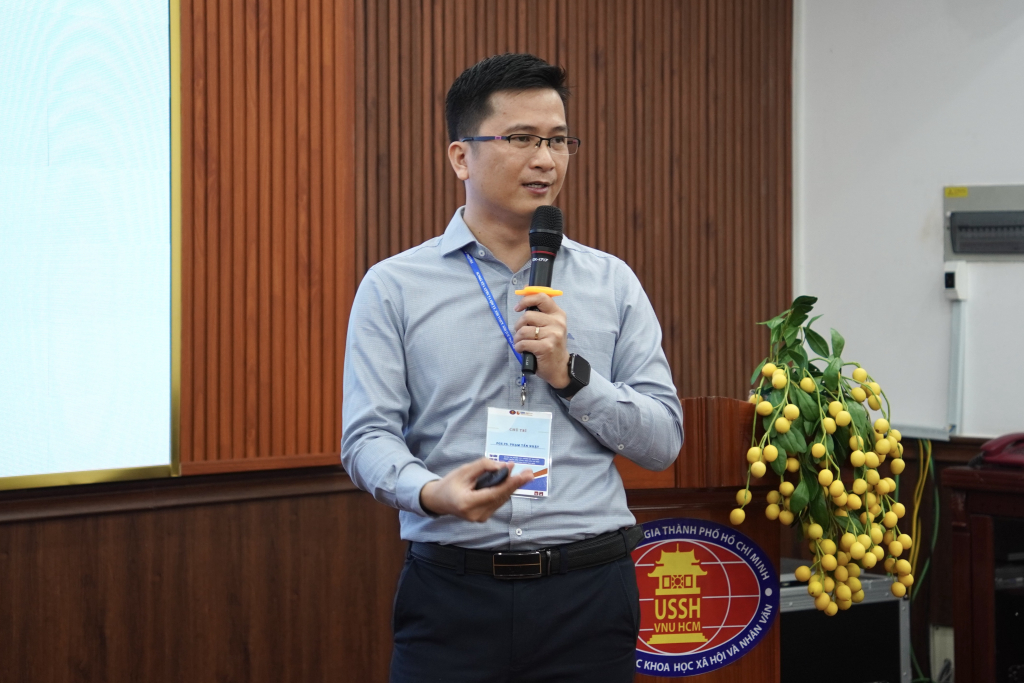
Assoc. Prof. Dr. Pham Tan Nhat describes sustainable HRM as the integration of traditional management and sustainable values - Photo by: MAI HUONG
Dr. Vo Thanh Tam, Head of the Department of Human Resource Management at UEH University, affirmed the nexus between theory and practice, alongside the role of universities in producing strategic human resources. He proposed a "Quadruple Helix" model-state, university, business, and society-to realize the vision of a prosperous and autonomous nation.
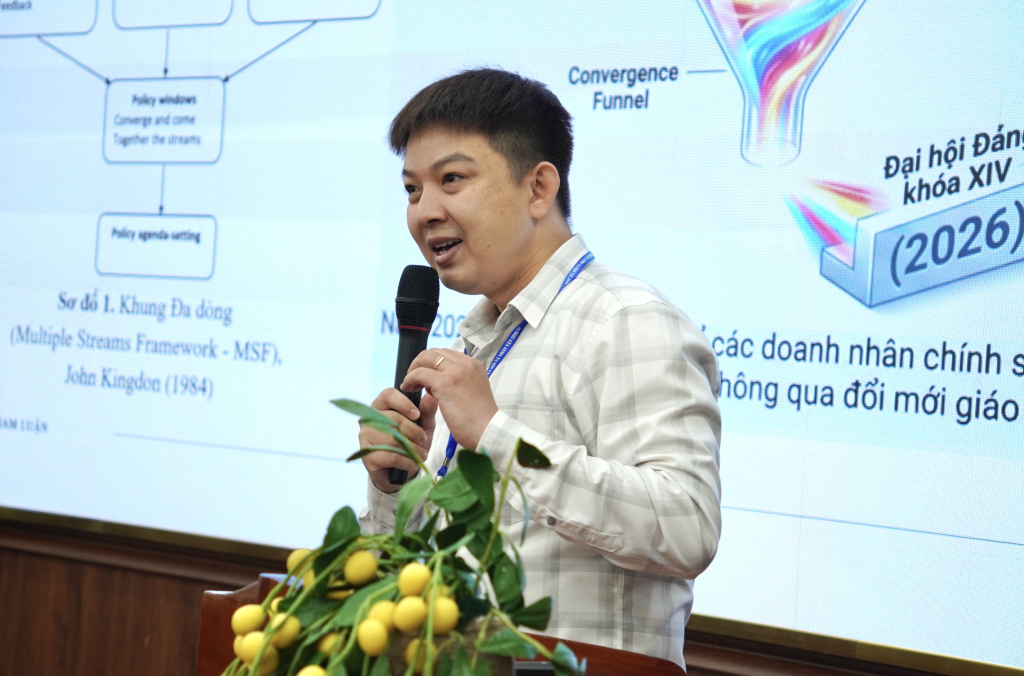
Dr. Vo Thanh Tam emphasizes that interdisciplinary thinking is a requirement for first-year students - Photo by: MAI HUONG
Following this, Dr. Ho Tran Quoc Hai from HCMC University of Law highlighted the field's evolution, observing that the market no longer requires HR professionals focused solely on technical tasks but instead demands a shift toward the HR Business Partner (HRBP) role. He argued that in the digital era, HR professionals must make data-driven decisions and effectively apply technology and artificial intelligence.
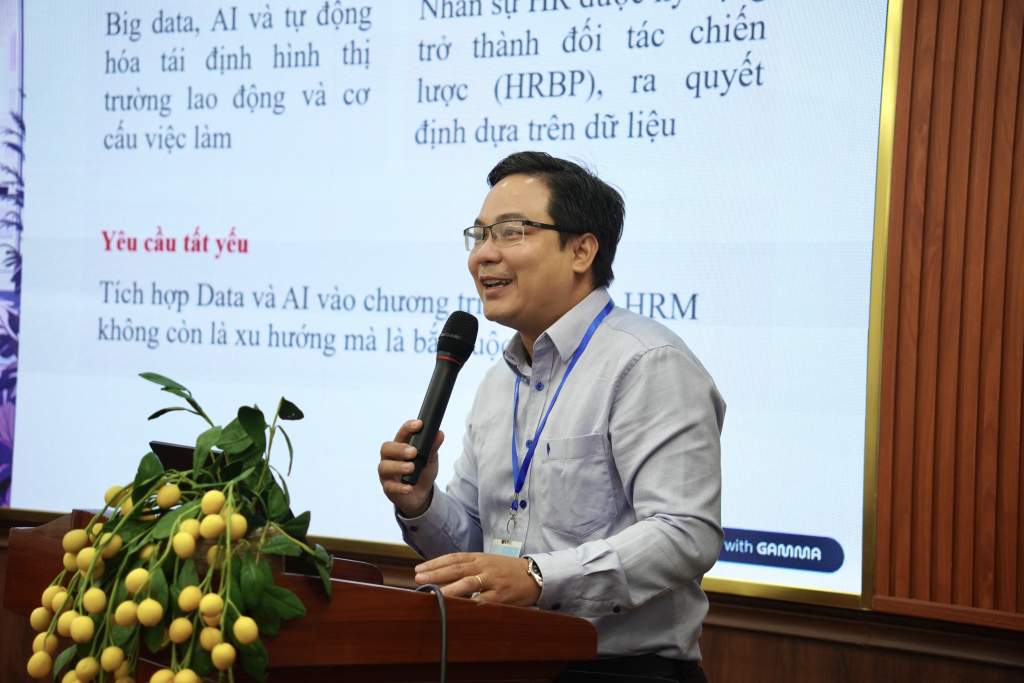
Dr. Ho Tran Quoc Hai affirms that innovative HR training is an essential demand - Photo by: MAI HUONG
From a corporate perspective, speakers agreed that AI would not replace humans but would “redefine” the HR role. Specifically, Mr. Pham Minh Phong, representative of Thanh Dong Education and Resource Development Co., Ltd., illustrated how AI is transforming recruitment, personalizing training, and managing real-time performance. He noted that AI provides a strategic platform to facilitate organizational management within enterprises.
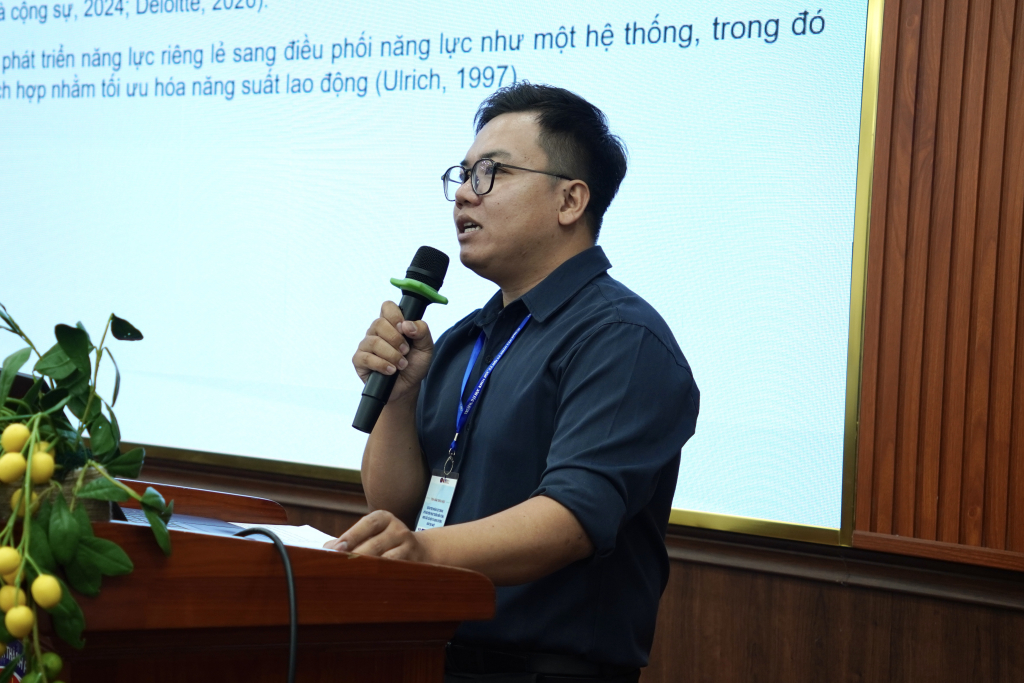
Mr. Pham Minh Phong shares that HR professionals should act as architects of training systems and continuous capacity building - Photo by: MAI HUONG
Meanwhile, Ms. Mai Thu Quynh, representative of ERP Viet JSC, argued that the core value of digital transformation in HR lies not in technology itself, but in the ability to utilize it effectively. She stated that the future of human resource management lies in the integration of three essential elements: people, technology, and data.
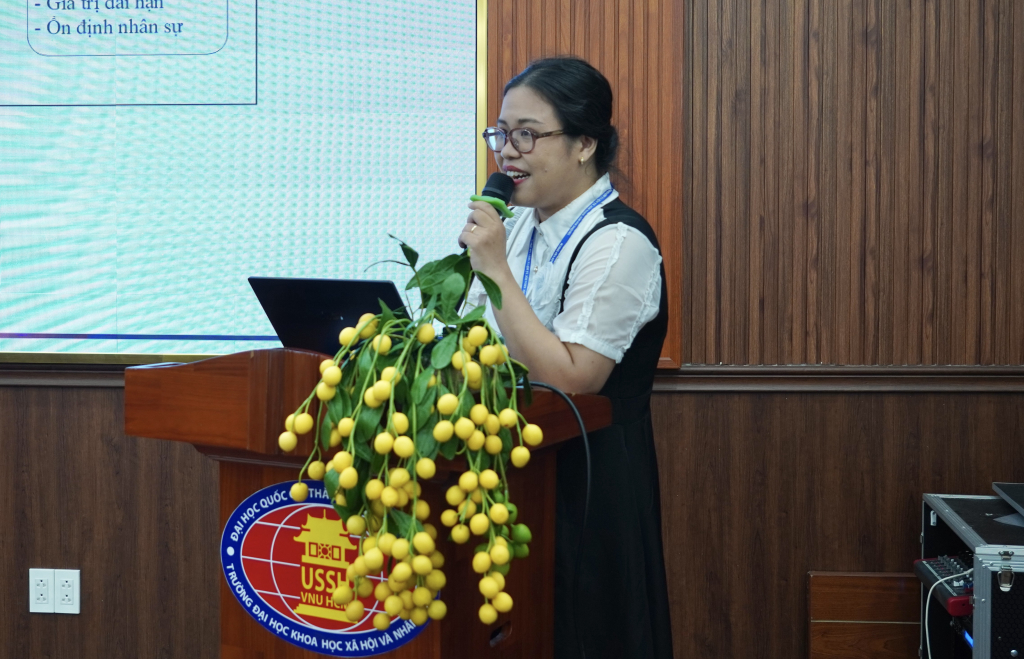
Ms. Mai Thu Quynh notes that the greatest challenge is changing old working habits - Photo by: MAI HUONG
Closing the session, Ms. Nguyen Le Thanh Huyen from the Faculty of Interdisciplinary Studies, USSH-VNUHCM, outlined a training orientation featuring the "Humanities" (Nhân Văn) identity. By leveraging the strengths of social sciences and liberal arts education, the faculty aims to implement a sustainable HR management system.
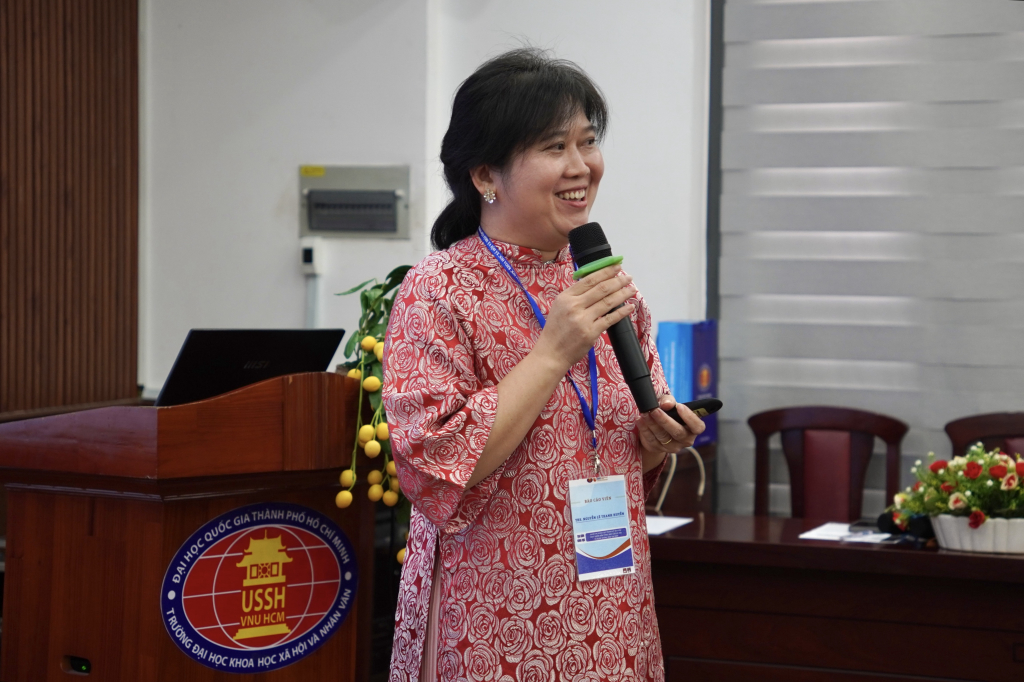
Ms. Nguyen Le Thanh Huyen emphasizes that HR professionals must focus on mental health and work-life balance - Photo by: MAI HUONG
During the discussion, participants suggested that training institutions should leverage their existing strengths. The program also recorded contributions emphasizing the integration of ESG (Environmental, Social, Governance) and professional ethics into the curriculum, while warning of the technological skills gap between different generations of workers.
|
The seminar featured six presentations:
|
Source: MAI HUONG - CAM TU
Translated by: Như Quỳnh Lý