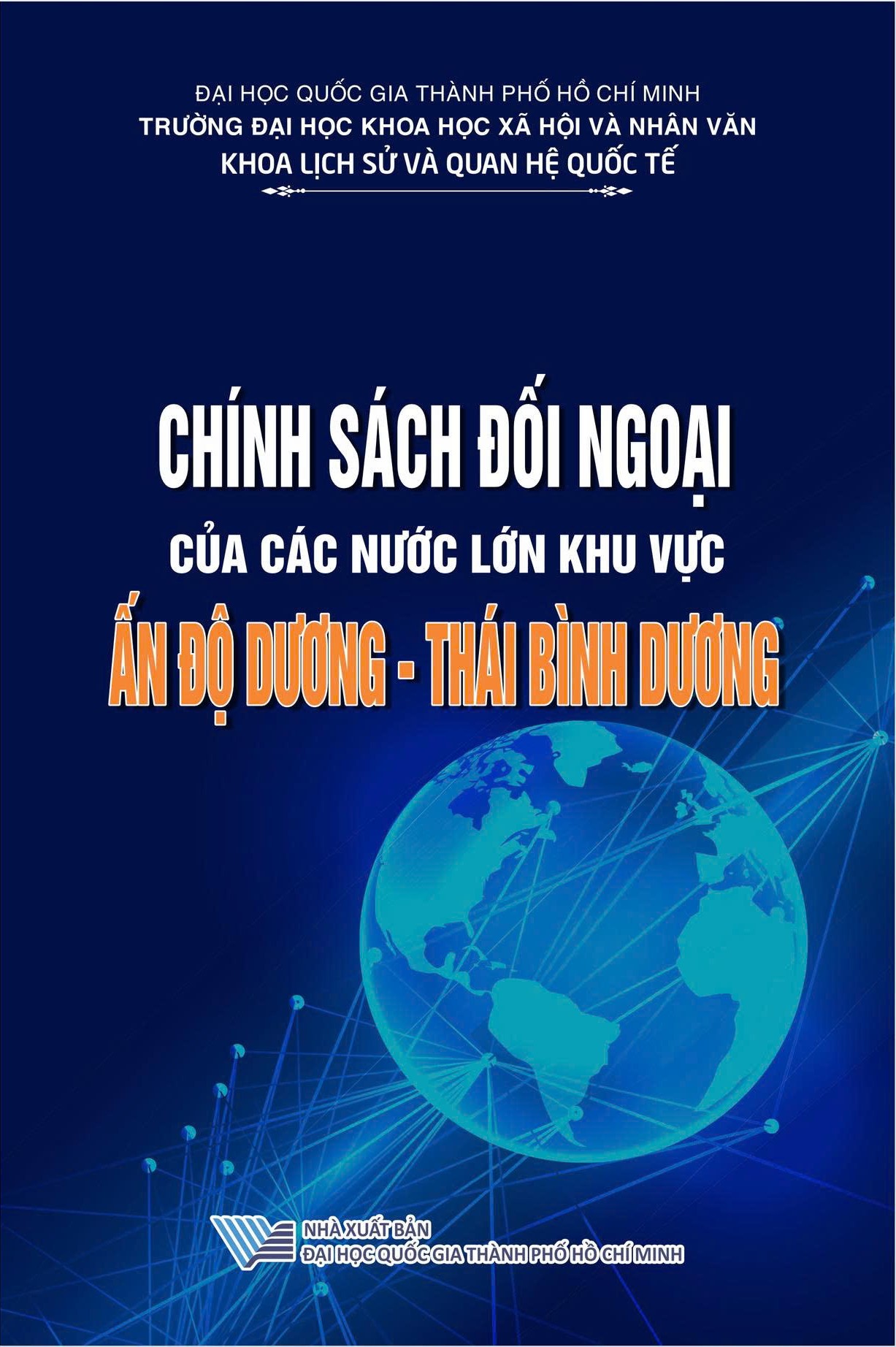
Foreign Policy of Major Powers in the Indo-Pacific Region
Authors: Tran Nam Tien - Nguyen Tang Nghi (Co-editors)
The world is experiencing profound and landmark shifts since the end of the Cold War. Over the past two decades, the world has witnessed a historic transition from the Atlantic shores to the Indo-Pacific region. This shift lies not only in economic growth figures but also in the concentration density of security hotspots and vital maritime corridors, with the Indo-Pacific becoming the “geopolitical center” of the world with the most intense conflicts of interest. The nature of the current geopolitical shift is reflected in the rise of new poles, creating a future multipolar world linked to the strategic space of the Indo-Pacific. It can be said that the Indo-Pacific region is currently a convergence point for the world's leading powers: the United States, China, Russia, India, Japan, and the dynamic ASEAN bloc. Furthermore, since 2017, the EU and key European countries such as the UK, France, and Germany have also made efforts to deeply engage in the Indo-Pacific region. The growing convergence of interests among powers within and outside the region accelerates the strategic competition between major powers, most notably the U.S.-China strategic competition that began in 2017. The U.S.-China strategic competition in the Indo-Pacific is not merely an economic and trade issue but a comprehensive confrontation on many fronts. In the security and military spheres, the U.S. and China have formed and strengthened new multilateral mechanisms such as QUAD (U.S., Japan, India, and Australia) or AUKUS (U.S., UK, and Australia) to counter the increasing influence of China through initiatives ranging from regional ones like the Belt and Road Initiative (BRI) to global ones such as the Global Development Initiative, Global Security Initiative, Global Civilization Initiative, and most recently, the Global Governance Initiative. By 2025, the Indo-Pacific region is falling into a state of “Security Dilemma,” where one side's efforts to enhance security are viewed as a threat by the other, leading to a quiet but intense arms race.
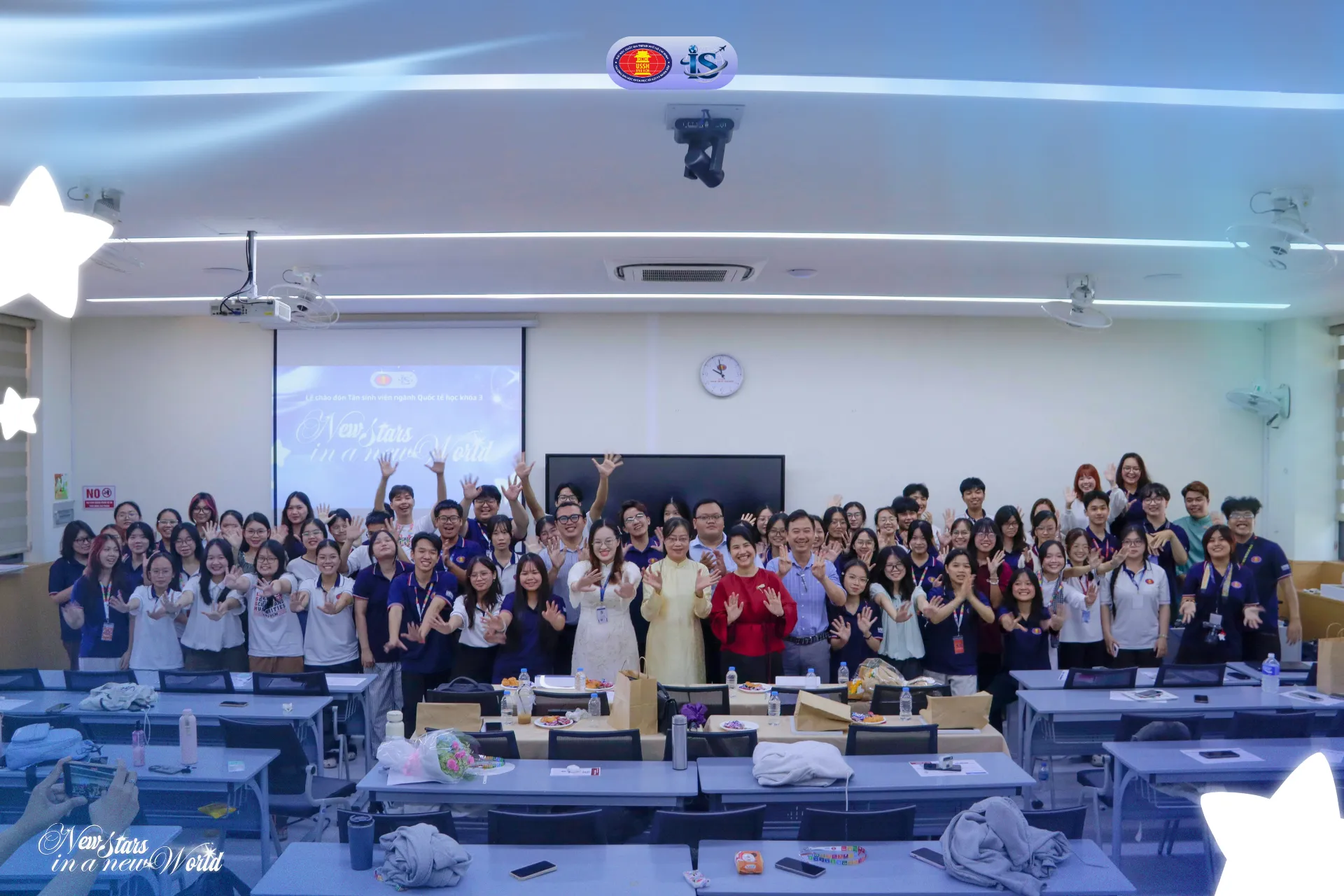
Based on this understanding, the Faculty of History and International Relations, University of Social Sciences and Humanities, Viet Nam National University Ho Chi Minh City organized the National Scientific Conference: “2025 Indo-Pacific Security - Political Dialogue and Forecasts”. The conference attracted interest and contributions from experts, scientists, and administrators from domestic universities such as: University of Social Sciences and Humanities - Viet Nam National University, Hanoi; College of Sciences, College of Education, and International School - Hue University; The University of Danang; University of Social Sciences and Humanities, Viet Nam National University Ho Chi Minh City; Saigon University; Fulbright University Vietnam; University of Economics and Finance Ho Chi Minh City; Open University Ho Chi Minh City; Ho Chi Minh City University of Foreign Languages and Information Technology; Nguyen Tat Thanh University; Diplomatic Academy of Vietnam - Ministry of Foreign Affairs, Regional Academy II - Ho Chi Minh National Academy of Politics;... as well as research institutes in Hanoi such as: Institute for Southeast Asian and Oceanic Studies, Institute of History, Institute for South Asian, West Asian and African Studies,... and many other units across the country.
The papers submitted to the Conference focus on three main groups of issues:
I. GENERAL ISSUES ON INTERNATIONAL SECURITY AND POLITICS IN THE INDO-PACIFIC REGION BY 2025.
1. The changing world landscape and the formation of a “Network of Intertwined Relations” order in the Indo-Pacific (Dr. Hoang Hue Anh)
2. Continental powers and maritime powers through a historical lens in the current Indo-Pacific Order (Dr. Dao Minh Hong)
3. Strategic movements in the Indo-Pacific in 2025: Reshaping regional security architecture and implications for Vietnam (Dr. Nguyen Van Duan)
4. New power structure in the Indo-Pacific 2020-2030: From “soft bipolarity” to “multi-axis competition” (M.A. Huynh Ho Dai Nghia)
5. ASEAN facing the policy adjustments of U.S. President Donald Trump from early 2025 towards the Southeast Asian region (Dr. Trinh Diep Phuong Vu)
6. ASEAN’s role in conflict resolution: The case of Cambodia - Thailand in 2025 (Assoc. Prof. Dr. Ha Anh Tuan)
7. Challenges to ASEAN from intra-bloc conflicts: The case of the Thailand - Cambodia conflict 2025 (Dr. Le Thi Ngoc Han, M.A. To Hai Dang)
8. The Unmanned Aerial Vehicle (UAV) race: How competition in UAV development among powers reshapes the Indo-Pacific security landscape (Dr. Nguyen Thanh Trung, M.A. Nguyen Ngoc Vinh Phuc)
9. The influence of artificial intelligence on the defense strategies of major powers in the Indo-Pacific region (M.A. Ha Thi Nga)
10. The contradiction between international anti-terrorism cooperation and the principle of non-interference in internal affairs: Practical cases and suggestions for Vietnam (M.A. Nguyen Tran Anh Thu)
11. Indo-Pacific security structure in the 2025 power shift: Vietnam’s counter-strategy (Dr. Nguyen Thai Giao Thuy)
12. Future scenarios for regional security structure: Multipolarization or Polarization? (Assoc. Prof. Dr. Tran Xuan Hiep, M.A. Le Hoang Kiet, Nguyen Tran Hoai Dong)
13. The security - political landscape in the Indo-Pacific region in 2025: Impacts on the world, regional order, and proposals for Vietnam (Colonel Hoang Van Canh)
II. STRATEGIES AND FOREIGN POLICIES OF MAJOR POWERS IN THE INDO-PACIFIC REGION BY 2025: ADJUSTMENTS AND IMPACTS ON REGIONAL SECURITY AND POLITICS.
14. China and the “Chinese Order” (Dr. Nguyen Xuan Cuong)
15. China’s gray-zone tactics at sea: Manifestations and impacts on the maritime security order in the South China Sea and the Indian Ocean (Master Candidate Pham Huynh Dan Thanh)
16. The U.S. Indo-Pacific Strategy 2025: Continuity, adjustment, or fundamental change? (Dr. Vo Thi Kim Thao, Assoc. Prof. Dr. Hoang Van Hien)
17. U.S. unilateral policy in the Trump 2.0 era and Indo-Pacific security from the perspective of Offensive Realism (Master Candidate Duong Thi Cat My)
18. U.S. foreign policy under Trump 2.0 and relations with allies in the Indo-Pacific region (Dr. Nguyen Thu Hanh)
19. Trump 2.0 foreign policy: Risk of eroding the U.S. soft power structure in the Asia-Pacific region (Dr. Ngo Thi Bich Lan)
20. U.S. strategy towards China in Southeast Asia during the 2009-2020 period: From “Competition” to “Strategic Competition” (Dr. Nguyen Thu Trang)
21. U.S. strategic communication regarding the Indo-Pacific region: Free and Open (Dr. Vu Tuan Anh, Nguyen Duc Phuc)
22. The U.S. trend of gathering forces in the Indo-Pacific region under President Donald Trump 2.0 (Dr. Pham Thi Yen)
23. India’s policy in the Indo-Pacific region under the Narendra Modi administration (Assoc. Prof. Dr. Vo Xuan Vinh)
24. India’s strategic adjustment towards the Indo-Pacific region and suggestions for Vietnam (Dr. Le Thi Hang Nga, Master Candidate Vu Thi Huong Giang)
25. Russia’s “Pivot to Asia” strategy and its impacts on the Indo-Pacific region (Assoc. Prof. Dr. Bui Hai Dang)
26. The Russian Federation’s Look East policy in Southeast Asia in the context of 21st-century global competition (M.A. Phan Thi Anh Thu, Dr. Ha Trong Nghia, Nguyen Minh Thuc)
27. Japan’s policy in the Indo-Pacific region in 2025: Continuing the Free and Open Indo-Pacific strategy with adaptation to the new context (Dr. Tran Hoang Long, M.A. Nguyen Le Thy Thuong)
28. Japan’s defense and security diplomacy strategy in the Indo-Pacific region in 2025 (Dr. Nguyen Tuan Binh, Dr. Nguyen Dinh Co)
29. France’s Indo-Pacific strategy: From strategic ambition to implementation (M.A. Nguyen Thi Phuong Dung)
30. France - India - UAE relations and maritime security in the Western Indian Ocean (2023-2025) (Master Candidate Nguyen Tu Minh Khue)
31. Security dilemma in the UK’s pivot policy in the Indo-Pacific in the post-Brexit era (2021 - 2025) (Master Candidate Nguyen Thi Nha Linh)
32. The role of non-regional actors in the Indo-Pacific regional security architecture: A case study of the United Kingdom (M.A. Tran Xuan Bao Long, Pham Duc Thang)
III. VIETNAM’S STRATEGIES AND FOREIGN POLICIES REGARDING NEW DEVELOPMENTS IN INTERNATIONAL SECURITY - POLITICS IN THE INDO-PACIFIC REGION BY 2025.
33. Research on Vietnam’s international integration in the new situation (Prof. Dr. Hoang Khac Nam)
34. Vietnam’s strategic positioning in the Indo-Pacific regional security environment in 2025 (Assoc. Prof. Dr. Do Thi Thuy)
35. Vietnam’s policy adjustment strategy in U.S.-China competition viewed from Hedging theory (Dr. Nguyen Tang Nghi)
36. Vietnam’s current major power balancing strategy from the perspective of Neorealism (Assoc. Prof. Dr. Tran Nam Tien)
37. Vietnam’s foreign policy on Indo-Pacific regional security issues (Dr. Doan Ngoc Tuan)
38. Vietnam’s defense dialogues and security diplomacy with strategic partners in the Indo-Pacific region (Dr. Le Tung Lam, Dr. Nguyen Ha Trang)
39. Local-level international cooperation in the Indo-Pacific region and perspectives from Vietnamese localities (Dr. Do Phuong Thao)