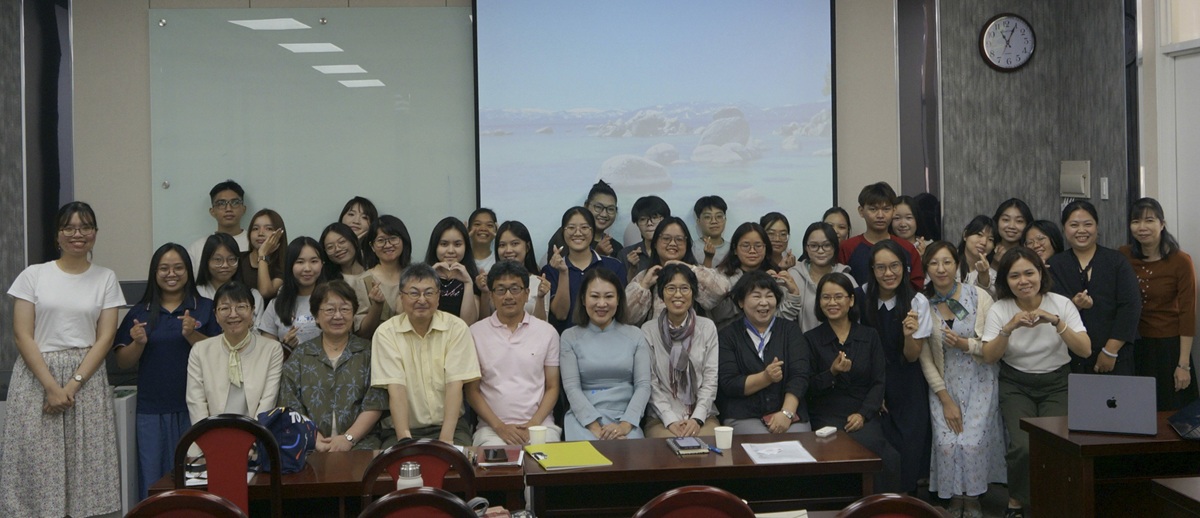
On the morning of August 18, 2026 (Tuesday), at the University of Social Sciences and Humanities, Viet Nam National University Ho Chi Minh City, the Faculty of Oriental Studies, Japanese Studies major successfully hosted an international scientific seminar themed "The current state of Vietnamese studies in Japan", with the keynote speaker being Prof. Kato Atsufumi – Professor at the Department of Modern Sociology, Kyoto Sangyo University, Japan, who is also President of the Japan Association for Vietnamese Studies.
Participants
Representing the Faculty of Oriental Studies were Assoc. Prof. Dr. Phan Thi Hong Xuan – Dean of the Faculty of Oriental Studies; Dr. Nguyen Thi Phuong Hao – Vice Dean of the Faculty of Oriental Studies, Dr. Huynh Phuong Anh – Head of the Japanese Studies major, along with lecturers, students of Japanese Studies and graduate students of Asian Studies.
From the Japanese side, the seminar was also attended by 5 Japanese scholars who are highly interested in researching Vietnamese studies and regional studies:
· Assoc. Prof. Dr. Emi Nogami – Mukogawa Women's University
· M.A. Atsuko Tsuchiya – Freelance Researcher
· Dr. Iwase Maomi – Notre Dame Seishin University
· Dr. Chinraiko Kaku – Notre Dame Seishin University
· Prof. Serizawa Satohiro – Tenri University
Welcome remarks
In her opening remarks, Assoc. Prof. Dr. Phan Thi Hong Xuan reviewed the formation and development process of the Japanese studies major in Vietnam, from the Dong Du movement in the early 20th century to the official establishment of the major at the University of Social Sciences and Humanities, VNU-HCM (1994) and in Hanoi (1995). She emphasized that while Vietnamese studies in Japan emerged in the 1920s and developed strongly since the Doi Moi period, information on this field remains limited for Vietnamese researchers and students, especially in the Southern region. The Dean also introduced the current scale of the Japanese studies major – approximately 800 students across all systems, with 80% of graduate students in Asian Studies coming from the Japanese studies major – and expressed her hope that the seminar would open up new research directions and enhance academic cooperation between the two countries.
Presentation by Prof. Kato Atsufumi
At the beginning, Prof. Kato introduced his research interests in cultural anthropology and Vietnamese regional studies, covering topics such as community self-governance, village reconciliation, gender, elderly people living alone, and caregiving.
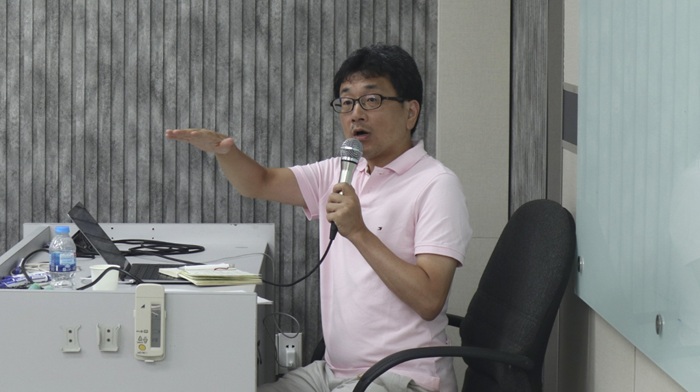
The Professor provided a brief history of Vietnamese studies in Japan across several periods:
· Pre- and post-war period: linked to Indochinese studies, ethnology by Matsumoto Nobuhiro, and Oriental history by Yamamoto Tatsurō based on Han-Nom texts.
· Vietnam War period: highlighted by Sakurai Yumio and studies on the communal land system, as well as two scholars who studied in Vietnam: Furuta Motoo (research on ethnic minorities) and Shiraishi Masaya (research on Phan Boi Chau).
· Period of the beginning of field surveys in Vietnam: especially the research project surveying the lives of people in Bach Coc commune (Nam Dinh) since 1994, delving into the socio-economic and cultural life of Northern rural areas, although the research results have not been published as a comprehensive work.
· Period of development of Vietnamese studies: expanding to research on ethnic minorities, religion, the Mekong Delta society, cultural heritage (Nha Nhac, Imperial Citadel of Thang Long, ...), the consequences of Agent Orange, the overseas Vietnamese community, ...
Regarding the current situation, Prof. Kato stated that the Japan Association for Vietnamese Studies currently has about 90 members; projects related to Vietnam funded for research in 2026 reached about 60, with an increasingly wide scope, notably research on the Vietnamese community in Japan. The Professor also noted that research on Vietnamese politics in the narrow sense remains quite modest compared to other fields.
Discussion
The Q&A session was lively with many noteworthy contents:
· Regarding research areas: delegates discussed the reasons why Japanese research is mainly concentrated in the Northern and North-Central regions (due to academic ties through Prof. Phan Huy Le, Prof. Phan An), while the South is less explored due to a lack of research connection networks. Scholars such as Prof. Serizawa, Assoc. Prof. Dr. Nogami, and M.A. Tsuchiya shared their field experience in Southern Vietnam, noting that while access is culturally favorable, it remains difficult to build research cooperation relationships.
· Regarding methodology and new trends: Assoc. Prof. Dr. Phan Thi Hong Xuan asked about research methods and new approaches in fieldwork for ethnology in modern Japan (compared to traditional research methods and approaches). Additionally, regarding the issue of foreign communities in Japan, she asked if Japan is currently interested in research activities on multicultural policies. Regarding this question, Prof. Kato and the delegates participating in the seminar discussed the emergence of interdisciplinary approaches and new ethnographic research methods (such as multi-sited ethnography, media ethnography), as well as the increasing interest in research on the overseas Vietnamese community (including in Japan).
· Regarding the research generation: Dr. Nguyen Thi Phuong Hao shared her experience meeting older Japanese scholars at international conferences, while raising the issue of the succession of young Japanese researchers in Vietnamese studies compared to Chinese and Korean studies.
· Regarding difficulties in conducting field research: some guests mentioned the reality that administrative procedures due to the merger of administrative units in Vietnam have caused certain difficulties for local research (as in the case of Ha Tinh) in the process of conducting fieldwork.
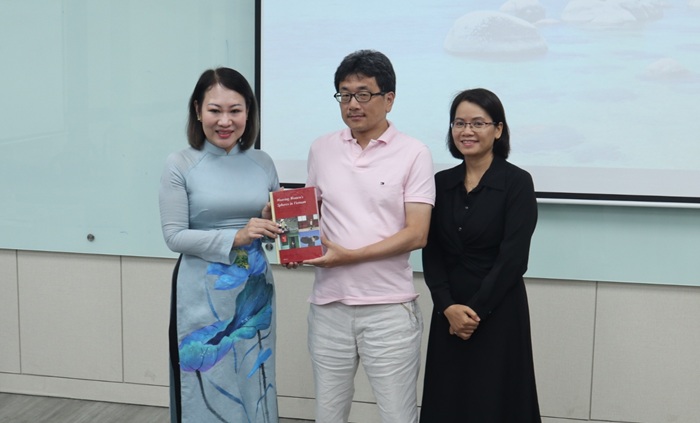
The scientific seminar took place in an open, academic atmosphere, contributing to strengthening research cooperation between Vietnamese and Japanese scholars in the fields of Vietnamese studies and regional studies, while also opening up many suggestions for new research directions for lecturers, graduate students, and students of Japanese studies, Faculty of Oriental Studies. Concluding the scientific seminar, Assoc. Prof. Dr. Phan Thi Hong Xuan thanked the Japanese researchers for sharing their insights on the state of Vietnamese studies in Japan, and expressed her hope that the Faculty of Oriental Studies would become a hub for receiving, connecting, and cooperating with Japanese researchers in Southern Vietnam. Thereby, contributing to creating a sustainable bridge connecting the two countries and the two peoples of Vietnam and Japan in the future.
Japanese Studies Major
Bài viết liên quan