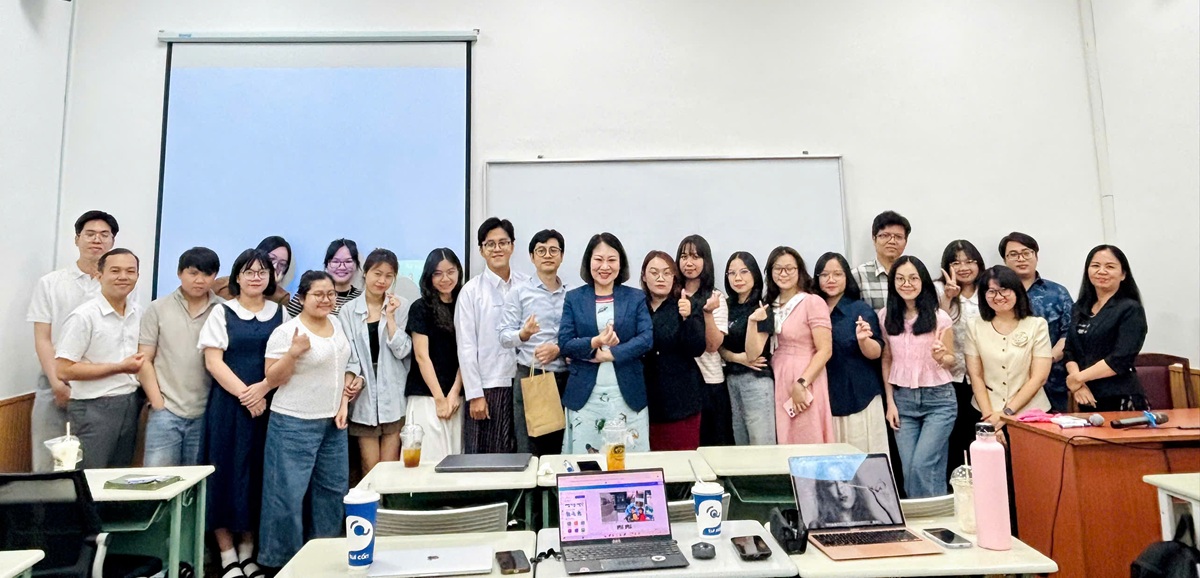
On the morning of September 5, 2026, the Faculty of Oriental Studies, University of Social Sciences and Humanities, Viet Nam National University Ho Chi Minh City organized an exchange and sharing program on the application of artificial intelligence in learning and research for postgraduate students in Asian Studies. The program was attended by Assoc. Prof. Dr. Phan Thi Hong Xuan – Dean of the Faculty of Oriental Studies, along with speaker Le Vinh Thao - Founder of An Chay TV and anchay.vn, representative of the International Vegetarian Union in Vietnam, and postgraduate students.
During the program, speaker Le Vinh Thao introduced PDF9 Educate, an artificial intelligence platform that supports reading comprehension, document analysis, and the execution of learning tasks and academic assessments. These tools are highly applicable for postgraduate students who frequently need to access, select, and process large volumes of documents during their studies and research.
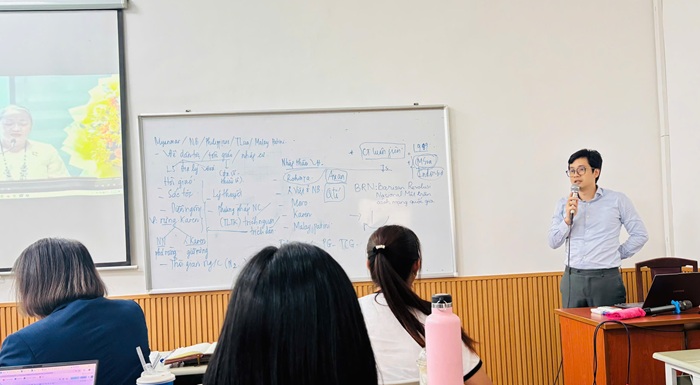
Through PDF9.AI, learners can ask questions based on document context, summarize and cross-reference information, identify arguments, find connections between contents, and receive support in constructing arguments based on specific source materials. Notably, the Voice Agent feature allows users to interact with documents via voice, enabling them to request concept explanations, clarify content, or identify key points in a more intuitive and flexible manner.
In addition to supporting learners, the program introduced AI's capabilities in building assessment criteria and rubrics, assisting lecturers in providing feedback on essays, research papers, document analysis reports, and research proposals. The use of rubrics helps clarify criteria regarding the use of materials, analytical skills, argumentation, citation, presentation, and independent thinking, thereby aiming for a clearer, more consistent, and transparent assessment process.
For the field of Asian Studies, these tools can assist students in cultivating core competencies such as problem identification and research question formulation; exploiting, cross-referencing, and analyzing documents; identifying historical, cultural, and social contexts; constructing interdisciplinary arguments; and presenting research results according to academic standards.
A point emphasized during the program is that AI only serves as a support tool and does not replace the thinking of learners, the expertise of lecturers, or the responsibilities of researchers. The use of AI in a university environment must be associated with the ability to verify information, return to original sources, evaluate the reliability of results, cite correctly, and ensure academic integrity.
On this occasion, PDF9.AI is offering postgraduate students in Asian Studies 02 months of free usage, enabling them to directly experience and evaluate the effectiveness of these AI tools in their learning and research process.
On behalf of the Faculty Board of the Faculty of Oriental Studies, Assoc. Prof. Dr. Phan Thi Hong Xuan – Dean of the Faculty, expressed her sincere gratitude to speaker Le Vinh Thao for taking the time to share practical knowledge and experience, and thanked PDF9.AI for supporting the Faculty's postgraduate students with the opportunity to experience the platform for 02 months.
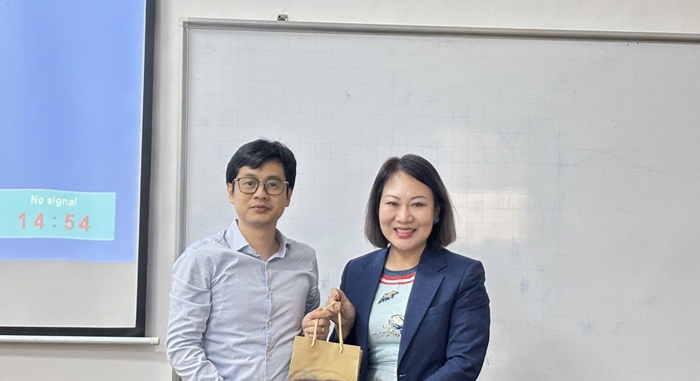
Assoc. Prof. Dr. Phan Thi Hong Xuan also emphasized that accessing new AI tools is not just to help students work faster, but more importantly, to know how to read deeper, ask better questions, verify information more rigorously, and form independent research thinking. This is also part of the Faculty of Oriental Studies' orientation to enhance research capacity, digital skills, and adaptability to new academic methods for postgraduate students.
The program is a practical activity contributing to connecting Asian Studies – technology – research methods, while encouraging students to proactively apply artificial intelligence responsibly, effectively, and in accordance with academic ethical standards.
Bài viết liên quan