VIET NAM – ASEAN CULTURAL EXCHANGE CENTER: CONNECTING INTERNATIONALLY, SPREADING A SUSTAINABLE LIFESTYLE
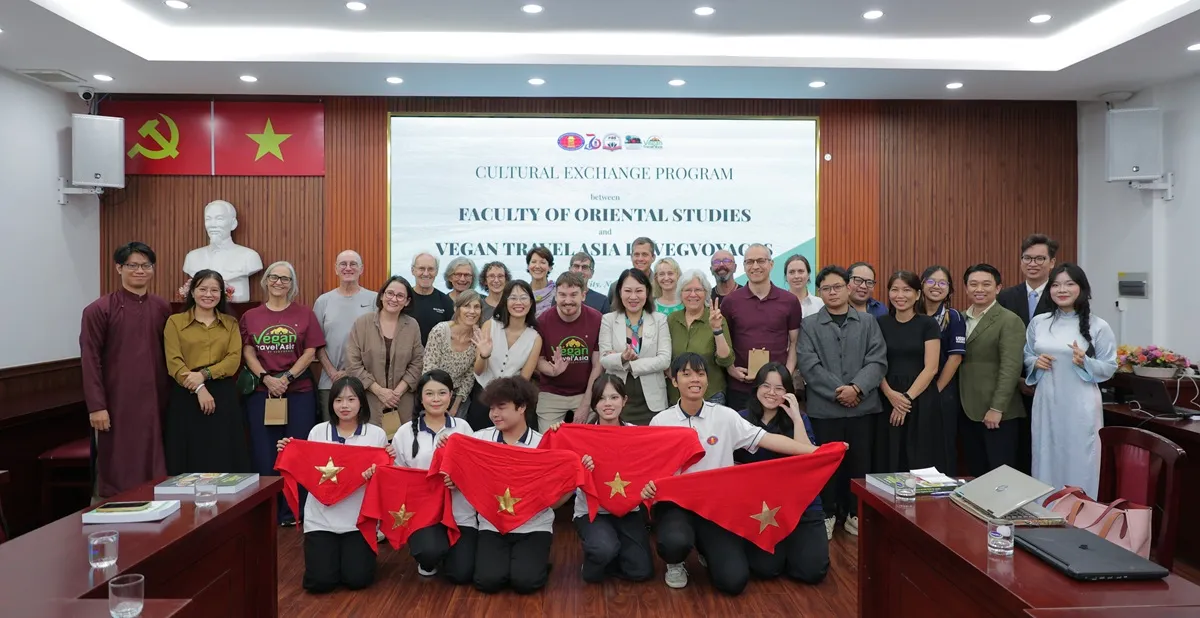
Through intercultural dialogue, culinary experiences, and practical environmental protection actions, the exchange program with the organization Vegan Travel Asia (USA) contributed to connecting knowledge with life, spreading the spirit of global citizenship, and promoting sustainable development within the university environment.
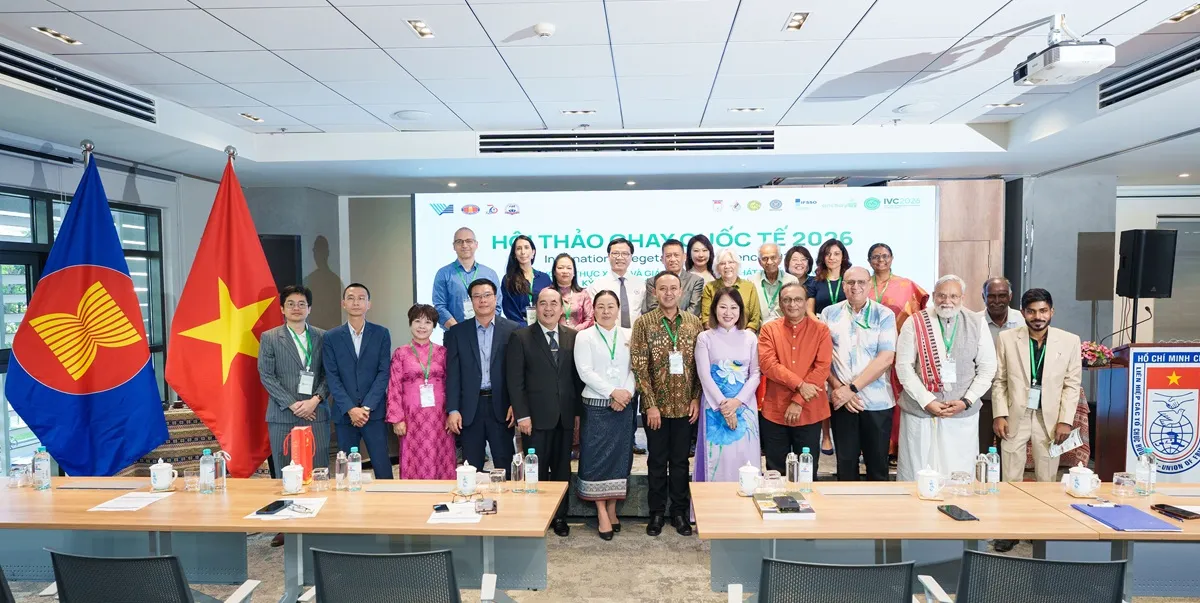
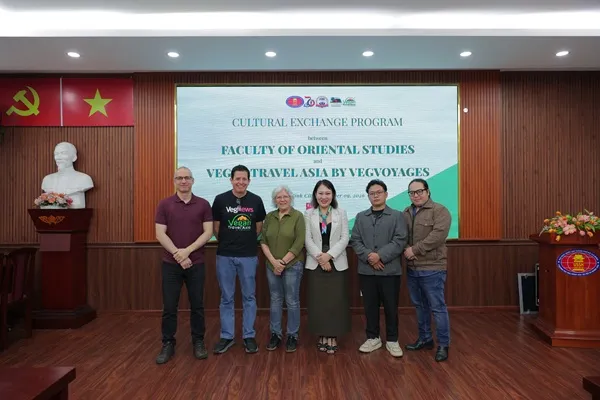
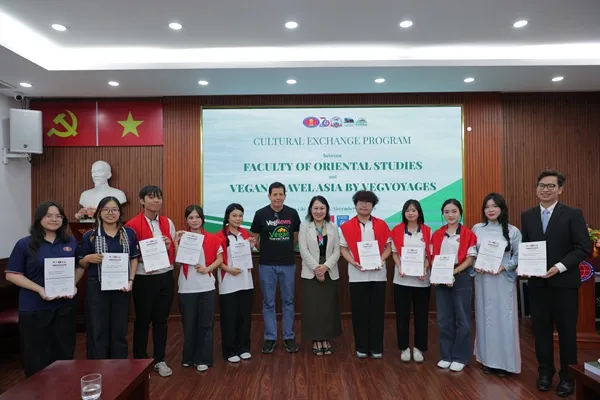
On November 9, 2026, at the Saigon campus, the Viet Nam – ASEAN Cultural Exchange Center under the Faculty of Oriental Studies, University of Social Sciences and Humanities, Viet Nam National University Ho Chi Minh City, in collaboration with Vegan Travel Asia (USA), organized a cultural and academic exchange program, connecting students with international experts and activists in the fields of culture, nutrition, and sustainable living.
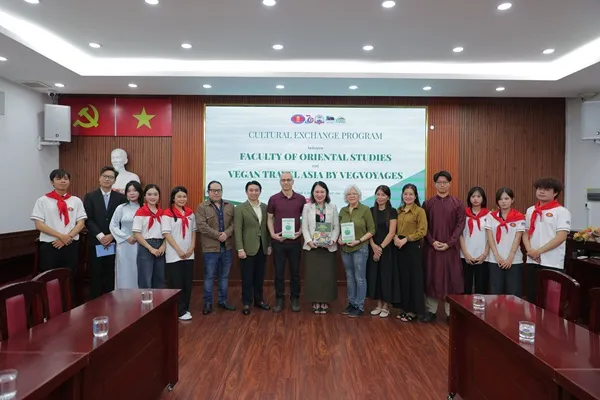
The program was attended by Assoc. Prof. Dr. Phan Thi Hong Xuan – Dean of the Faculty of Oriental Studies; Mr. Zac Lovas – founder of Vegan Travel Asia, along with 17 members of the international delegation; Ms. Marly – Honorary President of the International Vegetarian Union; Prof. Dr. Eric Lyswich – physician and nutritionist from Brazil; Mr. Scott Green – founder of the Vive organization (formerly known as Song Thuan Chay), along with lecturers, guests, and students.
Connecting knowledge, culture, and global responsibility
Speaking at the program, Assoc. Prof. Dr. Phan Thi Hong Xuan emphasized that sustainable development is not only linked to policies or technology but also begins with culture, lifestyle, and daily choices. In particular, cuisine is a vivid expression of cultural identity, indigenous knowledge, and how humans interact with nature. Therefore, international exchange not only helps students expand their understanding but also nurtures intercultural competence and the sense of responsibility of global citizens.
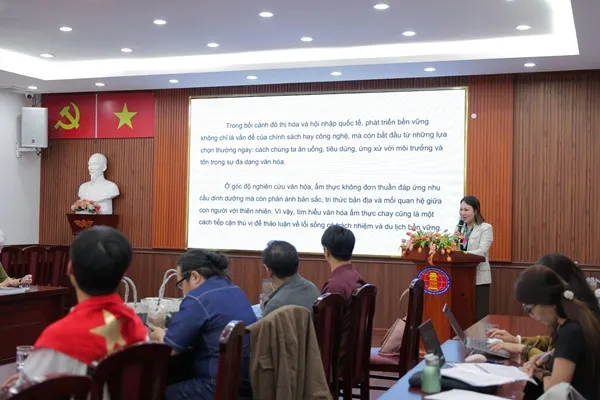
The international guests brought multi-dimensional perspectives on the relationship between culture, health, the environment, and sustainable development. While Mr. Zac Lovas shared experiences on responsible tourism and community connection through cultural experiences, Ms. Marly contributed to raising awareness about the international vegetarian movement and respect for all life forms. The participation of Prof. Dr. Eric Lyswich, a physician and nutritionist from Brazil, added professional insights into nutrition during discussions on plant-based lifestyles.
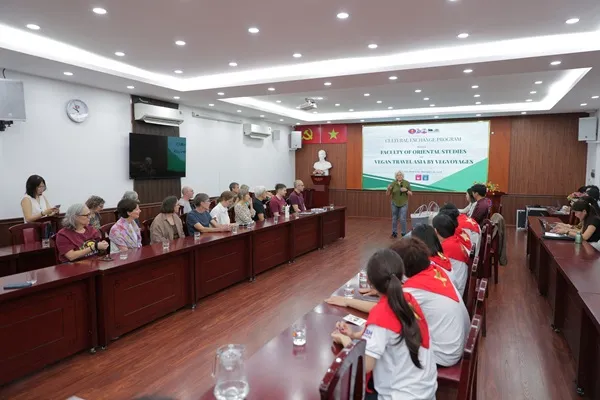
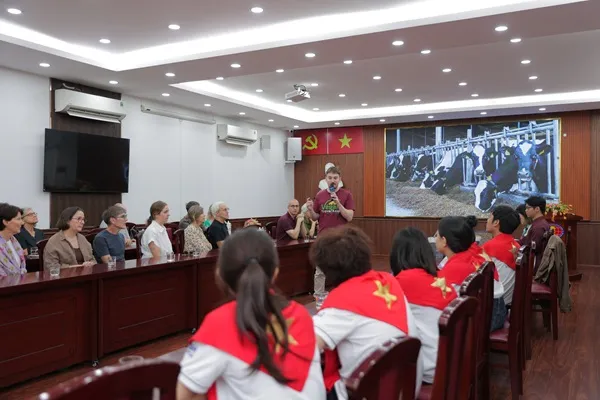
Students actively participated in intercultural dialogue.
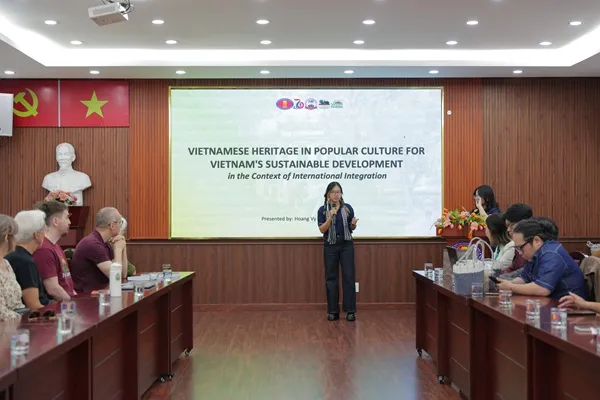
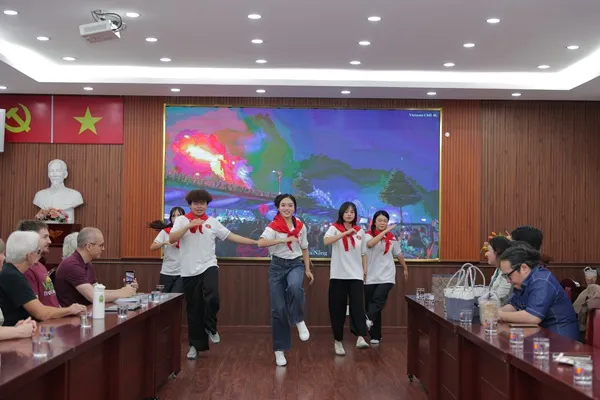
A highlight of the program was the active participation of students from the Faculty of Oriental Studies. Through their presentation on Vietnamese heritage in popular culture and sustainable development, students showcased the younger generation's perspective on preserving, creating, and spreading cultural values in the context of integration.
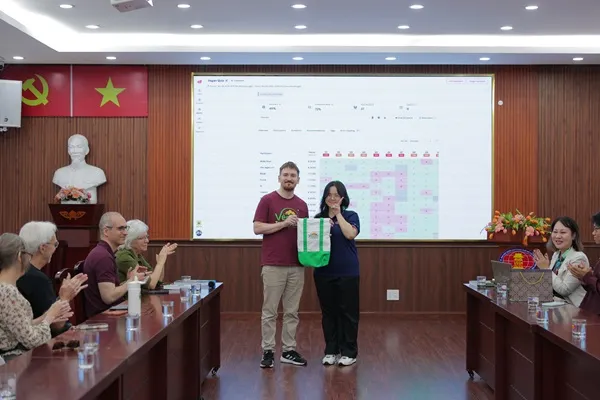
Notably, the interactive quiz activity led by Mr. Scott Green created an exciting atmosphere, encouraging students to apply knowledge and react quickly. Students from the Faculty of Oriental Studies excellently ranked in the Top 3 fastest and most accurate responders, demonstrating confidence, proactivity, and integration capabilities in an international exchange environment.
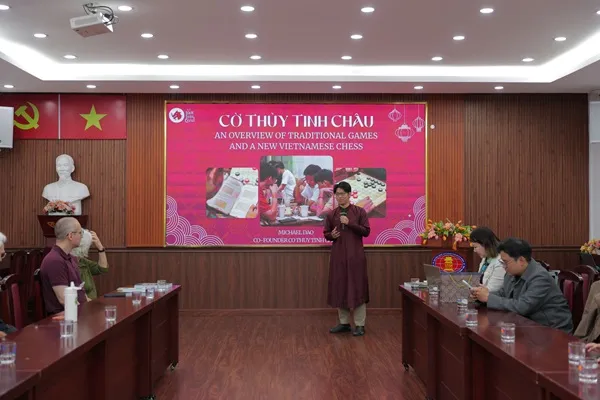
The Thuy Tinh Chau (Glass Pearl Chess) experience activity also provided an interesting approach to Oriental cultural symbols, contributing to connecting traditional values with contemporary creative forms.
Sustainable development through practical actions.
Not stopping at academic exchange, the program also created opportunities for international guests, lecturers, and students to explore Vietnamese and international vegetarian cuisine together, thereby feeling the cultural diversity through intimate experiences.
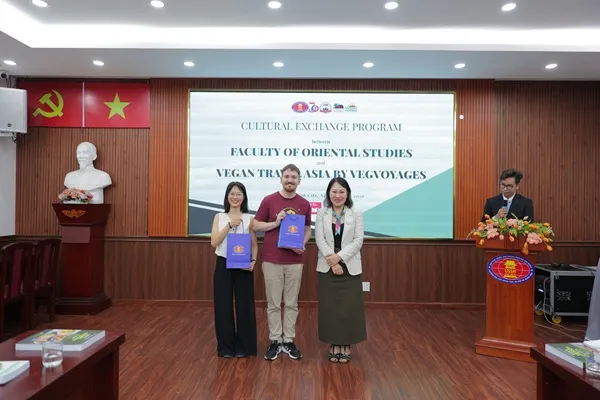
Accompanying the program, Diep Truong Phat Company presented all delegates with nutritious vegan cookies. This small but meaningful gift not only demonstrated hospitality but also contributed to introducing plant-based food options, connecting businesses with educational activities, and spreading a green lifestyle.
Notably, after the program, international guests, lecturers, and students together cleaned up, sorted waste, and rearranged the classroom. That simple image conveyed a profound message: sustainable development is not just something we talk about, but how we act and treat the surrounding environment.
Through the program, the Viet Nam – ASEAN Cultural Exchange Center continues to promote its role as a bridge between the university, international organizations, businesses, and the community, contributing to turning international cooperation activities into practical learning experiences for students.
From cultural dialogue to green lifestyle practice, the program affirms a meaningful orientation in higher education: international integration is not just to understand the world but also to co-create a humane and sustainable future.
Some other images at the program:
Related posts
 +1