The Institute for Social Sciences and Humanities Advances Strategic Cooperation on Digitalizing the Social Sciences and Humanities with International Partners in Bến Tre
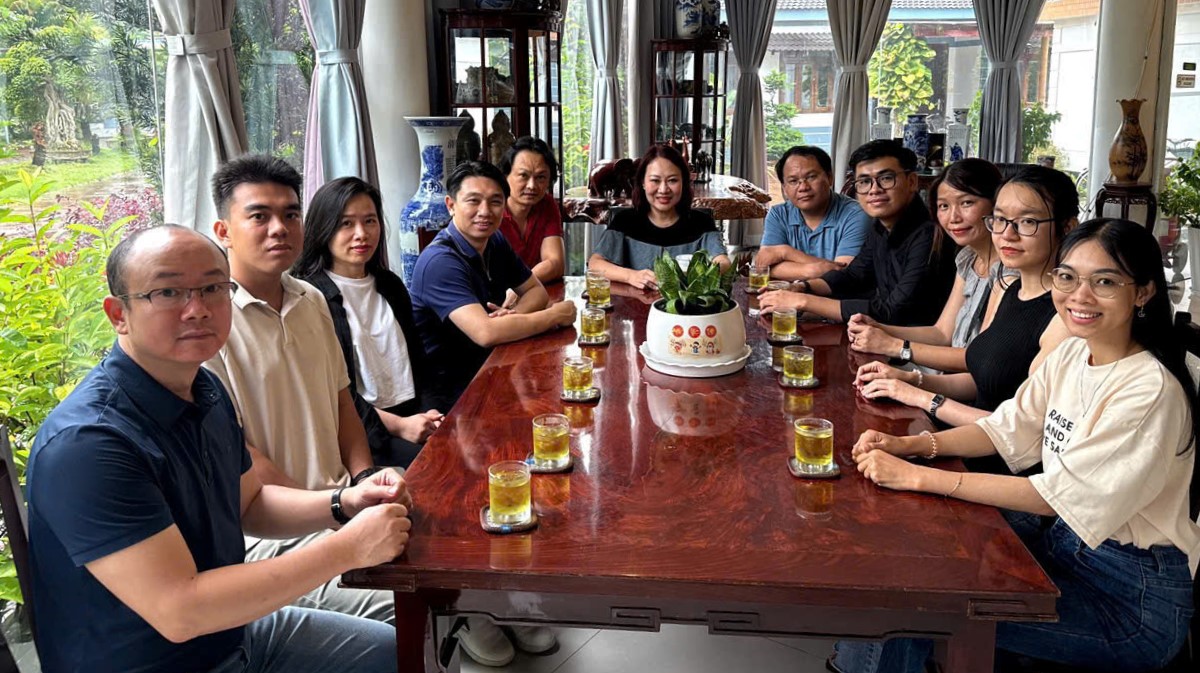
Assoc. Prof. Dr. Phan Thị Hồng Xuân Chairs Strategic Discussion on Digitalizing the Social Sciences and Humanities
On the afternoon of May 24, 2025, at the Forever Green Resort (Ben Tre Province), the Institute for Social Sciences and Humanities (ISSH), University of Social Sciences and Humanities – Vietnam National University Ho Chi Minh City, hosted a working session with international partners to discuss strategic cooperation in the digital transformation of social sciences and humanities (SSH).
The event brought together leaders of the Institute, researchers, and experts, along with representatives from renowned academic organizations in Taiwan and Malaysia, with the shared goal of forming a multilateral and interdisciplinary cooperation network in the context of globalization and digital transformation.
In an open and constructive atmosphere, delegates engaged in in-depth dialogue on key topics such as: the application of digital technology in SSH research and teaching; the potential of artificial intelligence (AI) in data analysis and knowledge dissemination; the development of digital ecosystems for academia; and the establishment of international academic training and exchange programs.
Notably, partners from Taiwan shared practical and effective experiences in integrating modern technologies with traditional cultural values in education, emphasizing self-reliance and liberal thinking. These insights offered valuable suggestions for Vietnam’s educational and research reforms.
In her remarks, Assoc. Prof. Dr. Phan Thị Hồng Xuân, Director of the Institute for Social Sciences and Humanities and Director of the Center for Vietnamese and Southeast Asian Studies, emphasized:
"As the university leadership has entrusted the Institute with developing part of the 'Digital Humanities Initiative'—a key component of the strategic development plan of the University of Social Sciences and Humanities through 2030—integrating digital technology into research and teaching is not only an inevitable trend but also a driving force for innovation in approaches and mindsets in the social sciences and humanities. This is also a critical opportunity to enhance real-world applications and strengthen practical connectivity, thereby contributing more meaningfully to sustainable development."
Dr. Xuân further stated that strengthening internal linkages—between the Institute’s specialized research centers—is a strategic solution to leverage interdisciplinary advantages and build a multi-dimensional, flexible, and effective digital academic ecosystem. By connecting fields such as anthropology, psychology, geography, urban studies, communication, education, culture, tourism, and sustainable development, the Institute aims to design high-impact interdisciplinary projects addressing contemporary social issues.
At the same time, expanding international cooperation will enhance academic competitiveness, promote knowledge and technology transfer, and allow the Institute to integrate more deeply into the global academic community—participating actively in digital transformation programs in education and research at regional and international levels.
The session concluded with a consensus on the following prioritized areas of collaboration:
-
Joint Research: Launch interdisciplinary research projects on the impact of digital transformation on culture, society, and human life;
-
Training and Capacity Building: Organize training courses and thematic workshops on digital skills, modern research methods, and AI applications in SSH;
-
Development of a Digital Academic Ecosystem: Create digital libraries, digital maps, and open data platforms for the academic and teaching communities;
-
International Academic Exchange: Establish joint training programs and exchange schemes for lecturers, students, and professionals between the Institute and international partners, particularly in areas of technological and innovation strengths.
The meeting concluded with strong agreement on long-term and sustainable cooperation. The parties agreed to establish a joint working group, a young researchers team, and a detailed action roadmap for effective implementation of the discussed initiatives.
As part of the working visit, the Institute also held a congratulatory ceremony for Researcher Trần Tuyên, who recently completed his PhD in Tourism Studies at the University of Social Sciences and Humanities – Vietnam National University, Hanoi.
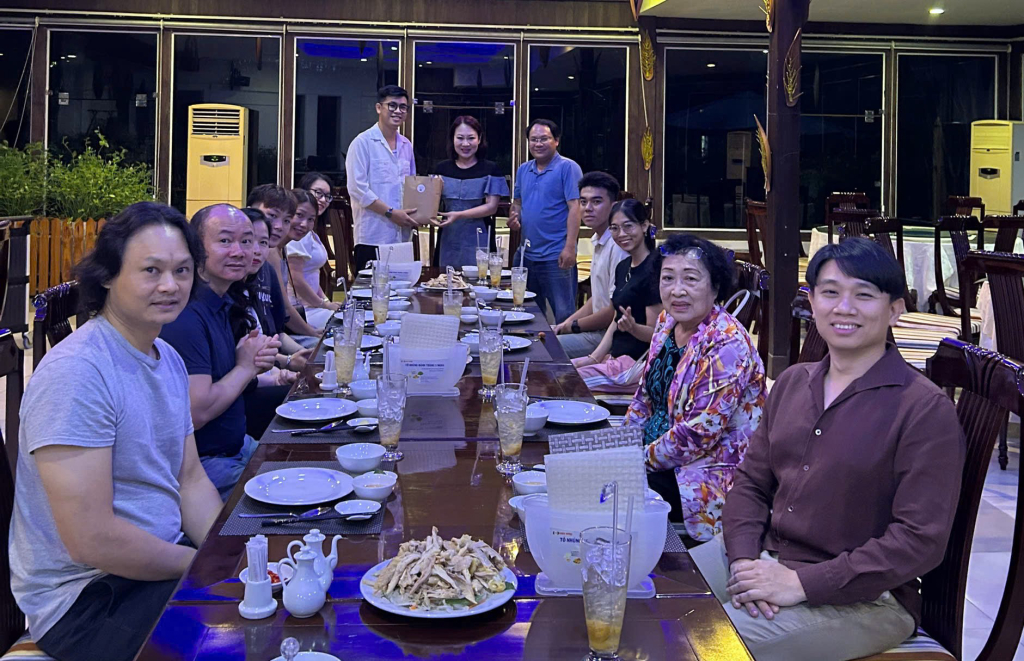
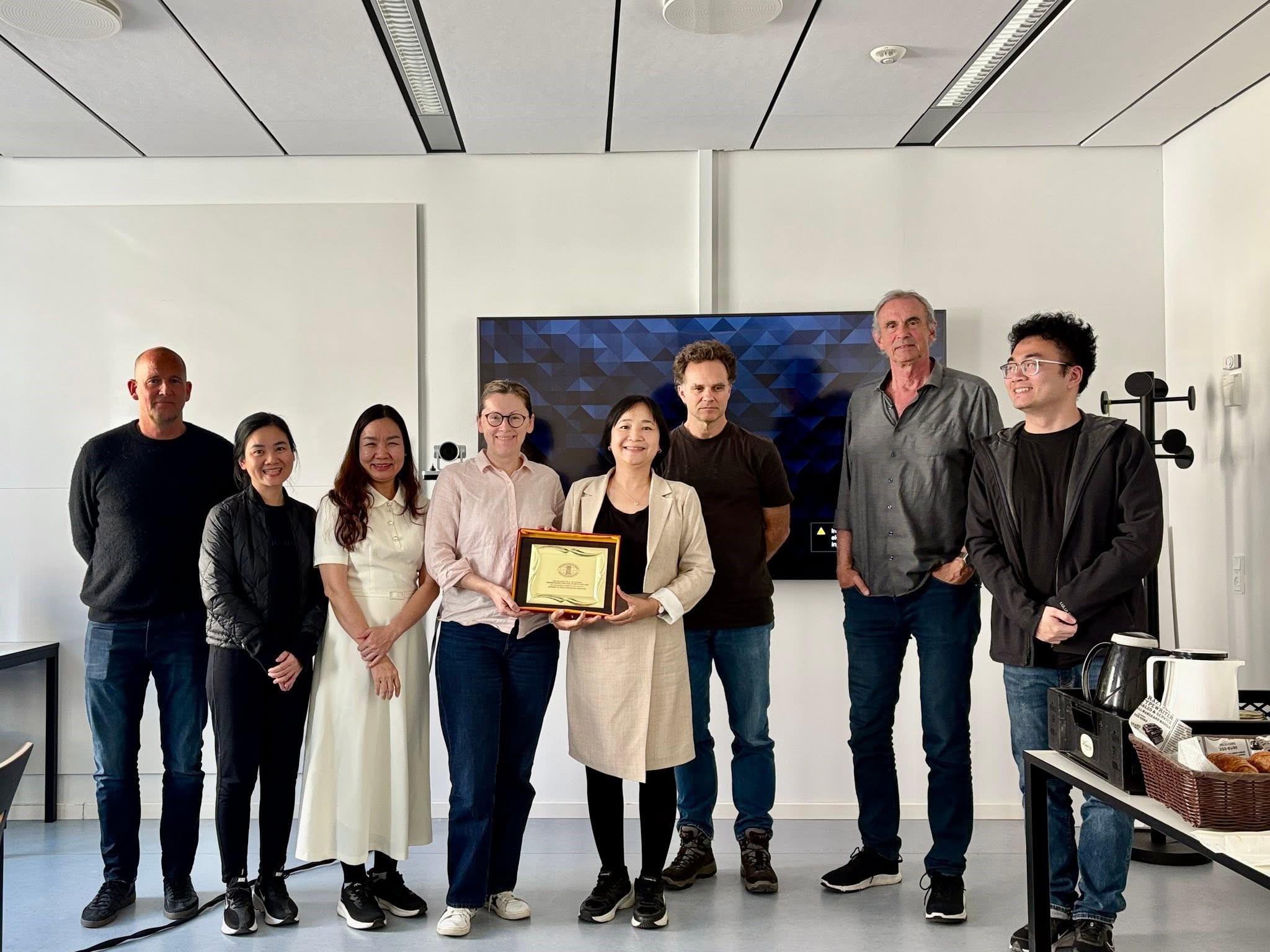
Photo: Assoc. Prof. Dr. Phan Thị Hồng Xuân, Director of ISSH, presents a commemorative gift to Dr. Trần Tuyên – Center for Tourism and Sustainable Development Research.
On behalf of the Institute, Assoc. Prof. Dr. Phan Thị Hồng Xuân extended congratulations and presented a commemorative gift to the newly conferred Doctor, acknowledging his dedicated and rigorous academic efforts. She expressed hope that Dr. Trần Tuyên would continue to contribute actively to academic projects and high-quality human resource development at the Institute, especially in shaping and advancing research programs on public policy.
The working session in Ben Tre marked an important milestone in the Institute’s digitalization strategy for SSH, while also strengthening academic partnerships between Vietnam and the broader Asian region. It paves the way for harmonizing traditional knowledge with modern technology in the 21st century.