|
A shift in perception
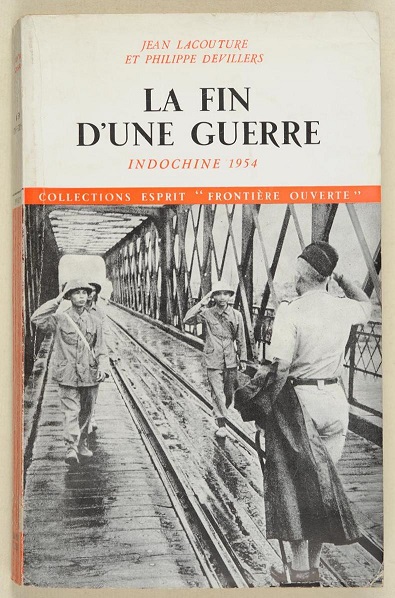
Philippe Devillers' life tied to Vietnam began on September 14, 1945, when he was recruited as a collaborator in Indochina by Hubert Beuve-Mery, editor-in-chief of Le Monde.
On November 3, 1945, after three weeks at sea on the British ship Oronte departing from Marseille port, he arrived in Indochina to work in the Information Department of the French Expeditionary Corps headquarters as a press attaché and the first resident reporter for Le Monde in Indochina. He, along with several other journalists, had the task of publishing the Caravelle newspaper to boost the morale of French soldiers. The Commander-in-Chief of the French Expeditionary Force in Indochina, General Leclerc, came to Vietnam with the mission of disarming the Japanese army, but in reality, he was hiding behind the British forces to return and invade Vietnam.
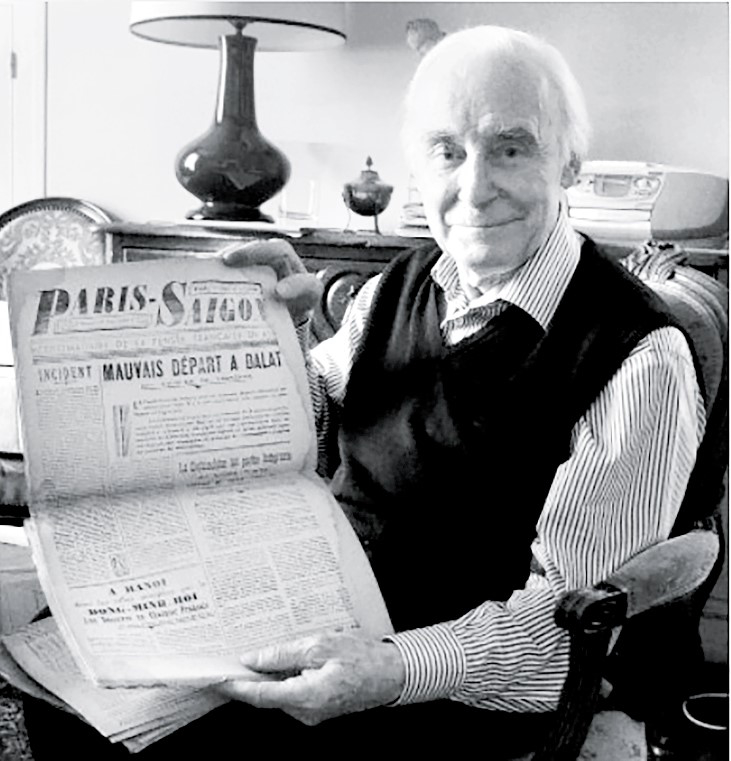
Upon arriving in Vietnam, Philippe and some friends plunged into exploring Indochina. At the end of November 1945, under the direction of General Leclerc and with the consent of the Editor-in-Chief of Le Monde, he and other French journalists such as Jean Lacouture, Pierre-Maurice Dessinges... established the weekly newspaper Paris-Saigon to publish new information about the war in Vietnam.
Witnessing the resistance war that the people here were conducting, which was unlike what the French leaders propagated, he changed his perception.
Philippe's first article about Vietnam, published in Le Monde on January 20, 1946, contained the passage: “France must realize that history has turned a page in Indochina: it is no longer the colonial or protectorate regime that will guide French policy here, but a new type of cooperation with nations that are evolving at a rapid pace”. At that time, very few French people had such a perspective. This was also a view reflecting his future standpoint on France-Vietnam relations, based on promoting peace-building through mutual understanding. The Paris-Saigon weekly therefore also advocated for reconciliation and harmony between the French and Vietnamese peoples.
For the sake of Vietnam's independence and unification, I have always written articles and books supporting that noble goal of a resilient nation that has resolutely chosen the path of struggle and has finally won. The Vietnamese nation deserves a free and happy life because it has fought bravely in the great wars of national defense.
Philippe Devillers
Rejoicing when the Preliminary Agreement was signed on March 6, 1946, in Hanoi, Philippe also quickly realized the duplicity of the French Government. Although the Agreement clearly stated one of the two signatories was “Mr. Sainteny, representative of the French High Commissioner, legally authorized by Admiral d'Argenlieu, French High Commissioner, who holds the executive powers of the French Republic”, immediately after, High Commissioner d'Argenlieu deceitfully declared: “The agreement (...) is limited in space. It has a local character. It was signed by the French Republic's commissioner in the North with the de facto government of Annam based in Hanoi. Until now, the actual power of that government is only exercised north of the 16th parallel (i.e., from Da Nang outwards). Moreover, legally, that power is only of a temporary nature in Central Vietnam. And as such, the agreement is not effective in Southern Vietnam because Southern Vietnam has been occupied by France and separated from the territory of Vietnam!”.
It was that colonial stance of France that caused the subsequent conferences in Da Lat and Fontainebleau to fail. Disappointed, Philippe returned to France on October 9, 1946, and continued to participate in the peace movement, opposing the war; he became a member of the France-Vietnam Association, the first friendship association connecting the French and Vietnamese peoples, founded in 1946 by journalist Andrée Viollis, a political activist and friend of President Ho Chi Minh. During this period, although a high-ranking official in the Secretariat of the French Government, he still maintained his stance of opposing France's misguided policies towards Vietnam.
The mission to shed light on the truth
Meanwhile, in Vietnam, the situation was becoming increasingly tense, with conflicts frequently occurring, the most serious being the incident on November 23, 1946, when the warship Suffren shelled Hai Phong, killing at least 6,000 people, most of whom were civilians. The Vietnamese side continuously requested French troops to return to the positions they occupied before November 20, but France rejected this and continued to cause many other provocations.
Through reporter Bernard Dramber of Paris - Saigon newspaper, President Ho Chi Minh sent a message to the French Government and people: “We do not want war... We want to avoid this war by all means... But if people force us to wage that war, we will wage it... The battle will be fierce, but the Vietnamese nation is ready to endure everything rather than lose its freedom. Regardless, we hope that we will not come to that solution”.
On the afternoon of December 18, 1946, French troops occupied the headquarters of the Ministry of Finance and the Ministry of Transport. On the morning of December 19, France demanded the disarmament of our troops in Hanoi. At 8:00 PM on December 19, the nationwide resistance began. General Valluy, Commander-in-Chief of French forces in Indochina, reported to Paris: “There is no longer any doubt, to all French and foreign observers, the Vietnamese are the ones who attacked first”.
But Philippe did not believe that. He later confided: “At that time, I promised myself to try not to die before shedding light on that year of 1946”.
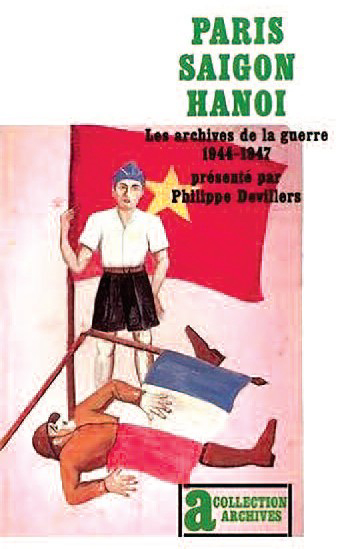
After more than 40 years of persistent and patient research, he almost completely reconstructed the history in the work "Paris - Saigon - Hanoi" published in 1988; pointing out that the culprit of the war was not the Vietnamese side, but the “d'Argenlieu - Valluy - Pignon trio” with the task of “quickly causing a breakdown to shift the responsibility to the Viet Minh”. They sought to provoke so that the Viet Minh would lose patience, use violence, and thereby provide France with a perfectly logical pretext to launch the war.
Later he confided: “To wage war and crush the opponent, which was the Viet Minh, the French leadership did not stop lying and always provided distorted, inaccurate information to the readers and the French people. I have always been against war. Since the Indochina war broke out again in December 1946, for over 40 years, I have been a “secessionist” from that brutal war.
The French war in Vietnam began like that and ended with the disastrous defeat of the expeditionary army at Dien Bien Phu. Philippe called that period “seven years of errors and illusions”.
Not learning lessons from France's failure in Vietnam, the US repeated similar mistakes and illusions. To have a pretext for direct military intervention in Vietnam, on December 8, 1961, the US announced to world public opinion the White Paper “A Threat to the Peace: North Vietnam's Efforts to Conquer South Vietnam”. That blatant slander by the US was immediately rejected by Philippe when he wrote in The China Quarterly, Issue 9, 1st Quarter 1962, an article titled “The Struggle for Unification of Vietnam” in English, over 20 pages long, proving the opposite.
Later, he continued to fight for the righteous cause of the Vietnamese people through articles and talks at many international forums. He also had the opportunity to present his views on the American war in Vietnam during a teaching stint at Cornell University, New York (USA).
Twenty years of so much affection
In 2010, at the age of 90, he collected his articles and memoirs about Vietnam into the last book of his writing career, which was also his Vietnam life, 475 pages long, titled "Vingt ans et plus avec le Vietnam: Souvenirs et écrits, 1945-1969" (More than 20 years with Vietnam: Memoirs and writings 1945-1969). On the occasion of the book's launch, he confided to the press that: “I have always supported the just cause of independence and unification of the Vietnamese people”. According to him, “the Vietnamese nation is resilient, having chosen the path of struggle to restore independence. That nation deserves to live in freedom and happiness”.
From the time he and some friends founded the Paris-Saigon weekly, until the publication of his last book about Vietnam, he had pursued this topic persistently for 65 years. History PhD Alain Ruscio called that period of attachment to Vietnam by the phrase “Philippe Devillers' Vietnam lifetime”. He passed away in February 2016, at the age of 96, leaving much grief for his friends in Indochina.
Highly valuing Philippe's loyalty to the Vietnamese people, the State of Vietnam awarded him the Friendship Order.
Source: http://www.daibieunhandan.vn/default.aspx?tabid=77&NewsId=377720
|