|
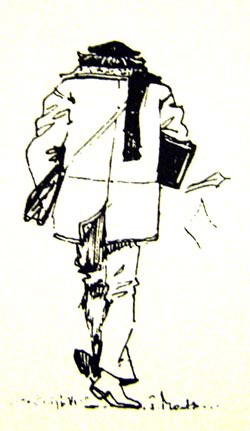
Silhouette of Jean Chesneaux (sketch by unknown author; source: family)
An "emeritus" professor at Denis-Diderot University (Paris VII), Jean Chesneaux was an expert in 19th and 20th-century Asian history, primarily China, where he began his research in 1948 (major works: Secret Societies in China, Peasant Movements in China 1840-1949, The Chinese Labor Movement from 1919 to 1927, Sun Yat-sen). On his way back to France from China in 1949, he visited Saigon, and through the Marxist Cultural Club group of progressive French intellectuals, Jean Chesneaux came into contact with the Vietnamese Resistance and, from then on, persistently supported Vietnam's struggle for independence and unification. He was the first Western author to write about the history of the Vietnamese nation: the book Contribution a l'histoire de la nation vietnamienne (Contribution to the study of the history of the Vietnamese nation, Ed. Sociales) was published in the same year, 1955, as L'histoire du Vietnam by Le Thanh Khoi (Ed. de Minuit). For two decades in the West, these two works served as introductory books on Vietnam for generations of researchers or, more broadly, those interested in Vietnam-related issues.
At Paris VII University (Jussieu), along with the "three musketeers" of French historians specializing in Vietnam—Georges Boudarel, Pierre Brocheux, and Daniel Hemery—Jean Chesneaux was a pioneer who trained an entire generation of research students in Vietnamese studies.
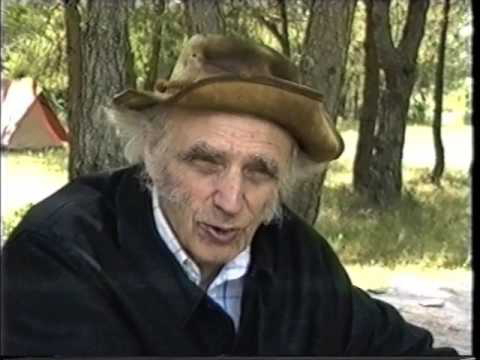
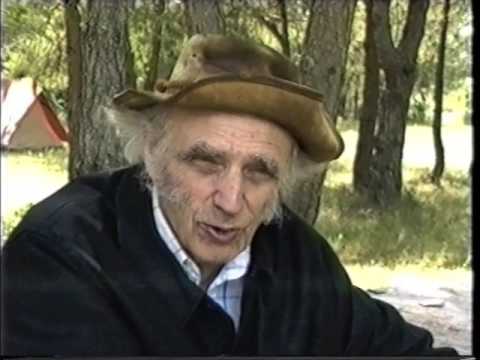
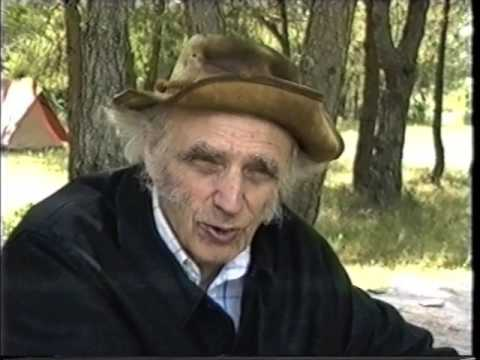
Jean Chesneaux
Coming from an intellectual and Catholic background, Jean Chesneaux joined the ranks of the French Communist Party early on. In 1969, he left the party and became one of the strong supporters of the so-called "Great Proletarian Cultural Revolution," mistakenly believing it to be a genuine revolution stemming from the masses. In this choice, perhaps the historian gave way to the "wanderer." Chesneaux had always been fond of "wandering." Wandering in time: «thinking about the past in a 'historical' way to think about the present in a 'historical' way» was a motto he pursued throughout his life. Wandering in space: he was very fond of Jules Verne and even wrote a whole book about this author (Jules Verne, un regard sur le monde, Bayard, 2001).
Emerging from the maze of Maoism, Jean Chesneaux immersed himself in the ecological movement, linking his concern for ecology with social movements. For many years, he was the president of Greenpeace-France, and until his final days, he was actively involved in the Attac movement, which advocates for "altermondialisation" (another form of globalization). At the same time, he actively supported the independence movement of the Kanak people in New Caledonia.
Jean Chesneaux's "first love" remained Vietnam: he supported both of Vietnam's resistance wars from beginning to end. Like many loves, it also bore, for many years, a silent wound. In 1972, in the book Le Vietnam (Maspéro publisher), Chesneaux spoke of «bipolarity» in the process of formation and national identity: during a time of intense turmoil (1972 was the year of the "final battle" with the "fiery red summer" and the 1972 Christmas bombing), the fact that someone, even a friend, and a long-time friend at that, spoke of a "North-South bipolarity" naturally caused a "sensitive" reaction from the Vietnamese historical community. The gentle but sharp response from Professor Tran Van Giau, in an atmosphere of misunderstanding and speculation from both sides, seemed to be "read" by Jean Chesneaux as an act of rejection. Only recently, Chesneaux's visit to Vietnam and the warm welcome from the Vietnam Association of Historians dispelled these misunderstandings.
|