Introduction
In the general progression of innovation and international integration, the field of Vietnamese Studies has been continuously making new strides, attracting the interest of a large number of researchers both at home and abroad. Researching Vietnamese Studies is one of the ways to help us revive and interpret the universal values of the nation, while placing them in the general context of the region and the world. With a path of exploitation that is both in-depth and diverse, the field of Vietnamese Studies has recently achieved significant progress.
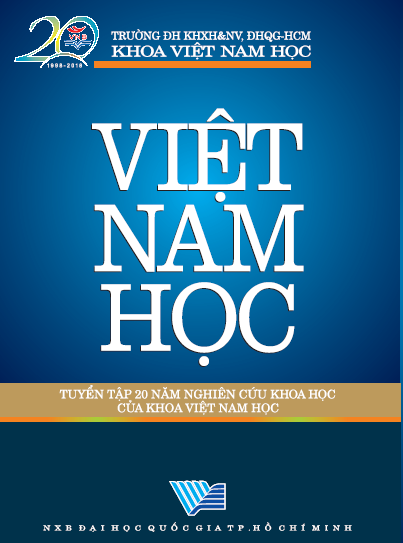
As one of the units with a depth of research and teaching in Vietnamese Studies, the Faculty of Vietnamese Studies at the University of Social Sciences and Humanities, Viet Nam National University Ho Chi Minh City, is on one hand sharing the common tasks of the whole sector, and on the other hand, is still striving to create its own identity. The work Vietnamese Studies (20 Years of Scientific Research) is one of three publications released to celebrate the 20th anniversary of the Faculty's establishment (1998-2018), alongside the proceedings Faculty of Vietnamese Studies – 20 Years of Construction and Development and the special journal….
Twenty years, not too long a journey when viewed from the perspective of a research field, but those twenty years are enough to mark many generations who have dedicated themselves to research and teaching at the Faculty. The first generation must include the names of professors such as Bui Khanh The, Dinh Le Thu, and Nguyen Van Lich, who accompanied the Faculty from the very beginning when it was still the Center for Vietnam – Southeast Asia Research. The achievements attained by this generation are always remembered and recalled during scientific meetings at the faculty. That is Bui Khanh The with his passion for the languages of ethnic minorities; Dinh Le Thu with her passion for researching the M’nong language and issues of educational development in Khmer ethnic areas; Nguyen Van Lich with his topics on Vietnamese and world history. The flame of their research enthusiasm was forged and passed on to subsequent generations, followed by the appearance of a series of new faces with new excitement in various fields, from linguistics to culture, history, literature... Nguyen Van Hue with Raglai folk tales, the culture and society of the Raglai people in Vietnam. Phan Thi Yen Tuyet with research works on marine culture, the culture of ethnic groups in the Mekong Delta, and issues of economic, cultural, and social transformation of the Cham and Khmer communities in Ho Chi Minh City. Le Khac Cuong with a passion for the M’nong and Ta Mun languages; Tran Thuy Vinh with the phenomenon of ambiguity in Vietnamese and English; Nguyen Van Pho with research on modern Vietnamese; Nguyen Thi Ngoc Han and Le Thi Minh Hang with a passion for Vietnamese grammar and its application in teaching Vietnamese to foreigners. Also in current research activities, besides the names that have established certain achievements for themselves, it is worth mentioning the young, enthusiastic lecturers. With the advantage of foreign languages, and having been trained at many advanced universities around the world, many of them are boldly experimenting with new directions and new approaches to research, contributing to placing Vietnam in the general global trend of movement.
With 47 articles selected from presentations and works published at Vietnamese Studies conferences and in specialized journals at home and abroad, the collection Vietnamese Studies (20 Years of Scientific Research) hopes to provide readers with an understanding of Vietnamese Studies, while also suggesting new thoughts and reflections. The articles in the collection are arranged into three parts with different approaches.
Part One: Vietnamese Linguistics: Consists of 25 articles exploring issues surrounding Vietnamese phonology, vocabulary, and semantics. These studies are often associated with the direction of practical application in teaching Vietnamese to foreigners to achieve optimal efficiency. Besides that, readers can also find here special interest in the group of ethnic minority languages, thereby seeing the richness in the linguistic life of the Vietnamese people.
Part Two: Literature – Culture: Consists of 14 articles revolving around issues of culture and literature, in which Vietnamese literature and culture, besides being seen as a separate entity with distinct characteristics, are also placed in the context of globalization to see the changes in the process of exchange and integration with the world.
Part Three: History – Society: Consists of 8 articles with diverse perspectives from history to culture, education, tourism, and economics. All contribute to diversifying the life of Vietnamese Studies research, while showing sensitivity in grasping the current issues of the country.
On the occasion of the launch of this collection to readers, on behalf of the Faculty of Vietnamese Studies, we would like to sincerely thank the scientists and colleagues who have contributed, accompanied, and supported us so that this work could reach the readers. The collection is not only a product of conferences and publication, but more importantly, it is the crystallization of worries, exploration, and reflection to make the field of Vietnamese Studies reach further.
Thank you very much!
TABLE OF CONTENTS
| Part I | VIETNAMESE LINGUISTICS | |
| 1. | Vo Thi Ngoc An | The phenomenon of conversion in Vietnamese and English - application in language teaching |
| 2. | Phan Tran Cong | Pronunciation according to the Southern dialect - advantages and limitations |
| 3. | Le Khac Cuong Phan Tran Cong | Preliminary record on the phonetics of the Ta Mun language in Tay Ninh and Binh Phuoc |
| 4. | Dao Muc Dich Nguyen Thi Anh Thu | Acoustic correlates of statement and question intonation in Southern Vietnamese |
| 5. | Nguyen Thi Ngoc Han | Word strings in the usage of Korean students |
| 6. | Le Thi Minh Hang | “The/Vay” from the perspective of language practice |
| 7. | Huynh Cong Hien | Elementary Vietnamese for foreigners - group of absolute quantifier words |
| 8. | Tran Thi Hoa | Some thoughts on the similarities and differences in Vietnamese and Japanese culture |
| 9. | Nguyen Van Hue | Nasalization in the Raglai language |
| 10. | Nguyen Huynh Lam Lee Na Yeong | Imperative sentences of Korean students learning Vietnamese |
| 11. | Nguyen Thu Lan Nguyen Tra Giang Pham Van Chanh | Foreign students’ motivation in Vietnamese language course at faculty of Vietnamese studies, University of Social Science and Humanities – Ho Chi Minh City National University, Vietnam |
| 12. | Le Thi Hong Minh | Teaching homonyms through some genres of folk poetry and parallel sentences |
| 13. | Tran Trong Nghia | Discussing the difficulty of Vietnamese exercises for foreigners |
| 14. | Nguyen Tuan Nghia | Building positive psychology for Vietnamese language learners |
| 15. | Cu Thi Minh Ngoc | Difficulties in practicing Vietnamese outside the classroom for Korean students at the Faculty of Vietnamese Studies - University of Social Sciences and Humanities, Ho Chi Minh City |
| 16. | Nguyen Van Pho | “Cùng” – operator marking the identity predicate |
| 17. | Nguyen Thanh Phong Tran Thi Tam | Combinations expressing degree, besides the group of words “Rat – Qua – Lam” |
| 18. | Nguyen Hoang Phuong | Cognitive space of perception verbs |
| 19. | Phan Thanh Tam | Verb phrases in the Stieng language |
| 20. | Nguyen Thanh Thuy | Task-Based Language Teaching method and its applicability in teaching business Vietnamese |
| 21. | Dinh Le Thu | How to use degree adverbs: Rat - Qua - Lam, Hoi - Kha |
| 22. | Nguyen Thi Thanh Truyen | Regarding the units “chinh chu”, “chinh chu”? |
| 23. | Nguyen Hoang Trung | Calque - a double-edged sword in describing Vietnamese grammar |
| 24. | Tran Thuy Vinh | On transferring cultural knowledge in teaching Vietnamese to foreign students |
| 25. | Nguyen Thi Hoang Yen | On the pair of causative - inchoative predicates in Vietnamese |
| Part II | LITERATURE - CULTURE | |
| 26. | Tran Thi Kim Anh Nguyen Thi Le Hang | The worship of the four female generals by Vietnamese people in the Southwest region: A case study of Dieu Hoa communal house (My Tho, Tien Giang) |
| 27. | Phan Thai Binh | Some comparisons in behavior between the Vietnamese and the Koreans |
| 28. | Nguyen Duy Doai | Ca Ong (Whale) worship of the residents on Ly Son island district, Quang Ngai |
| 29. | Dinh Thi Dung | Vietnamese festivals viewed from the perspective of cultural adaptation and integration |
| 30. | Doan Le Giang | Research and introduction of Vietnamese literature in Japan |
| 31. | Tran Thi Minh Gioi | Reading Francois Rabelais – thinking about Ho Xuan Huong |
| 32. | Nguyen Thi Thanh Ha | Research on world cultural heritage in Vietnam – issues of approach |
| 33. | Bui Thi Duyen Hai | Ao dai of Vietnamese women - Process of transformation |
| 34. | Vo Thanh Huong & Student Group | The influence of spiritual beliefs and the five precepts on the cultural life of Vietnamese Buddhists at Quang Te pagoda and Korean Buddhists at Dae Han Jeong Sa pagoda |
| 35. | Tran Thi Mai Nhan | Scientific research in social sciences and humanities in Vietnam in the global context |
| 36. | Nguyen Thi Kim Phuong | The word “Dao” (道) in Vietnamese proverbs, folk songs – folk singing |
| 37. | Nguyen Thi Huyen Trang | Thieu Tri’s literary heritage through Dai Nam thuc luc |
| 38. | Phan Yen Tuyet | Religious and belief transformation in ethnic minority communities in the Southeast region |
| 39. | Tran Thi Tuoi | “Dionysian art” as a discourse in the poetry of Thanh Tam Tuyen |
| Part III | HISTORY - SOCIETY | |
| 40. | Le Thi My Ha | Employment transition of rural farmers in the context of rural-urban development (a case study of Ho Chi Minh City from 1997-2010) |
| 41. | Ngo Thi Phuong Lan | Livelihoods of ethnic groups belonging to the Mon-Khmer language group in Binh Phuoc in the current context of development |
| 42. | Nguyen Van Lich | Improving the quality of Vietnamese Studies training at the University of Social Sciences and Humanities, Viet Nam National University Ho Chi Minh City |
| 43. | Nguyen Thi Anh Nguyet | Some features of the land reclamation and economic development in Con Dao (from the 17th century to the first half of the 19th century) |
| 44. | Nguyen Thi Diem Phuong | Developing rural tourism in the Southwest region: Potential and challenges |
| 45. | Bui Khanh The | Lessons from President Ho Chi Minh citing “using the immutable to respond to the myriad changes” |
| 46. | Huynh Duc Thien | Methodology and theoretical issues when researching socio-economic changes during the Doi Moi (Renovation) period |
| 47. | Pham Le Anh Van | “Brain drain” in Vietnam: technological solutions and startup ecosystem development |
Bài viết liên quan