USSH-VNUHCM and the delegation of the Ministry of Education and Training worked in Sweden and Finland on overseas Vietnamese and Vietnamese language teaching
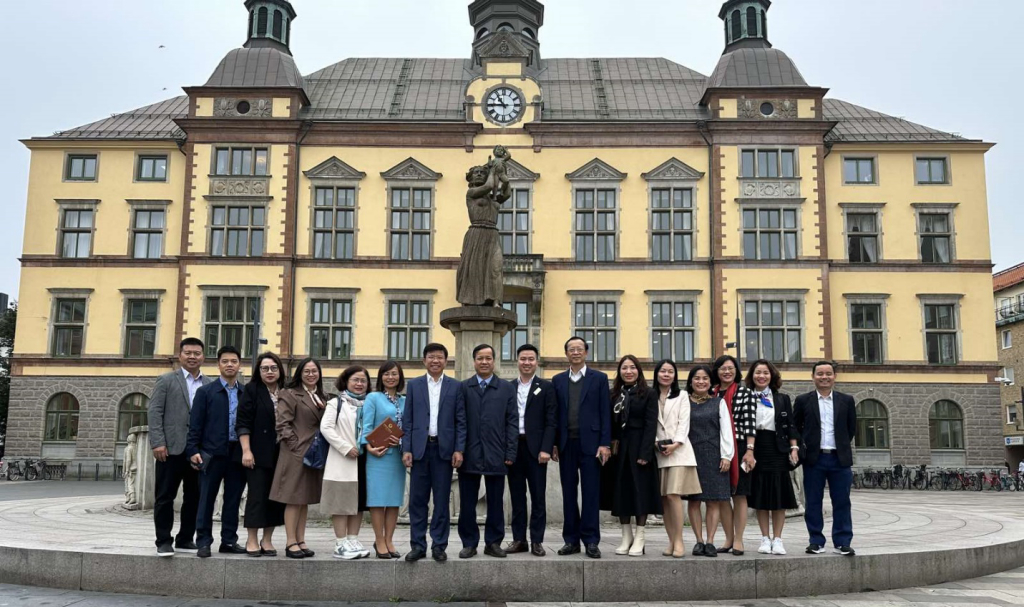
From September 14 to September 17, a working group from the University of Social Sciences and Humanities, Viet Nam National University Ho Chi Minh City accompanied the delegation of the Ministry of Education and Training of Viet Nam on a working trip to Sweden and Finland regarding issues related to overseas Vietnamese and Vietnamese language teaching in the two host countries. The delegation was led by Dr. Pham Ngoc Thuong - Deputy Minister of Education and Training, with the participation of 4 Vietnamese universities, including the University of Social Sciences and Humanities, Viet Nam National University Ho Chi Minh City. Members from the University of Social Sciences and Humanities, Viet Nam National University Ho Chi Minh City included Assoc. Prof. Dr. Ngo Thi Phuong Lan, President, Dr. Pham Thanh Duy - Director of the Administration Division, and Dr. Nguyen Hoang Phuong - Deputy Dean of the Faculty of Vietnamese Studies.
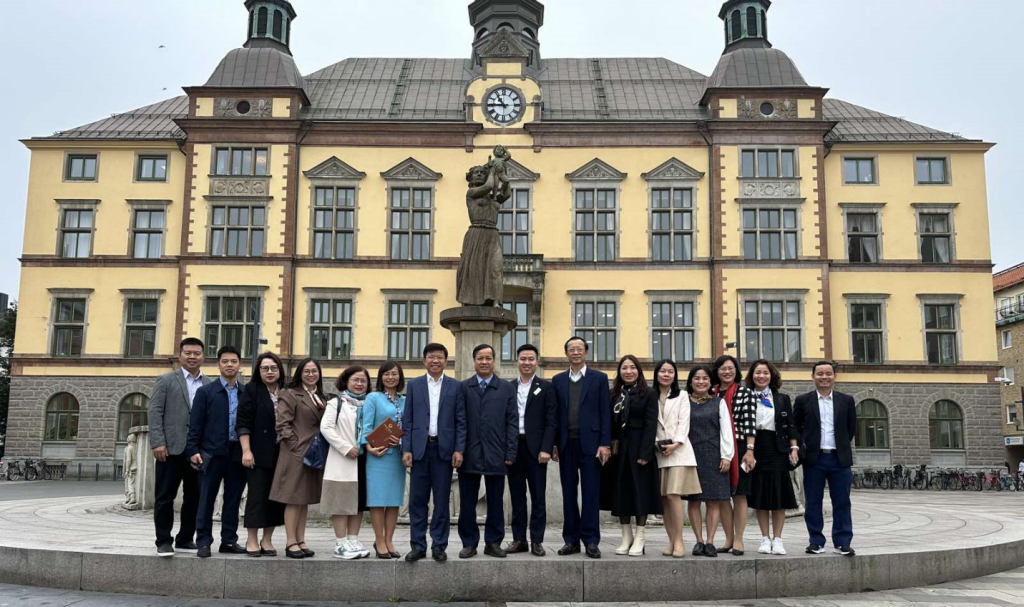
In Sweden, from September 11 to September 13, 2023, the delegation worked with representatives of the Eskilstuna Municipal Government; leaders of the school and the Faculty of Vietnamese Language Teaching at MDU Eskilstuna; the Eskilstuna Intercultural Center - where Vietnamese is taught to local Vietnamese students; the Swedish Ministry of Education and Research; Uppsala University; and the Vietnamese Association and Vietnamese language teachers in Sweden.
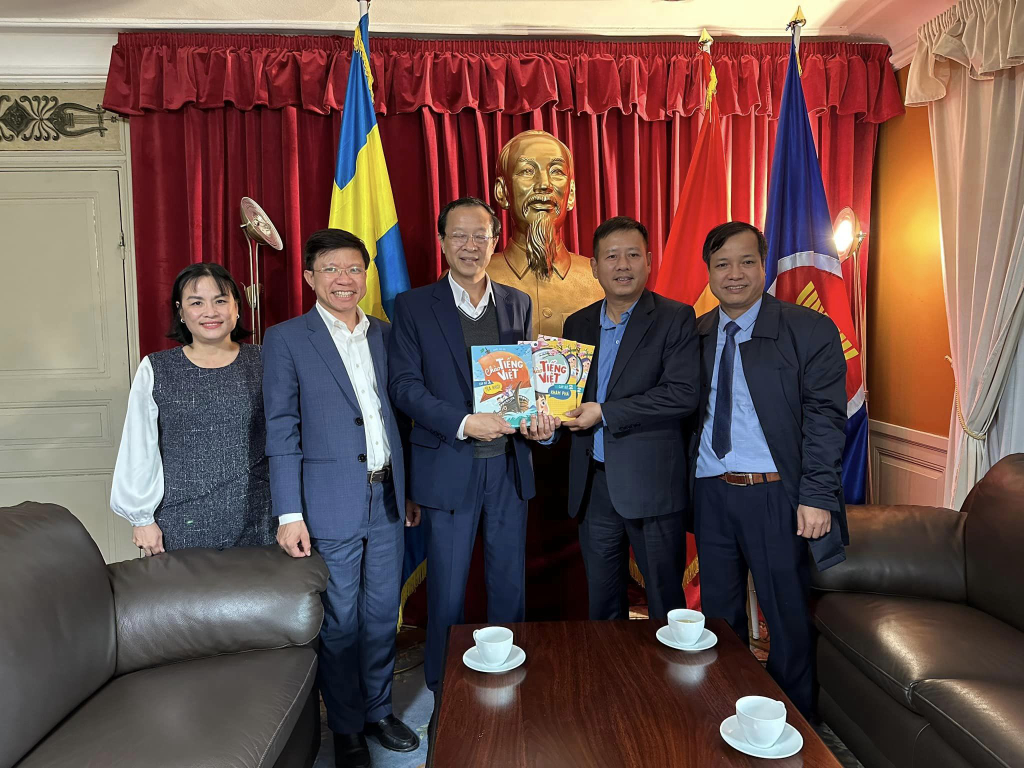
The core content of the meetings was to cooperate effectively in management and exchange experience in building, issuing, and monitoring the implementation of policies and management mechanisms for teaching Vietnamese and foreign languages in Viet Nam and Sweden. Notably, this was the first time that working sessions at the Deputy Ministerial level were held with the theme: exchanging experience in building, issuing, and monitoring the implementation of policies and management mechanisms for teaching Vietnamese and foreign languages in Viet Nam and Sweden. Through these exchanges, the meetings aimed to create opportunities for teachers, volunteers, and Ministry leaders of both countries to connect and promote policies for developing the Vietnamese language in the host countries.
There are currently about 20,000 Vietnamese people living in Sweden, with about 2,000 students studying Vietnamese. Regarding Vietnamese or mother tongue teaching, Sweden has made it compulsory in education since 1977 with The Home Language Reform policy. The government is always very supportive, on the condition that if there are 05 registered students, a class will be opened, and students are completely exempted from tuition fees. The Intercultural Center is a place that organizes mother tongue teaching activities at all levels from kindergarten upwards. Children living in Sweden are registered to study for free, including adopted children. Students are currently learning their mother tongue at educational institutions for 60 to 80 minutes per week. Common difficulties in teaching Vietnamese include a lack of textbooks specifically designed for local Vietnamese teaching; there are no educational institutions in Sweden that train teachers to teach Vietnamese or provide training on Vietnamese teaching methods for teachers; there is a relative lack of facilities, materials, and resources for learning, practicing, and communicating in Vietnamese for both students and teachers; and the number of students registering for Vietnamese language classes is scattered in many different places, causing difficulties for teaching, so there is a great need to cooperate and develop more convenient online and digital teaching methods.
At the meetings, the two delegations exchanged views frankly on the advantages, difficulties, and solutions of each country, while also identifying priorities in Vietnamese language development policies. In addition, the two sides discussed strengthening cooperation in Vietnamese language research and teaching between the University of Social Sciences and Humanities, Viet Nam National University Ha Noi, and the University of Education - Thai Nguyen University with MDU Eskilstuna and the Eskilstuna Intercultural Center.
In Finland, from September 14 to September 16, 2023, the delegation of the Ministry of Education and Training worked with the Finnish Ministry of Education and Culture.
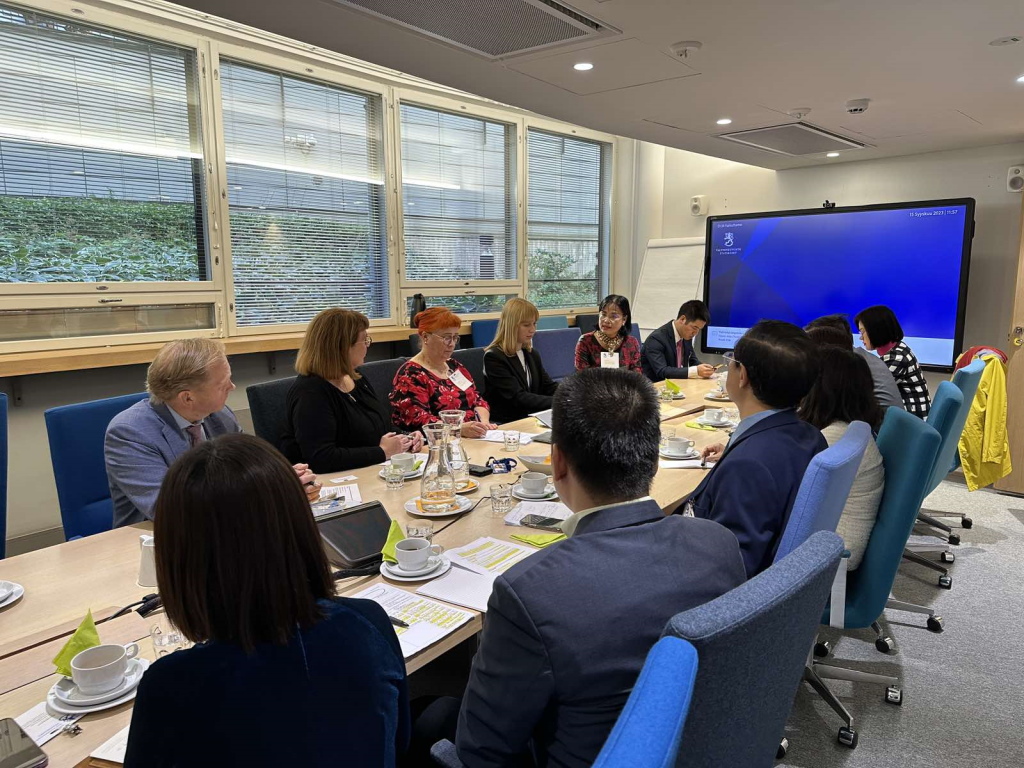
This was the first time leaders of the two Ministries worked and exchanged experiences on the topic of building, issuing, and monitoring the implementation of policies and management mechanisms for teaching Vietnamese and foreign languages in Viet Nam and Finland. Through these exchanges, the meeting aimed to create opportunities for teachers, volunteers, and Ministry leaders of both countries to connect and promote policies for developing the Vietnamese language in Finland. At the meeting, the two delegations exchanged views frankly on the advantages, difficulties, and solutions of each country, while also identifying priorities in Vietnamese language development policies.
In addition, the delegation attended many other activities such as working with the Association of Overseas Vietnamese; the Association of Vietnamese Students and Youth in Finland; the Finland-Viet Nam Friendship Association and a number of local educational institutions; working with The Helsinki Normal Lyceum - a pedagogical practice school affiliated with the University of Helsinki; and working with the City of Espoo - where there are Vietnamese language classes organized by the city. During the working sessions, the two sides discussed strengthening cooperation in Vietnamese language research and teaching between the University of Social Sciences and Humanities, Viet Nam National University Ho Chi Minh City, and The Helsinki Normal Lyceum and the BiziVietnam organization on supporting training in methods, programs, and Vietnamese language teaching materials between Vietnamese educational institutions and those in Finland; and exchanging Vietnamese/foreign language lecturers between educational institutions of the two countries.
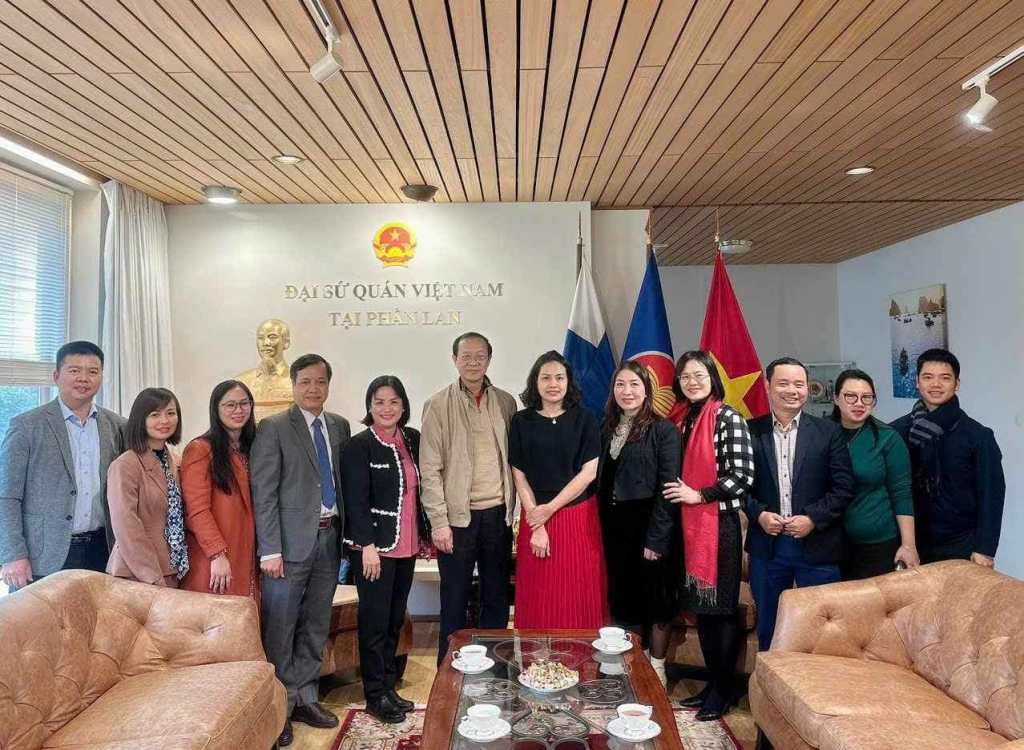
There are 58 mother tongues in Finland, with more than 23,000 students. Last school year, 404 students registered to study Vietnamese. Currently, there are 12 educational institutions across Finland that teach Vietnamese. Since 1995, the Finnish Government has upgraded teacher training for language teachers to have a Master's degree and spends budget on in-service training for teachers currently teaching. Regarding common difficulties in teaching Vietnamese, Finland is similar to Sweden in that it lacks textbooks; educational institutions; facilities, materials, and resources for learning, practicing, and communicating in Vietnamese for students and teachers; and the number of students registering for Vietnamese language classes is low and scattered, causing difficulties for teaching.

The working trip to Sweden and Finland of the working group from the University of Social Sciences and Humanities, Viet Nam National University Ho Chi Minh City, together with the delegation of the Ministry of Education and Training of Viet Nam, has opened up prospects for cooperation and development for the University of Social Sciences and Humanities, Viet Nam National University Ho Chi Minh City in general and the Faculty of Vietnamese Studies, University of Social Sciences and Humanities, Viet Nam National University Ho Chi Minh City in particular, in the following areas:
1. Promoting cooperation with the Swedish Ministry of Education and Research, the Finnish Ministry of Education and Culture, educational organizations, and higher education institutions in teaching and learning Vietnamese, such as: developing training and teacher professional development programs; cooperating to help consulting experts provide support; sharing experiences on teaching and learning Vietnamese; and sending volunteers to teach Vietnamese (for Sweden and Finland), English, Swedish, and Finnish (for Viet Nam). Enhancing cooperation and coordination in building teacher training programs, and sharing experiences and teacher evaluation standards from Finland. Regarding teacher training, Finland is among the top in the world in terms of standards and training/development programs.
2. Expanding bilateral cooperation programs between schools, educational institutions, enterprises, and research institutes of both sides, especially promoting the development of enterprise-school relationship models in the training process.
3. Calling for investment from organizations and individuals in Sweden and Finland into Viet Nam in the field of education and training, especially in the field of training and teaching related to Vietnamese language and Vietnamese studies.
4. Enhancing the exchange of teaching and research staff and students between educational and training institutions of the two countries.
5. Developing Vietnamese language teaching programs, training courses on Vietnamese teaching methods, and online Vietnamese classes from Viet Nam to provide flexible, suitable, and convenient training courses for educational institutions in Sweden and Finland.
6. Coordinating the development of specialized textbooks for teaching Vietnamese suitable for the specific characteristics of each locality in Sweden and Finland, while maintaining the Vietnamese cultural, ethnic, and linguistic identity.
7. Expanding cooperation to organize examinations and issue Vietnamese Language Proficiency Certificates for individuals in need in Sweden and Finland.
8. Building and connecting cultural, linguistic, academic, and scientific research exchange programs between Viet Nam and the two countries, Sweden and Finland.
9. Supporting Vietnamese communities in Sweden and Finland to preserve, promote, and spread the image, culture, ethnicity, language of Viet Nam, and Vietnamese studies not only to the children of the Vietnamese diaspora but also to the native people in Sweden and Finland./.
Bài viết liên quan