DIALOGUE WITH THE WRITER PETER SIMON ALTMANN ON HIS WORK “DAS ANDERE”: A JOURNEY TO FIND “THE OTHER” BETWEEN REAL LIFE AND THE WRITTEN PAGE
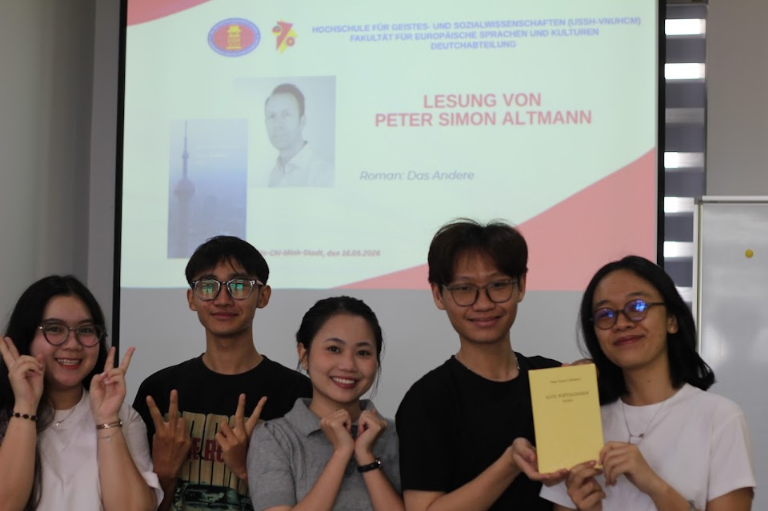
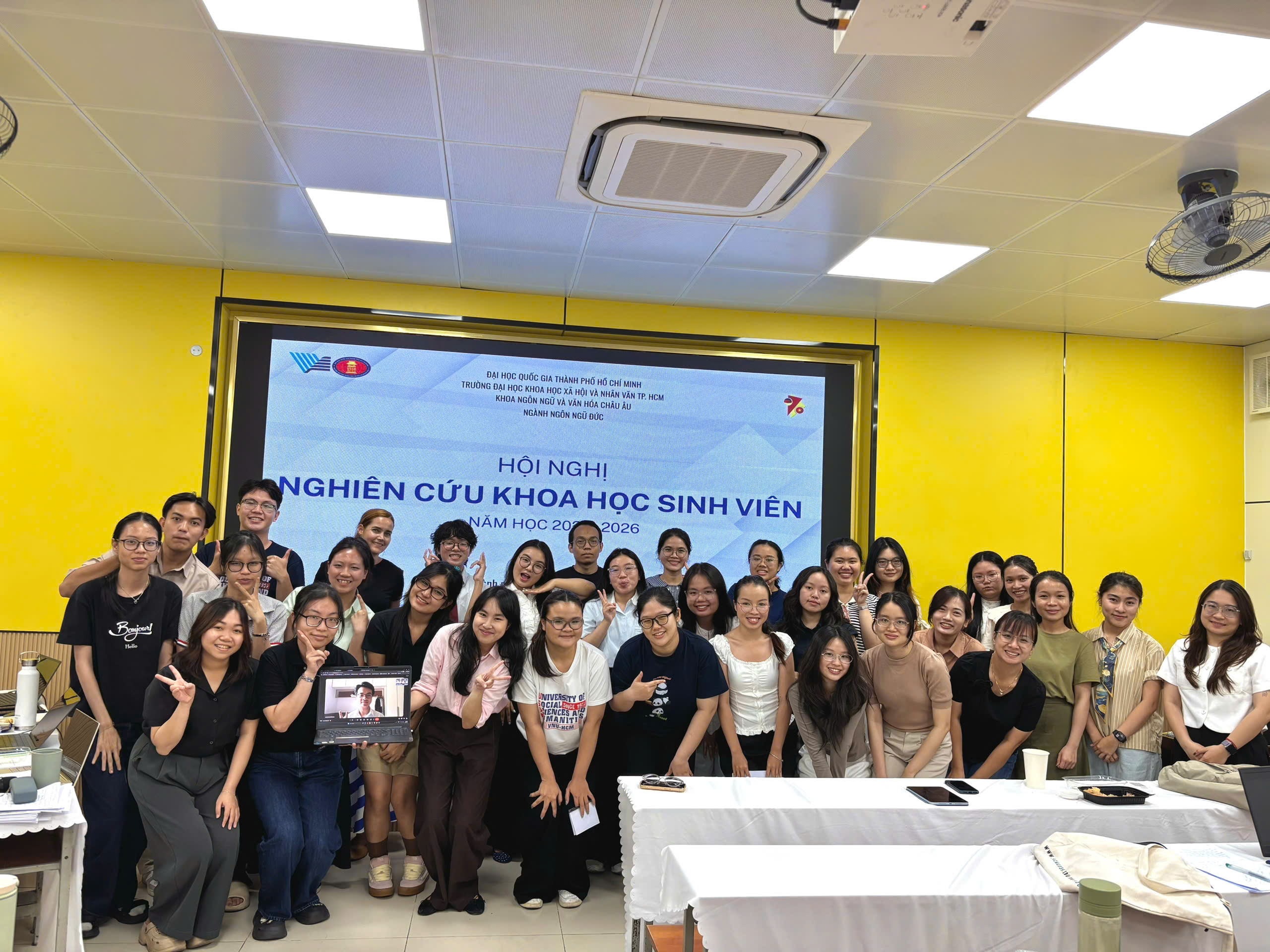
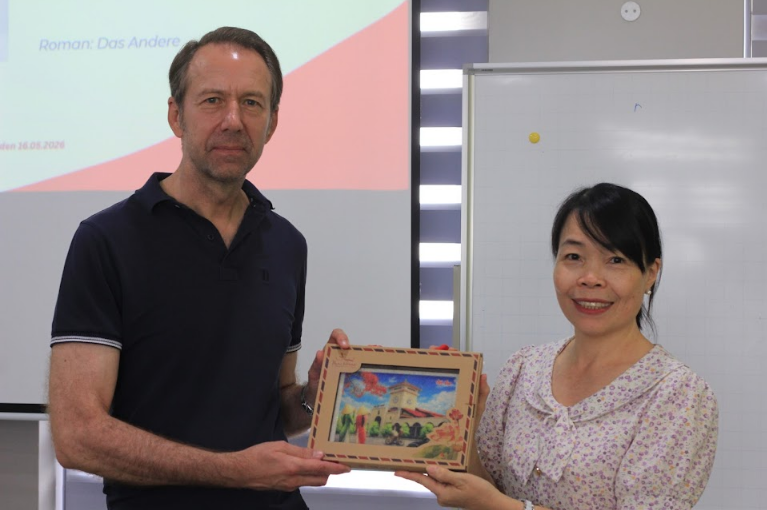
On May 16, 2026, the Saigon campus of the University of Social Sciences and Humanities (USSH) became a space for a philosophical and contemplative meeting between lecturers, students of the German Linguistics Department, and the Austrian writer Peter Simon Altmann on the occasion of presenting his work “Das Andere” (The Other). For over two hours, the writer opened the door into his unique worldview: a place where language, travel, and life’s silent moments intertwine, becoming the threads with which he weaves the literary works of his life.
Language and New Cultural Dimensions
Opening the exchange, Peter Simon Altmann made a strong impression by sharing that he can use 4 to 5 languages. For him, learning a new language is not purely acquiring a tool of communication, but opening up a new culture. The author is particularly drawn to Korean and Japanese—languages that lie completely outside his Western cultural comfort zone. He noted that learning languages helps the mind develop more flexibly, which is especially necessary for a writer who always needs agility in verbal thinking. More interestingly, he realized that languages such as Vietnamese, Korean, and Japanese all inherit and intersect with Chinese characters. Currently, the writer is still harboring plans to learn French. The connection with French and the influence of French culture in Vietnam were also among the reasons he chose to venture here and organize a book reading.
Decoding “Das Andere”: When Expatriate Philosophy Reflects on Literature
When asked about the title of the work, Peter Simon Altmann shared deep linguistic insights. He chose “Das Andere” instead of “Das Fremde” (The Foreign/The Strange) because he believes “Das Andere” carries a philosophical beauty unique to the German language, which accidentally loses its nuance when translated into English as "The Other".
The writer’s philosophical perspective was also clearly shown when he compared two cultural symbols: while in Europe, the sun is a symbol of consciousness, in Asia, the moon embodies contemplation. At the same time, by invoking the thoughts of philosopher Emmanuel Levinas on the philosophy of altruism and the ontology of "The Other", it was precisely the reading and combination of expatriate experiences that helped him enrich the layers of meaning for the work.
The Shanghai Experience and the Core of the Story
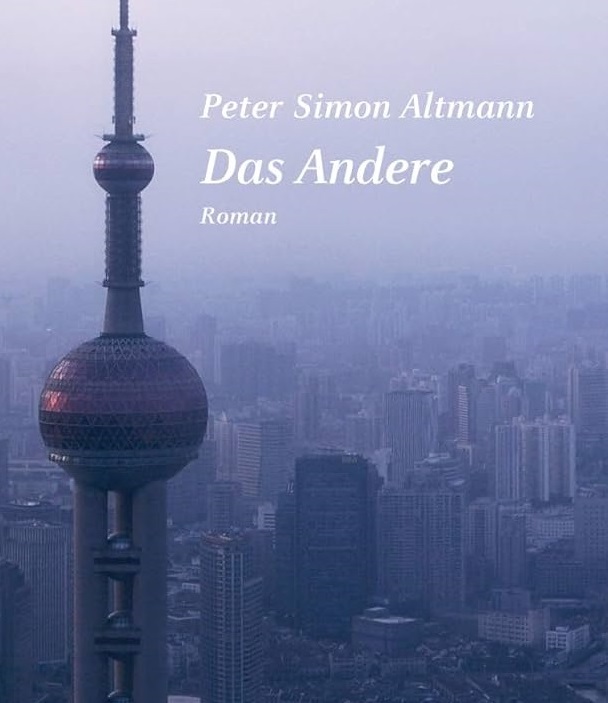
At the exchange, the writer read a special excerpt about the main character, Jakob. It is the story of a man who wants to change his destiny, turning his gaze toward China to find "The Other". Jakob was originally a wealthy businessman, but he did not want his life to be forever framed and halted by dry numbers; therefore, he chose Shanghai as the destination for his journey. The appearance of the Shanghai Tower on the book cover is not merely a geographical landscape, but a haunting artistic indicator of the character's journey to find the meaning of life.
Revealing how he named the character, Altmann said the name Jakob Waltz was inspired by his own relatives and ancestors. In the author's family history, his real-life uncle Jakob once left his family for America to prospect for gold. But in the work, the character Jakob's journey far away is not a material gold rush, but a spiritual quest. The detail that Jakob wants to sell the memorial house was built from the character's own thoughts: he believes the house is the final thread connecting him to his old life, and if he wants to move forward, he must let go.
The Point of Convergence Between Author and Character
Peter Simon Altmann admitted that there are passages where the character reflects on life, especially while sitting and watching nature, which are deeply imbued with Taoist thinking (the relationship between humans and nature). In the middle of the work, there is a segment where Jakob is all alone in a garden: he hesitates whether to return to Austria to inherit and keep the hotel as the family's last legacy, or to sell it because he does not live there himself. The author wittily shared that this detail was inspired by the context of his own life.
The writer conveys messages of letting go and freedom through contemplative sayings: "Du musst das không können können" (You don't always have to be able to be able to do everything) or the philosophy of anonymity "Man soll nicht jemand sein, man soll niemand sein" (One should not be someone, one should be no one), recalling the biography of the Buddha—who also came from a wealthy family but gave up everything to seek the Great Way (Taoism).
5 Years of Gestation and Future Projects
To complete “Das Andere”, Altmann took about 5 years. He nurtured the first pages in 2017 during a 3-month writers' residency in Shanghai. For him, each work is a distinct artistic structure rather than a fixed formula.
Discussing his creative impulse, Peter Simon Altmann emotionally recalled encounters with his colleagues over everyday cups of coffee. It was the story of a writer who, despite severe illness and a broken marriage, still chose to venture to Eastern European lands to care for and cook for 3,000 disabled children in Romania. What they did was completely selfless, driven only by a pure love for life. For Altmann, that was the greatest and most authentic source of inspiration, the thing that salvages and shapes the humanistic values in his works.
Currently, during his 2-week business trip across Vietnam, Peter Simon Altmann expressed a special fondness for Ho Chi Minh City and hopes to return here soon. He also revealed that he is embarking on 3 new projects, including a work named in Latin as Vademecum (German: Geh mit mir! - Go with me!)—this work will again be about the author's own life stories and reflections.