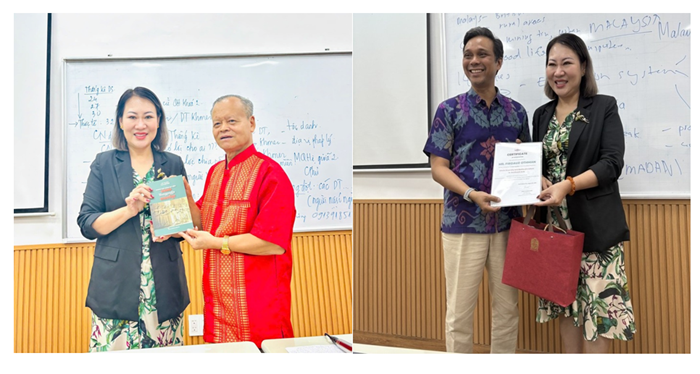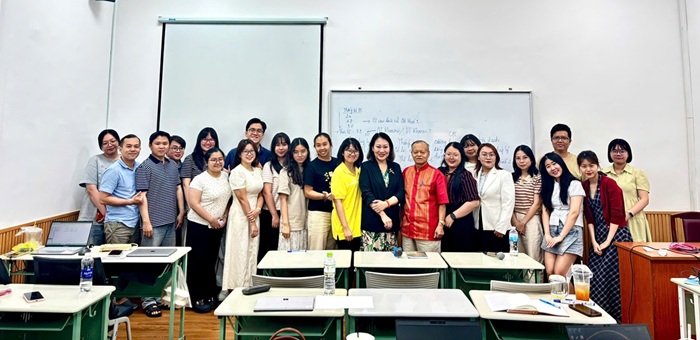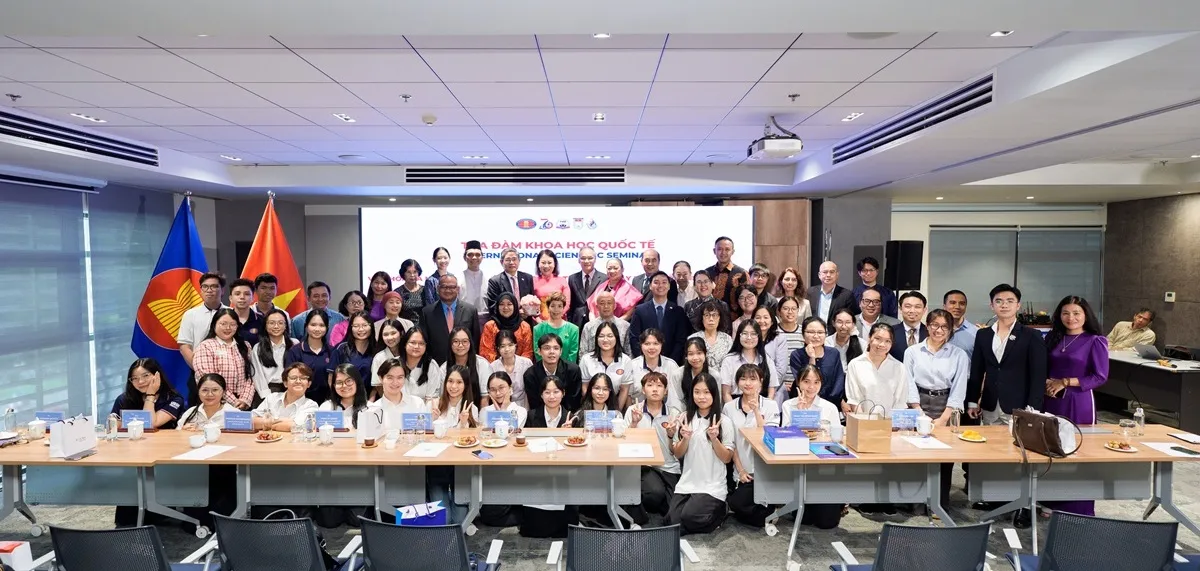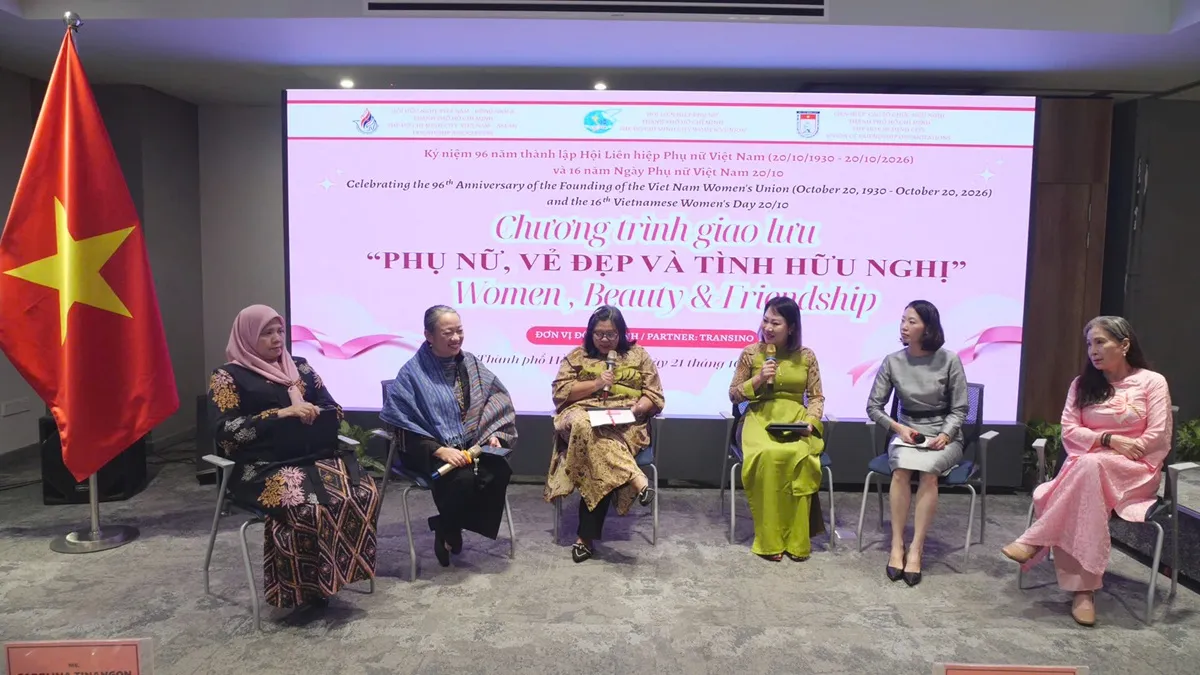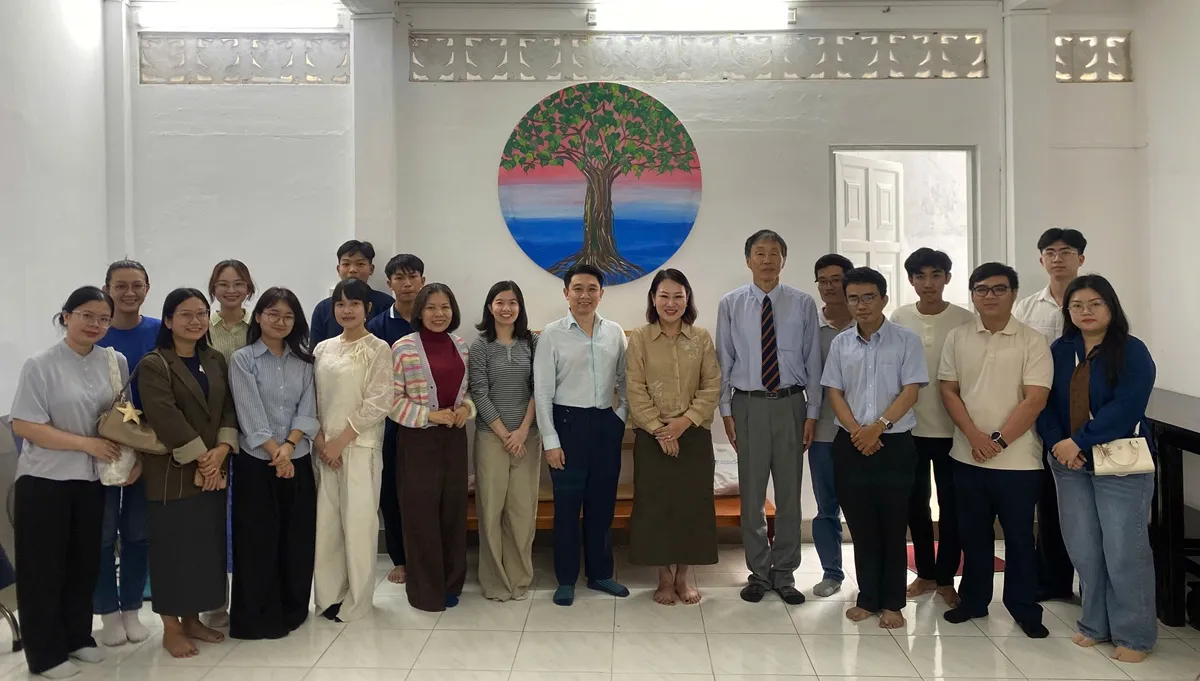
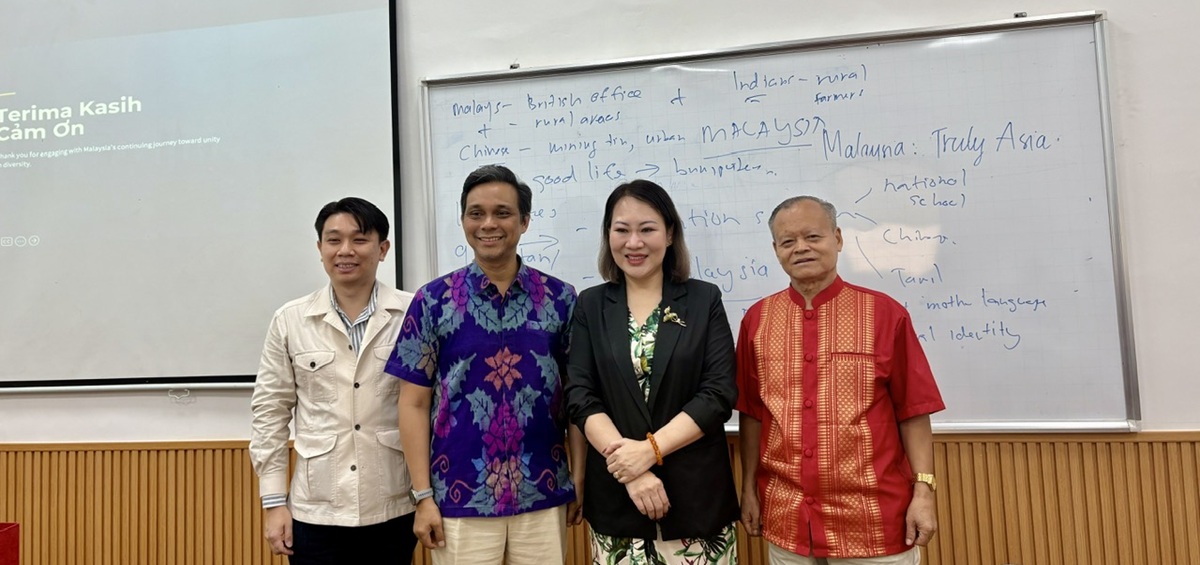
On the morning of August 22, 2026, the Faculty of Oriental Studies, University of Social Sciences and Humanities, Viet Nam National University Ho Chi Minh City organized an academic exchange program for Asian Studies graduate students, featuring presentations by Mr. Firdauz Othman, Consul General of Malaysia in Ho Chi Minh City, and Colonel Tran Van Thong, former Political Counselor of the Embassy of Vietnam in Cambodia.
The program is an academic support activity that helps students broaden their understanding of culture, society, ethnicity, and diversity management in Southeast Asia through practical perspectives and experiences.
In his presentation on Malaysia, Consul General Firdauz Othman introduced the characteristics of a multi-ethnic, multi-religious, and multicultural society, while also discussing the experience of building social cohesion and balancing communal identity with national identity. The stories and experiences shared helped students better understand the socio-cultural life of Malaysia as well as how different communities coexist in a diverse society.
Using the case of Malaysia, students gained further grounds to discuss concepts such as multiculturalism, social integration, cultural assimilation, diversity management, and nation-building in the context of globalization.
Continuing the program, Colonel Tran Van Thong presented on ethnic groups and several socio-cultural characteristics in Cambodia. In addition to the majority Khmer community, Cambodia is home to many different ethnic communities with distinct characteristics in terms of history, language, culture, habitats, and livelihoods.
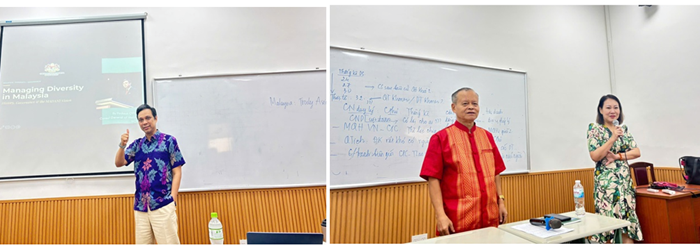
Through a system of documentation and practical case studies, the speaker helped students gain a better understanding of the ethnic diversity of Cambodia, the process of forming and maintaining community identity, and the adaptation of resident groups under different social conditions.
The discussion also opened up several academic issues regarding ethnic identity, nationality, migration, social integration, and the preservation of cultural identity. These contents were placed in specific historical and social contexts, thereby helping students clearly identify the diversity in the relationships between individuals, communities, and the nation, while distinguishing the concepts of integration, adaptation, cultural exchange, and cultural change.
Another topic addressed by Colonel Tran Van Thong was the life of the ethnic Vietnamese community in Cambodia. From the materials introduced, students had the opportunity to learn more about the settlement process, social adaptation, cultural life, and changes within this community in the context of contemporary Cambodia. Thereby, the session expanded the discussion to issues of migration, minority communities, and the relationship between cultural identity and the social environment of their residence.
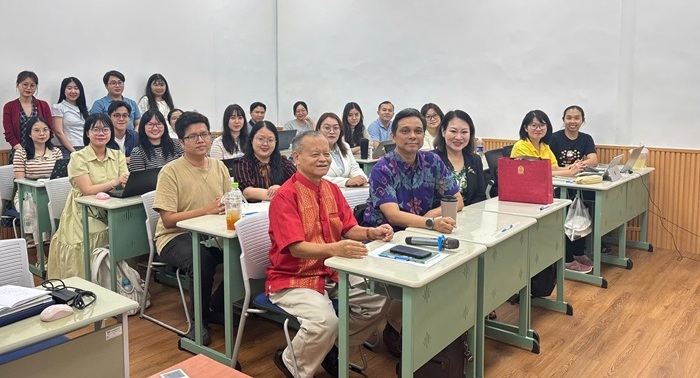
The program created a vibrant and highly practical space for academic exchange. While the presentation on Malaysia helped students observe the experience of a multicultural society in building cohesion among communities, the presentation on Cambodia contributed to expanding understanding of ethnic diversity, adaptation processes, and the preservation of cultural identity.
Through the two cases of Malaysia and Cambodia, Asian Studies graduate students gained further materials and comparative perspectives to approach issues of cultural diversity, ethnic relations, and coexistence among communities in Southeast Asia, thereby bridging theoretical knowledge with practical regional issues.