EXPANDING VIETNAM – CHINA EDUCATIONAL AND RESEARCH COOPERATION CHANNELS: CONNECTING THROUGH SOCIAL SCIENCES AND HUMANITIES
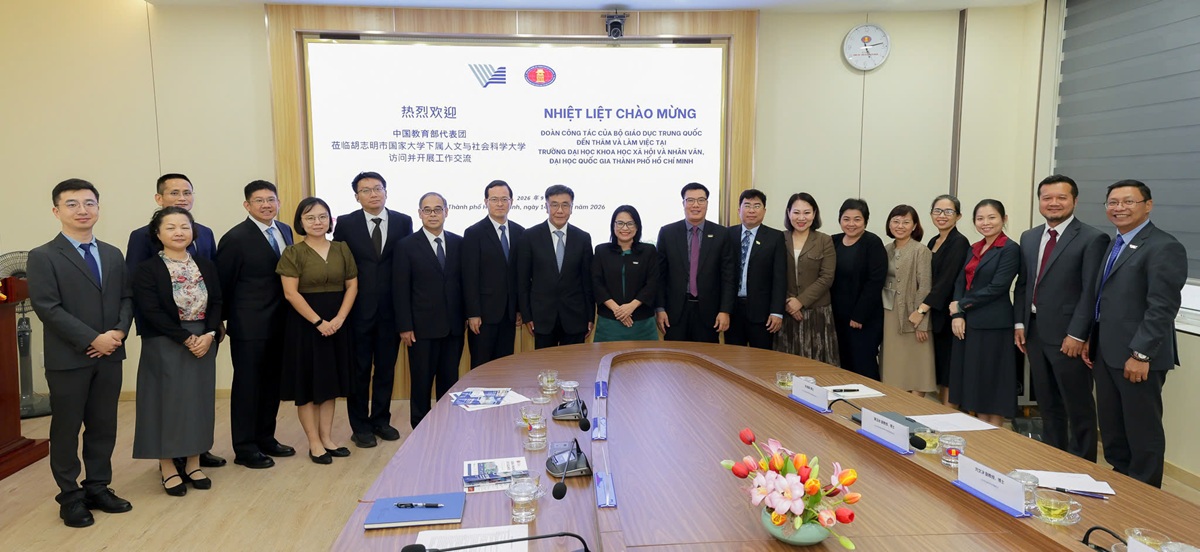
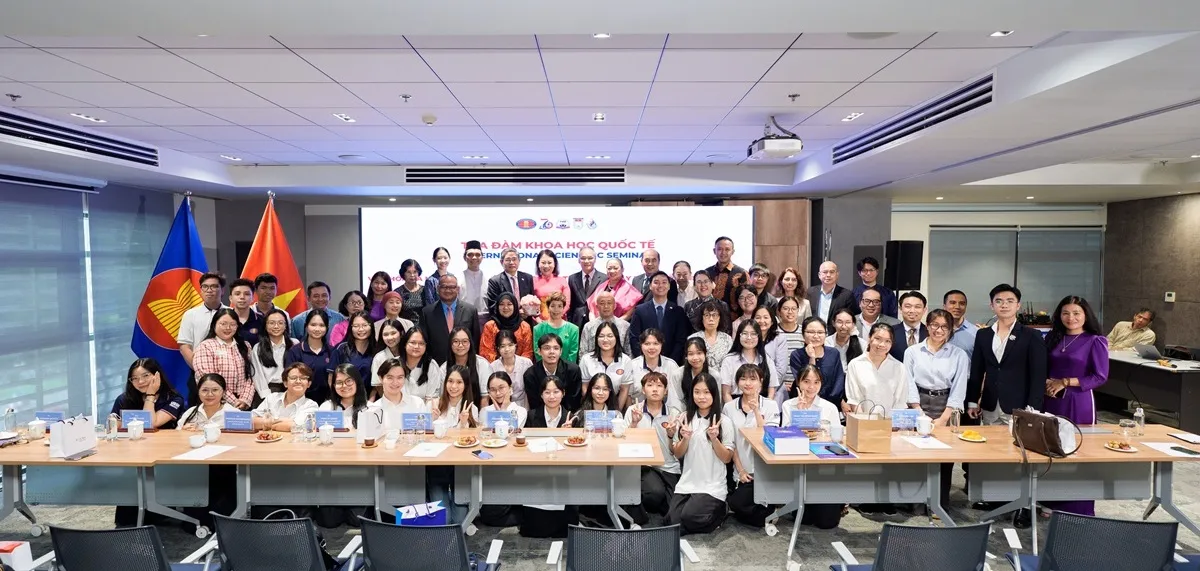
On the afternoon of September 14, 2026, at the Linh Xuan campus, the University of Social Sciences and Humanities, Viet Nam National University Ho Chi Minh City held a working session with the delegation from the Ministry of Education of China to exchange experiences in training, education, and international cooperation, while opening up new possibilities for cooperation in education and research between the two countries.
Attending the program, on the side of the Ministry of Education of China, there was Mr. Wang Chengwen, Member of the Party Committee of the Ministry of Education of China, Director of the Discipline Inspection and Supervision Group of the Central Commission for Discipline Inspection and the National Supervisory Commission at the Ministry of Education; on the side of the Chinese Embassy in Vietnam, there was Mr. Luo Yao-guang, Counselor of the Chinese Embassy in Vietnam; on the side of the Chinese Consulate General in Ho Chi Minh City, there was Mr. Xu Zhou, Deputy Consul General, along with members of the delegation.
On the side of Viet Nam National University Ho Chi Minh City and the University of Social Sciences and Humanities, Viet Nam National University Ho Chi Minh City, there were Dr. Nguyen Thai Binh Long, Deputy Director of the External Relations and Project Development Department of Viet Nam National University Ho Chi Minh City; Prof. Dr. Ngo Thi Phuong Lan, Member of the Standing Committee of the Party Committee of Viet Nam National University Ho Chi Minh City, President of the University; Assoc. Prof. Dr. Luu Van Quyet, Vice President; Assoc. Prof. Dr. Phan Thi Hong Xuan, Dean of the Faculty of Oriental Studies; Dr. Hoang Thi Thu Thuy, Head of the Chinese Studies Section, Faculty of Oriental Studies, along with representatives of departments, faculties, and professional units of the University.
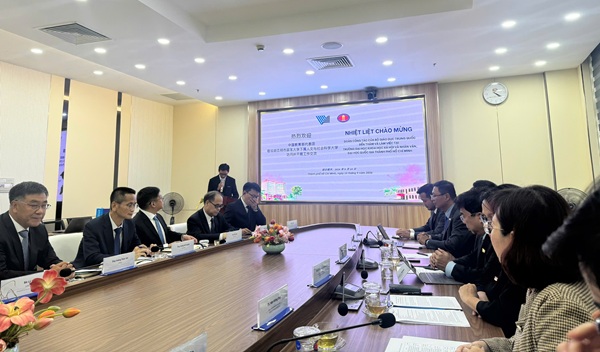
Creating a channel for Vietnam – China educational and research cooperation
One of the contents of interest at the working session was the strengthening of connection and information exchange channels regarding educational, training, and research cooperation between the two countries. Based on the practical cooperation between higher education institutions, the parties can gradually form regular information exchange hubs, thereby helping universities, researchers, and learners to better access cooperation programs, academic opportunities, scholarships, exchanges, joint research, and cultural exchange activities.
According to the orientation of exchange and cooperation, activities should not only stop at individual exchange events but should aim to build a sustainable connection mechanism, in which higher education institutions can act as a bridge between management agencies, universities, researchers, and the young generation of the two countries.
This is also a suitable direction consistent with the strengths of the University of Social Sciences and Humanities – a multi-disciplinary training and research institution in the field of social sciences and humanities, which also possesses a wide international cooperation network with partners in the region and around the world.
Affirming the position of social sciences and humanities in social development
A notable content of the exchange was the role of social sciences and humanities in a social context that is undergoing rapid changes under the impact of technology, economy, and the process of international integration.
If natural sciences and technology contribute to creating new tools and solutions, social sciences and humanities help society understand more deeply about people, culture, history, social relations, and changes in community life. Therefore, the development of social sciences and humanities education and research has not only academic significance but also contributes to creating a knowledge foundation for policy planning, enhancing mutual understanding between nations, and promoting international cooperation.
In Vietnam – China relations, this significance is even more prominent. The two countries have a long history of exchange and are increasingly deeply connected in terms of economy, education, culture, and people. Therefore, strengthening research on the society, culture, history, and relations of the two countries can contribute to building a deep and long-term foundation of understanding for bilateral cooperation.
Connecting the young generation through education and academic exchange
From the perspective of higher education, expanding cooperation also places the learner in the center. The formed information and cooperation channels will create more opportunities for students of the two countries to participate in academic exchanges, research, cultural exchanges, and develop international integration capabilities.
This is also one of the ways for humanistic exchange to become a bridge between the young generation of Vietnam and China, thereby contributing to building understanding, trust, and long-term cooperation between the two nations.
Youthful imprint in the working program
Contributing to creating a professional and open atmosphere for the program, the hosting was performed by student Pham Nguyen Quang Tuan, majoring in Chinese Studies, Faculty of Oriental Studies, University of Social Sciences and Humanities. With his ability to use Chinese and MC skills, Quang Tuan directly connected the contents of the working session, contributing to demonstrating the image of a generation of students in social sciences and humanities who are confident, dynamic, and ready to participate in international exchange and cooperation activities.
The presence and direct participation of students in a university-level foreign affairs activity also show that higher education does not only equip students with professional knowledge but also creates an environment for learners to practice foreign languages, intercultural communication skills, and the courage to integrate.
The working session between the Ministry of Education of China, Viet Nam National University Ho Chi Minh City, and the University of Social Sciences and Humanities opened up further exchanges on cooperation possibilities in training, education, and research in social sciences and humanities. This is also an opportunity for the University to continue promoting its role as an academic connector, fostering humanistic exchange, and contributing to Vietnam – China educational cooperation relations in the new phase.