Graduate students had an academic exchange with Assoc. Prof. Dr. Mohd Shahril Ahmad Razimi, a scholar from Brunei Darussalam, on the topic "Islamic worldview in Asia."

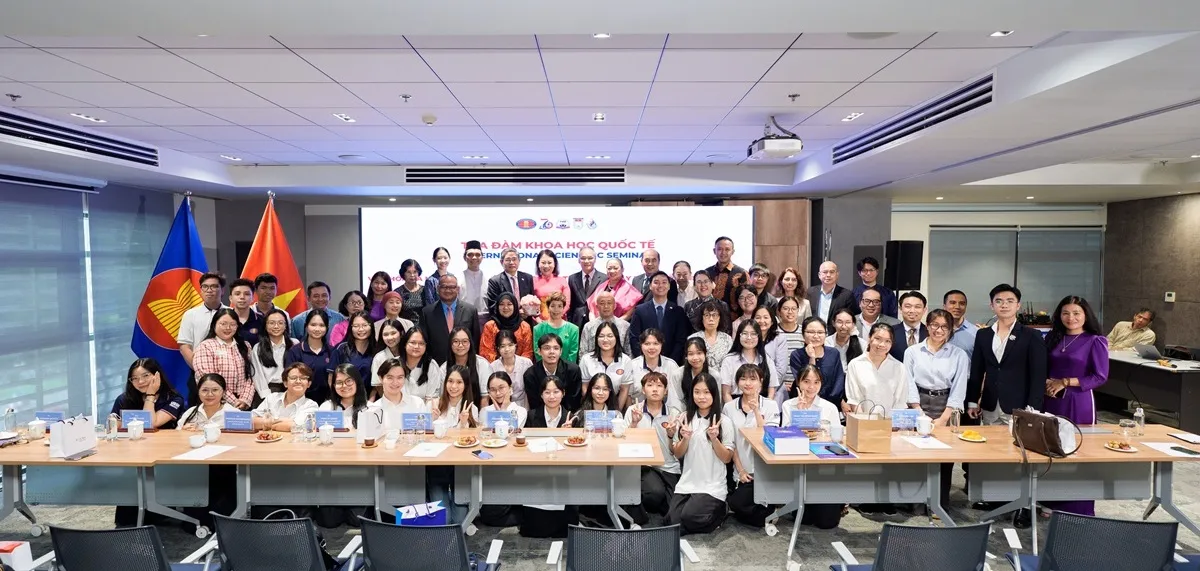
On the morning of October 4, 2026, on an online platform, graduate students of the Faculty of Oriental Studies, University of Social Sciences and Humanities, Viet Nam National University Ho Chi Minh City had an academic exchange with Assoc. Prof. Dr. Mohd Shahril Ahmad Razimi, a scholar from Brunei Darussalam, on the topic "Islamic worldview in Asia".
The seminar was organized within the framework of the module "Religion and beliefs in Asia", with the desire to expand the classroom space through online connection with scholars in the region, bringing academic perspectives and practical experiences from Asian countries closer to graduate students.
Assoc. Prof. Dr. Mohd Shahril Ahmad Razimi is an Associate Professor, Dean of the Faculty of Education and Social Sciences at Religious Teachers University College of Seri Begawan (KUPUSB), Brunei Darussalam, and formerly served as the Director of Postgraduate Studies. With expertise in Islamic governance, Syariah law, educational administration, and quality management, the speaker brings an approach to Islam that is both academically profound and linked to practical social life.
The highlight of the seminar is the approach to Islam as a worldview, rather than just viewing religion through doctrines and rituals. Through the speaker's presentation, students were opened up to the connection between faith and how people perceive themselves, their families, their communities, morality, social responsibility, and the world around them.
Set in the Asian context, especially Southeast Asia, Islam is viewed in interaction with the history, culture, and social characteristics of each country. Sharing practical experiences from Brunei Darussalam and Malaysia helped students better understand that religious research is not just about exploring a belief system, but must also place religion in the life of the community and specific socio-cultural contexts.
The online space did not reduce the interactivity of the session. Students directly exchanged with the speaker on issues related to Islam in contemporary society, the relationship between religion and culture, as well as the adaptation of religious values to the changes of modern life. Thereby, the class became a space for academic dialogue that transcends the geographical distance between Viet Nam and Brunei Darussalam.
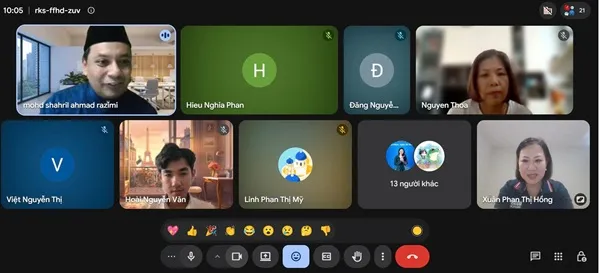
Concluding the session, Assoc. Prof. Dr. Phan Thi Hong Xuan – Dean of the Faculty of Oriental Studies, in charge of the module, emphasized the significance of creating conditions for students to "learn about Asia from Asian scholars themselves". Such online connected classes not only expand knowledge sources but also help students practice intercultural dialogue skills, comparative thinking, and respect for religious-cultural diversity.
The seminar closed in an open atmosphere of exchange, while also opening up many issues for students to continue reflecting and researching. This is also one of the orientations of the Faculty of Oriental Studies in postgraduate training: expanding academic space through technology, connecting Viet Nam with the region, and gradually bringing ASEAN into the classroom through the very voices, knowledge, and experiences of ASEAN scholars.