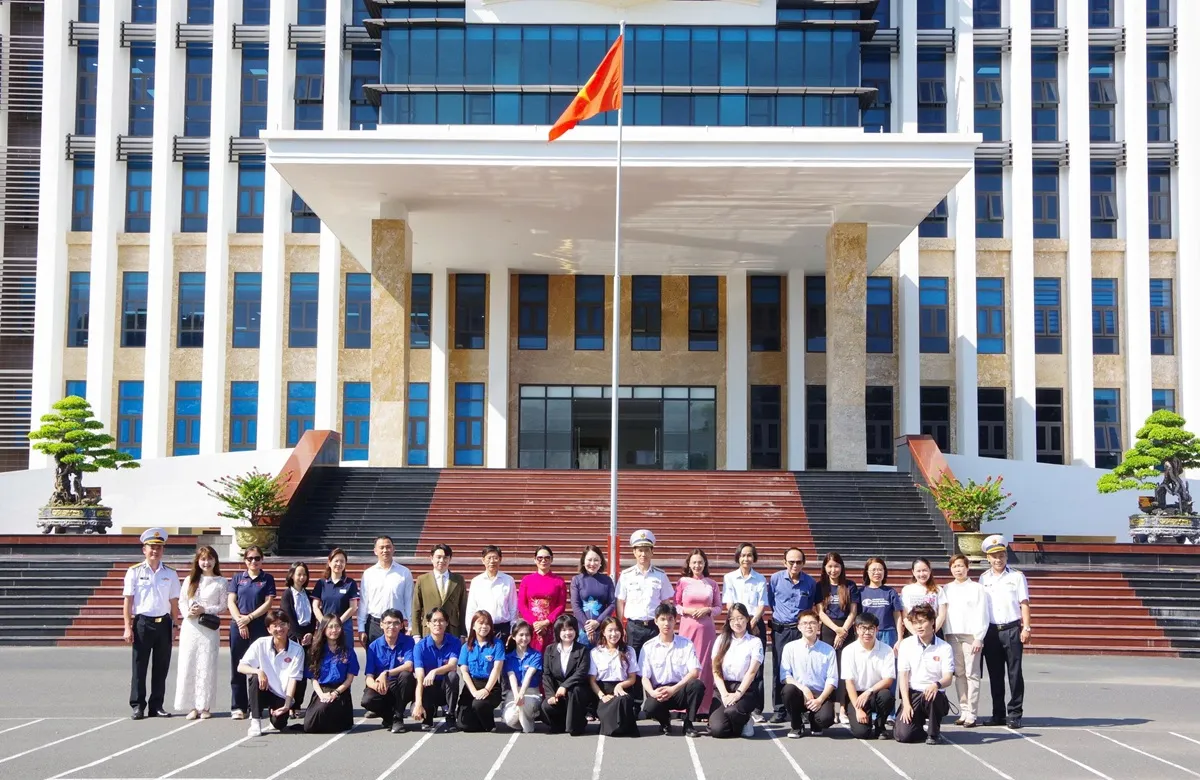
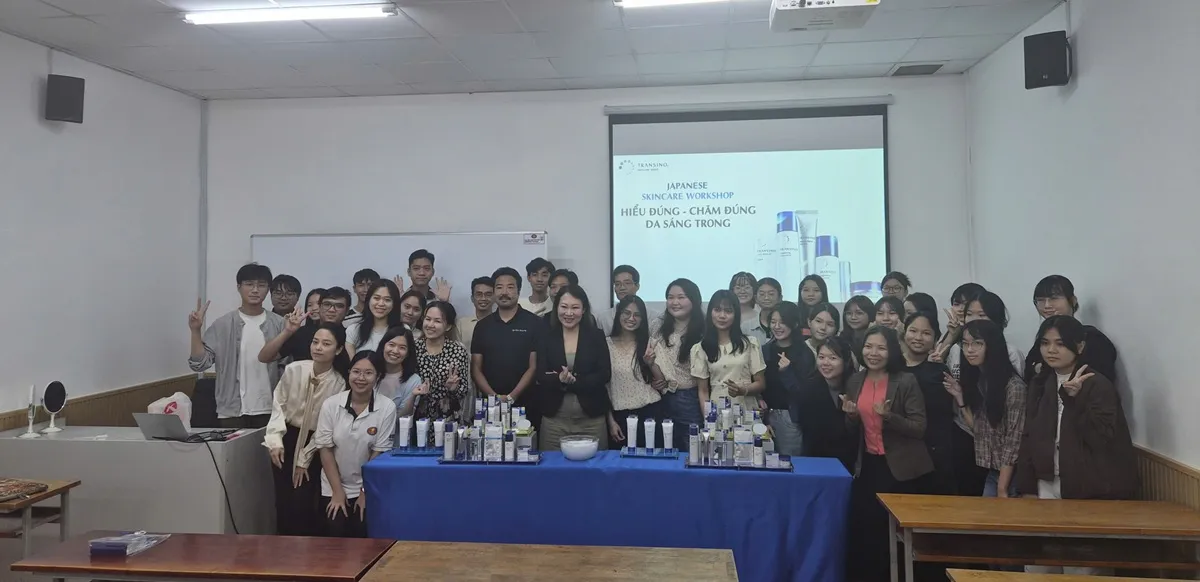
On the morning of October 10, 2026, the Faculty of Oriental Studies, University of Social Sciences and Humanities, Viet Nam National University Ho Chi Minh City, in collaboration with the Japanese cosmetics company Transino, organized a thematic talk titled “Japanese Skincare Workshop.” The program offered students and postgraduate students the opportunity to learn about Japanese beauty culture, access scientific skincare knowledge, and explore career prospects in the cosmetics and beauty care industry.
The activity is part of a series of cultural exchange, business connection, and career orientation programs for learners, contributing to strengthening the bond between the university and enterprises, while creating conditions for students and postgraduate students to access Japanese cultural values through practical experiences.
At the program, a representative from the Transino brand, under the Daiichi Sankyo Healthcare Group (Japan), introduced the distinct features of Japanese aesthetic concepts and beauty care culture. The shared content helped participants better understand the relationship between beauty, skin health, and personal care habits, as well as the combination of traditional values and modern scientific achievements in the field of skincare in Japan.
Beyond the cultural perspective, experts also provided practical knowledge about skin characteristics, factors affecting skin health, causes of hyperpigmentation, and basic principles of skincare and protection. Thereby, students and postgraduate students were encouraged to build appropriate, scientific, and responsible personal care habits.
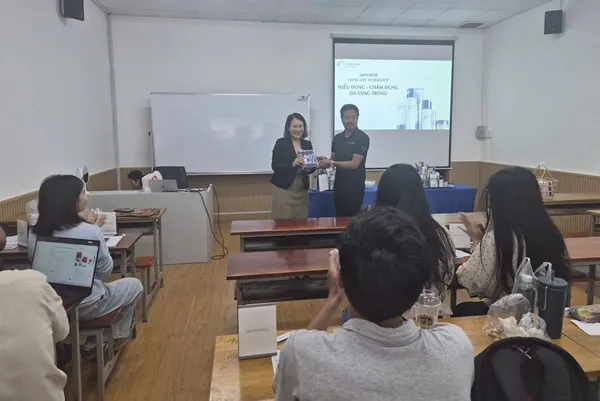
A highlight of the program was the hands-on experience of skincare products under the guidance of company representatives. This activity not only helped learners acquire knowledge through practice but also created opportunities to learn about consultation processes, product introduction, and professional communication in a Japanese business environment.
In particular, the program also opened up interesting perspectives on the relationship between culture, aesthetics, health, and business activities in contemporary Japanese society. For students and postgraduate students in the social sciences and humanities, this is an opportunity to approach an interdisciplinary field where cultural knowledge, foreign language proficiency, intercultural communication skills, and market understanding can be applied in practical professional activities.
Through sharing from the business representative, participants also gained more information about the potential of applying Japanese language and cultural knowledge in fields such as cosmetics, cosmeceuticals, communication, marketing, customer consulting, and international business cooperation. These contents contribute to broadening awareness of the diversity of career opportunities in the context of international integration.
In the Q&A session, students and postgraduate students had the opportunity to exchange directly with speakers about skincare methods, Japanese beauty culture, as well as requirements for knowledge, skills, and professional attitude when working in the beauty care industry. Sharing from business practice contributes to connecting knowledge equipped at the lecture hall with the needs of the labor market.
The thematic talk took place in a friendly and open atmosphere, creating a space for exchange, sharing knowledge, and practical experience between learners, lecturers, and business representatives.
Through this activity, the Faculty of Oriental Studies continues to affirm its orientation of linking training with practice, strengthening cooperation with enterprises, and diversifying learning and experience forms for students and postgraduate students. The program not only contributes to expanding understanding of contemporary Japanese culture but also encourages learners to develop interdisciplinary thinking, foreign language ability, intercultural communication skills, and the ability to apply knowledge to professional practice.
This is also one of the practical activities contributing to promoting Vietnam – Japan cultural exchange, while expanding the connection space between the university, enterprises, and learners in the context of higher education internationalization.
Bài viết liên quan