In an era characterized by strong transformations, intersections, and globalization, cultural institutions face challenges in maintaining traditional forms and accepting new ones. . Communities exhibit intense competition, but do not exclude the possibility of social and cultural interdependence to survive and prove their particularities. Individuals tend to become global citizens but are unwilling (or unable to) to erase their original image. Recently in an article published in the magazine "Life of Thought" (La Vie des Idées), Michael Foessël expressed doubts about a reality: "Becoming a global citizen: a horizon or an abyss in behavior" Currently. This is not a new way of posing the problem. In the social sciences and humanities since the 1980s, much has been said about the concepts of individual identity and community identity. Is this a consequence of these conflicting phenomena in societies entering the postmodern period, where individual identity is recognized in transformation and in internal and external contradictions? The question of identity cannot be separated from the cultural sphere, one of the components of individual and national identity. In this idea, we consider the specific case of writer Pham Van Ky as the object of Vietnamese-French cultural interference and acculturation, as well as a symbol of a phenomenon of crisis and identity conflict.
About the concept of identity
Identity is one of the totem concepts. Issues of identity have attracted the attention of many researchers in different fields. Pierre Luigi Dubied, in his work Apprendre Dieu, has commented on identity as follows:
“First, identity has only recently blossomed as a pivotal topic in the social sciences and in literature. The concept of identity presents a way of questioning that is certainly pervasive, especially in romanticism, and evokes the conditions of life in industrial society: an age in which the individual is gradually lost the familiar identity acquired through its stable and homogenous social groups” (1992, p. 123).
Not until the era of industrial societies, but for a long time people have questioned their own identity, nature, origin and even destiny in order to understand who they really are. In contemporary society, these questions arise even more intensely. So the concept of identity was really pervasive. But what is identity? We can use the definition of professor, sociologist Alex Mucchielli. According to him,
“Identity is a set of criteria, definitions of a subject and an inner sense. This sense of identity is made up of different sensibilities: a sense of oneness, consistency, dependence, dignity, independence and trust, all organized around a will to survive. The dimensions of identity are intimately linked: individuality (sense of being unique), communal (sense of belonging to a group) and cultural (sense of having a subculture).” [1] (1986, p. 5).
Consciousness of one's identity is a fundamental fact about our relationship with life and with the world. This consciousness is formed from a complex process of combining self-relationship with others, between individuals and society. That is why people often talk about individual identity and community identity. Theories of individual and community identity construction both aim to describe processes of internalizing the external norms of the individual, primarily through language as well as the conflicts resulting from that process. .
Identity-building processes vary with society and historical context. The modern individual human image manifests as a psychological being capable of being independent of the predestined model of man, a subject capable of differing based on his social position, a human being. desire for autonomy based on their position in the community. In this view, individual concerns begin to replace collective concerns. The sense of self-construction imposes on the concept of a society as a whole capable of determining the position and function of each individual. That is why individuals need strategies and transformations of identity. It is also from that, that the possibility of identity conflict arises between the inheritance and the expectation, between the original foundation and the dream to reach.
In any case, the concept of identity in contemporary human research suggests an ontologically nuanced question: "who am I?". Hannah Arendt, the German-Jewish philosopher, argues that answering this question correctly means entering the process of recounting the flow of her life (1958). It is in that narrative journey that we see the identity of "who" here is a narrative identity. In other words, narrative identity reveals a form of "who" in human identity. Narrative identity in the sense of Paul Ricoeur is formed from the ego (the self), from the ego (emergence) of the subject.
To be in a dual position: both a reader and an author of one's own life. Paul Ricoeur argues that the flow of a life is constantly reconstructed through true or fictional stories told by the subject himself[2]. Thus, narrative identity does not prove stable. It transforms and becomes the object of many different versions, sometimes complementary and sometimes opposing.
Narrative identity and writer
Narrative is one of the tactics of identity reconstruction. Storytelling is a form of structure that allows people to find meaning and escape frustration. On the magical side, it allows to restore a flow marked by pain or abuse, or moreover it allows to find mediators against adversities.
Thus is clear. Writing is to assert identity, find identity, or create an identity. For a long time in literature, the purpose of composition has often been associated with the idea of self-affirmation, a superior form of expression of an established identity (as in Romanticism). The writer ascribes to the text an ability to strengthen the ego in the written form, the most comprehensive realism of his being. The writer's personality is affirmed in his own work. From Baudelaire to Maurice Blanchot, they all follow this view of life when they think that human beings are the products of their own creation (l'homme est ce qu'il fait):
If you had to comment someone through his work, then that person is the artist. We call him the creator. The creator of a new reality, opening to the world a wider horizon, a possibility that is absolutely not closed [...] The creator of himself in what he creates.[3]
For Marcel Proust, writing is the preeminent means of overcoming the precarious anxiety of immediate experience, of capturing the profound authenticity of sensations, and of giving them an interrelated dimension to merge. integrating them into a culture and diffusing them in the form of an intersection in a metaphorical whole that allows the transmutation of random data of time and space. The writer through his work presents himself to himself and expresses to others the image of a transformed self, but in that transformed self the essential identity is formed.
As such, identity can be seen as a fundamental element in contemporary literature. It helps to answer the question why literary works were born?
Pham Van Ky: a conflicting identity
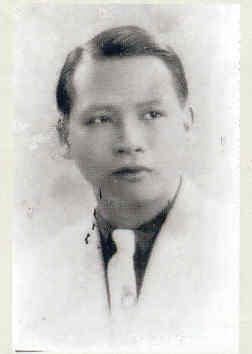
Writer Pham Van Ky was born on July 10, 1916, in Binh Dinh. Real life as well as biographical data and bibliography are probably enough to prove that Pham Van Ky was influenced by French culture from a young age. It is an overstatement to talk about French cultural influences on a person who comes from a French upbringing. However, it should also be emphasized in the special case of Pham Van Ky, when his French cultural capital has gone beyond the trivial observations of external manifestations to reach the peak of creativity and soul. core of the aesthetic and artistic point of view. In this regard, in 1978, in the magazine Présence Francophone, issue 16, Professor Thuong Vuong Riddick had a very interesting and profound study on the writer's talent "The tragedy of Westernization" through "through novels and novels". theory" by Pham Van Ky.
Moreover, before that, in 1954, in an interview with French literary critic André Bourin, and editor of the magazine Nouvelles littéraires, Pham Van Ky confirmed the influence of literary creation from the very beginning. The beginning of his career is as follows:
During my baccalaureate time in Hanoi, I discovered Lamartine with a very interesting flexible style one by one, then Verhaeren, Samain and Rostand. But it was only when I graduated from the baccalaureate that I really got to know Mallarmé and Valéry, my two great discoveries[4].
Pham Van Ky began his journey to experience new horizons in 1938, when he was granted a scholarship by the colonial government to study literature at the Sorbonne. In France, Pham Van Ky built his image as a true intellectual, admired especially among the intellectuals and in the French press. He collaborated with famous literary magazines such as Esprit by Emmanuel Mounier, Les Temps Modernes by Jean Paul Sartre, Cahiers du Sud by Jean Ballard, Preuves by François Bondy, etc. The press space has opened up for Pham Van Ky a "literary microcosm", in Bourdieu's terms, where the writer's mentality begins to be confirmed.
In Frères de sang, the first novel to appear in autobiographical form, Pham Van Ky reveals that his literary path is heavily influenced by French culture:
We begin the path of literary refinement on the Paris docks, among the old bookstores. O West, I have become a writer in your style. I distill from it a particular expression capable of deciphering my own problems in your own language: those of form explorations that convey melodies of the mind, connected with vocal meaning. me, with a new resonance, with relationships
true, your words-sensing powers! I aspire to return to your American roots. I am called the wanderer of the border (p. 57).
To demonstrate the process of cultural reception, exchange and transformation in Pham Van Ky, we take back the ideas and comments of Jean-Jacques Mayoux, a French critic, in his dialogue with Pham Van Ky. , published in issues 38 and 39 of Les Lettres nouvelles, 1956:
But, writer, in an extraordinary space, in a remote abyss, you have given rise to an imagination towards your distant homeland as in the case of James Joyce towards Dublin. Is it possible that the writer himself has suggested the mysterious origin of the world? It is also possible that now the writer is living in the East in the expression of representations. But, even so, the writer is too far away from the Orient even in literary tactics. Mallarmé gave birth to him by helping him self-destruct, so that even in Mallarmé's own country he became the inventor of a pure but nonexistent Vietnam. It is true that being separated from the mother tongue, from the motherland, from the home sky, forced him to be silent or to speak at length, but it seems that his writer actually came from the above entities. [5] (translated from the original, p. 717).
The image of Pham Van Ky in a state of tension and crisis is clearly outlined through Mayoux's above remarks. If we accept the idea that narrative identity is built on "transitional" manipulations from life elements and events through narrative characters, then the author's personal identity portrait, Community and national identity is most clearly reflected in the images of his characters. Still in the novel Frères de sang, we recognize this principle. With a subtle hint of Asian stereotypes, the novel outlines the life of a family, a Vietnamese village in the transitional period. of the Royalist regime was built thousands of years ago. The author wants to introduce to readers who live in a different society the picture of a Vietnamese society that is disappearing and being condemned by History. With a clear writing style, Pham Van Ky captures very delicately and accurately the details of Vietnamese social customs.
The main character, a young Vietnamese man returning from France after ten years of studying abroad, becomes a writer. Seeing no changes after the revolution in his homeland, he immediately clashed with his father, who was an official in the court, tyrannical and unjust. Then he went on to antagonize his two brothers, one following the mystical thought of Lao Tzu, tolerating the situation with a passivity, the other, with an idealistic spirit, putting aside family and traditional factors in order to pursue the revolutionary movement. As for the two younger sisters, the older sister is always subject to, tolerating, and overwhelmed by ancient morals, while the younger seems liberal, refusing to accept an arranged marriage. run away on the wedding night. She boldly left her compulsive husband with the words pinned on the pillow:
My dear friend, I must be the winner. And not with jewels. I am worth more than Confucian precepts. Tam dong is something I put in my bag. The four virtues are what I chew in my mouth, without needing betel nut to avoid contaminating my pure white teeth (p. 175).
The novel ends with a decaying image of the concept of family and village, and at the same time reveals the character's confusion when looking back at his own identity:
And who am I? My fiancée is waiting for me in France. Our wedding will be held at the church. My initiation will only be temporary. O West, I have only to accept your God. What's that guy's name? I will accept. Him or someone else ! Me or someone else ! And what could be done with that? Since then, I have no longer been with a close continent, a neighboring race, a "familiar spirit" (p. 204-205).
It makes sense to put Paul Ricoeur's idea in the case of writer Pham Van Ky. Paul Ricoeur explains "Literature as a vast laboratory for thought experiences, where the transformative possibilities of narrative identity emerge as experiences of narrative". Pham Van Ky used literature as a vehicle for the path of transcending identity. Narrative identity in Pham Van Ky's literary works is a form of self-reflection, a form of personal identity in conflict and crisis between deeply ingrained value systems and human standards. ink in the current space.
In addition to the genre of fiction that often conveys conflicting and antagonistic cultures, we also see Pham Van Ky's short stories published in literary magazines also in this exploit.
In the short story L'Ogre qui dévore les villes (on Les Temps modernes, no. 14, November 1, 1946), the concept of origin or "genealogy" is given by P.
Van Ky is raised as the focal point, and it extends beyond the family space. It is the genealogy of a country, of all the fundamental elements that form a nation's identity. After mourning the fate of the port town of Quy Nhon, the author's own hometown, the narrator turns to Hue, a citadel split in half: the French Hue "with white box houses" and Hue of the Annamites with the mysterious features of the three fences". Through the image of the homeland, appearing in the narrator's soul a wind disturbs the feelings:
And I blamed myself, like a family, for having to leave the family home ! I am tormented by the feeling of homeland, like Quoc Quoc's son! Never before have I mentioned my homeland with such intense love, the S-shaped country, closing in on itself, being dug by a Confucian plow, adorned with the Buddha's smile. (p. 251).
Likewise, the short story Le Fanôme de la précision shows a tormented soul on a more intense level. The story comes in the form of a nightmare (cauchemar) or semi-consciousness (demi-conscience). But it is certainly a phenomenon of the author's unconscious projection of "truth". That fact is related to the developments that occurred in Indochina in the 1950s. A series of questions began with “why”: why “a country was formed for thousands of years and was created like this. out of the absolute”, now walking to the rhythm of the pendulum of the clocks of “others”? Why do people trample on the customs of their homeland? Why should an entire locality be buckling under a single law, a single civilization: Western civilization?
Instead of ending
If writing is to affirm and reconstruct identity, then Pham Van Ky has become a genius in tactics and manipulation of expressing details from experience to transform into artistic products. In that very object of art we read personal identity in a new form. Readers recognize in the writer's work conflicting phenomena and people become the direct object of internalizing those conflicts. In such situations people are sometimes forced to be forced into a state of exile, silence or closure. Writers find in their act of writing a way out, both to unlock an ideal and to acquire an identity, and that identity is often marked by crises, rejections and conflicts. Literature helps us to absorb the process of people building their image.
References
Blanchot, Maurice, L’espace littéraire, Paris: Gallimard, 1955.
Foessël, Michael, “Être citoyen du monde: horizon ou abîme du politique”, La Vie des idées, 18 juin 2013. URL: http://www.laviedesidees.fr/Etre-citoyen-du-monde-horizon-ou.html.
Luigi Dubied, Pierre, Apprendre Dieu, Genève: Labor et Fides, 1992.
Mayoux, Jean Jacques & Pham, Van Ky, “Voix d’Est, Voix d’Ouest”, Les Lettres nouvelles, 38 et 39, 1956, tr. 704-733 et 857-870.
Mucchielli, Alex, L’identité, Paris: PUF, 1986.
Ricœur, Paul, Soi-même comme un autre, Paris: Seuil, 1990.
Ricœur, Paul, Temps et Récit, III, Paris: Seuil, 1985.
Thuong Vuong-Riddick, “Corps et acculturation selon Pham Van Ky”, Présence Francophone, 18, 1979, tr. 165-176.
Thuong Vuong-Riddick, “Le trame de l’occidentalisation dans quelques romans de Pham Van Ky”, Présence Francophone, 16, 1978, tr. 141-152.
Tác giả gửi Văn Việt.
Sources : 05 Tháng Bảy 2014http://vanviet.info/phe-binh-gioi-thieu/nha-van-pham-van-ky-ke-di-rong-noi-bien-gioi-hay-mot-can-tinh-xung-dot/
Author : Dr. Pham Van Quang - Faculty of French Linguitics and Literature - University of Social Sciences and Humanities-VNU HCMC.
[1] Alex Mucchielli, 1986, tr. 5.
[2] Paul Ricœur, 1985, tr. 446
[3] Maurice Blanchot, 1955, tr. 21.
[4] André Bourin, 1954.
[5] Jean-Jacques Mayoux & Pham Van Ky, 1956, tr. 175.
[6] Paul Ricœur, 1990, tr. 176.
© VANVIET.ORG 2014.