Assoc. Prof. Dr. Doan Le Giang: 'A new standing for Vietnamese Studies in the world has been identified'
|
|
|
On July 26-27, 2019, the 4th International Conference on Vietnamese Studies themed Issues in teaching Vietnamese and researching Vietnamese Studies in the contemporary world was organized by the Faculty of Vietnamese Studies at the University of Social Sciences and Humanities, Viet Nam National University Ho Chi Minh City, with the participation of numerous domestic and international Vietnamese studies researchers. The conference raised many interesting and novel issues, demonstrating a new position for Vietnamese studies research in the world. |
|
|
The conference received over 150 reports, with content primarily focusing on four main areas: international Vietnamese Studies, Vietnamese linguistics and teaching methodology, Vietnamese culture and literature; and Vietnamese history and society. Assoc. Prof. Dr. Doan Le Giang (Dean of the Faculty of Vietnamese Studies, University of Social Sciences and Humanities, Viet Nam National University Ho Chi Minh City), serving as the Head of the Content Committee of the conference, shared with The Thao va Van Hoa (VNA): * The conference has raised many interesting issues, but in your personal opinion, what is the most prominent one? - The most prominent is the situation of Vietnamese research in the world. In my keynote report, I briefly presented the 400-year process of Vietnamese research abroad. Records of the land of Vietnam can be found as early as the Records of the Grand Historian (Shiji) by Sima Qian, during the Western Han dynasty, in the 1st century BC. Following that are records in historical series such as the Book of Han, Book of the Later Han, Book of Wei, Records of the Three Kingdoms... However, the "world" back then was only the "Sino-centric cultural sphere," also known as the East Asian cultural sphere, which Vietnam had just entered. And thus, Vietnam was not truly known to the wider world - the five continents.
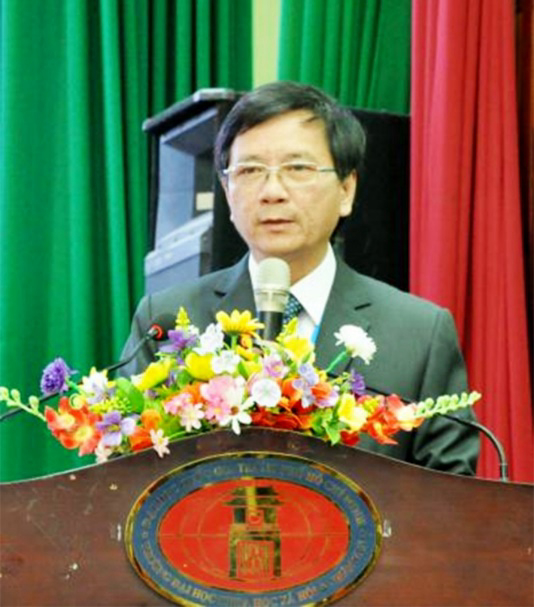
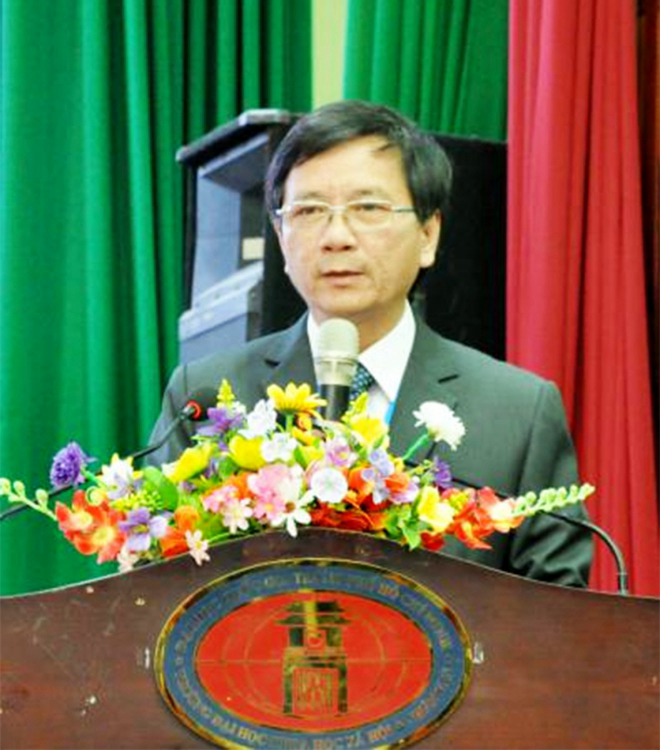
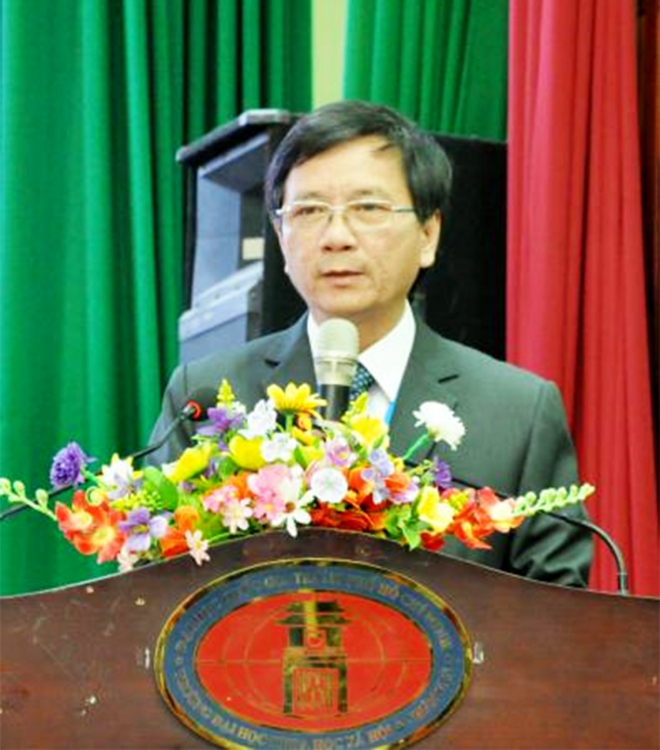
Assoc. Prof. Dr. Doan Le Giang presenting the keynote report at the conference
By the time globalization began, the discovery of the route from the Indian Ocean to the Pacific Ocean via the Strait of Malacca by Western countries in the 16th century made trade between European countries and the Far East vibrant. The land of Vietnam began to be known through travelogues written by missionary priests, merchants, and explorers. The earliest is the book Decadas da Asia, dos feitos que os Portugueses fizeram no descobrimento e conquista dos mares e terras do Oriente by the Portuguese linguist Joao de Barros (1496-1570), first published in Lisbon in 1563, which contains records about Vietnam's Con Dao. It was not until Relazione della missione del Regno di Cocincina (1621) by Cristoforo Borri (1583-1632) that there were records specialized in Vietnam by a European. The book was first published in Italian in 1631. Borri can be considered the first foreign "Vietnamese studies" scholar - in the loose sense of the term. Since then, the history of the world's Vietnamese studies has been nearly 400 years old. In the "International Vietnamese Studies" theme group, the presentations focused on presenting the status, methods, and achievements of Vietnamese studies in Japan, Korea, the USA, France, Germany, Russia, China, etc. * What about other issues, such as teaching Vietnamese in the world? - The position of the Vietnamese language and teaching Vietnamese in the world also has interesting findings. In the paper History of teaching and learning Vietnamese in Japan in the 18th-20th centuries, Prof. Shimizu from Osaka University (Japan) provided interesting information such as: Vietnamese was known and recorded in Japan very early: In the mid-18th century, through 2 travelogues that contained journeys to Vietnam, namely Annan Koku Hyoryu Jitsuroku and Nanpyo Ki. Vietnamese language textbooks in Japan also appeared very early. The earliest series are Annam Conversational Language by Nakagawa Taichi (Sanseidou Publishing, 1941) and Annam Conversational Language by Andou Nobukazu and Takahashi Tsuneo (Keisetsushoin Publishing, 1941). Afterwards, there were Vietnamese language curricula such as Introduction to Annam Language, grammar section (1942), conversation section (1942), and reading section (published by Indoshina-kenkyukai [Indochina Research Association], 1942). Scholar Kin Eiken compiled the Japanese-French-Annam Conversational Dictionary (Okakurashobou Publishing, 1942). Vietnamese Grammar by Tran Trong Kim was translated into Japanese as early as 1944 (translated by Hisamochi Yoshitake, published by Hakusuisha, Tokyo).
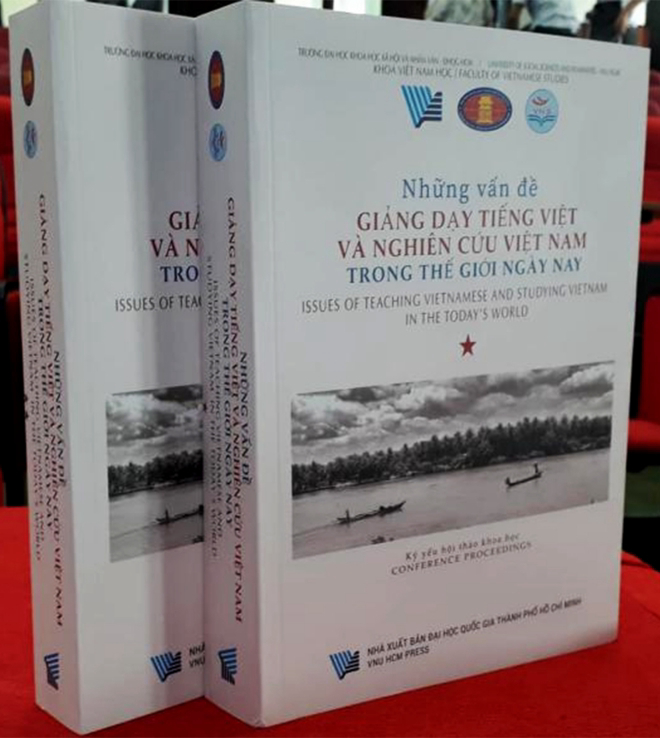
Two volumes of proceedings of the recently held Vietnamese Studies conference
* Looking at the overview, what has the recent conference achieved? - Vietnam is a country with an important position in Southeast Asia, or more broadly, in the Indo-Pacific region. Vietnam is a nation with a rich, profound culture; Vietnamese people are industrious, intelligent, studious, and possess extraordinary will and energy. Vietnam was a focal point for the struggle movement of colonial nations in the 20th century and recently has become a focal point for successful Doi Moi. Therefore, the field of Vietnamese studies was born early in the past and is currently increasingly attracting international scholars. Besides countries with strong, long-standing Vietnamese studies traditions such as France, China, Japan, Russia, etc., for the past few decades, Korea and the USA have emerged as nations with phenomenal development in Vietnamese studies. While Korean Vietnamese studies scholars focus on materials and regional exchanges, American Vietnamese studies scholars focus on language, traditional culture, and ancient and modern history. Not only that, the USA also leads in innovating the perspectives and methodology of research on Vietnamese studies. Therefore, it can be said: A new standing for Vietnamese studies in the world has been identified. * Thank you for these interesting insights.
|
|||