On the afternoon of 18 May 2026, the Faculty of Social Work – Anthropology – Sociology, University of Social Sciences and Humanities, Vietnam National University Ho Chi Minh City, successfully organized an international scientific seminar entitled “Discussion on Transdisciplinary Research Methods”. The program took place in Room D.509, Saigon Campus, with the participation of lecturers, researchers, graduate students, and students interested in emerging research approaches in the social sciences, environment, and sustainable development.
The seminar aimed to create an academic forum for discussing transdisciplinary research methods, an approach that has become increasingly significant as social, environmental, and climate-related issues grow more complex and require collaboration across different fields of knowledge. Through the program, participants had the opportunity to gain a clearer understanding of the concepts, characteristics, principles, and procedures for conducting transdisciplinary research, while also learning from practical experiences drawn from international research projects.
At the seminar, Prof. Dr. Jean-Paul Vanderlinden, from the University of Versailles Saint-Quentin-en-Yvelines – Paris-Saclay University, France, delivered a presentation on transdisciplinary research methods. His presentation focused on clarifying the differences between disciplinary, multidisciplinary, interdisciplinary, and transdisciplinary research, thereby emphasizing the role of integrating scientific knowledge with the practical experiences of communities, policymakers, and relevant stakeholders throughout the research process.
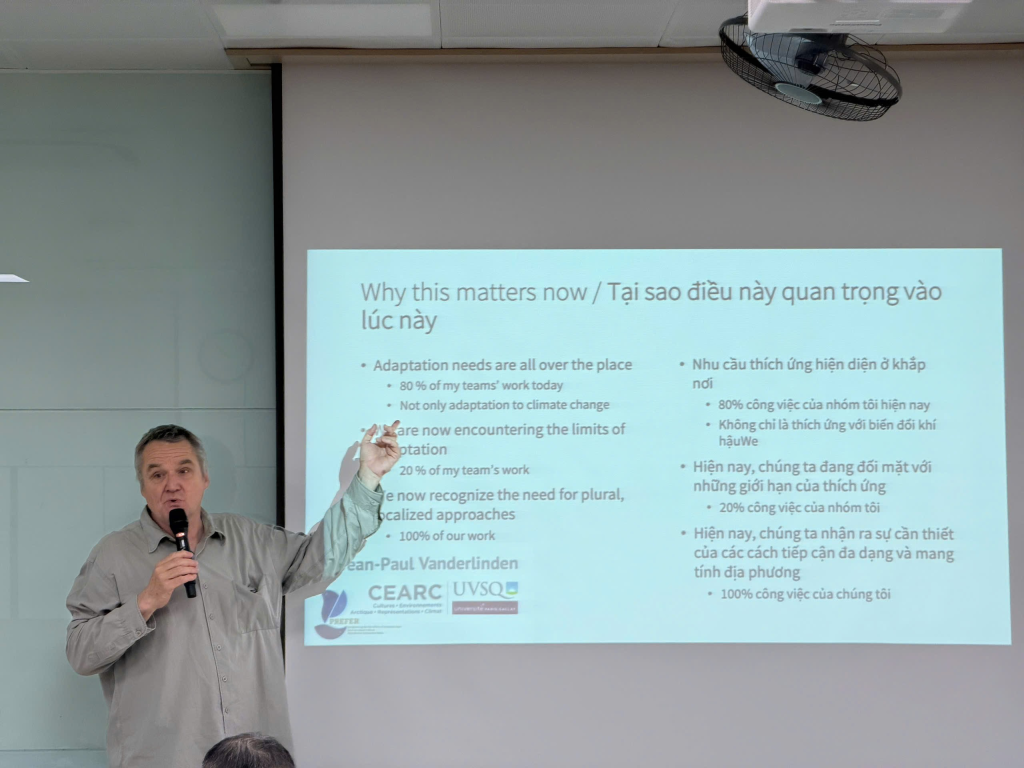
Speaker: Prof. Dr. Jean-Paul Vanderlinden. Photo: Chi Cuong
In addition to the theoretical foundations, the speaker shared a number of practical examples related to climate change, the environment, resource management, and sustainable development. These examples helped participants better visualize how to design a transdisciplinary study, from identifying the research problem and building a multidisciplinary research team to selecting data collection methods and connecting research findings with practical social needs.
The academic discussion session was lively, with many questions raised by lecturers, researchers, and graduate students. The discussion focused on the challenges of implementing transdisciplinary research in the context of developing countries, ways to coordinate collaboration among researchers from different fields, and the role of communities and social actors in the co-production of knowledge. These exchanges helped clarify the applied value of transdisciplinary research methods, particularly for topics such as climate change, urban flooding, and sustainable development.
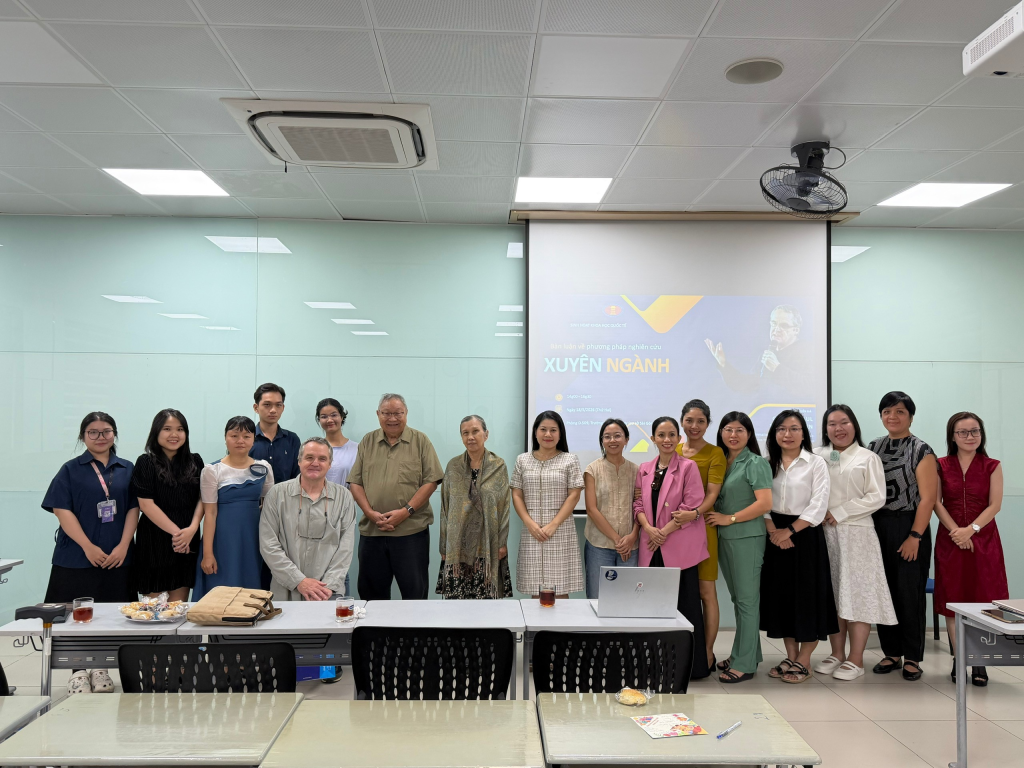
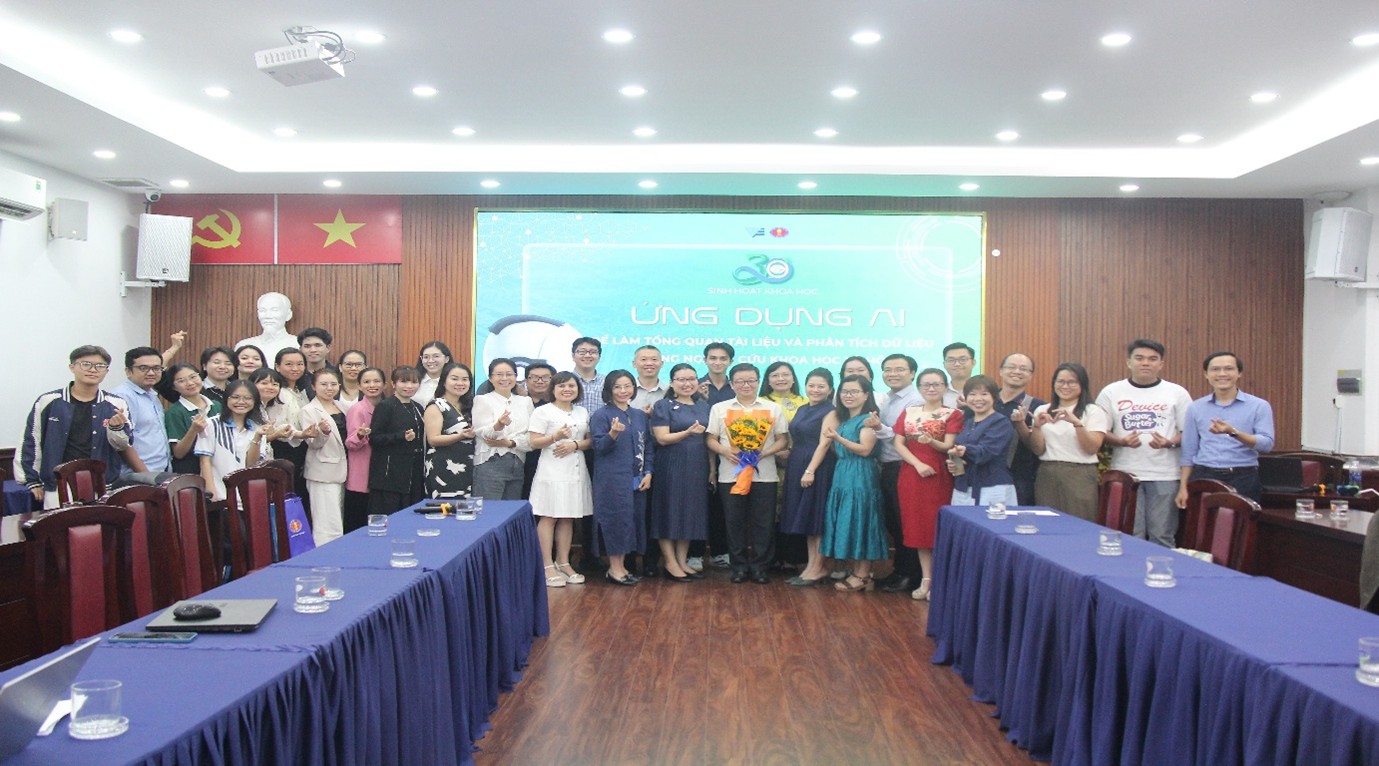
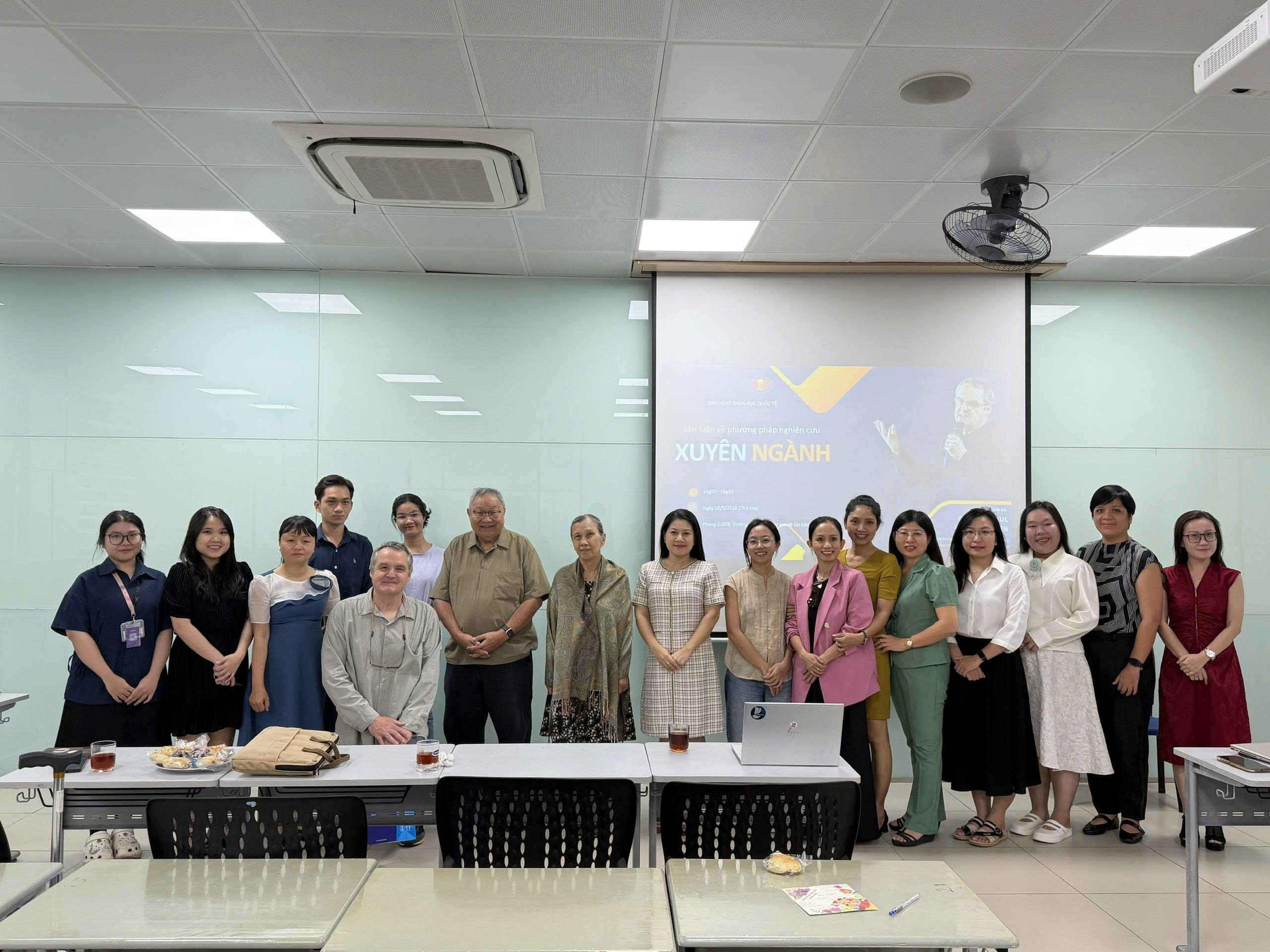
Speaker Prof. Dr. Jean-Paul Vanderlinden and attendees. Photo: Chi Cuong
The international scientific seminar not only provided participants with additional professional knowledge of modern research methods but also created an open academic dialogue space, contributing to stronger connections between research, training, and practice. In this way, the program continued to affirm the role of scientific seminar activities in enhancing research capacity, expanding international academic cooperation, and promoting applied, interdisciplinary, and socially impactful research approaches in the field of social sciences and humanities.
Written by Nguyen Xuan Anh