International Academic Exchange: Korean and Chinese Perspectives on Multicultural Governance and Ethnic Relations in Asia
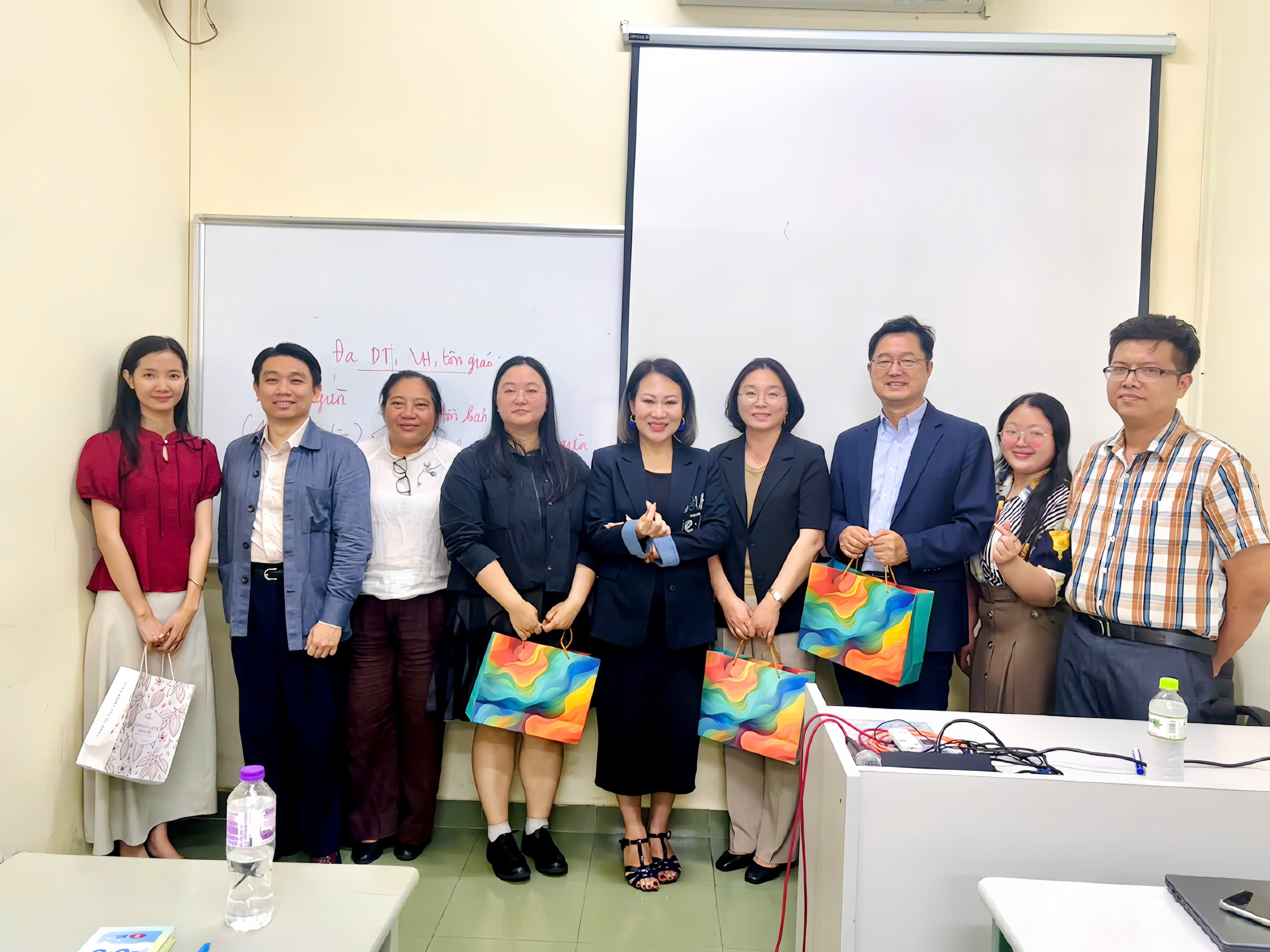
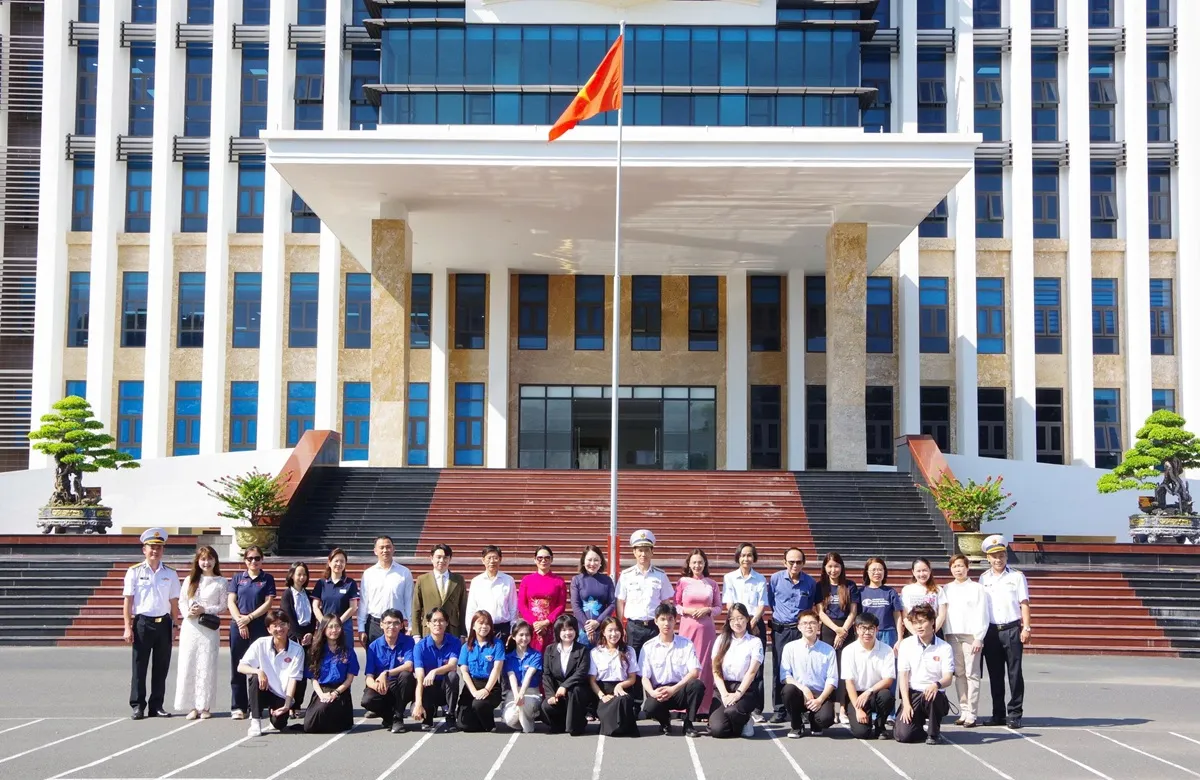
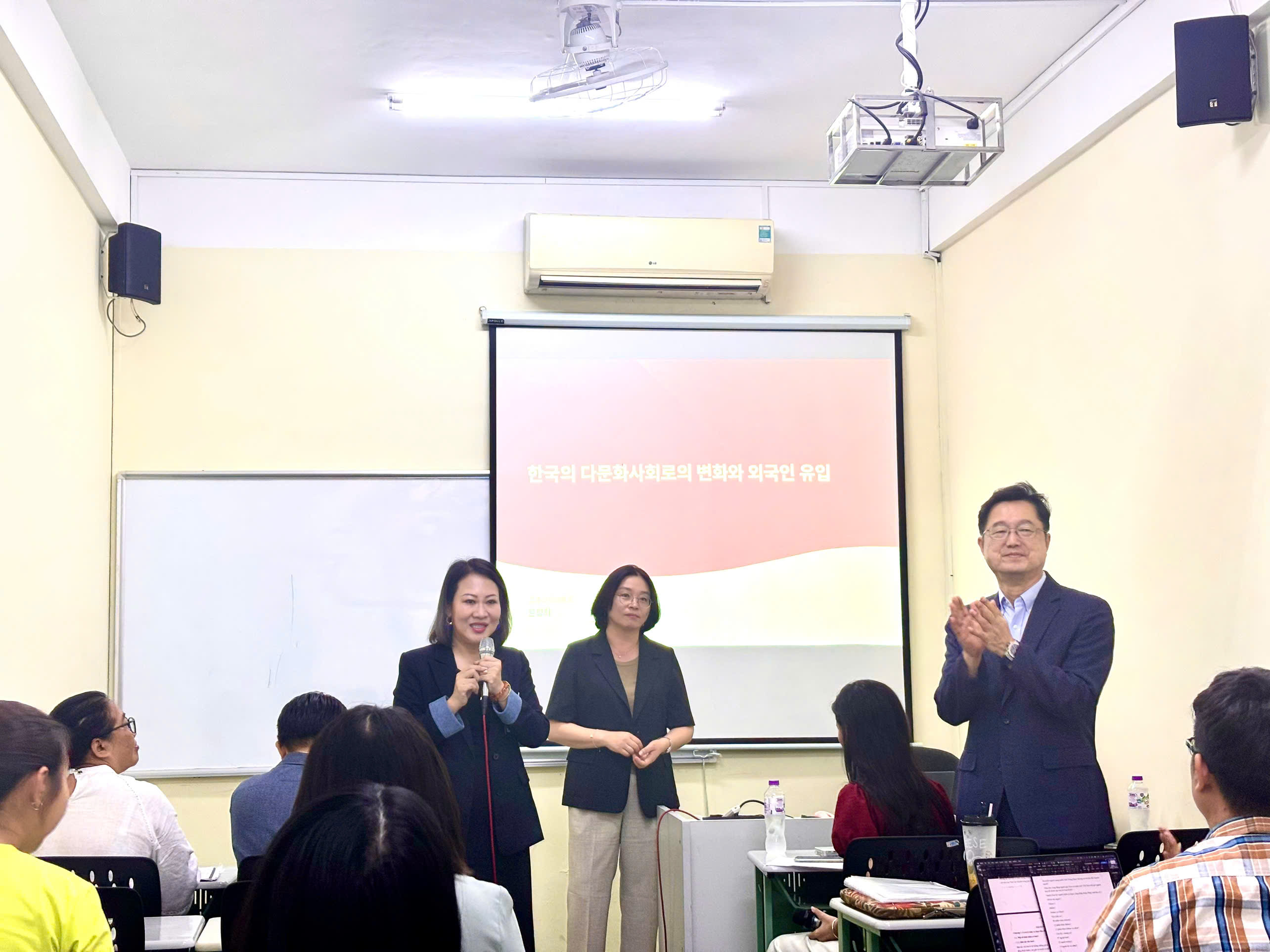
On the morning of August 8, 2026, the Faculty of Oriental Studies organized an international academic session themed: “Ethnic Diversity, Conflict, and Multiculturalism in Contemporary Korea: Perspectives from Asia”. The program was part of the course module “Ethnic Conflict in Asian Societies”.
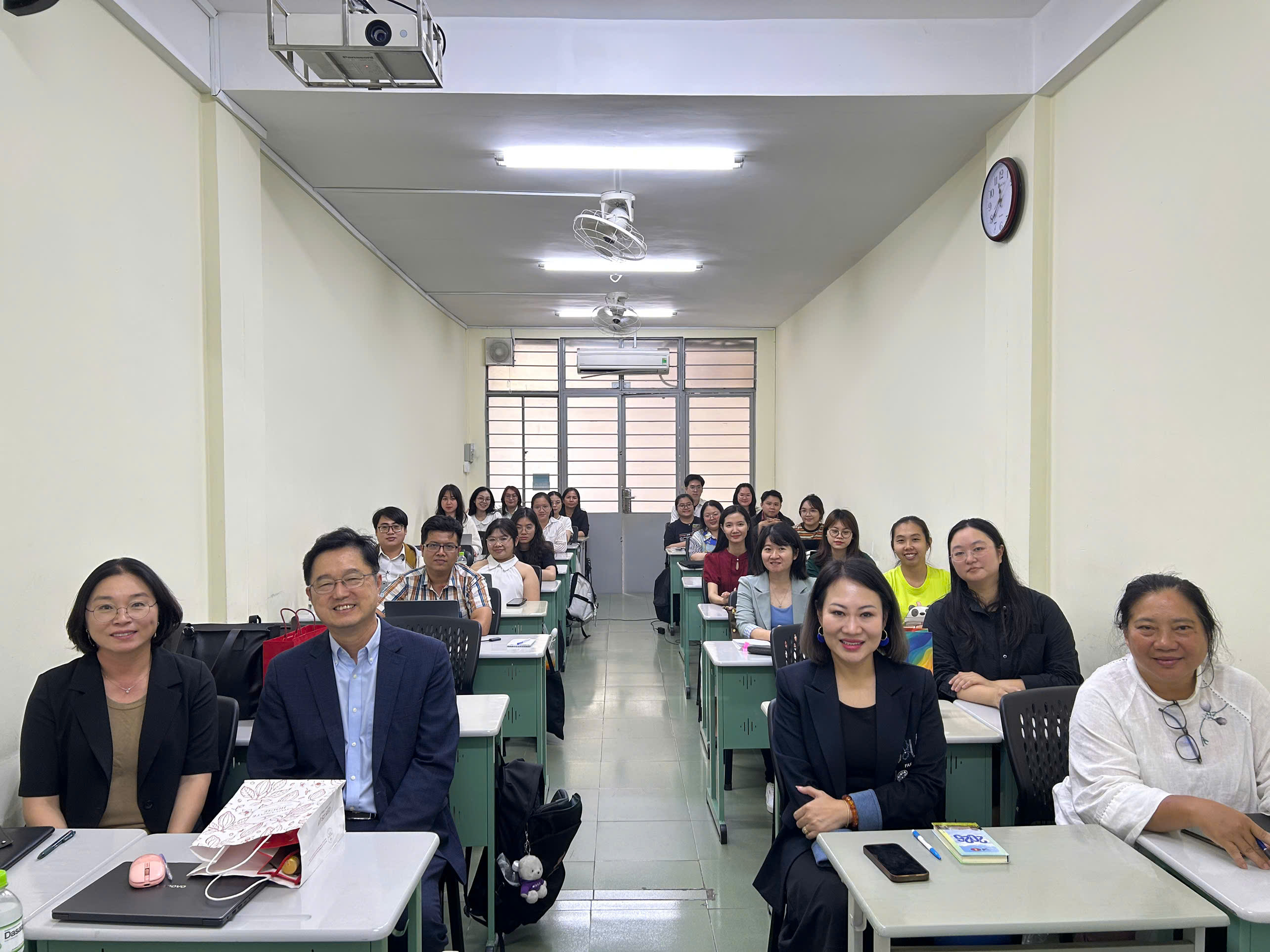
The program was chaired by Assoc. Prof. Dr. Phan Thi Hong Xuan, Dean of the Faculty of Oriental Studies, with the professional participation of Dr. Duong Hien Hanh, scholars from Korea and China, and graduate students majoring in Asian Studies at the Faculty of Oriental Studies, University of Social Sciences and Humanities, Viet Nam National University Ho Chi Minh City. This academic activity contributes to bringing regional practical issues into the classroom, creating opportunities for students to directly engage with international scholars and broaden their comparative perspectives on multicultural governance, ethnic relations, and social changes taking place in Asia.
Perspective from Korea: Multiculturalism and transformations in ethnic relations
Opening the program, Prof. Yun Hyang Hee, an associate researcher at the Chungnam Research Institute, a scholar with interdisciplinary professional background holding two PhDs in International Multicultural Studies from Dongguk University and Korean Language Education from Mokwon University, presented the topic “Multiculturalism and Ethnic Relations in Contemporary Korea”.
Based on research and practical observations in Korea, Prof. Yun Hyang Hee analyzed the notable transformations of Korean society in the context of increasing migration and cultural diversity. Changes in demographic structure and social composition are posing many new issues related to integration, education, identity, cultural adaptation, and relationships between social groups.
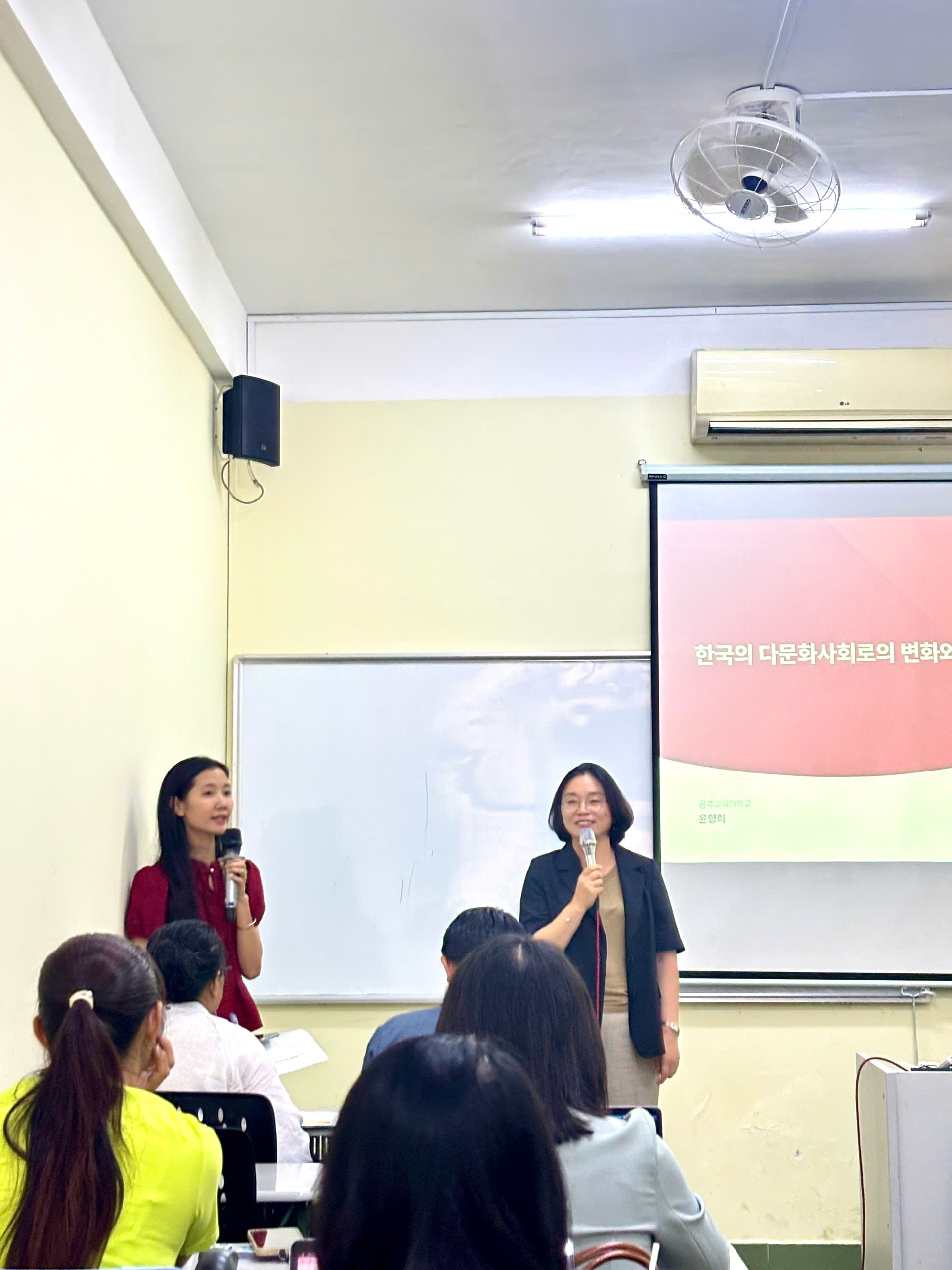
The presentation helps students perceive Korea not only through the image of a historically culturally homogeneous society, but also as a notable case study on the process of transitioning into an increasingly diverse society. Thereby, learners have a basis to reflect on the relationship between demographic changes, social policies, multicultural education, and the management of differences.
Perspective from China: Policies, practices, and challenges in multicultural governance
Following the program, Dr. Hou Zhe, Assistant Professor at the Shanghai Academy of Social Sciences (SASS), a former visiting scholar at the Harvard-Yenching Institute, presented the topic “Multicultural Governance in Contemporary China: Policies, Practices, and Challenges”.
From the case of China – a country with a large population scale and diversity in ethnicity, culture, and social space – Dr. Hou Zhe focused on analyzing approaches in policy planning, multicultural governance practices, as well as challenges posed in the contemporary social context.
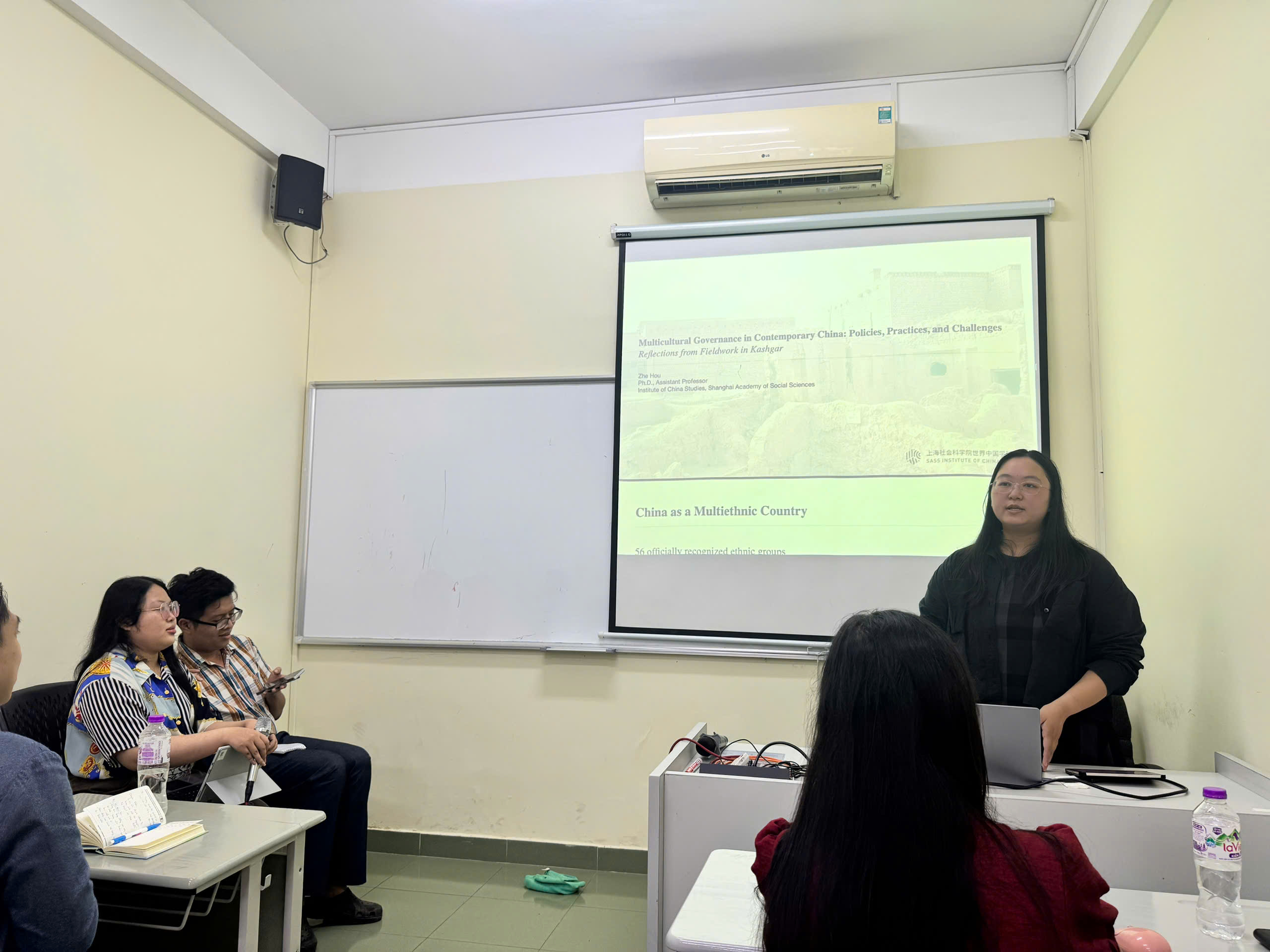
The presentation provided an important comparative case for students to examine the relationship between cultural diversity – state policy – social governance – ethnic relations. Thereby, students have the conditions to view multicultural governance not only as a story about the existence of many cultural groups in the same society, but also as directly related to governance mechanisms, the ability to reconcile differences, and the maintenance of social cohesion.
From two national cases to a comparative approach to Asia
One of the prominent values of the program is placing the two cases of Korea and China in the same academic dialogue space. Differences in history, population size, social structure, and policies provide conditions for students to identify the diversity of models and methods of multicultural governance in Asia.
The exchange session became even more vibrant with the professional opinions of Dr. Duong Hien Hanh and direct questions from students to the two international scholars. Instead of just receiving knowledge through lectures, students were encouraged to raise issues, exchange, and compare theory with specific practical cases.
Through direct dialogue with experts, students have the opportunity to strengthen their critical thinking and apply interdisciplinary approaches to analyze issues of identity, ethnicity, multiculturalism, social integration, and public policy. This is also an opportunity for learners to realize more clearly that ethnic issues need to be considered in specific historical, political, economic, cultural, and social contexts, instead of being explained by a single cause.
Diversity and difference do not necessarily lead to conflict
Concluding the session, Assoc. Prof. Dr. Phan Thi Hong Xuan highly appreciated the sharing from the two international scholars, especially for providing students with two cases of comparative value on the changes of multicultural society and the practice of governing ethnic relations in Asia.
From the discussed content, Assoc. Prof. Dr. Phan Thi Hong Xuan emphasized an important realization for the module: diversity and difference do not necessarily lead to conflict; the core issue lies in how society perceives, regulates, and manages differences. Appropriate policies, education, dialogue, mutual recognition, and mechanisms to ensure the participation of social groups have significant meaning in transforming diversity into a resource for development rather than becoming a cause of division.
Assoc. Prof. Dr. Phan Thi Hong Xuan also suggested that students should not stop at noting the specific characteristics of each country, but need to place the Korean and Chinese cases in a comparative approach, applying studied theories to explain why, despite the coexistence of diversity, each society has different management methods and issues.
From there, students need to continue asking: What makes difference a resource for society and under what conditions can difference be transformed into conflict? What roles do the State, law, education, media, and society play in this process? More importantly, international experiences need to be selectively received to reflect on the issues of Vietnam and ASEAN in the context of increasing exchanges, population movement, and cross-cultural interactions.
The international academic exchange, therefore, not only supplements knowledge for the “Ethnic Conflict in Asian Societies” module, but also expands the academic space of the Asian Studies graduate program. Introducing international scholars and practical case studies into the classroom contributes to enhancing interdisciplinary, comparative, and internationalization elements in the training of the Faculty of Oriental Studies.
More importantly, from the different perspectives of Korea, China, and Vietnam, the program contributes to forming in students a more open approach to diversity: understanding differences for dialogue, managing differences for coexistence, and promoting diversity as a resource for the sustainable development of Asian societies.
Some other images:
Bài viết liên quan