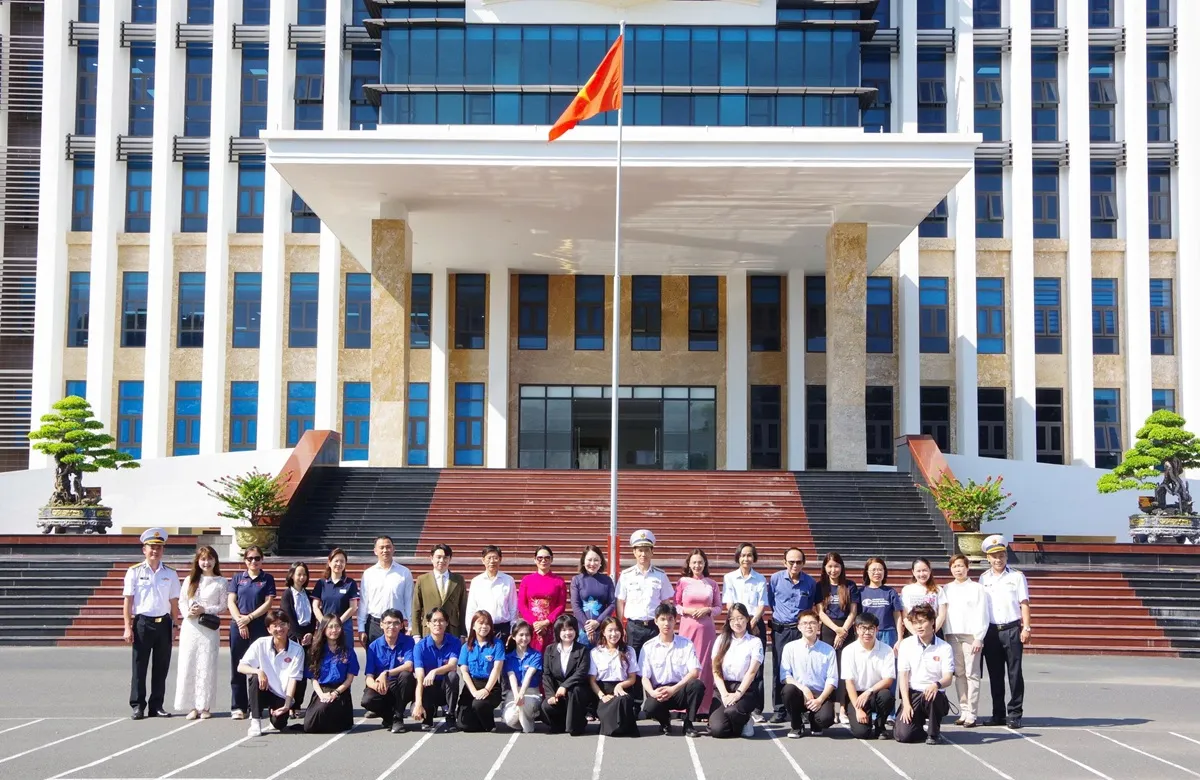
Graduate students of Asian Studies participate in presentations at the International Conference on Social Sciences and Humanities 2026 (USSH-ICSSH 2026)
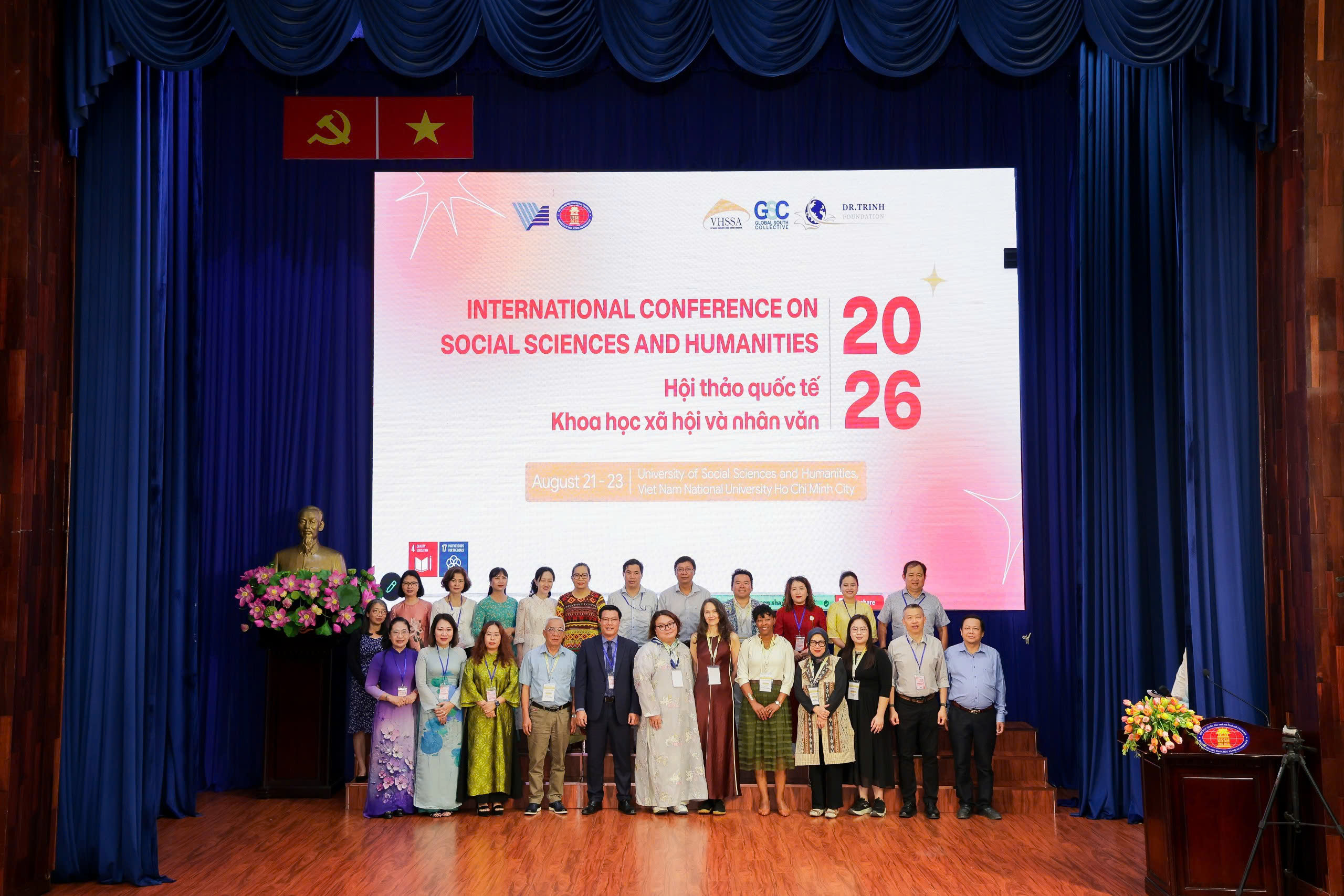
On August 21, 2026, at the Saigon campus, the International Conference on Social Sciences and Humanities 2026 (USSH-ICSSH 2026) was officially opened, gathering domestic and international scholars and researchers to exchange ideas on new issues and approaches in social sciences and humanities. The event was organized by the University of Social Sciences and Humanities, Viet Nam National University Ho Chi Minh City in collaboration with the Southern Hemisphere Research Group, with the attendance of scholars, researchers, presenters, and learners from Southeast Asia, East Asia, South Asia, North America, Africa, and many other regions. Following previous editions, USSH-ICSSH 2026 aims to expand academic exchange, promote research collaboration, and develop transnational academic networks.
At the plenary session, delegates listened to two keynote speeches approaching contemporary issues in social sciences and humanities from two different directions. Prof. Sarah Pink, Monash University, Australia, presented the paper “Feeling Possible Futures: Anticipating Future Emotional Life,” raising questions about how humans can study and envision the future through sensory and emotional experiences. In the second keynote speech, Assoc. Prof. Ngo Thi Huyen, Dean of the Faculty of Information and Library Science, presented the paper “Beyond the Prompt: Rethinking AI Literacy for Social Sciences and Humanities Research.” From the reality that AI is increasingly widely used in research activities while simultaneously bringing concerns about reliability, she raised the necessity of an AI competency framework suitable for the specific characteristics of social sciences and humanities – a field that works not only with information but also with language, society, human experience, and the process of meaning interpretation.
Following the plenary session, the conference continued with parallel thematic sessions, focusing on many fields of social sciences and humanities such as journalism and communication, social work, anthropology, sociology, Oriental studies, education and psychology, history and international relations, TESOL, philosophy, cultural studies, gender, literature, and Vietnamese studies. The thematic sessions created a space for graduate students, PhD candidates, and researchers to present research results, exchange academic ideas, and receive feedback.
Vibrant sessions in Oriental Studies
Within the framework of the conference, the Oriental Studies sessions took place in room A.305 with the participation of researchers, lecturers, and graduate students. The report content spanned many research directions in the fields of East Asia and Southeast Asia, from culture, literature, society, gender, and population to emerging issues in the context of globalization and digital transformation.
At Panel 3A: Oriental Studies, chaired by Dr. Nguyen Thi Phuong Hao, co-chaired by Dr. Nguyen Thanh Tuan, and with Dr. Hoang Thi Thu Thuy as secretary, the reports focused on diverse issues of Asian culture and society. In particular, the paper “A comparative study of female character construction in ‘Romance of the Three Kingdoms’ and ‘Hoang Le Nhat Thong Chi’” by graduate student Huynh Ngo Dan Anh approached the image of female characters from a comparative literature perspective. Besides, the paper “Transnational crime in Southeast Asia in the digital context: The case of the Golden Triangle region” by graduate students Vuong Le Minh Khanh and Nguyen Thi Minh Truyen raised issues regarding the transformations of transnational crime in the digital environment. The paper “Pre-marital financial burden and the rising age at first marriage: analyzing the context in urban areas of Japan and China” by graduate students Vo Thi My Xuyen and Le Thi Hong Ha approached a contemporary social issue through changes in marriage and demographic structure in the two East Asian nations.
At Panel 3B: Oriental Studies, chaired by Assoc. Prof. Phan Thi Hong Xuan, co-chaired by Dr. Le Thi Sinh Hien, and with Dr. Nguyen Thi Hoai Chau as secretary, the presentations continued to broaden the scope of research on the culture, society, and people of Japan. Graduate student On Thi Ngoc Thao presented the paper “Dragon and Phoenix patterns on Bingata costumes of the Ryukyu region on Okinawa main island, Japan,” exploring the cultural and symbolic values of traditional patterns on Bingata costumes. The paper “The role of female labor in the elderly care sector in Japan today” by graduate student Bien Ly Thao Trang addressed the role of women in an increasingly important sector amid demographic and social changes in Japan. Subsequent reports included “The paradox of the pillar role: Behind the masculine image of Japanese men” by graduate student Nguyen Thanh Hien and “From sacred to ecological: The meaning shift of ‘Kamuy’ in the Ainu language” by graduate student Nguyen Thi To Uyen. These studies demonstrated diversity in approaches to gender, identity, language, and indigenous culture issues, while also contributing to clarifying the transitions in contemporary Japanese social life and culture.
The participation of graduate students in Asian Studies from the Faculty of Oriental Studies in the thematic sessions was a notable highlight of the conference. Through directly presenting research to scholars, lecturers, and peers, students had the opportunity to test their research results, receive professional feedback, and practice their skills in presentation, exchange, and academic debate.
The selected topics also demonstrated the wide research scope of the Asian Studies major, from culture and literature, language, gender, society, and population to transnational issues and ongoing changes in the region. Placing research on Japan, China, and Southeast Asia in the same exchange space contributed to encouraging interdisciplinary and comparative approaches – approaches that are of significant importance in regional studies.
USSH-ICSSH 2026 was therefore not only a forum for researchers to publish and exchange research results but also a practical academic environment for graduate students, especially those in Asian Studies, to connect with the domestic and international research community. This was also an opportunity for learners to expand their academic networks, access new research directions, and step-by-step enhance their independent research capacity.
Through the Oriental Studies sessions, the Faculty of Oriental Studies continued to affirm its role in training and research on Asia, while creating conditions for learners to engage more deeply in academic activities, gradually linking postgraduate training with scientific research and international integration.
Bài viết liên quan