NATIONAL SCIENTIFIC CONFERENCE: "DIGITAL TECHNOLOGY IN HERITAGE CONSERVATION: 3D SCAN, GIS, AI AND VIRTUAL MUSEUMS"
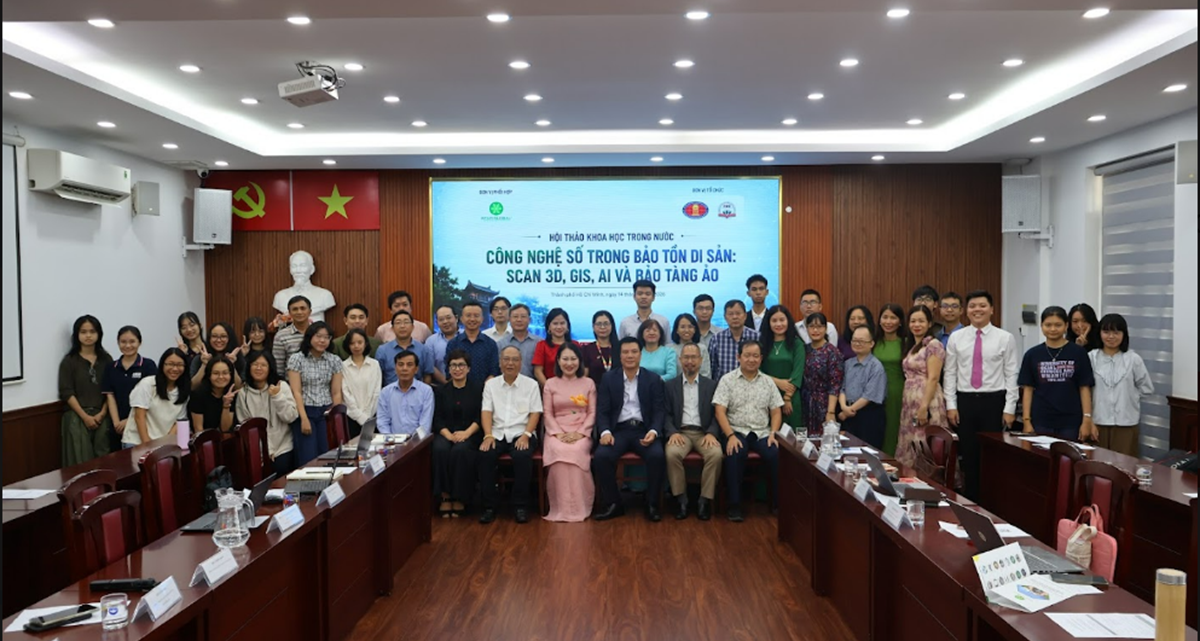
On the morning of August 14, 2026, at the University of Social Sciences and Humanities, Viet Nam National University Ho Chi Minh City, the national scientific conference themed “Digital technology in heritage conservation: 3D Scan, GIS, AI and Virtual Museums” was successfully held. The conference served as an important interdisciplinary academic forum aimed at connecting social sciences and humanities knowledge with advanced technological solutions in the preservation and promotion of national cultural heritage values.
Attendees of the conference included representatives of the University's Board of Presidents, the Department of Oriental Studies' Board of Heads, along with numerous scientists, conservation experts, cultural managers, museum officials, representatives of technology companies accompanying the Conference (Star Global Expert Solutions Joint Stock Company, Diep Truong Phat Production, Processing and Trading Co., Ltd.), graduate students, and students.
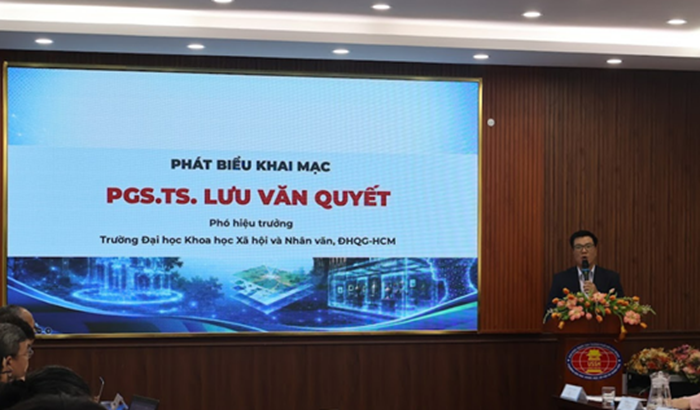
Delivering welcoming remarks at the opening ceremony, the representative of the Board of Presidents of the University of Social Sciences and Humanities, VNUHCM emphasized the pioneering role of the University in research and training. At the same time, it was affirmed that in the context of digital transformation, technology is not merely dry algorithms or technical tools replacing original artifacts, but a humanistic bridge helping to vividly recreate historical stories and traditional cultural values, making them more accessible to the public, especially the younger generation.
Practice from digitization activities at many museums in Ho Chi Minh City shows that when technology is guided by profound humanistic knowledge, heritage is not only preserved against the challenges of nature and time but also continues to live, spreading strong inspiration in contemporary society.
The keynote report of the conference clarified the context and orientation of digital transformation according to major policies and decisions of the Party and Government in the field of culture. From nearly 40 papers sent from across the country, the Content Committee reviewed and selected 25 typical papers, arranged into 3 core thematic groups:
1. 3D technology and heritage restoration: Delving into Photogrammetry, 3D Scan, and GIS techniques in archaeology and artifact restoration (such as Champa heritage, Dong Duong Buddhist monastery, Nine Dynastic Urns, Hat Boi masks, Sa Huynh culture...). The papers set requirements for ensuring scientific authenticity, verification processes, and data standards before intervening in original heritage.
2. Building and managing smart digital museums: Discussing the construction of data ecosystems, access authorization layering, copyright, data security, documentary heritage preservation (palm-leaf manuscripts, Cham documents...), and international lessons in smart museum management combined with AI technology, 360 virtual reality.
3. Digital heritage with life and development: Emphasizing the role of heritage subject communities, community archaeology, experiential education, communication, and gamification. Thereby, turning digital heritage into a means to improve cultural understanding, educate patriotism, and serve sustainable cultural economy.
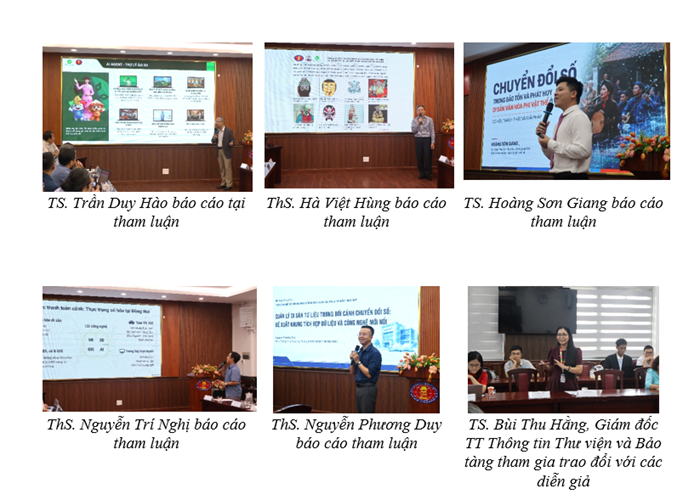
The conference discussion section was lively with 5 professional reports revolving around solutions for applying technology in heritage conservation. Opening the working session, Dr. Tran Duy Hao (Director of Star Global Expert Solutions Joint Stock Company) shared about “Digital museums in the trend of cultural heritage digital transformation in Vietnam: Practical implementation of interactive smart 3D/360 technology integrated with AI virtual assistants”. Next, M.A. Ha Viet Hung (University of Fine Arts Ho Chi Minh City) presented research on applying 3D human models to preserve and design Hat Boi masks; the third paper was by Dr. Hoang Son Giang (Department of Science and Technology Ho Chi Minh City) comprehensively analyzing the opportunities and challenges of digitizing intangible heritage. The conference also heard practical perspectives from M.A. Nguyen Tri Nghi (Dong Nai Museum) with 360 virtual reality technology solutions. And finally, M.A. Nguyen Phuong Duy (University of Social Sciences and Humanities, VNUHCM) closed the report section with a proposal for a framework for integrating data and emerging technologies in documentary heritage management.
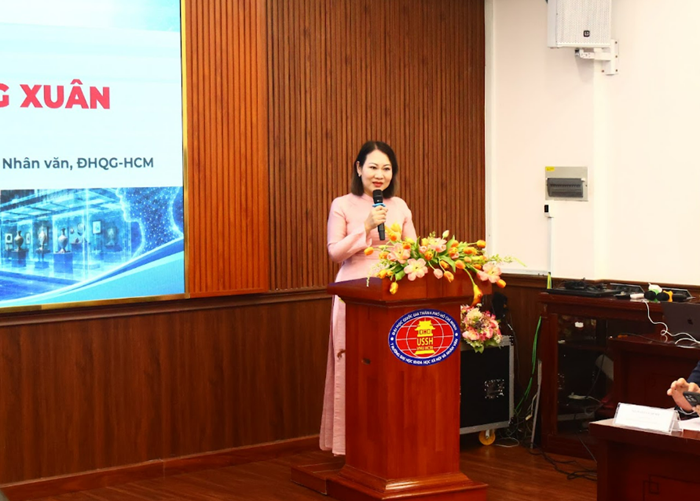
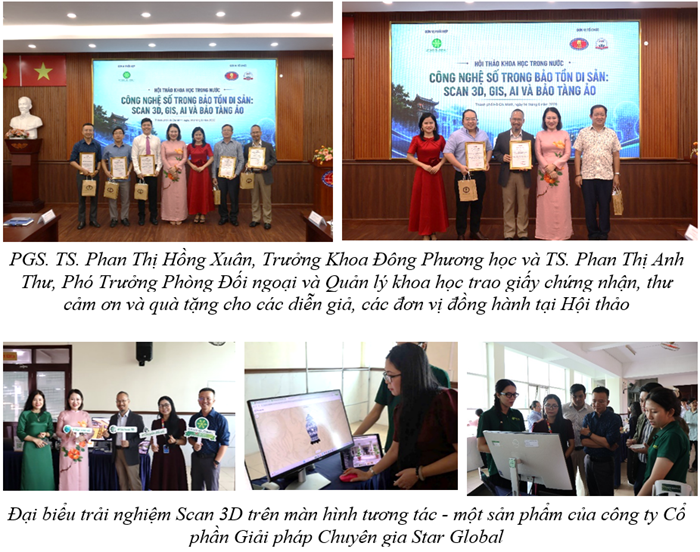
Delivering the summary and closing remarks of the conference, Assoc. Prof. Dr. Phan Thi Hong Xuan (Head of the Department of Oriental Studies, representative of the Presiding Committee) summarized the outstanding results of the session. The conference affirmed that digital transformation has fully participated in every process from identification, documentation, preservation, research to interpretation and promotion of heritage values. The key message concluded: “Technology can help heritage be stored longer and accessed more broadly; but people, communities, and cultural values are the center of the conservation process”. Digital transformation is not replacing real heritage with a virtual version, but expanding the living space for heritage in the future.
To realize the research results, the Presiding Committee proposed three key follow-up directions:
Strengthening interdisciplinary research between social sciences – humanities and technology; Deploying specific pilot projects on 3D, GIS, AI, and digital museums associated with real heritage and communities in Vietnam; Forming a multilateral cooperation network between the University – Management Agencies – Museums – Technology Enterprises – Communities to transfer research solutions into practical products serving society.
The conference closed with the expectation of new steps in building a Make in Vietnam digital heritage ecosystem, contributing to preserving and promoting national cultural identity in the digital era.
Bài viết liên quan